Bild von unserem Modell generiert.
Training
Luftqualität für Radfahrer: Fahren, Ruhen oder Drinnen bleiben
Wie du AQI, PM2.5, Ozon, Symptome und Trainingspriorität nutzt, um zu entscheiden, ob du draußen fahren, nach drinnen gehen oder dich erholen solltest.
Warum Luftqualität zu deinen Trainingsentscheidungen gehört
Luftqualität für Radfahrer ist kein Lifestyle-Detail. Sie ist eine Trainingsvariable.
Ausdauertraining funktioniert, indem es Stress erzeugt und dem Körper dann erlaubt, sich anzupassen. Schlechte Luft fügt einen zweiten Stressfaktor hinzu, der dich nicht auf die gleiche kontrollierte Weise fitter macht, wie es ein gut konzipiertes Intervalltraining tut. Er kann die Kosten einer Ausfahrt erhöhen, die wahrgenommene Anstrengung verzerren, die Erholung beeinträchtigen und eine Einheit auf dem Papier produktiv aussehen lassen, während er insgeheim die Qualität der folgenden Tage reduziert.
Radfahrer sind besonders exponiert, weil der Sport lange Dauer, hohe Ventilation und wiederholtes tiefes Atmen kombiniert. Ein kurzer Spaziergang durch den Verkehr ist nicht dasselbe wie ein Schwellen-Training, bei dem große Luftmengen durch den Mund gezogen werden. Die Exposition ist nicht nur die Luft draußen. Es ist die Luft draußen, multipliziert mit der Intensität und Dauer deiner Ausfahrt.
Deshalb sollte der Radfahr-AQI neben Temperatur, Wind, Schlaf und Ermüdung stehen, wenn du entscheidest, was du mit einem Training machst. Das Ziel ist nicht, jede Ausfahrt abzusagen, die unvollkommen aussieht. Das Ziel ist, die Einheit an die Bedingungen anzupassen, damit die beabsichtigte Anpassung immer noch sinnvoll ist.
Die schnelle Entscheidungsmatrix
Nutze diese, bevor du dich in Details verlierst. Die Entscheidung sollte strenger werden, wenn die Intensität steigt, da die Ventilation mit der Arbeit zunimmt.
| AQI-Kategorie oder -Bedingung | Haupttreiber zur Überprüfung | Symptome | Trainingsart | Empfehlung |
|---|---|---|---|---|
| Gut | PM2.5 und Ozon nicht erhöht | Keine | Jede geplante Einheit | Draußen fahren |
| Moderat | PM2.5 oder Ozon | Keine | Leichtes Ausdauer- oder Erholungs-Training | Draußen fahren, aber sauberere Straßen wählen und es ruhig angehen lassen |
| Moderat | PM2.5 oder Ozon | Keine oder leichte Reizung | Tempo, Schwelle, VO2 max, Gruppen-Ausfahrt | Intensität reduzieren oder nach drinnen verlegen |
| Ungesund für empfindliche Fahrer | PM2.5, Ozon oder Rauch | Jegliche Symptome, Asthma, kürzliche Atemwegserkrankung oder bekannte Empfindlichkeit | Jede Outdoor-Einheit | Nach drinnen verlegen oder ruhen |
| Ungesund oder schlimmer | Jeder Schadstoff | Jeder Status | Jede Outdoor-Einheit | Nach drinnen verlegen oder ruhen |
| Waldbrandrauch vorhanden | PM2.5 ist der Hauptschadstoff | Rauchgeruch, Dunst, Hals- oder Augenreizung | Intervalle, lange Ausfahrten oder Gruppen-Ausfahrten | Nach drinnen verlegen oder ruhen |
Wenn deine App einen US-amerikanischen AQI verwendet, zeigt sie normalerweise Kategorielabels wie gut, moderat, ungesund für empfindliche Gruppen, ungesund, sehr ungesund und gefährlich auf einer numerischen Skala an. Der wichtige Vorbehalt ist, dass die Grenzwerte der Kategorien, die Gewichtung der Schadstoffe und die Benennung je nach Land und App variieren können. Behandle das Label allein nicht als Entscheidung. Behandle das Label, den Schadstofftreiber, deine Symptome und das Trainingsziel als ein System.
Ein kurzer medizinischer Hinweis gehört hierher. Wenn du Asthma, Herz-Kreislauf-Erkrankungen, eine kürzliche Atemwegserkrankung oder starke Symptome während einer Ausfahrt hast, befolge deine eigene medizinische Anleitung und lass ein Leistungsziel nicht darüber entscheiden, ob du weitermachst. Trainingsziele sind keine medizinische Freigabe.
AQI, PM2.5 und Ozon: Was Radfahrer verfolgen sollten
Die meisten Fahrer beginnen mit AQI, weil er leicht zu finden und leicht zu interpretieren ist. Das ist nützlich, aber AQI ist ein Index, keine Diagnose. Er fasst verschiedene Schadstoffe in einer vereinfachten Kategorie zusammen, und der wichtigste Schadstoff kann sich je nach Jahreszeit, Ort und Wettermuster ändern.
Für Radfahrer sind PM2.5 und Ozon die wichtigsten Punkte, die es zu verstehen gilt.
PM2.5 bezieht sich auf Feinstaub. Dies ist der Schadstoff, den die meisten Fahrer mit Waldbrandrauch in Verbindung bringen, aber er kann auch aus Verbrennung, Verkehr, industriellen Quellen und stehender Luft stammen. Das praktische Problem ist die Dosis. Hartes Fahren erhöht die Ventilation, was die Menge an verschmutzter Luft erhöht, die du durch das Atmungssystem bewegst.
Ozon ist anders. Es wird oft an heißen, sonnigen, stehenden Tagen relevanter und kann später am Tag schlimmer sein. Eine Strecke kann klar aussehen und sich dennoch rau anfühlen, sobald die Intensität steigt. Ozon ist ein Grund, warum sich ein Fahrer während einer Sommer-Intervall-Einheit ungewöhnlich eingeschränkt fühlen kann, selbst wenn kein offensichtlicher Rauch vorhanden ist.
Die praktische Hierarchie ist einfach:
- Nutze den Radfahr-AQI als erste Überprüfung.
- Prüfe, welcher Schadstoff den Wert antreibt.
- Achte bei Rauchereignissen speziell auf PM2.5.
- Berücksichtige die Ozon-Zeitplanung an heißen, sonnigen Tagen.
- Vertraue den Symptomen, wenn sie stärker sind, als die Zahl vermuten lässt.
Dieser letzte Punkt ist wichtig. Luftmonitore sitzen nicht an deinem Vorbau. Sie können in einer anderen Stadt, windaufwärts, windabwärts, drinnen oder hinter den Echtzeitbedingungen auf deiner Strecke sein. Wenn die Daten akzeptabel sind, aber die Luft nach Rauch riecht, dein Hals brennt oder deine Atmung sich abnormal anfühlt, sollte der Ausfahrtsplan geändert werden.
Wie Umweltverschmutzung Leistung und Erholung beeinflusst
Schlechte Luft muss keine dramatischen Symptome hervorrufen, um die Trainingsqualität zu beeinträchtigen. Das übliche Muster ist subtiler: normale Leistung fühlt sich härter an, die Herzfrequenz verhält sich seltsam, das Atmen fühlt sich eingeschränkt an, und der nächste Tag bringt mehr Ermüdung mit sich, als die Einheit hätte verursachen sollen.
Das ist ein schlechter Tausch für die meisten Trainingstage.
Eine lockere Ausfahrt soll aerobes Volumen mit geringem Aufwand hinzufügen. Wenn Umweltverschmutzung diese Ausfahrt in einen Atemstresstest verwandelt, dient sie nicht mehr demselben Zweck. Ein Schwellen-Training soll kontrollierte Zeit nahe einer spezifischen metabolischen Anforderung akkumulieren. Wenn der limitierende Faktor Atemwegsreizung oder Atembeschwerden wird, trainierst du nicht mehr das System, das du ansprechen wolltest. Eine VO2-max-Einheit ist noch empfindlicher, da der gesamte Punkt hohe Ventilation und hoher Sauerstoffbedarf ist.
Dies ist der Punkt, an dem ein datengesteuerter Fahrer einen häufigen Fehler vermeiden sollte: die Einheit nur danach zu beurteilen, ob die Leistungsziele erreicht wurden. Du kannst ein Training durch schlechte Luft erzwingen und die Intervalle trotzdem absolvieren. Das beweist nicht, dass die Entscheidung gut war. Die bessere Frage ist, ob die Einheit deine Entwicklung verbessert hat.
Nützliche Signale, die nach Ausfahrten bei schlechter Luft zu beachten sind, umfassen:
- Ungewöhnliches Husten oder Halsreizungen nach der Ausfahrt.
- Atembeschwerden, die über die Einheit hinaus anhalten.
- Höher als erwarteter wahrgenommener Aufwand für normale Ausdauerleistung.
- Schlechter Schlaf nach einer ansonsten routinemäßigen Ausfahrt.
- Hartnäckige Müdigkeit am nächsten Morgen.
- Eine Diskrepanz zwischen Leistung, Herzfrequenz und wahrgenommenem Aufwand.
Keines dieser Signale ist perfekt spezifisch. Sie können von Hitze, Dehydration, akkumulierter Ermüdung, Krankheit oder schlechter Ernährung herrühren. Aber wenn sie an einem Tag mit schlechter Luft auftreten, ist die einfachste Erklärung oft, dass die Umweltkosten höher waren als geplant.
Praktische Schwellenwerte für lockere Ausfahrten, Intervalle und Rennen
Ohne vorzugeben, dass die Entscheidung perfekt präzise sein kann, nutze AQI-Kategorie, Schadstofftyp, Symptome und Trainingsbedeutung zusammen. Je härter die Einheit, desto sauberer sollte die Luft sein.
Wenn die Luft im guten Bereich ist
Trainiere normal. Achte dennoch auf lokale Mikroklimata, besonders in der Nähe von Verkehrskorridoren, Industriegebieten, Tunneln und tiefer gelegenen Gebieten, wo die Luft stagnieren kann. Gute regionale Luft bedeutet nicht, dass jede Straße gleichermaßen sauber ist.
Dies ist der Tag für normale Struktur: Ausdauer, Tempo, Schwelle, VO2 max, Gruppenfahrten oder Rennvorbereitung. Wenn du maximale Arbeit leistest, gelten die üblichen Regeln: tanke auf, wärme dich richtig auf und beurteile die Einheit anhand deiner aktuellen Form und nicht anhand einer einzigen heroischen Leistungszahl. Wenn sich Ziele unter sauberen Bedingungen falsch anfühlen, überprüfe deine FTP oder verwende den FTP-Schätzer, bevor du die Luft beschuldigst.
Wenn die Luft im moderaten Bereich ist
Hier beginnt der Kontext wichtig zu werden. Für einen gesunden Fahrer ohne Symptome ist eine lockere Ausfahrt oft vernünftig, besonders auf einer saubereren Route und zu einer verkehrsärmeren Zeit. Aber harte Intervalle verdienen mehr Aufmerksamkeit.
Wenn die Einheit nicht dringend ist, verlege die Intensität nach drinnen oder tausche den Tag mit leichterer Ausdauer. Die Fitnesskosten einer Verzögerung von Intervallen sind normalerweise gering. Die Kosten, ein Schlüssel-Training in eine stark irritierende Einheit zu verwandeln, können größer sein, besonders während eines intensiven Trainingsblocks.
Eine nützliche Regel: Je weniger ersetzbar das Training ist, desto sorgfältiger solltest du die Exposition kontrollieren. Wenn das Ziel aerobes Volumen ist, fahre leichter und wähle sauberere Straßen. Wenn das Ziel hochwertige Intensität ist, ist saubere Luft wichtiger als die Spezifität im Freien.
Wenn die Luft für empfindliche Fahrer ungesund ist
An diesem Punkt wird die individuelle Reaktion entscheidend. Fahrer mit Asthma, kürzlichen Atemwegserkrankungen, Allergien, Herz-Kreislauf-Erkrankungen oder einer Vorgeschichte von Rauchempfindlichkeit sollten konservativ sein. Selbst Fahrer, die Umweltverschmutzung normalerweise gut vertragen, sollten die Einheit herabstufen.
Lockeres Fahren kann für einige Athleten möglich sein, wenn keine Symptome vorliegen und die Route offensichtliche Exposition vermeiden kann, aber Intervalle sollten normalerweise nach drinnen verlegt werden. Hohe Ventilation in kompromittierter Luft ist der schlechte Kompromiss. Du erhöhst die Dosis genau dann, wenn der marginale Trainingsgewinn am stärksten von sauberer Atmung abhängt.
Wenn dies ein Renntag ist, ist die Entscheidung schwieriger. Rennen ist nicht nur ein Training, und es gibt Zeiten, in denen ein Fahrer sich entscheidet zu starten, weil das Ereignis wichtig ist. Aber die taktische Anpassung sollte klar sein: unnötige Exposition verkürzen, ein ausgedehntes hartes Aufwärmen bei schlechter Luft vermeiden, die Atmung frühzeitig überwachen und bereit sein, aufzugeben, wenn die Symptome eskalieren. Ein Rennergebnis ist es nicht wert, einen Tag mit schlechter Luft in einen Rückschlag zu verwandeln.
Wenn die Luft ungesund oder schlimmer ist
Gehe nach drinnen oder ruhe dich aus. Dies ist der einfachste Aufruf im Entscheidungsbaum.
Ausdauerfahrten im Freien bei offensichtlich schlechter Luft sind selten eine kluge Trainingsentscheidung. Outdoor-Intervalle machen noch weniger Sinn. Wenn du eine wichtige Einheit hast, mache sie drinnen in der saubersten Umgebung, die verfügbar ist. Wenn dein Indoor-Setup keine anständige Indoor-Cycling-Luftqualität bieten kann, nimm dir eine Erholung und bewahre den nächsten produktiven Tag.
Training entsteht nicht dadurch, dass man am schlimmsten Tag Härte beweist. Es entsteht durch das Stapeln von wiederholbarem, hochwertigem Stress und Erholung. Schlechte Luft bricht diesen Rhythmus.
Waldbrandrauch braucht eine eigene Regel
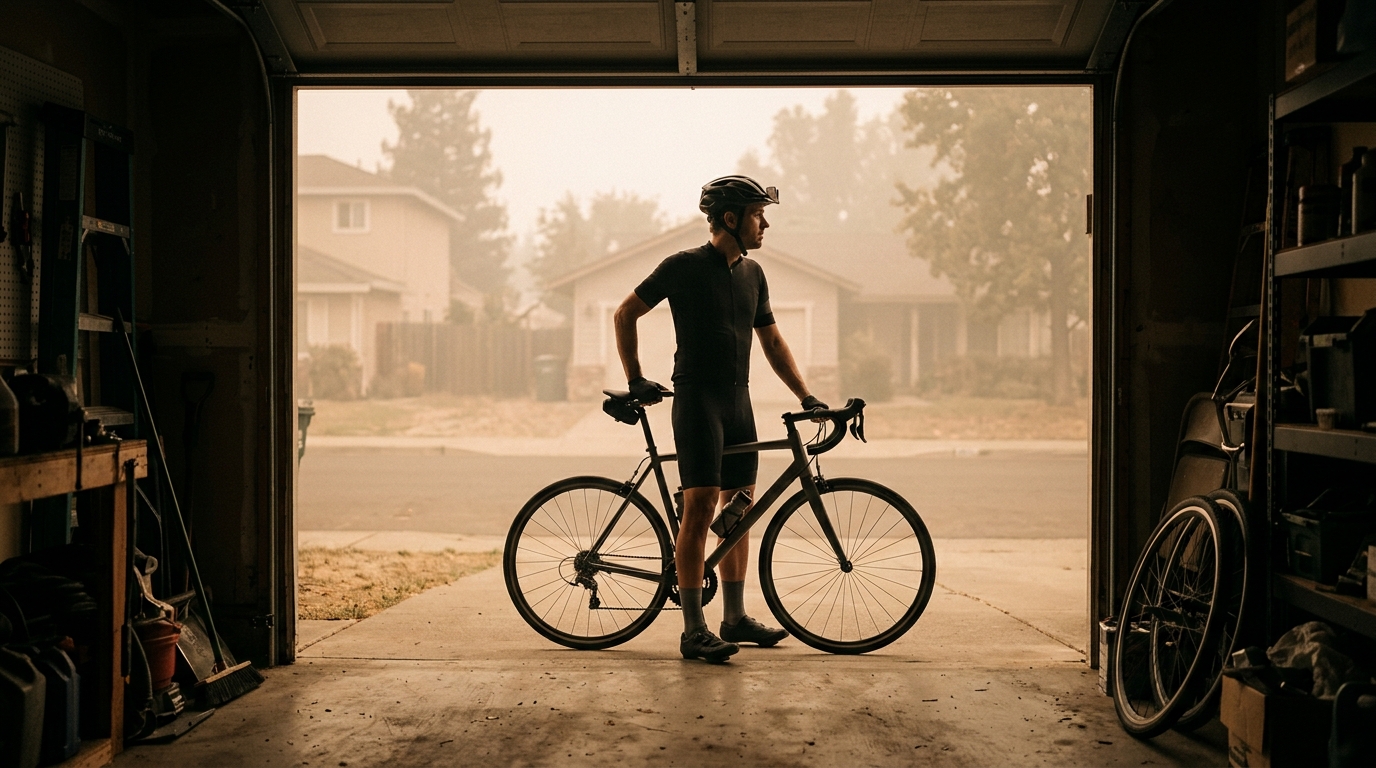
Radfahren bei Waldbrandrauch verdient eine eigene Kategorie, da sich die Bedingungen schnell ändern können und die visuellen Hinweise irreführend sein können. Rauch kann sich über Nacht absetzen, mit dem Wind ziehen, sich in Tälern konzentrieren oder in einem Teil der Stadt besser werden, während er sich in einem anderen verschlechtert.
Bei Rauchereignissen ist PM2.5 normalerweise der wichtigste Schadstoff, den du überprüfen solltest. Verlasse dich nicht allein auf die visuelle Klarheit. Eine Straße kann befahrbar aussehen, während die Feinstaubwerte immer noch ein Problem darstellen, und eine App kann hinter dem zurückbleiben, was dir Nase, Hals und Augen bereits sagen.
Wenn du Rauch riechst, Dunst siehst oder Reizungen spürst, stufe die Ausfahrt unabhängig von der Motivation herab. Rauchtage sind schlechte Kandidaten für lockere Gruppenausfahrten, da Intensität und Routenwahl vom ursprünglichen Plan abweichen können.
Die besten Optionen für Rauchtage sind in der Regel:
- Indoor-Ausdauertraining, wenn die Raumluft sauber ist.
- Indoor-Intervalle, wenn die Einheit wichtig ist und keine Symptome vorliegen.
- Mobilität, Kraft oder vollständige Erholung, wenn die Raumluft ebenfalls schlecht ist.
- Eine Routenänderung nur, wenn die lokalen Bedingungen deutlich besser sind und voraussichtlich stabil bleiben.
Wann du ein Training nach drinnen verlegen oder durch Erholung ersetzen solltest
Die Entscheidung ergibt sich aus der Frage, was das Training erreichen soll, und dann aus der Frage, ob die Luft diesen Zweck zu akzeptablen Kosten erfüllt.
Bei leichter Ausdauer ist der Zweck ein kostengünstiges Volumen. Wenn die Luft die Atemwege belastet oder das Fahren durch verkehrsreiche Korridore erfordert, ist die Einheit nicht mehr kostengünstig. Verlege sie nach drinnen, kürze sie oder fahre an einem anderen Tag.
Bei Tempo und Sweet Spot ist der Zweck eine anhaltende aerobe Arbeit mit moderatem Stress. Diese Einheiten können sich bei schlechter Luft täuschend gut anfühlen, weil sie nicht maximal sind, aber die Dauer kann dennoch eine erhebliche Exposition verursachen. Wenn die Luft fragwürdig ist, ist drinnen normalerweise die sauberere Ausführung.
Bei Schwellen- und VO2-max-Einheiten ist der Zweck Qualität bei hoher Ventilation. Dies sind die ersten Einheiten, die bei steigender Umweltverschmutzung nach drinnen verlegt werden sollten. Verschwende keinen wichtigen Intervalltag damit, zu versuchen, zu beweisen, dass der Plan schlechte Bedingungen überleben kann. Schütze den Stimulus.
Sei bei Erholungsausfahrten rücksichtslos. Wenn die Luft schlecht ist, überspringe sie. Eine Erholungsausfahrt ist nur nützlich, wenn sie die Durchblutung verbessert, Steifheit reduziert und dich danach besser fühlen lässt. Wenn sie die Atemwege reizt, hat sie ihre Aufgabe nicht erfüllt.
Indoor-Radfahren ist nicht automatisch sauber. Die Luftqualität beim Indoor-Cycling hängt vom Raum ab. Vermeide es, in der Nähe von Dämpfen, Staub, Rauch, Reinigungsmitteln oder in einer Garagenumgebung mit Abgasrisiko zu fahren. Halte Fenster während Rauch- oder hoher Umweltverschmutzungsperioden geschlossen, da offene Fenster die Raumluft verschlimmern können, anstatt sie zu verbessern. Ein Ventilator hilft bei der Kühlung, aber er bewegt auch alles, was sich im Raum befindet. Wenn du eine Filterung verwendest, lasse sie vor und während der Ausfahrt laufen und halte den Trainingsbereich langweilig: saubere Luft, guter Luftstrom, keine Reizstoffe.
Routenplanung und Standortwahl, die die Exposition reduzieren
Du kannst die regionale Luft nicht kontrollieren, aber du kannst die Dosis reduzieren.
Das Timing ist wichtig. Verkehrsdichte Straßen sind oft schlimmer, wenn Fahrzeuge dicht gedrängt und langsam sind. Das Ozonrisiko kann an heißen, sonnigen Tagen später relevanter sein. Rauch kann sich mit dem Wind verschieben und sich in bestimmten Geländeabschnitten absetzen. Die richtige Antwort ist nicht immer früh oder spät. Die richtige Antwort ist das Zeitfenster, in dem dein spezifischer Schadstoff niedriger ist und deine Route am wenigsten exponiert ist.
Die Routenwahl ist wichtiger, als Fahrer zugeben. Eine malerische Straße neben starkem Verkehr ist nicht dasselbe wie eine parallele, verkehrsarme Route. Ein Anstieg, der stehende Luft einschließt, kann sich schlechter anfühlen als ein exponierter Grat mit Luftstrom. Ein Radweg neben im Leerlauf stehenden Autos kann schlechter sein als ein längerer Umweg auf ruhigen Straßen.
Praktische Anpassungen:
- Wähle verkehrsarme Straßen statt direkter Straßen, wenn die Luft grenzwertig ist.
- Vermeide es, hinter Dieselfahrzeugen, Bussen oder langen Autoschlangen zu sitzen.
- Überspringe Tunnel und Unterführungen, wenn sich die Luft eingeschlossen anfühlt.
- Bevorzuge Routen mit Luftstrom gegenüber stagnierenden Korridoren.
- Halte die Intensität in der Nähe von Verkehr niedriger und spare Anstrengungen für sauberere Abschnitte auf.
- Fahre alleine oder mit disziplinierten Partnern, wenn du das Tempo kontrollieren musst.
Hier kann der Leistungsmesser helfen. Wenn die Bedingungen grenzwertig sind, begrenze die Leistung frühzeitig. Eine Ausfahrt, die wirklich einfach bleibt, begrenzt die Ventilation im Vergleich zu einer Ausfahrt, die ins Tempo abdriftet, weil die Gruppe ungeduldig ist. Die sauberste Route ist weniger nützlich, wenn die Ausführung zu einem rollenden Rennen wird.
Wie du die Luftqualität zusammen mit den Trainingsdaten protokollierst
Das nützlichste Luftqualitätssystem ist das, aus dem du lernen kannst. Das bedeutet, genügend Kontext zu protokollieren, um die Exposition mit Leistung und Erholung zu verbinden.
Übertreibe es nicht. Füge der Ausfahrtsdatei oder dem Trainingsprotokoll eine kurze Notiz mit der gleichen Konsistenz hinzu, die du für Hitze, Wind oder Verpflegung verwenden würdest. Mit der Zeit ergeben sich Muster.
Nützliche Felder zum Notieren:
- AQI-Kategorie zu Beginn der Ausfahrt.
- Hauptschadstoff, falls bekannt, insbesondere PM2.5 oder Ozon.
- Sichtbarer Rauch, Dunst, Geruch oder Verkehrsexposition.
- Routentyp: verkehrsarm, städtisch, industriell, Trail, Indoor.
- Symptome während und nach der Ausfahrt.
- Ungewöhnliche Herzfrequenz, wahrgenommene Anstrengung oder Atemanpassung.
- Erholungsmarker am nächsten Morgen, falls du einen verfolgst.
Das Ziel ist nicht, ein perfektes Umweltmodell zu erstellen. Das Ziel ist, deine eigene Reaktion zu verstehen. Einige Fahrer sind eindeutig empfindlicher gegenüber Rauch. Einige tolerieren moderate Umweltverschmutzung, haben aber Probleme mit Ozon. Einige sehen das größte Problem in der Erholung und nicht in der Leistung während der Ausfahrt.
Sobald du das Muster erkennst, wird die Entscheidung einfacher. Wenn PM2.5 plus Intensität dich zuverlässig husten lässt, gibt es keinen Grund, es weiter zu testen. Wenn ein moderater AQI auf einer verkehrsarmen Ausdauerstrecke keine Probleme verursacht, kannst du weniger reaktiv sein. Daten sollten dich ruhiger machen, nicht ängstlicher.
Die Entscheidungsregel, die dein Training auf Kurs hält
Für Radfahrer bedeutet Luftqualität, die Exposition an die Absicht anzupassen.
Saubere Luft bedeutet: Führe den Plan aus. Marginal schlechte Luft bedeutet: Schütze dein leichtes Volumen, wähle sauberere Routen und verlege die Intensität in sauberere Bedingungen. Schlechte Luft oder Symptome bedeuten Indoor-Training oder Ruhe.
Das ist die operative Regel. Lass nicht zu, dass ein grünes Trainingsfeld die tatsächlichen Kosten der Einheit übersteuert. Die besten Fahrer sind nicht diejenigen, die jede Ausfahrt erzwingen. Es sind diejenigen, die verstehen, welche Variablen an einem bestimmten Tag wichtig sind und den Trainingsprozess schützen. Luftqualität ist eine dieser Variablen. Nutze sie gut, und du bewahrst die Einheiten, die tatsächlich etwas bewirken.