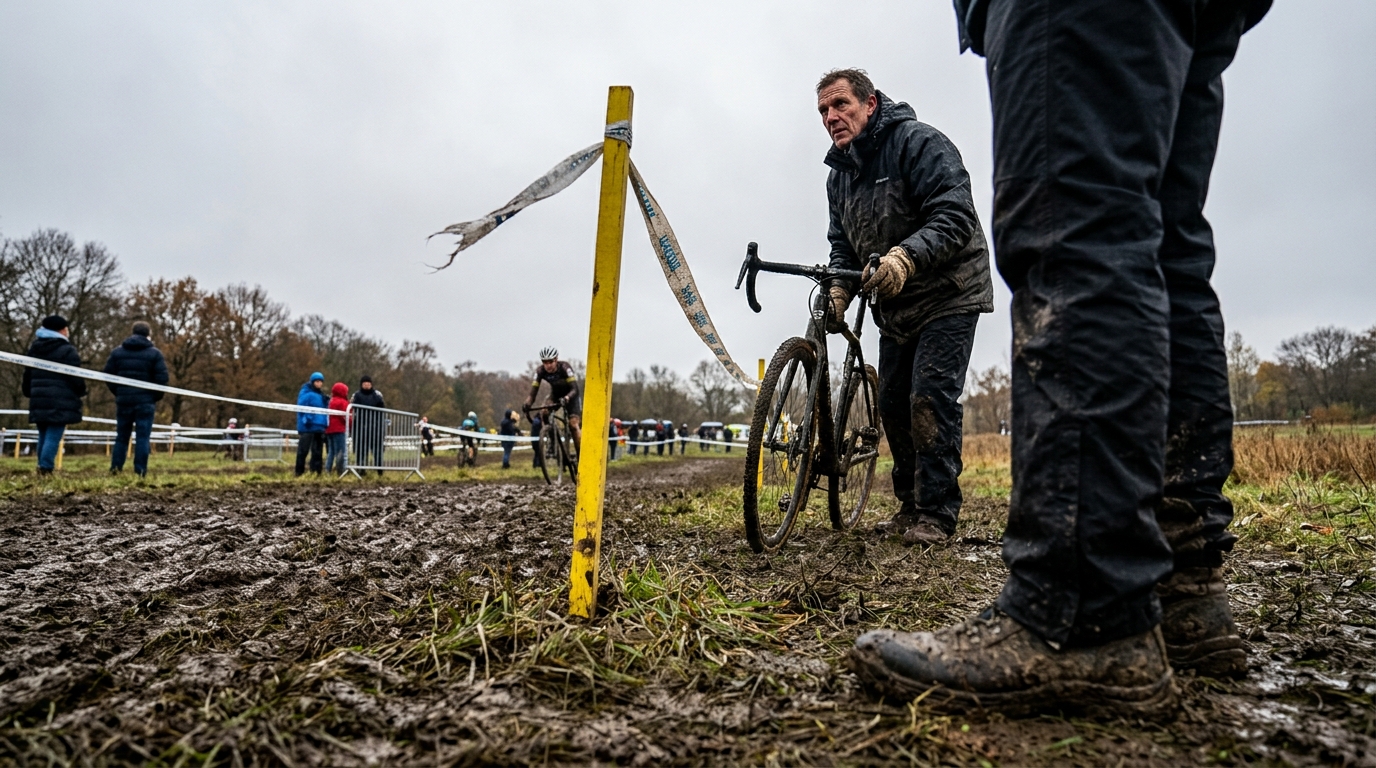
Image generated by our model.
training
Segment Training Without Wrecking Your Plan
How to chase KOMs, QOMs, and leaderboards with discipline while keeping the session, pacing, and post-ride analysis aligned with the plan.
When Segment Chasing Helps Training - and When It Hurts
Cycling segment training can be productive, but only when the segment serves the plan instead of replacing it.
The upside is obvious. A segment gives you a clear target, a defined course, and a result that reflects more than just fitness. Execution matters. Positioning before the start matters. Wind, surface, line choice, traffic, and pacing all matter. That makes using segments for cycling training a useful way to practice race-like intensity without needing a race number.
The problem is that segment chasing is emotionally sticky. It turns a planned endurance ride into an unplanned threshold test. It turns a recovery spin into a maximal sprint. It tempts you to keep digging after the useful training stimulus has already been created.
That is where riders get into trouble. A hard segment effort is not free. It carries muscular fatigue, autonomic stress, and often a bigger psychological cost than a normal interval because you are judging the result in public. If you stack too many attempts into a training week, you can end up with plenty of intensity but very little progression.
The rule is simple: chase segments when the effort matches the adaptation you are already trying to build. Do not chase them because the road happens to tilt up and an app tells you there is a leaderboard nearby.
Pick Segments That Match Your Current Training Goal
Good segment training starts before the ride. The most important decision is not how hard to go. It is whether the segment fits the current phase of training.
If your goal is aerobic durability, choose longer steady segments where the limiter is sustainable power and fatigue resistance. These are useful when you want to practice holding pressure after prior workload. The segment becomes a controlled test of whether your endurance is turning into repeatable output.
If your goal is threshold development, pick a segment that rewards even pressure and disciplined pacing. Avoid routes with repeated interruptions, technical corners, or terrain that forces big surges unless those demands match your event goals.
If your goal is anaerobic sharpness or punch, a shorter segment can be appropriate, but it should be placed carefully. These efforts create a lot of local muscular stress and can compromise the quality of later work. They are best used when freshness is part of the plan, not when you are supposed to be accumulating low-intensity volume.
If your goal is sprint work, choose a segment that lets you accelerate safely and hold the line without needing to gamble with traffic, intersections, or blind corners. A sprint segment that requires risk is not a training tool. It is just a bad decision with a leaderboard attached.
The segment should answer a training question. Can you sustain power over changing terrain? Can you pace a climb without overcooking the opening? Can you produce a hard effort late in a ride? Can you repeat a high-output surge after controlled work? If the segment does not answer a useful question, it is probably noise.
Build a Segment Attempt Into a Structured Workout
The cleanest way to use segment training is to place the attempt inside a workout that already has a purpose.
Start with the day's objective. If the plan calls for threshold work, the segment can be the main interval. If the plan calls for high-intensity work, the segment can be one of the key efforts. If the plan calls for endurance, the segment should either be skipped or ridden below maximal intent.
A good structure looks like this:
- Prepare with progressive riding rather than rolling straight into a maximal effort.
- Approach the segment with enough space to settle breathing, position, and gearing.
- Ride the attempt according to the target system, not according to panic.
- Continue the workout after the segment if the plan calls for more work.
- End the ride with the planned objective still intact.
Example: threshold day with a segment attempt
Say the planned session is a threshold-focused ride, and there is a steady climb or false-flat segment that matches the kind of pressure you were already meant to hold.
Use the segment as the main threshold interval, not as extra credit:
- Warm up progressively until threshold effort feels available rather than forced.
- Ride a controlled threshold block before the segment if that was already part of the plan, keeping it disciplined enough that it does not become a race before the race.
- Recover until breathing, cadence, and focus have reset.
- Enter the segment with speed, but do not sprint into it unless the segment specifically demands that kind of start.
- Ride the opening just under the ceiling you believe you can sustain, then build pressure once the effort has stabilized.
- After the segment, continue with the planned threshold work only if the quality is still there.
- If the segment leaves you unable to complete the rest of the session, record it honestly as the main workout and do not pretend it was a clean addition.
This is the distinction that matters. A segment attempt can replace a planned interval. It should rarely be bolted onto a demanding session without changing the cost of the day.
For riders using FTP, the segment target should be anchored to the type of effort you are trying to produce. That does not mean staring at the head unit every second. It means knowing the effort ceiling before the road starts. Any power target should be treated as a coaching heuristic, not a universal physiological rule.
The best segment attempts feel aggressive but not chaotic. You know where you can spend energy, where you need to protect momentum, and where the effort should become fully committed.
Pacing Short, Medium and Long Segments
Pacing a KOM, QOM, or leaderboard attempt depends on duration, terrain, and how much the segment punishes early mistakes.
The head unit should guide the effort, not run it. What you watch should change with the length of the segment.
Short segments
Short segments are often won or lost before the official start. Entry speed, gearing, body position, and the ability to accelerate without hesitation matter as much as average power.
The biggest mistake is starting from too low a speed or in the wrong gear, then producing a messy spike that fades before the segment is over. A cleaner approach is to roll in fast, accelerate decisively, and accept that power will be uneven if the segment is very short or technical.
Watch entry speed, gear selection, line choice, and whether you are still accelerating through the decisive part of the segment. A simple lap timer can help, but only if it does not pull your eyes away from the road.
Ignore average power smoothness. Ignore heart rate as a pacing tool here, because it will lag behind the effort. The file can be useful afterward, but during the attempt the priority is momentum, timing, and clean execution.
Medium segments
Medium segments are where many riders lose the most time through poor judgment. They feel short enough to attack from the gun, but long enough that an early overreach can ruin the back half.
The goal is controlled aggression. Start hard enough to establish speed, then settle before the effort becomes unrecoverable. If power is far above what recent training suggests you can sustain and breathing becomes ragged too early, you are probably borrowing against the finish.
Watch lap power, perceived exertion, cadence, and the shape of the terrain ahead. The most useful question is not whether the number looks heroic in the first part. It is whether the effort still feels repeatable enough to keep pressure on through the second half.
Ignore small speed changes that come from gradient, wind, or surface. Chasing every dip in speed with a surge usually wastes energy. Let power rise where speed is hardest to maintain, but do not turn every pitch into a sprint.
Long segments
Long segments reward restraint. The temptation is to ride the opening on adrenaline because the leaderboard is already in your head. That is usually the wrong move.
For longer efforts, start slightly under the sustainable ceiling you believe you can hold, then build if the effort is still under control. The early goal is to avoid creating a debt you cannot repay. Settle into pressure, keep cadence and breathing stable, and let the commitment rise as the segment unfolds.
Watch lap power, breathing, cadence, and heart-rate response. Heart rate should not be treated as a precise governor, but it can confirm whether the effort is drifting out of control. If power is steady while heart rate and RPE climb sharply, that tells you the cost of the effort is rising.
Ignore the urge to match your best-ever opening pace if the day, wind, or fatigue state is different. A strong long segment often looks almost boring in the file. Power is steady, surges are intentional, and the finish is hard because the pacing allowed it to be hard.
If you are unsure what power is realistic, use recent training and tools like the FTP estimator as a starting point, then adjust for freshness, terrain, and conditions.
Use Wind, Traffic and Route Context Without Fooling Yourself
Segment results are not pure fitness tests. That is part of what makes them interesting and part of what makes them easy to misread.
Wind can change everything. A tailwind can make a good ride look exceptional. A headwind can make excellent power produce an ordinary time. Crosswinds can matter too, especially on exposed roads where holding speed and line becomes harder.
Traffic and route context matter as well. A clean run through a safe, uninterrupted section is different from a ride where you slow for cars, pedestrians, junctions, or rough surface. Never treat a compromised attempt as a fitness failure. Also, never treat a perfect-condition result as a permanent reflection of your true level.
This is where cycling segment analysis needs restraint. The leaderboard gives you a ranking, not a physiological diagnosis. Your power file, heart-rate response, perceived exertion, and the ride context tell the more useful story.
Before the attempt, ask:
- Is the route safe enough to ride hard without gambling?
- Is the wind direction likely to help, hurt, or distort the result?
- Is the surface predictable?
- Can you enter the segment at speed without creating risk?
- Does the segment finish in a place where you can safely recover?
A segment that requires luck is not a training benchmark. A segment you can repeat safely in different conditions becomes a much better tool.
Analyze the Attempt: Power, Fatigue and Execution
After the ride, do not just check the rank. The ranking is the least controllable output.
Start with execution. Did you start too hard, too soft, or about right? Did power collapse in the final section? Did you surge in places that mattered, or did you waste energy responding to emotion? Did cadence and position support the effort, or did you grind because gearing was wrong?
Then look at the power curve in context. If the segment produced a best recent effort, that may signal improving form, especially if it happened inside a normal training ride rather than on a fully rested day. If the power was strong but the time was not, conditions or route execution may explain the gap. If the time was strong but the power was ordinary, you probably had favorable conditions, better momentum, or both.
Fatigue is the next layer. A segment attempt late in a ride means something different from the same attempt when fresh. If you can hold strong power after accumulated workload, that is a useful sign for road racing, gravel, fondos, and long climbs. If your power drops sharply whenever the effort comes after prior work, your limiter may be durability rather than peak output.
Also check what the attempt did to the rest of the session. If you still completed the planned work, the segment was integrated well. If the attempt caused the rest of the ride to fall apart, it needs to be treated as the main session next time.
Post-ride segment checklist
Use the same fields each time so the segment becomes a repeatable training marker rather than a one-off emotional result:
- Segment duration.
- Average power and normalized power, if available.
- Power fade across the effort, especially whether the final section collapsed or held.
- Wind direction and whether it helped, hurt, or changed during the attempt.
- Entry speed and whether you arrived in the right gear.
- RPE during the opening, middle, and finish.
- Heart-rate response, including whether it rose normally, lagged, or drifted sharply.
- Whether the rest of the planned workout was completed.
That last field is the honesty check. If the leaderboard improved but the workout failed, the attempt may still have value, but it was not a clean training integration.
The best analysis ends with a decision, not just a conclusion. Keep the segment in rotation, choose a better day, adjust pacing, change the warmup, or stop chasing that segment because it does not serve the plan.
How Often to Chase Segments Without Derailing Progress
The right frequency depends on training phase, recovery capacity, and how costly the attempts are. But the principle is consistent: segment chasing should be occasional and intentional.
During a focused build, use segment attempts as replacements for similar hard work, not as extra stress layered on top. If you chase a hard climb, that may be your threshold session. If you chase a punchy rise, that may be your anaerobic work. Treat it with the same respect you would give any demanding interval set.
During easier periods, avoid turning every ride into a test. This is where many motivated riders quietly sabotage adaptation. They never ride easily enough to recover, but they also never structure intensity well enough to progress. The result is a middle zone of constant fatigue and inconsistent performance.
A practical filter is to ask before each attempt: if this effort goes badly, will it still have served today's training purpose? If the answer is no, skip it. If the answer is yes, ride it with intent.
Segment chasing is most valuable when it sharpens training rather than distracting from it. Pick the right segment, place it inside the right workout, pace it according to the demand, and analyze the result with more curiosity than ego.
That is how segment training becomes more than hunting KOMs, QOMs, or leaderboard positions. It becomes a controlled way to test form, practice execution, and turn competitive instinct into useful fitness.