Produktroute
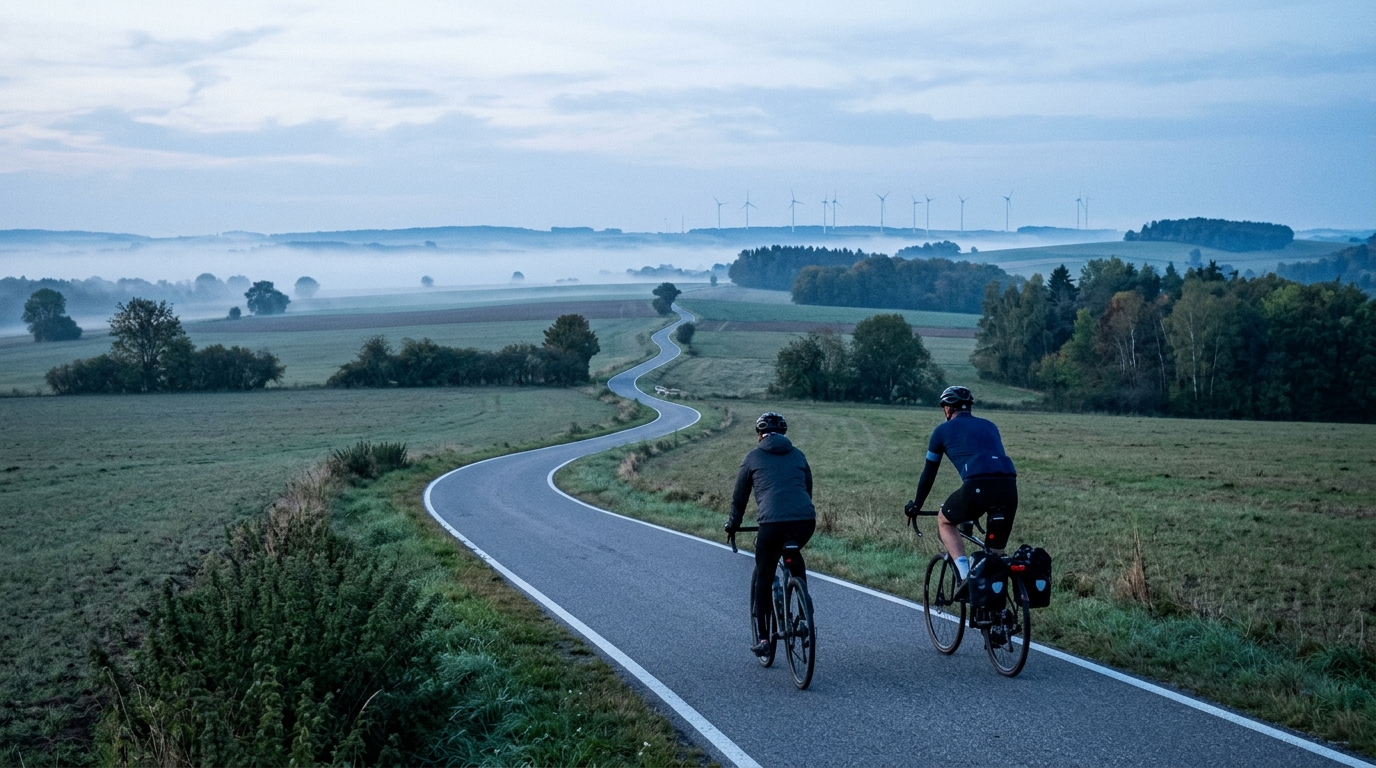
A 105 km asphalt point-to-point route in Germany with 727 m of elevation gain, built more around steady endurance than major climbs.
- Distanz
- 105km
- Höhenmeter
- 727m
- Untergrund
- —
- Form
- Punkt-zu-Punkt
Die Route
Höhenprofil
Produktroute cycling route overview
The Produktroute cycling route is a 105 km asphalt ride in Germany with 727 m of elevation gain. The key detail is not just the distance, but how that distance pairs with the climbing load. At 105 km, this is long enough to require real pacing, fueling, and route planning, but the 727 m of gain suggests the difficulty is more cumulative than defined by a major climb.
This is not a loop, which changes the ride more than many riders account for. A point-to-point route rewards planning. You need a clear start and finish strategy, whether that means transport, a pickup, or accepting that the full day is built around completing the line rather than returning to the same base.
Terrain and ride character
With asphalt as the listed surface, the Produktroute is best approached as a road-focused endurance ride. The absence of listed notable climbs matters. It points toward a route where the elevation is likely distributed across the day rather than concentrated into a signature ascent. That kind of profile can be deceptively wearing because there may be fewer obvious moments where the ride announces itself as difficult.
The practical takeaway is simple: do not ride the opening section like a short training loop. A 105 km point-to-point route with 727 m of gain is exactly the kind of ride where small surges early can become costly late. Keep the pressure controlled, especially if riding in a group, and treat the route as an endurance effort first.
Pacing and fueling notes
The most efficient way to ride this route is to keep intensity stable and avoid turning every rise into a test. Without a listed major climb to structure the effort, pacing has to come from discipline rather than terrain. If you use power, anchor the day below your hard threshold work and leave room for the final part of the route. If you are setting zones, a current FTP estimate is more useful here than guessing by feel once fatigue sets in.
Fueling should start early because the route length is the main challenge. Even with moderate total elevation gain, 105 km is enough distance for under-fueling to show up before the finish, especially on a point-to-point ride where stopping options and timing need to be planned rather than assumed.
Practical setup
A road bike setup is the natural fit for an asphalt route of this distance. The bigger preparation point is logistical: because the Produktroute is not a loop, confirm how you will handle the finish before starting. Build the day around steady execution, not improvisation. The route is unlikely to be defined by one decisive climb, but its length gives it enough weight that poor pacing, late fueling, or weak transport planning can still turn a manageable ride into a grind.
Ähnliche Routen
3-Länder-Radweg
A 302.2 km asphalt route in Germany with 1512 m of climbing and point-to-point logistics shaped by the Reußenkreuz climb.
7 Peaks Alpine Challenge
A 110.9 km point-to-point assault through the Victorian Alps, stacking 3404 metres of climbing across relentless, wind-swept high-country ascents.
Aberdare Range
A 46 km asphalt point-to-point through Kenya's Central Highlands that trades big climbs for a relentless 1,700 m of rolling grind.
Abra Málaga
A 45-kilometer point-to-point ribbon of asphalt through Peru's Sacred Valley, climbing 1,699 relentless meters into the high Andes.
Afriski Mahlasela Pass
A 112.8 km asphalt ascent through the Maloti Mountains, climbing 3,384 m to the roof of southern Africa via the storied Mahlasela Pass.
Ahr Cycleway
An 82.9 km asphalt point-to-point route with 541 m of gain, the Ahr Cycleway is a steady endurance ride rather than a climb-focused day.