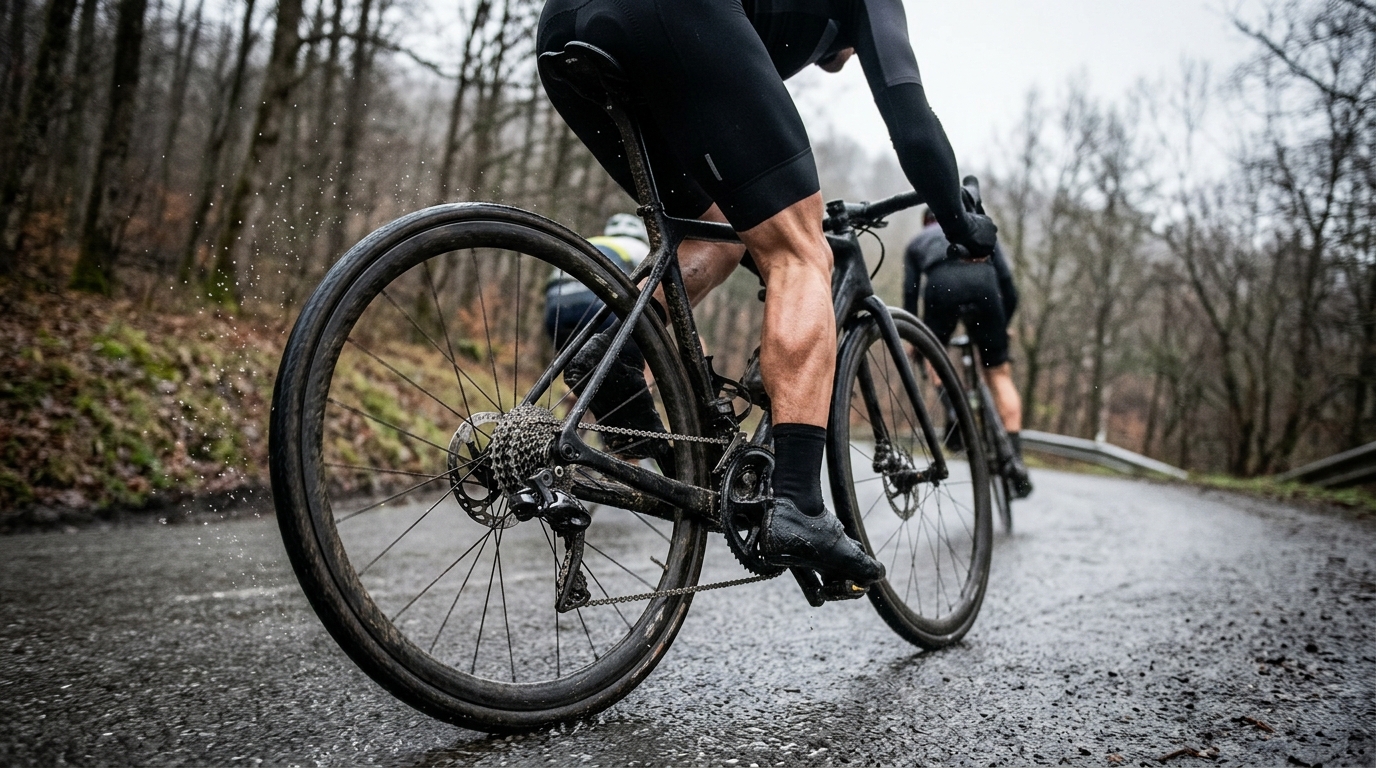
Bild von unserem Modell generiert.
cycling base training
Cycling Base Training: Build Aerobic Fitness With Data
Use cycling base training to build aerobic durability, progress long rides, add controlled intensity, and interpret the data without drifting into fatigue.
What Base Training Is Really For
Cycling base training is not just riding slowly and waiting for fitness to appear. Done well, it is the period where you build the aerobic durability that lets harder training work later.
The point is not to prove fitness every ride. It is to increase the amount of useful aerobic work you can absorb while staying fresh enough to repeat it. That distinction matters because the base phase is won by consistency, not by isolated impressive files.
The key word is absorb. Endurance riding only helps if the work sits below the point where it creates excessive stress. If every aerobic ride becomes a quiet race against last week, you are no longer building the platform. You are spending it.
A productive base phase should leave you with clear signs:
- You can ride longer at an easy aerobic effort without heart rate drifting as much.
- You recover from endurance rides predictably.
- You can add controlled pressure without having to cut the rest of the week apart.
That is why data matters. Power shows the external work. Heart rate shows the internal cost. Training load shows accumulated stress. RPE tells you whether the system feels stable or strained.
None of those metrics is decisive alone. Together, they keep the aerobic block honest.
Set Your Aerobic Zones Before You Add Volume
Before adding volume, set your zones well enough that endurance rides are actually endurance rides.
If your functional threshold power is outdated, your power targets will be wrong. If your heart rate zones are based on a stale test or a device estimate you have never checked against real riding, your supposed easy work may sit too high. That matters because a small intensity error, repeated across a winter endurance block, becomes a large training mistake.
Use power when you have it, heart rate as the cost signal, and RPE as the referee. A proper aerobic endurance ride should feel controlled early and still controlled late. You should not need to bargain with yourself to keep the effort going.
A simple setup process:
- Refresh your FTP estimate if recent riding makes the old value obviously wrong, using a recent hard effort or a tool such as the FTP estimator.
- Identify the power range where breathing is steady and you are not having to concentrate to hold the effort.
- Cross-check that heart rate settles into the ride rather than climbing continuously from the start.
- Note how the ride feels the next day, because the cost of a base ride is not fully visible in the file itself.
The mistake is treating endurance as a power target only. It is better to think of it as a physiological state. If you are tired, hot, under-fueled, dehydrated, or stressed, the same power can cost more. In that case, forcing the target is not discipline. It is poor execution disguised as discipline.
How to Progress Long Rides Without Overreaching
Long rides are the backbone of the base phase, but the progression has to be controlled enough to protect the rest of the week.
The long ride should push durability forward without making the next few sessions worse. If it leaves you flat and negotiating with yourself on every ride that follows, it may have been hard, but it was not well placed.
Progression should happen through a single lever at a time:
- Extend the long ride while keeping the effort clearly aerobic.
- Keep duration stable and make the ride smoother, steadier, and better fueled.
- Add controlled tempo late in the ride only after the same endurance structure feels repeatable.
- Keep the long ride unchanged while adding a little total aerobic work elsewhere in the week.
The tradeoff is simple. More volume gives you more aerobic stimulus, but only if you can recover from it. More intensity makes the file look more productive, but it raises the cost of the ride and can reduce the total endurance work you can handle across the week. The best base training choice is not the hardest option. It is the option that lets the next ride stay useful.
Use a practical decision framework:
- Progress when the long ride finishes under control, heart rate behavior is normal for the conditions, and the next endurance ride feels routine.
- Hold volume when the ride is completed well but the late section is less stable than usual, or when heart rate drift is higher than expected without an obvious explanation.
- Back off when the long ride compromises the next sessions, RPE is rising at familiar power, sleep worsens, motivation drops, or easy riding no longer feels easy.
This is where base miles can be misleading. More miles are not automatically better. More repeatable aerobic work is better.
When to Add Tempo, Sweet Spot, or Short Intensity
Pure endurance work is useful, but most experienced riders eventually need some controlled pressure inside the base block. The question is not whether tempo or sweet spot can work. It is whether the athlete can absorb it without shrinking the aerobic volume that the block is supposed to build.
Tempo fits well when endurance rides are stable but you need a little more muscular pressure. A practical version is to place a controlled tempo insertion inside an otherwise aerobic ride, preferably where terrain lets you hold the effort smoothly. It should feel like firm aerobic work, not like a threshold test that happens to be labeled base.
Sweet spot is more potent and less forgiving. It can build muscular endurance efficiently, but it also takes up recovery space. That is the hidden cost. If sweet spot makes you cut back the long ride, flatten the following endurance sessions, or turn the week into a recovery scramble, it is no longer supporting the base phase. It is crowding it out.
Short intensity has a different job. Brief high-cadence efforts, controlled rises, or short accelerations can keep the legs responsive without turning the session into a hard day. This is useful for riders who feel stale after long stretches of steady winter riding, but the execution has to stay restrained. The goal is coordination and sharpness, not anaerobic fatigue.
A controlled week might look like this in principle:
- Most rides stay aerobic and repeatable.
- The long ride remains the anchor, not a casualty of midweek ambition.
- A tempo or sweet spot insertion appears only when the surrounding endurance work is already stable.
- If the added work makes the next ride worse, the insertion is reduced or removed before more volume is added.
That last point is the key analytical conclusion. Intensity is not free. It buys adaptation by spending recovery. In a base phase, that purchase only makes sense when it improves the week rather than taking it over.
Use Decoupling, Training Load, and RPE to Check Progress
Progress in an aerobic block is not always visible through peak power. Chasing peak power too often during base can pull you away from the adaptations you are trying to build.
Better signals are steadiness, durability, and recovery.
Decoupling is one of the most useful checks. When power stays steady but heart rate climbs disproportionately, the body is paying more for the same output. Some drift is normal, especially when conditions are difficult or fueling is poor. But if comparable rides show less drift over time, that is a strong sign your aerobic system is becoming more durable.
This changes how you interpret a ride file. A ride with modest power and stable heart rate may be more valuable than a slightly higher-power ride that comes with rising cardiac cost and heavy legs the next day. The first file suggests the system is absorbing work. The second may simply show that you forced the target.
Review decoupling after each comparable long ride or steady endurance session, but make decisions from the trend, not a single file. One strange ride can be noise. Repeated drift in similar conditions is a signal.
Training load gives the wider picture. The goal is not to drive load upward at all costs. It is to build a sustainable ramp where workload rises without a matching rise in exhaustion. If load climbs while RPE stays controlled and recovery remains predictable, you are probably adapting. If load climbs and every ride feels heavier, the plan is outrunning the rider.
RPE is the underused metric. Data-driven athletes sometimes treat subjective effort as soft, but it is often the first warning that the same power is costing more. If your normal endurance ride suddenly feels sticky, that is information. The power file may look acceptable, but the internal cost has changed.
Use a short post-ride note:
- Did the effort feel controlled from start to finish?
- Did power fade late?
- Did heart rate behave normally for the conditions?
- Did the legs feel normal the next morning?
- Did the session make the next ride better or worse?
That combination gives a better read than any single score.
Check the Confounders Before You Change the Plan
Base-training data is easy to misread when the conditions around the ride change. Before you decide your zones are wrong or your fitness has stalled, run through the obvious confounders.
- Heat can raise heart rate for the same power and make decoupling look worse than your fitness actually is.
- Dehydration can produce the same pattern, especially late in longer rides.
- Caffeine can lift heart rate and make a normal endurance ride look internally more expensive.
- Poor sleep can raise RPE before power meaningfully drops.
- Accumulated fatigue can make familiar aerobic work feel heavy even when the file looks normal.
- Under-fueling can create late power fade, rising RPE, and a misleading impression that your endurance is worse than it is.
The interpretation rule is straightforward. If one ride looks off, check the environment and lifestyle factors first. If similar rides keep showing the same pattern after those factors are controlled, treat it as a training signal.
Common Base Training Mistakes That Stall Fitness
The most common mistake is riding endurance days too hard. It feels productive because the file looks better, but it often reduces the total aerobic work you can handle. The ride becomes costly enough that the next sessions lose quality, so the week delivers less useful volume even though individual rides look more ambitious.
Another mistake is adding volume without improving fueling. Aerobic riding still requires energy. Under-fueled base rides can teach you to survive, but they often reduce quality, increase fatigue, and make the next day worse. If the goal is repeatable training, fueling is part of the workout.
A third mistake is letting sweet spot become the default. Sweet spot has a place, but when it fills the gaps between endurance rides, the week can become too dense to absorb. The rider feels busy, the training load rises, and the aerobic foundation never gets the stable repetition it needs.
A fourth mistake is ignoring strength and mobility until problems appear. A base phase increases repetitive load. If position, stability, or tissue tolerance is poor, more riding can expose the issue. The gym does not need to become the main event, but basic strength work can make the bike training more durable.
Finally, many riders test too often. Regular testing has value, but constantly chasing validation disrupts the block. You do not need a maximal effort every time you wonder whether training is working. If familiar endurance power feels easier, decoupling improves, and recovery is stable, the signal is already there.
A Four-Phase Base Training Progression
A useful base progression moves from control, to durability, to controlled pressure, to consolidation. The exact rides depend on your history, schedule, and recovery, but the logic is consistent.
Phase One: Establish Control
Start by making endurance rides genuinely aerobic. Cap intensity on climbs, avoid chasing average speed, and finish rides feeling like you could repeat similar work soon.
The data goal is clean execution: stable power, predictable heart rate, and low residual fatigue. If you cannot repeat the same basic ride without feeling drained, intensity is too high, volume is too much, or recovery is not supporting the plan.
Phase Two: Extend Durability
Once the routine feels stable, extend the long ride or add more total endurance work, but do not raise intensity at the same time. This is where many riders get impatient, but patience is the point. The adaptation comes from repeating aerobic work without stacking unnecessary cost.
Watch decoupling on longer rides. If heart rate drift increases as duration grows, hold the progression until the same type of ride becomes steadier. Holding is not stagnation. It is letting the body catch up to the workload.
Phase Three: Add Controlled Pressure
When endurance volume feels repeatable, add a restrained tempo or sweet spot insertion inside an otherwise aerobic week. Do not place it on top of a week that is already hard. The insertion should leave the long ride intact and the following endurance rides normal.
If the added pressure improves the week, keep it. If it makes everything else worse, reduce it before adding more volume. That is the simplest way to stop controlled intensity from becoming accidental overload.
Short intensity can also appear here, but keep it purposeful. The aim is to maintain leg speed and coordination, not to create another hard session by mistake.
Phase Four: Consolidate and Prepare the Next Block
The final part of the base block should not be a desperate push. It should consolidate the work so you enter the next phase fresher and more durable, not merely more tired.
Keep the long ride, retain controlled pressure only if you are absorbing it well, and use the rest of the week to protect aerobic consistency. Review the trend rather than one standout ride:
- Are similar endurance rides easier?
- Is heart rate more stable at familiar power?
- Can you finish long rides without fading?
- Is training load rising without constant heaviness?
- Do you feel ready to add more specific work?
If the answer is yes, the base phase has done its job. You have not just collected winter miles. You have built an aerobic platform that can support more demanding training.
That is the real value of a data-driven approach. It turns winter riding from a loose collection of sessions into a clear progression. You know why each ride exists, how hard it should be, and what signal tells you whether it is working.