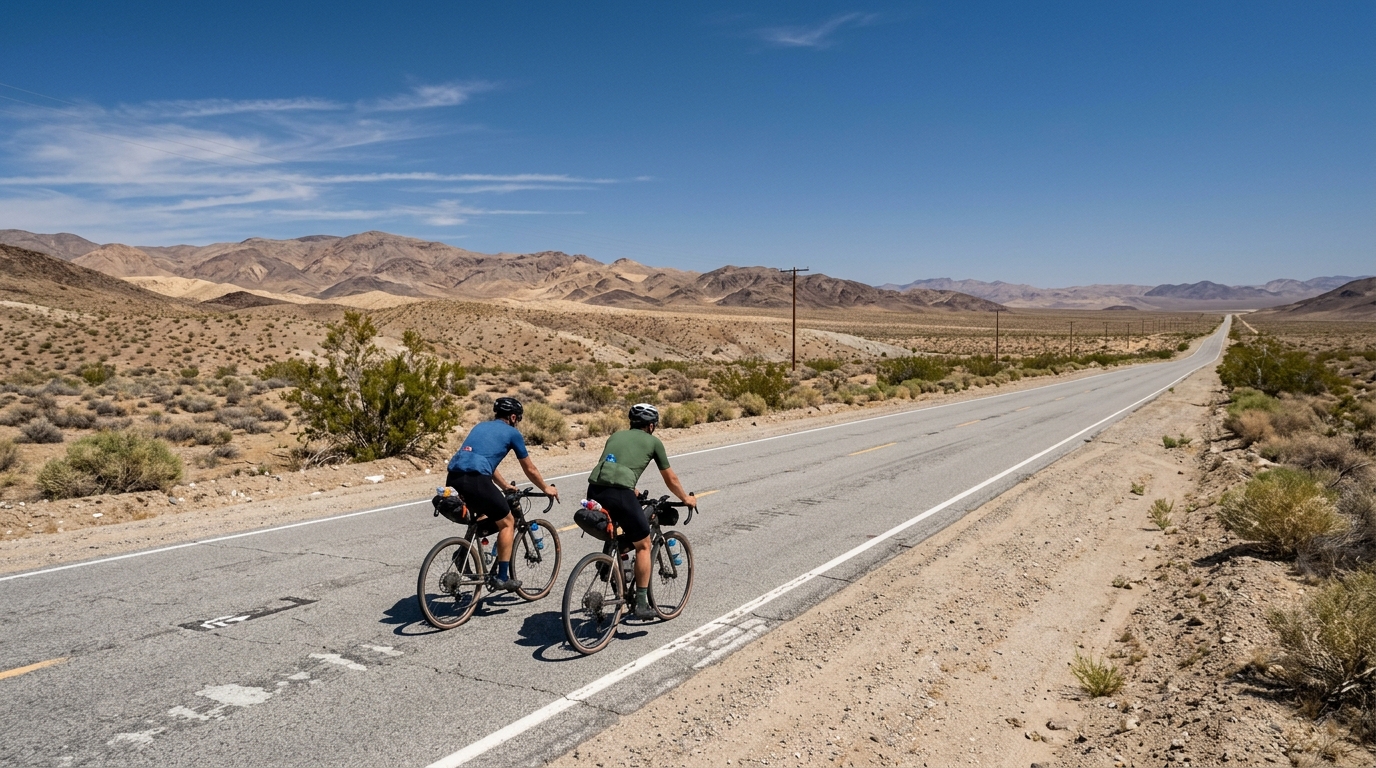
U.S. Bicycle Route 787
A practical guide to the 97.2 km U.S. Bicycle Route 787 cycling route, an asphalt point-to-point ride with 393 m of climbing.
- Distanca
- 97.2km
- Penjanje
- 393m
- Podloga
- —
- Oblik
- Od tačke do tačke
Ruta
Profil visine
U.S. Bicycle Route 787 cycling route overview
U.S. Bicycle Route 787 is a 97.2 km asphalt route with 393 m of elevation gain. The important takeaway is the balance between distance and climbing. This is not a route defined by a single decisive ascent or a named climb. It is a point-to-point ride where the physical demand is more likely to come from staying efficient over the full distance than from managing one obvious hard section.
That makes it a good route for riders who want steady endurance work without the tactical reset that comes with a loop. Because it does not return to the start, logistics matter more than they would on a local circuit. Plan the finish before rolling out, especially if the ride is part of a larger training day or travel schedule.
Terrain and ride character
With 393 m of elevation gain across 97.2 km, the climbing load is moderate. The route should feel more rolling and aerobic than mountainous, assuming the gain is spread across the ride. There are no notable climbs listed, which supports that reading: the effort profile is likely shaped by accumulation rather than any single feature that forces a major pacing decision.
That changes how to ride it. Instead of saving everything for a summit, the better approach is to keep the pressure controlled and avoid small over-threshold surges that quietly drain the legs. On a route like this, the strongest riders are often the ones who keep the power and fueling consistent rather than the ones who chase every rise.
For structured training, U.S. Bicycle Route 787 fits well as an endurance or tempo-focused ride. Riders using /glossary/ftp should treat the distance as the main limiter and keep intensity honest early. The modest climbing means there may be fewer natural recovery moments than on a hillier route, so smooth pacing matters.
Surface and equipment notes
The listed surface is asphalt, so standard road cycling equipment is the natural fit. Tire choice can lean toward efficiency rather than off-road durability, though comfort still matters over 97.2 km. A setup that feels fast for the first hour but harsh late in the ride is the wrong trade-off here.
Because the route is point-to-point, carry what is needed to finish without assuming an easy return to the start. That means checking repair kit, food, and water before departure. The route stats do not point to extreme climbing demands, but the distance is long enough that under-fueling will show up before the finish.
How to pace it
The simplest pacing model is restrained early, steady through the middle, and only harder late if the legs are still responsive. The absence of notable climbs removes the need for climb-specific pacing, but it also removes an obvious place to regroup. Treat the route as one continuous endurance problem: keep the effort sustainable, limit unnecessary accelerations, and let the final portion decide whether there is room to press on.
Slične rute
3-Länder-Radweg
A 302.2 km asphalt route in Germany with 1512 m of climbing and point-to-point logistics shaped by the Reußenkreuz climb.
7 Peaks Alpine Challenge
A 110.9 km point-to-point assault through the Victorian Alps, stacking 3404 metres of climbing across relentless, wind-swept high-country ascents.
Aberdare Range
A 46 km asphalt point-to-point through Kenya's Central Highlands that trades big climbs for a relentless 1,700 m of rolling grind.
Abra Málaga
A 45-kilometer point-to-point ribbon of asphalt through Peru's Sacred Valley, climbing 1,699 relentless meters into the high Andes.
Afriski Mahlasela Pass
A 112.8 km asphalt ascent through the Maloti Mountains, climbing 3,384 m to the roof of southern Africa via the storied Mahlasela Pass.
Ahr Cycleway
An 82.9 km asphalt point-to-point route with 541 m of gain, the Ahr Cycleway is a steady endurance ride rather than a climb-focused day.