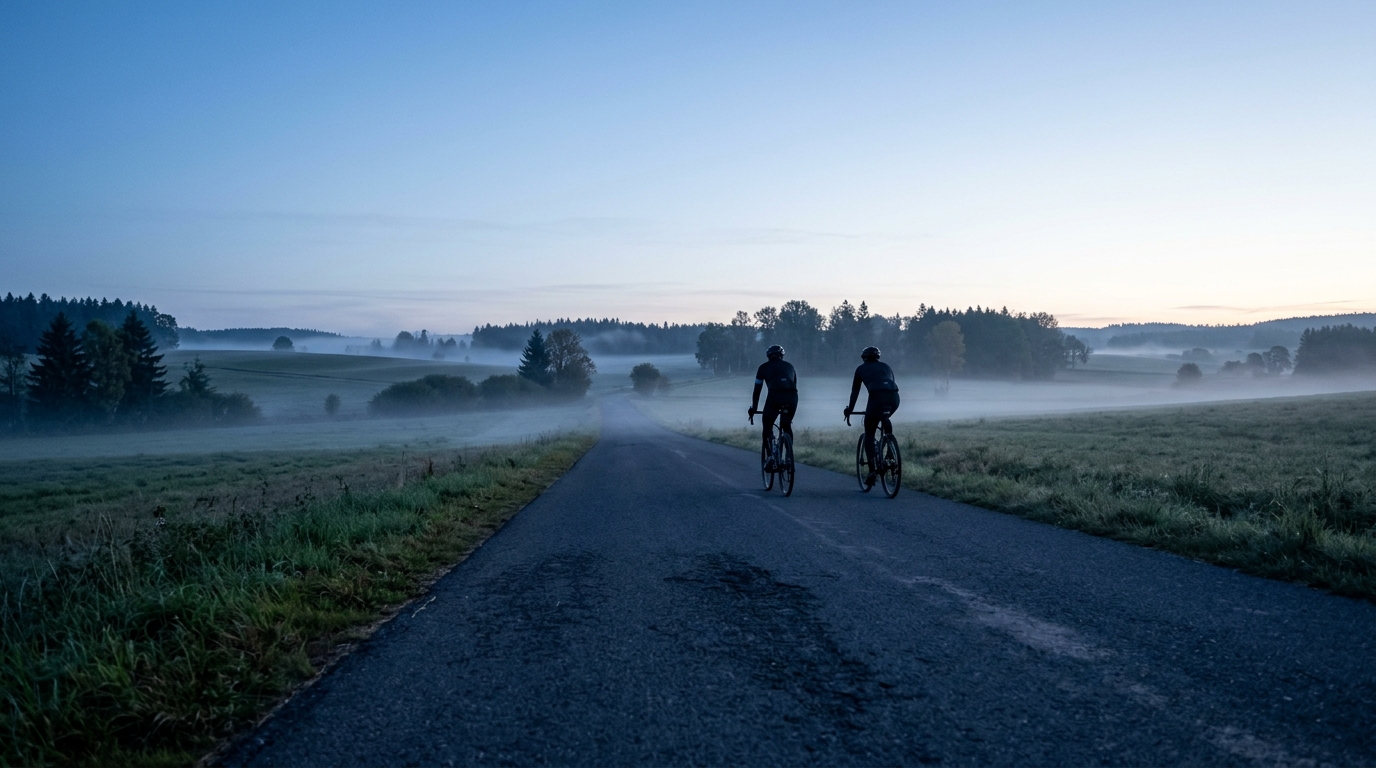
Bayerisch-Böhmischer Freundschaftsweg
A 97.4 km asphalt point-to-point route in Germany with 874 m of climbing and a steady endurance character rather than a single defining climb.
- Distanca
- 97.4km
- Penjanje
- 874m
- Podloga
- —
- Oblik
- Od tačke do tačke
Ruta
Profil visine
Bayerisch-Böhmischer Freundschaftsweg cycling route
The Bayerisch-Böhmischer Freundschaftsweg is a 97.4 km asphalt route in Germany with 874 m of elevation gain. The important detail is not just the total climbing, but how that climbing changes the ride. This is not listed as a route with notable climbs, so the difficulty is more likely to come from accumulated elevation, pacing drift, and the way repeated rises interrupt rhythm rather than from one obvious summit effort.
That makes it a steady endurance day rather than a pure climbing test. Strong riders can turn it into a controlled tempo ride, but anyone who treats the early kilometres too casually may find the climbing total starts to matter late. The route asks for patience: stay smooth, avoid unnecessary spikes, and let the terrain come back to you.
Terrain and ride character
The full route is on asphalt, which gives it a more predictable road feel and makes it well suited to a road bike or a fast all-road setup. Because the surface is not the limiting factor, the main performance variable becomes pacing. On a route just under 100 km, small over-threshold efforts can stack up quickly, especially when the climbing is spread through the ride rather than concentrated into a single named climb.
With 874 m of gain, this is not a flat transfer ride. It sits in the space where endurance fitness matters more than pure climbing specialization. The best approach is to ride the opening section below the effort you think you can sustain, then build into the route once the elevation pattern is clear. If you ride by power, anchor the day around sustainable endurance and tempo rather than chasing every rise above /glossary/ftp.
Practical notes
This is not a loop, so logistics matter. Plan the start and finish before thinking about pace: transport, return options, or a point-to-point pickup will shape the day as much as the terrain. A non-loop route can be excellent for a committed endurance ride, but it leaves less margin for improvisation if weather, fatigue, or mechanical issues change the plan.
Key setup choices are straightforward:
- Use efficient tires suited to asphalt rather than prioritising rough-surface protection.
- Carry enough food for a ride that can stretch due to steady elevation gain.
- Pace the early kilometres conservatively because the climbing load is cumulative.
- Treat the route as point-to-point and confirm finish logistics in advance.
The Bayerisch-Böhmischer Freundschaftsweg cycling route is best understood as a long, paved endurance ride with enough climbing to demand discipline, but without a listed marquee climb that dictates the entire day.
Slične rute
3-Länder-Radweg
A 302.2 km asphalt route in Germany with 1512 m of climbing and point-to-point logistics shaped by the Reußenkreuz climb.
7 Peaks Alpine Challenge
A 110.9 km point-to-point assault through the Victorian Alps, stacking 3404 metres of climbing across relentless, wind-swept high-country ascents.
Aberdare Range
A 46 km asphalt point-to-point through Kenya's Central Highlands that trades big climbs for a relentless 1,700 m of rolling grind.
Abra Málaga
A 45-kilometer point-to-point ribbon of asphalt through Peru's Sacred Valley, climbing 1,699 relentless meters into the high Andes.
Afriski Mahlasela Pass
A 112.8 km asphalt ascent through the Maloti Mountains, climbing 3,384 m to the roof of southern Africa via the storied Mahlasela Pass.
Ahr Cycleway
An 82.9 km asphalt point-to-point route with 541 m of gain, the Ahr Cycleway is a steady endurance ride rather than a climb-focused day.