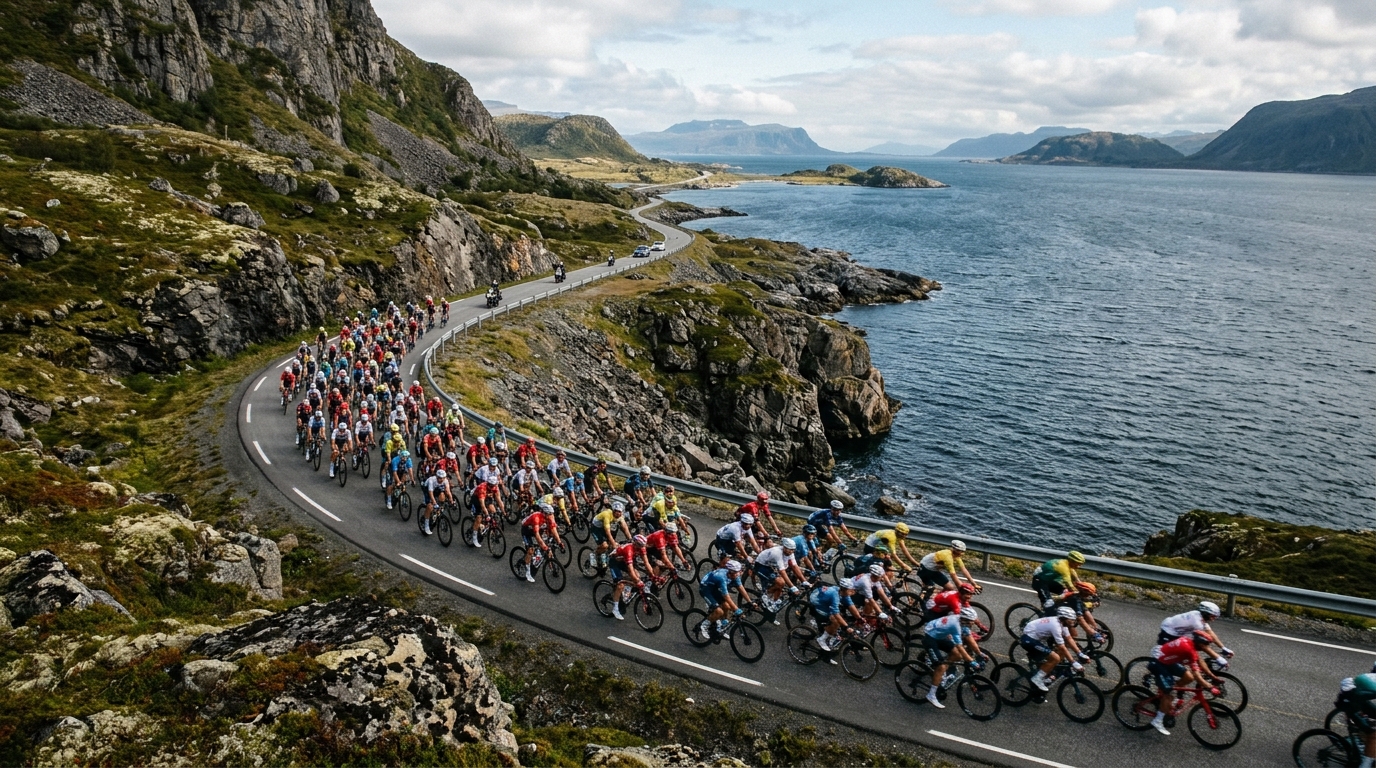
Sliku je generisao naš model.
Pregled etape
Erlend Blikra wins Stage 2 as Lonardi takes Arctic Race lead
Erlend Blikra won the 180km hilly stage to Andenes, with Giovanni Lonardi third on the day and moving into the race lead.
Erlend Blikra of UXM men won Stage 2 of the Arctic Race of Norway, taking the hilly 180km run from Bø i Vesterålen to Andenes in 3h 56' 49.
The stage profile pointed toward a day where positioning and durability mattered more than pure climbing separation. With no summit finish on offer, the terrain could make the race selective, but it did not produce visible time gaps at the head of the result. Ethan Vernon finished second for NSN, while Giovanni Lonardi took third for PTV, both on the same time as Blikra.
A hilly stage decided without GC separation
The key takeaway is that the course was hard enough to shape the front of the race, but not hard enough - or not raced in a way - to split the leading finishers on time. Riley Pickrell, Anders Foldager, Jason Tesson, Lorrenzo Manzin, Nikiforos Arvanitou, Ronan Augé, and Brody McDonald all filled out the top ten on the same time.
That matters because hilly transition-style stages often sit in the awkward middle ground tactically. They can punish poor positioning and blunt the legs of pure sprinters, but without a summit finish or recorded time gaps, they are less likely to force a decisive GC reshuffle. Blikra converted that kind of finish best, while the main overall contenders who made the front avoided damage.
Lonardi moves into the race lead
The GC impact was still significant at the top: Giovanni Lonardi is the race leader after Stage 2. His third place on the stage put him in the right position on a day when losing contact would have carried a bigger cost than gaining a small margin.
For the race going forward, this result keeps the overall picture compact based on the available stage result. Blikra takes the stage win, Lonardi takes the leader's position, and the absence of time gaps among the top ten means the race remains defined more by placement than separation after the second stage.