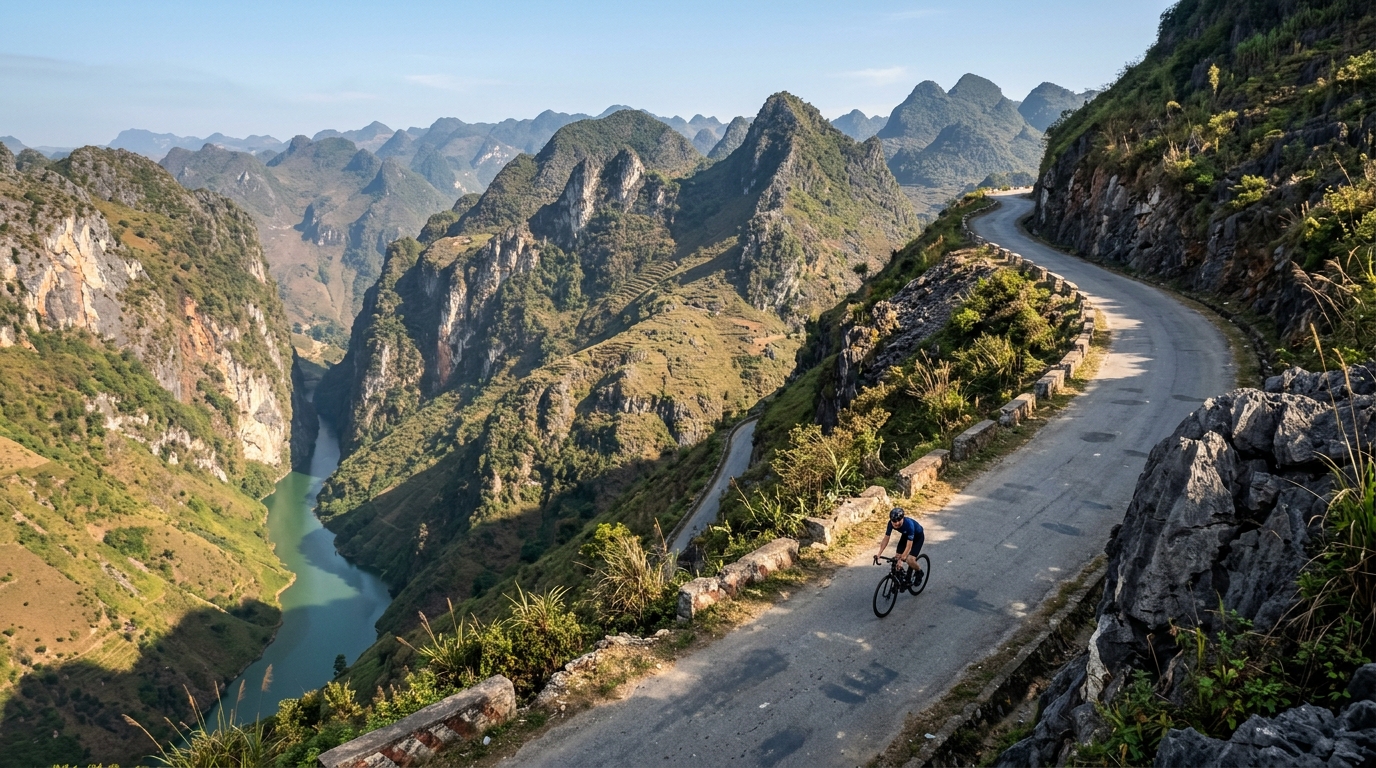
Mã Pí Lèng Pass
A practical pacing and gearing guide to the Mã Pí Lèng Pass cycling climb, a 13.5 km category 1 ascent in Vietnam averaging 6.19%.
- Duž ina
- 13.5km
- Prosek
- 6.2%
- Maks
- 12.0%
- Vrh
- 1,335m
- Visinska razlika
- 802m
Uspon
Profil nagiba
Mã Pí Lèng Pass cycling climb profile
Mã Pí Lèng Pass is a category 1 climb in Vietnam that asks for controlled effort more than aggression. On paper, the climb is 13.5 km long, starts at 499 m, and tops out at 1335 m. The average gradient is 6.19%, with a listed maximum gradient of 11.96%, so the key mistake is obvious: treating it like a steady tempo climb and then being under-geared when the road bites.
The net elevation gain is 836 m, which tells you the essential character of the ride. This is not a short punchy wall where you can bluff your way over the top. It is a sustained climb where small pacing errors compound. Even at an average of 6.19%, the duration of the effort means you need to ride the lower slopes with restraint and save the harder work for the upper half.
How the gradient should shape your pacing
The available profile data does not include kilometre-by-kilometre gradient changes, so the safest way to ride Mã Pí Lèng Pass is to respect the average while gearing for the maximum. A 6.19% average over 13.5 km is already enough to keep pressure on the pedals for a long time. The 11.96% maximum tells you there are steeper sections where cadence can collapse if you arrive carrying fatigue from the opening kilometres.
Start the climb below your sustainable climbing effort, not at it. If you pace by power, anchor the first part under /glossary/ftp rather than chasing speed. If you pace by feel, you should be able to keep breathing controlled and stay seated without forcing the gear. The objective is not to feel fresh, but to avoid burning matches before the steepest gradients appear.
Gearing and riding notes
Because the climb combines a long 13.5 km distance with ramps approaching 11.96%, compact climbing gears make sense for most riders. The right setup is the one that lets you stay seated and maintain cadence when the gradient moves into double digits. If your lowest gear only feels comfortable on the 6.19% average, it may not be enough for the hardest pitches.
Practical approach:
- Ride the opening kilometres conservatively, even if the gradient feels manageable.
- Keep a gear in reserve for the 11.96% maximum gradient.
- Avoid repeated out-of-saddle surges unless you are using them to briefly reset posture.
- Fuel before the climb rather than waiting until the effort feels hard.
- Treat the summit at 1335 m as the real finish, not the point where the road first feels close to easing.
The best ride here is a disciplined one. Mã Pí Lèng Pass rewards riders who keep the effort even, protect cadence, and understand that a category 1 climb is decided by energy management as much as raw climbing strength.