Climb library · Vietnam
Cycling climbs in Vietnam
Vietnam packs its cycling into six catalogued climbs that trade brute steepness for atmosphere, threading roads through mist, jungle and dramatic river gorges. None reach hors catégorie, but the country still climbs high: the summit road tops out at 2,005 metres, where cool mountain air rewards the long grind up. Đèo Trạm Tôn crowns the collection as the highest of the lot, a sweeping ascent that pulls riders toward the country's loftiest passes.
Elsewhere the character shifts with the terrain. Mã Pí Lèng Pass carves along vertiginous limestone cliffs, while Ngoạn Mục Pass and Đèo Prenn climb toward the highlands on switchbacking ramps. Nearer the coast, Cù Mông Pass and Cả Pass offer shorter, punchier tests linking sea-level roads to breezy summits. Together these six climbs make Vietnam a varied playground where every ascent frames a different landscape.
Signature climbs of Vietnam
All climbs in Vietnam
20 climbs
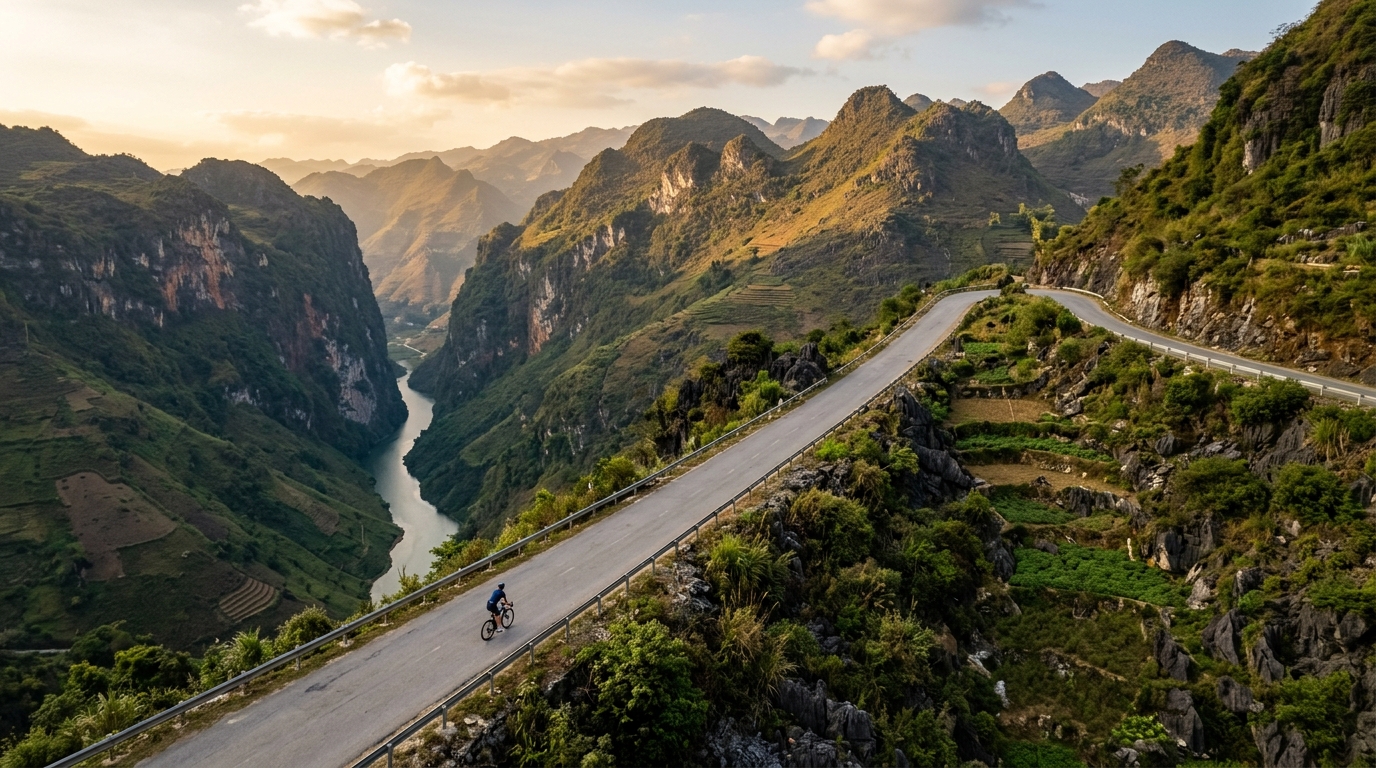
- Mã Pí Lèng PassCat 1VN · 12.2 km · 6.8% · 802 m571pts
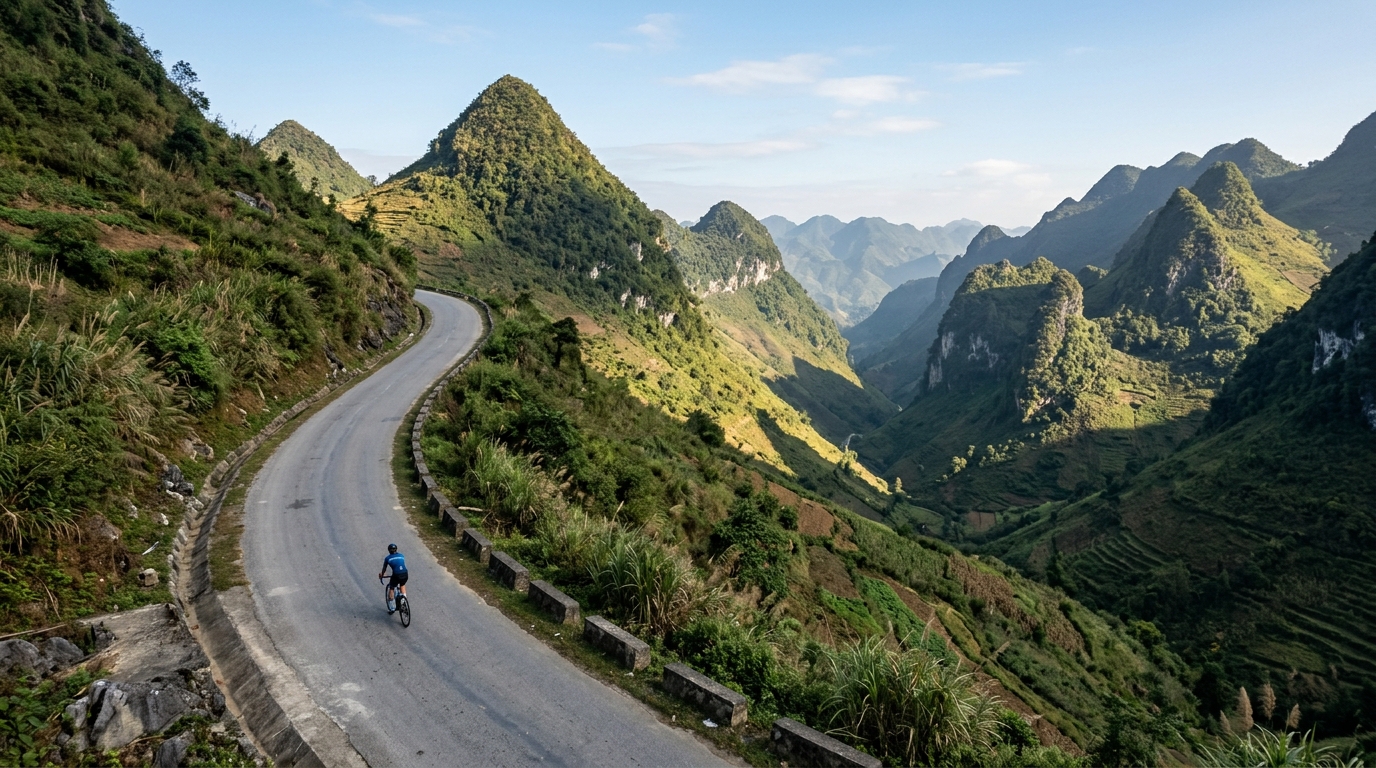 Đèo Trạm TônCat 1VN · 28.6 km · 4.9% · 1396 m689pts
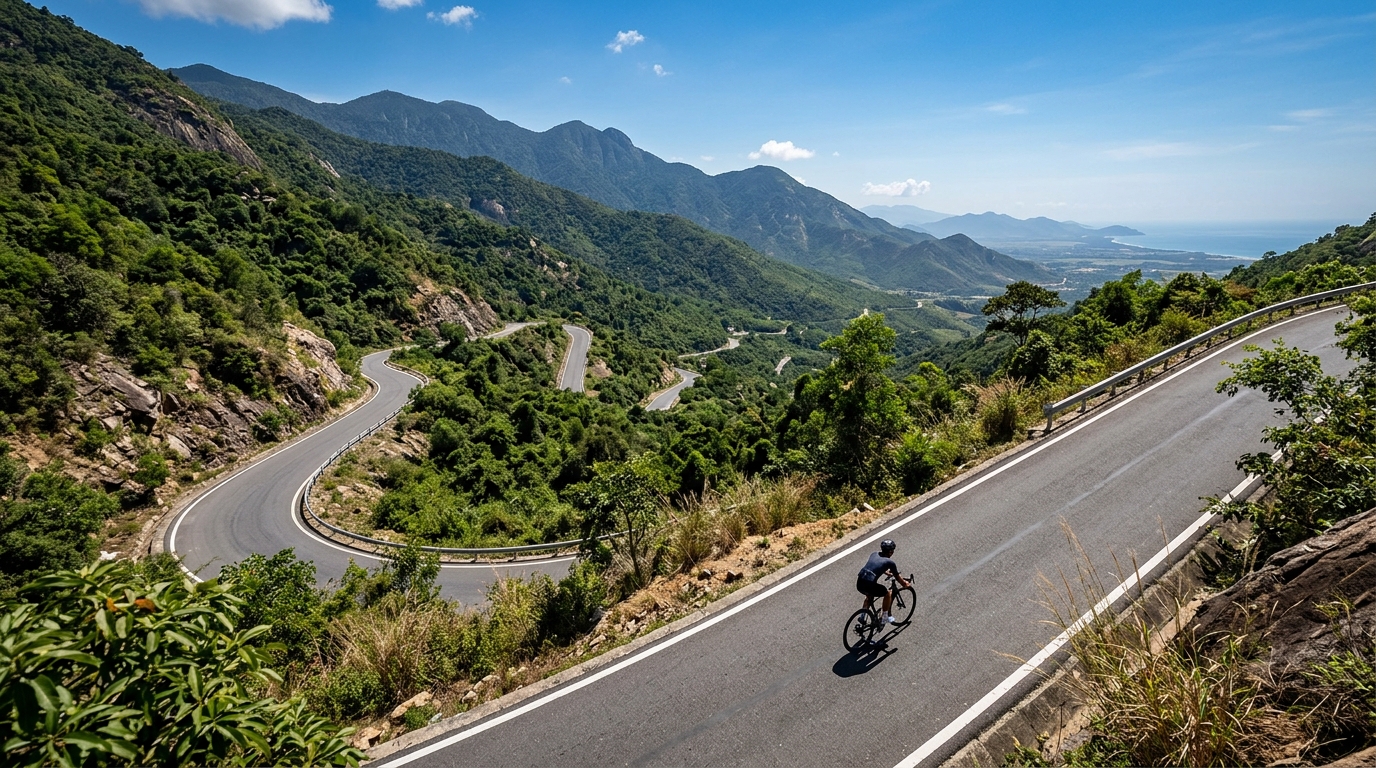 Ngoạn Mục PassCat 2VN · 7.9 km · 5.3% · 397 m222pts
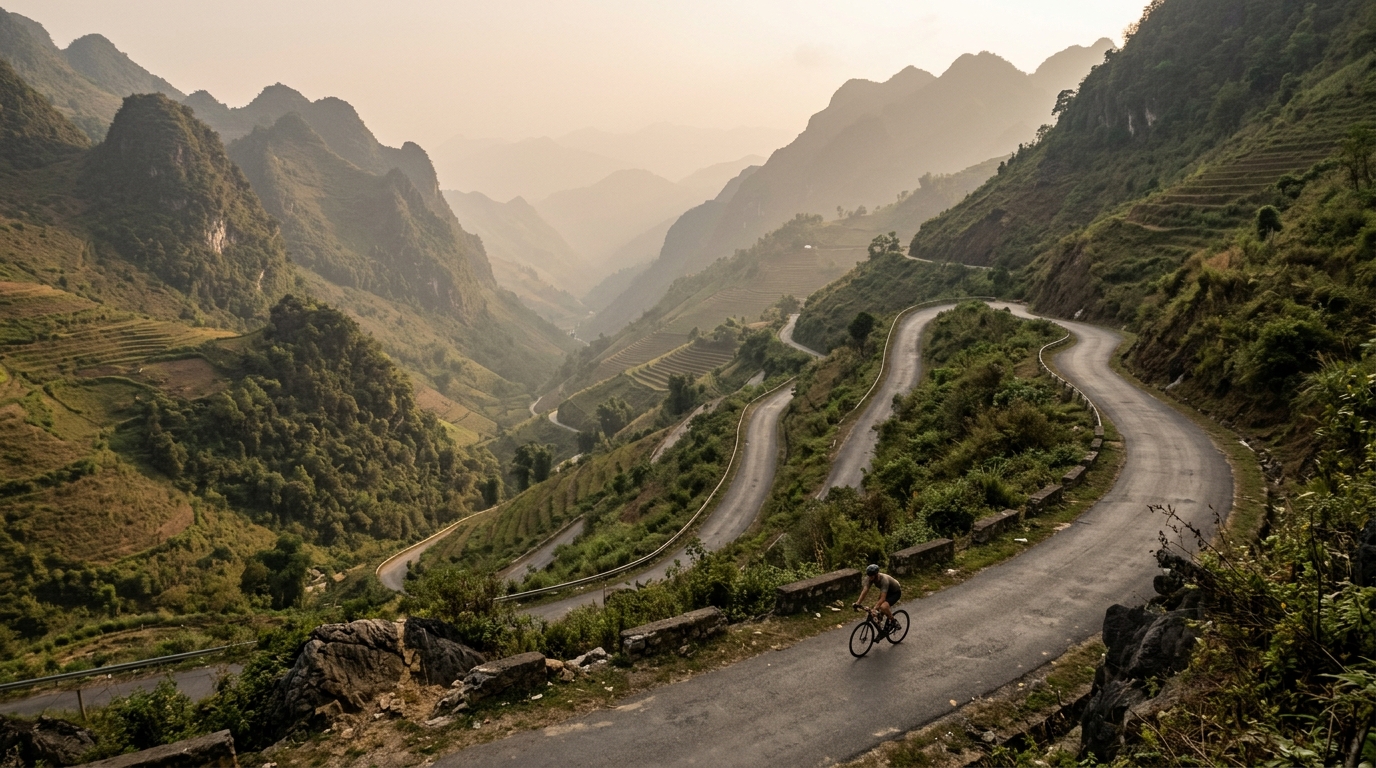 Khau Phạ PassCat 2VN · 3.0 km · 9.0% · 236 m246pts
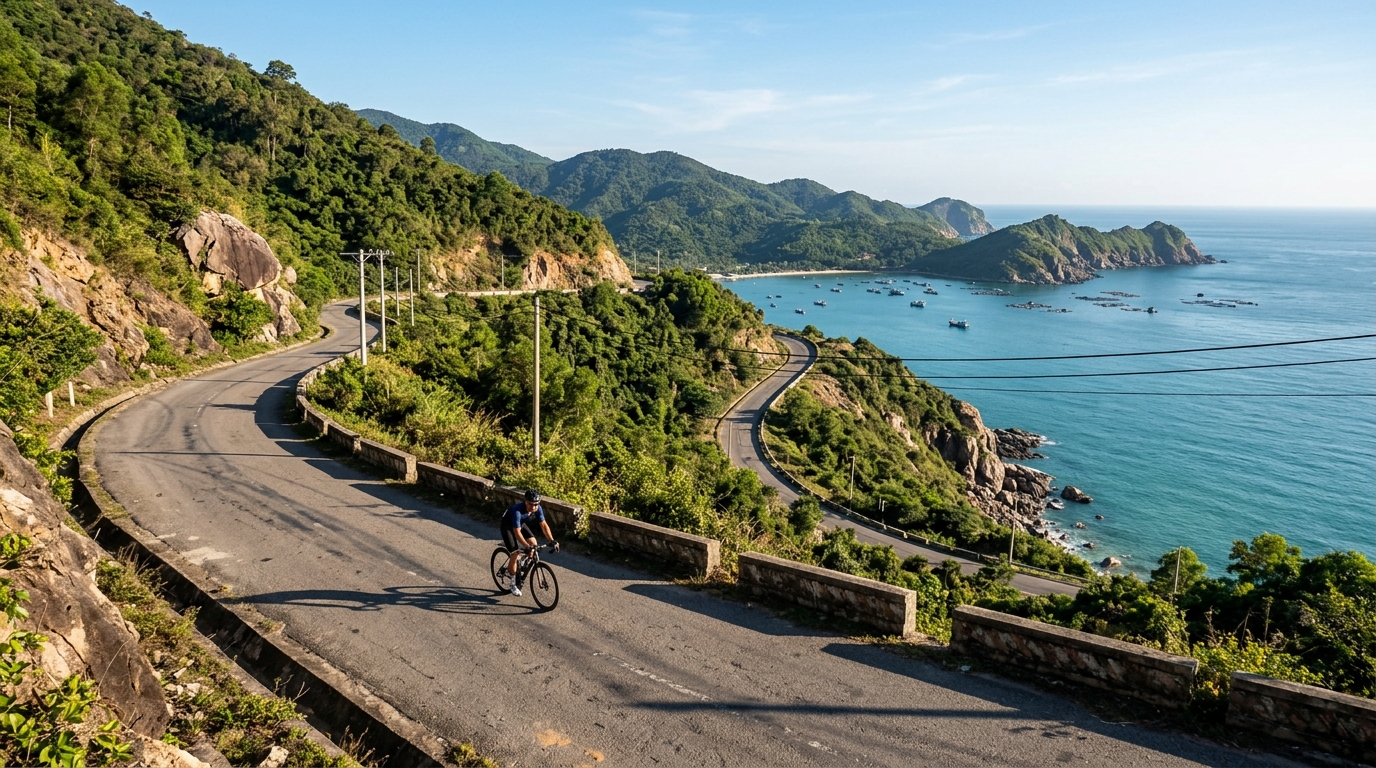 Cả PassCat 3VN · 2.2 km · 6.8% · 124 m101pts
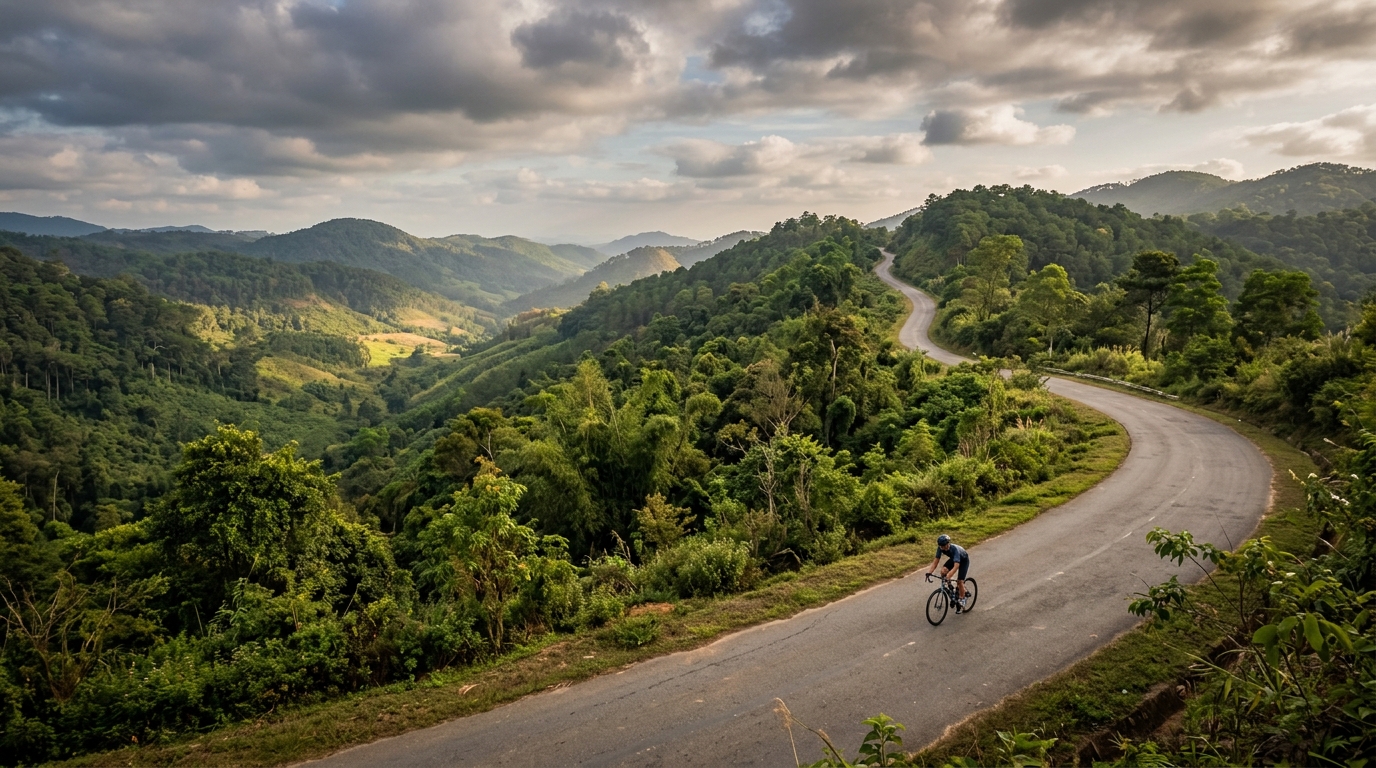 Đèo PrennCat 3VN · 7.0 km · 4.5% · 301 m140pts
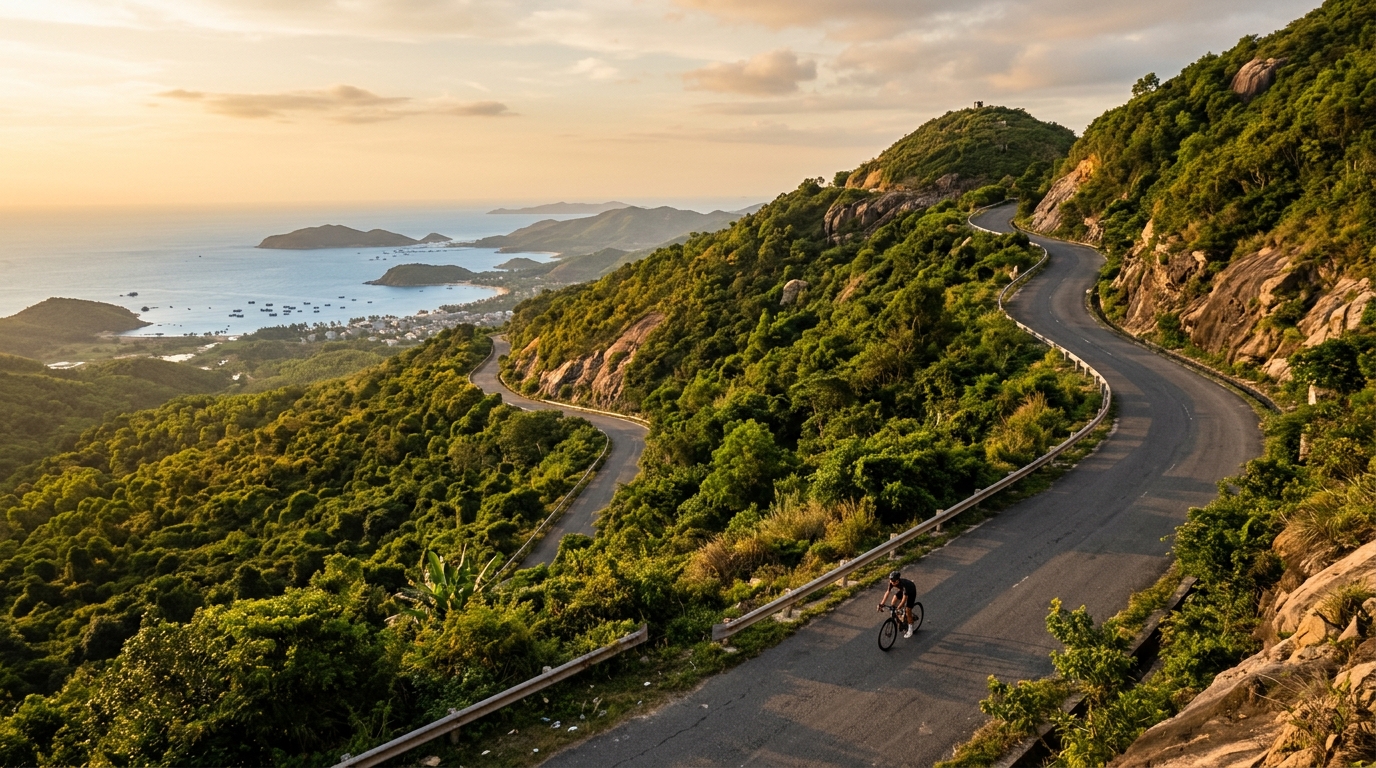 Cù Mông PassCat 3VN · 3.0 km · 6.2% · 167 m115pts
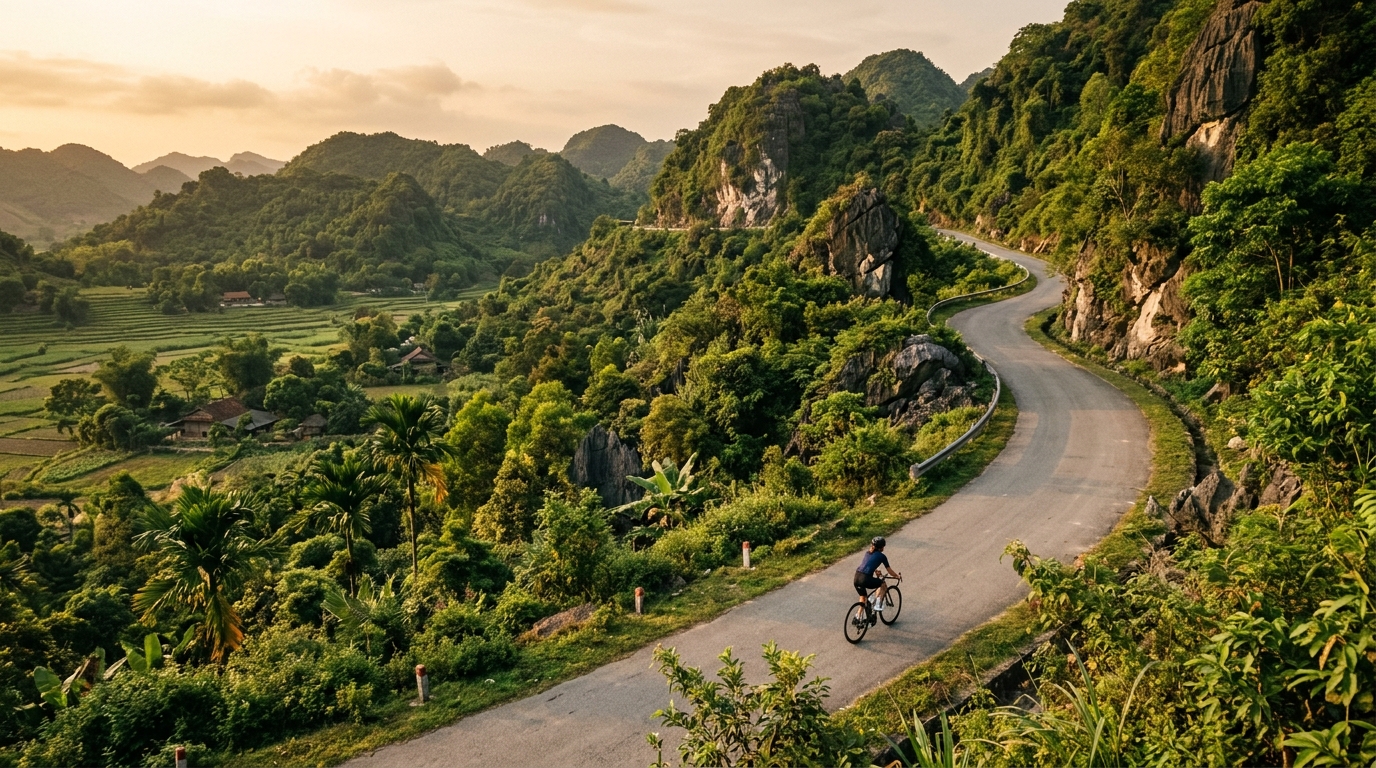 Col de Deo LeCat 3VN · 2.9 km · 7.3% · 195 m159pts
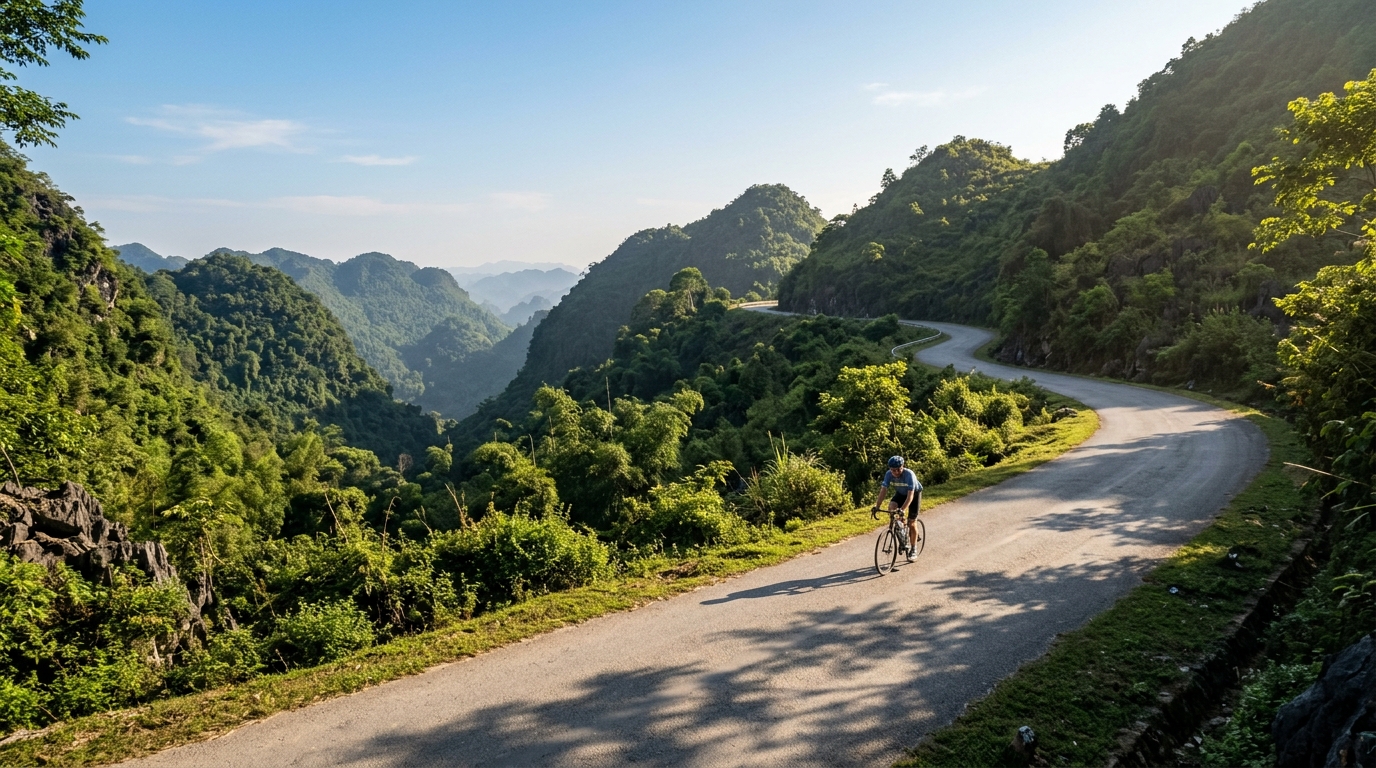 Col de Deo GiangCat 3VN · 6.3 km · 4.2% · 245 m113pts
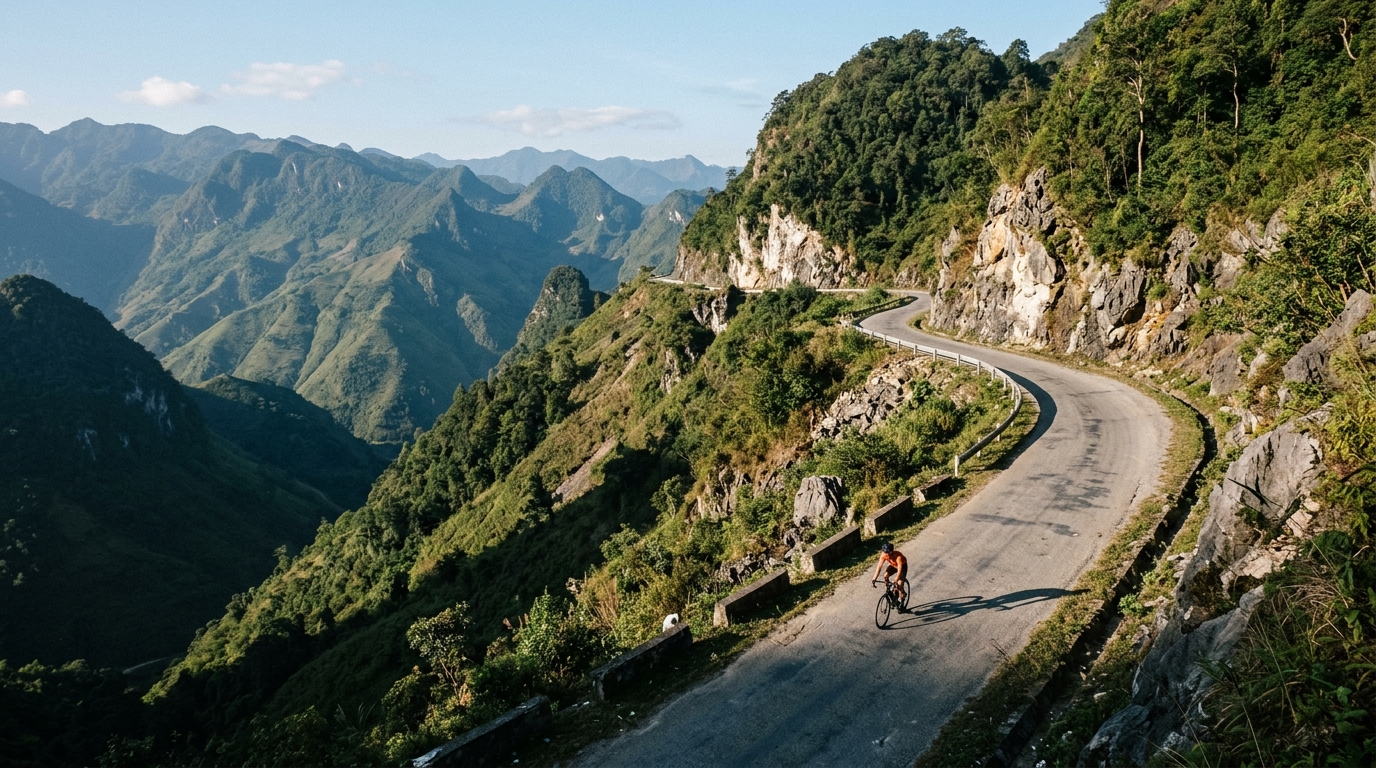 Col de Ma KanCat 1VN · 29.1 km · 5.2% · 1599 m780pts
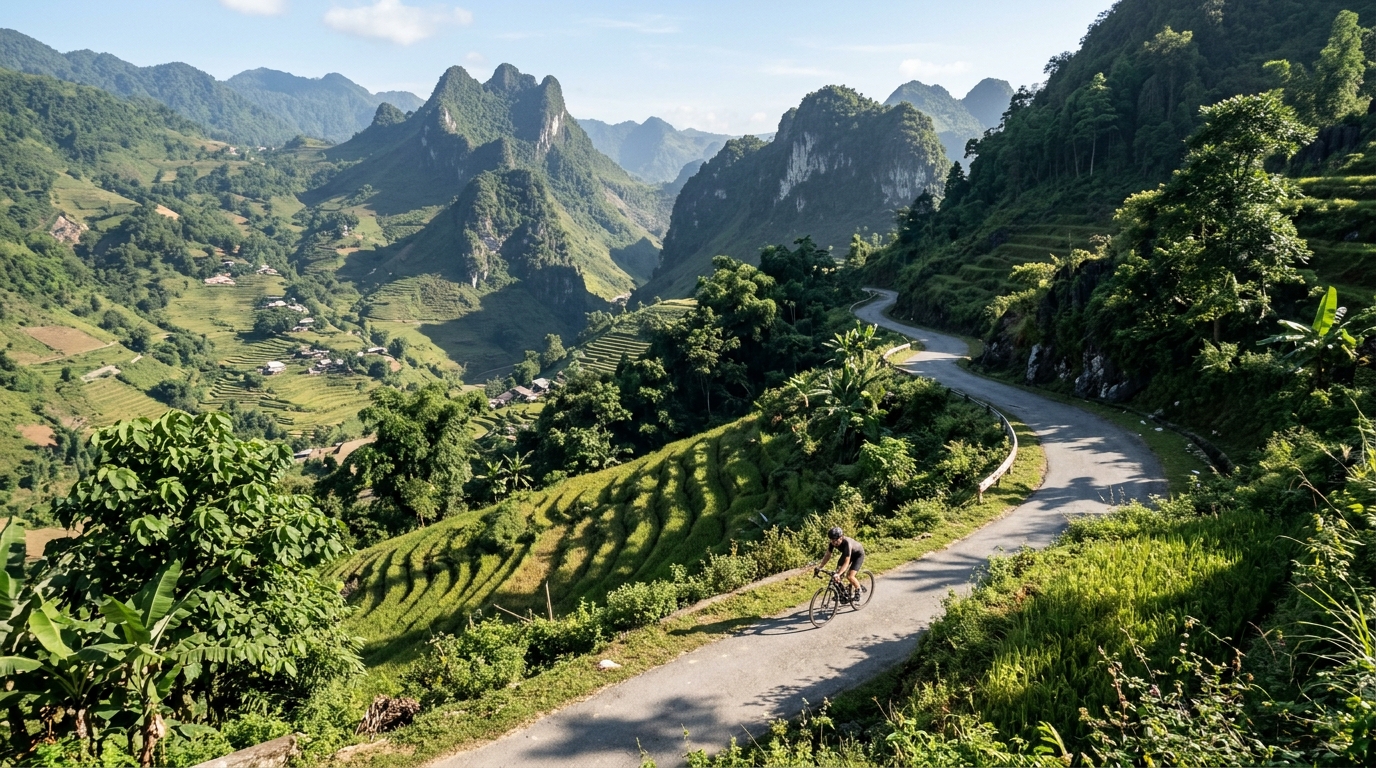 Col de Ho TaoCat 1VN · 15.3 km · 6.7% · 1028 m679pts
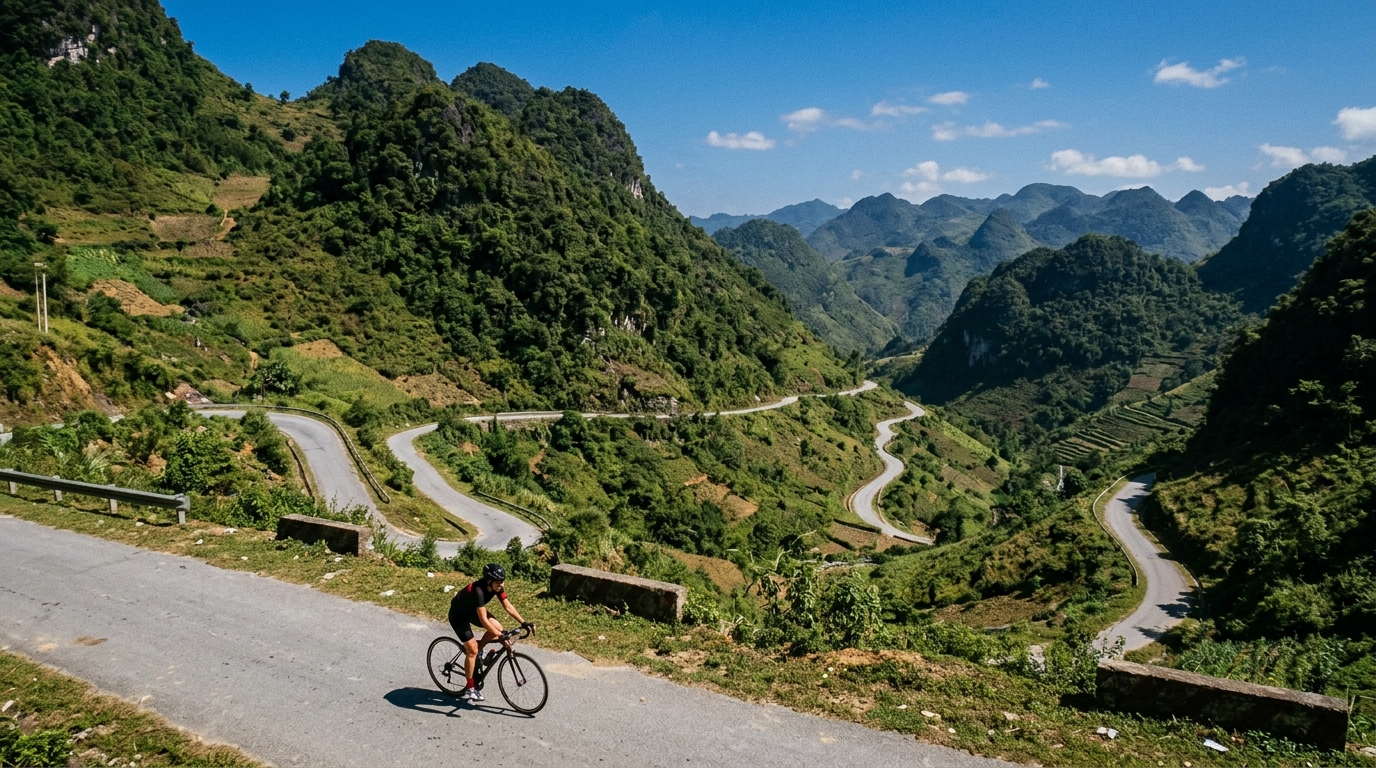 Col de Tchu ChangCat 1VN · 47.1 km · 3.7% · 1835 m659pts
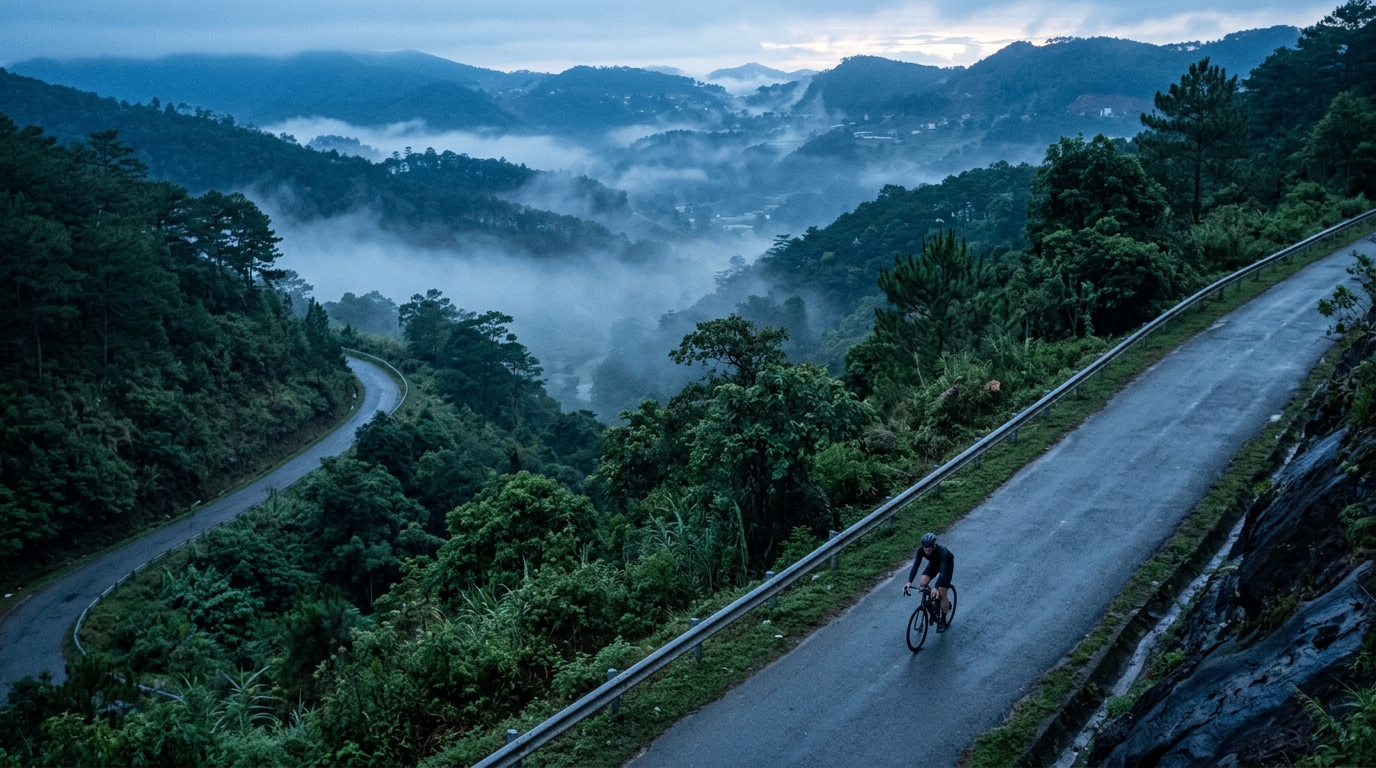 Col de LeaCat 1VN · 23.5 km · 4.9% · 1159 m555pts
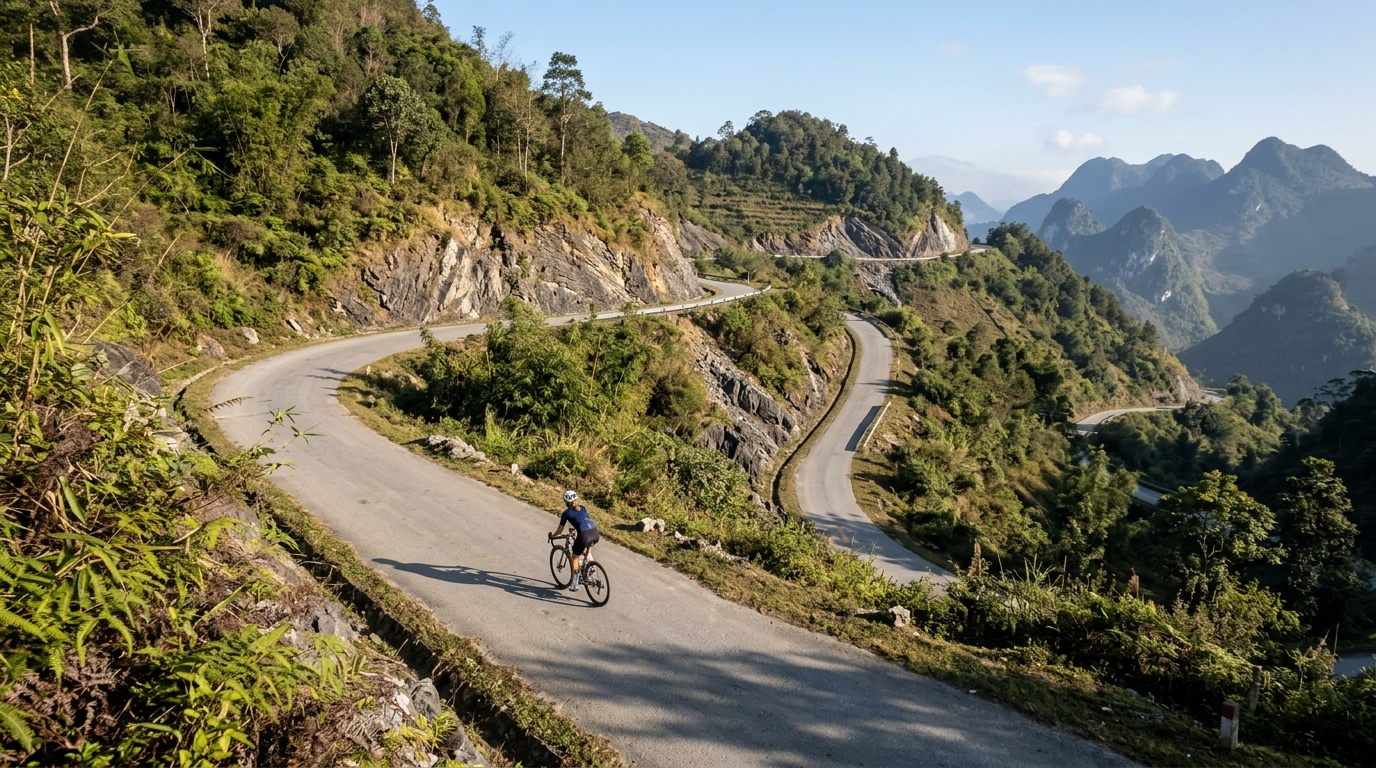 Col de Tchu QuaCat 1VN · 33.6 km · 4.0% · 1523 m551pts
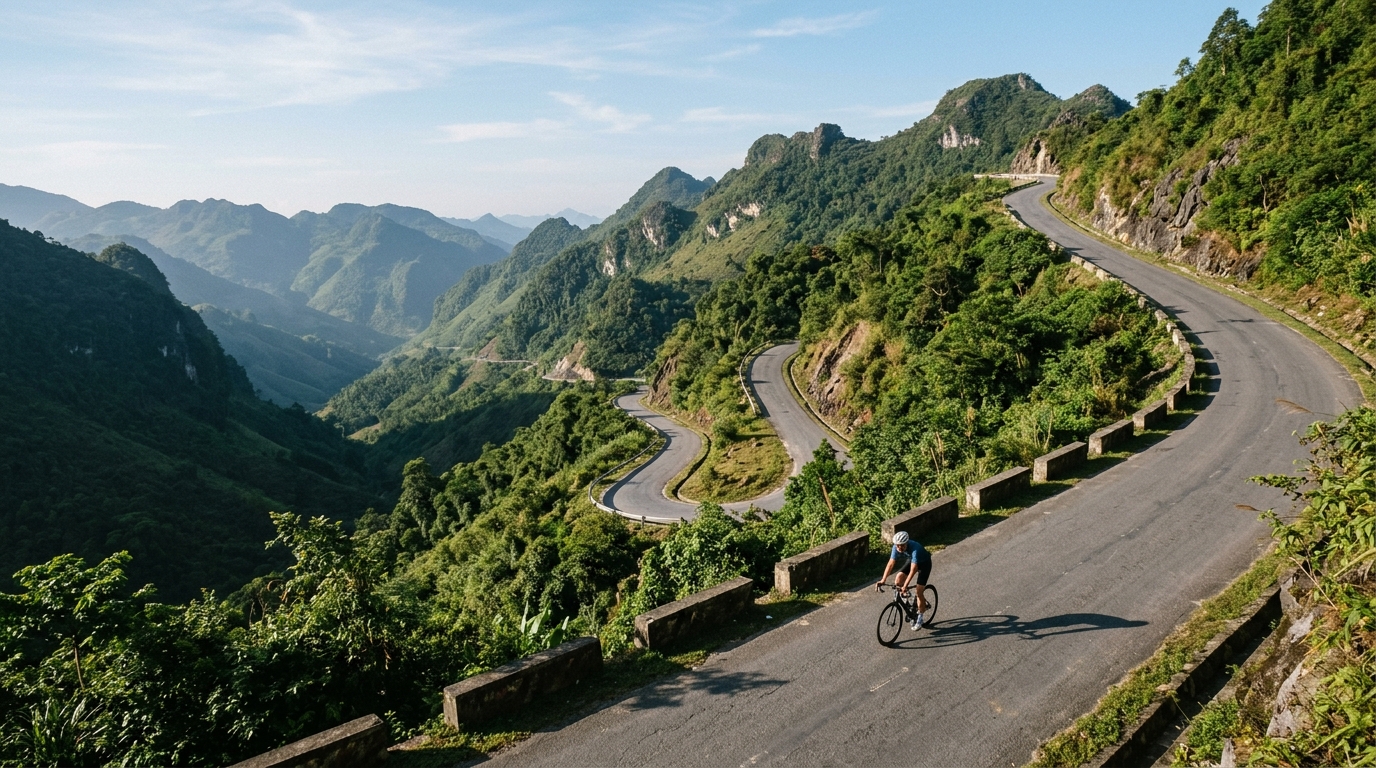 Col de Ta NgaoCat 1VN · 11.8 km · 6.3% · 728 m471pts
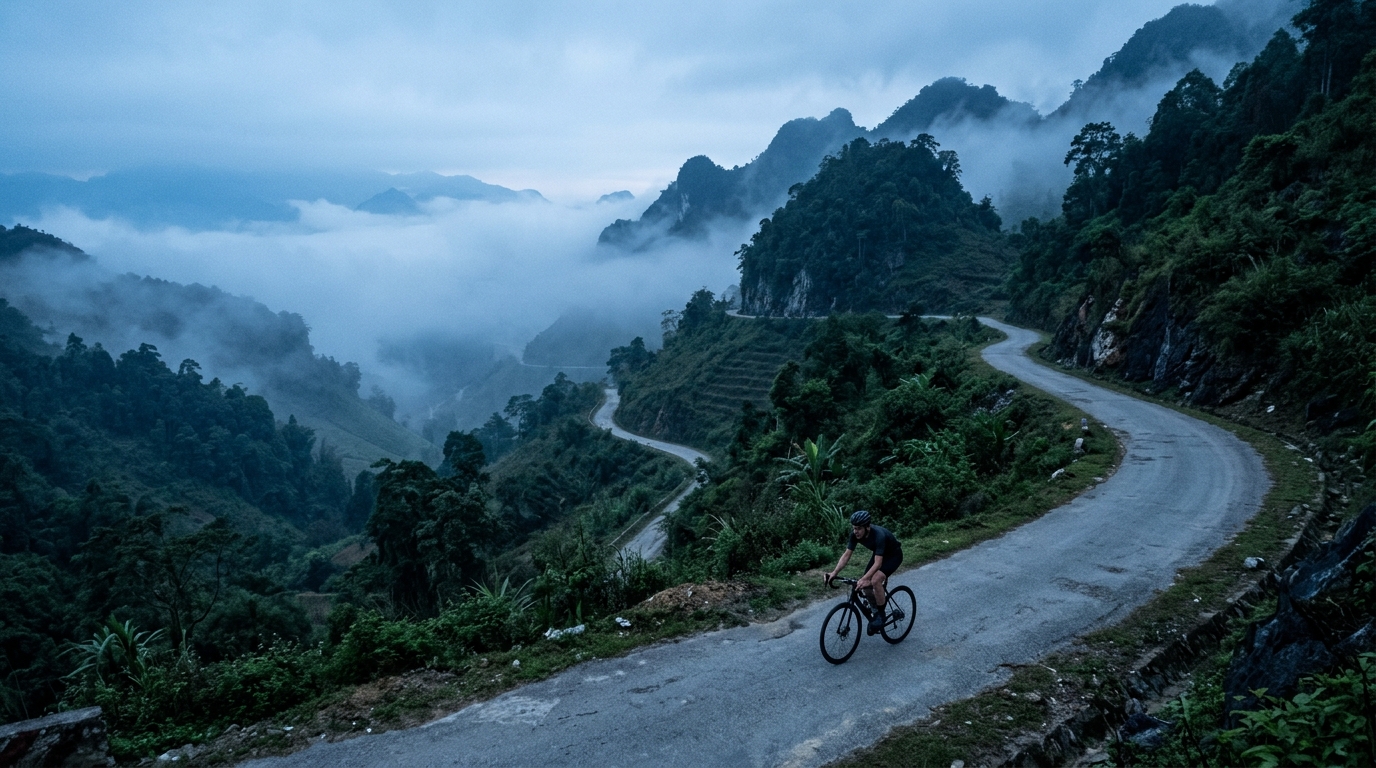 Col de Bân QuangCat 1VN · 11.4 km · 6.2% · 693 m439pts
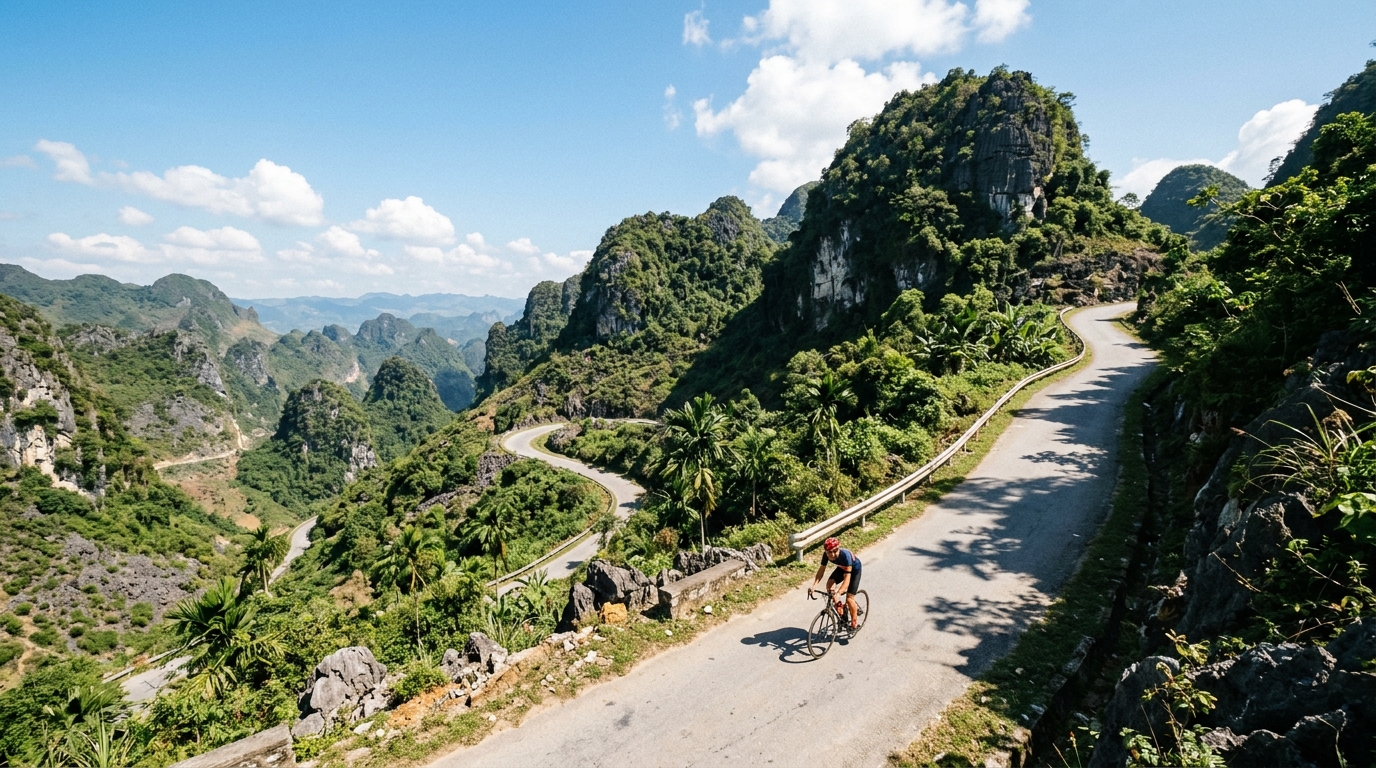 Col de Tcha Yin TchaiCat 1VN · 18.6 km · 4.7% · 892 m402pts
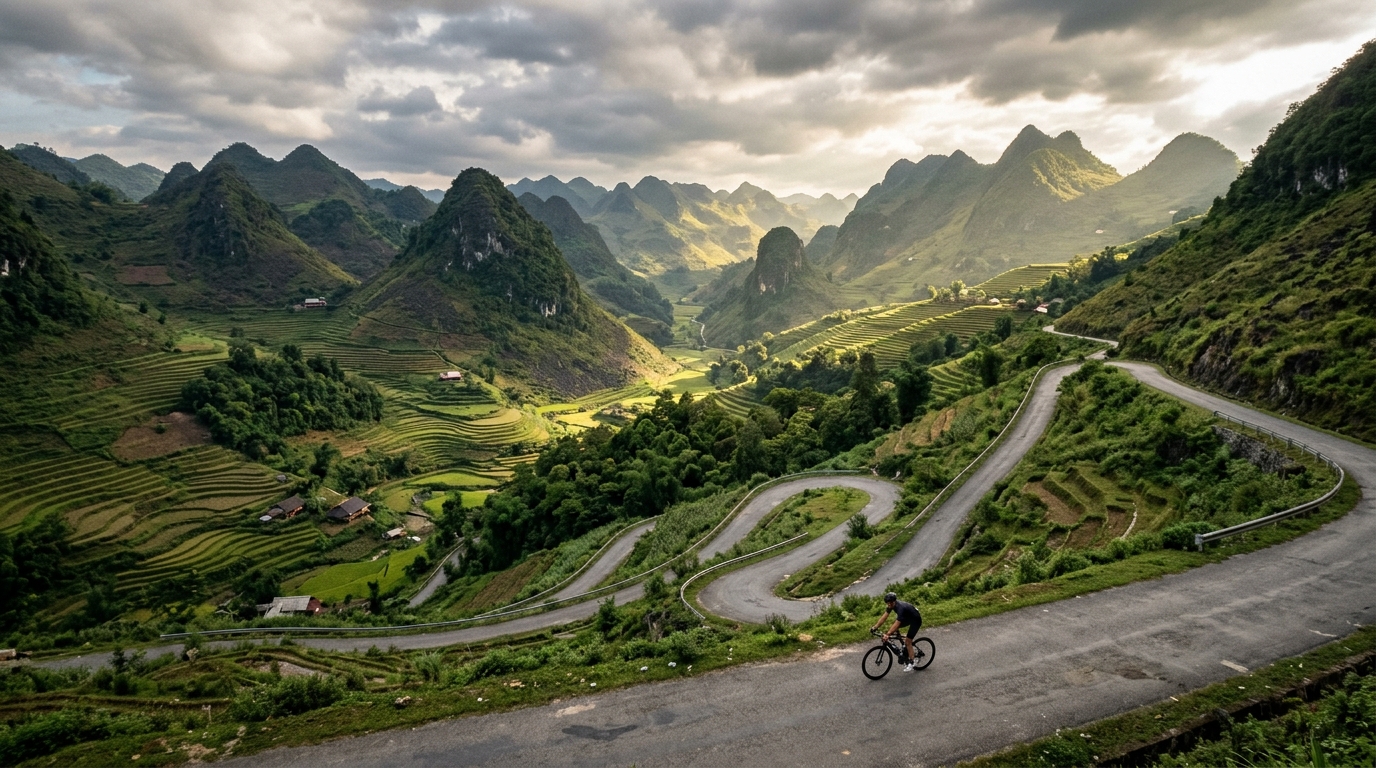 Col de Kiu Vy Kiu SinCat 1VN · 9.4 km · 7.6% · 673 m546pts
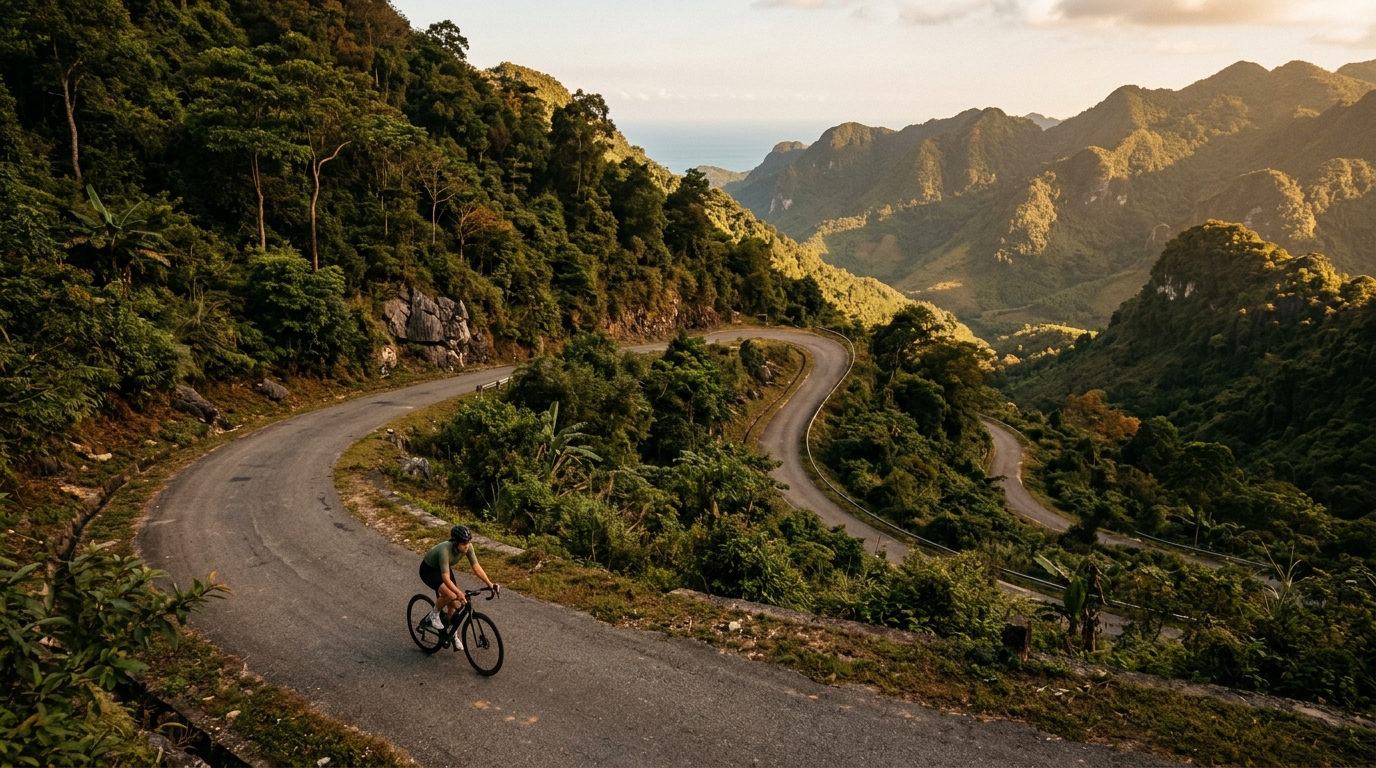 Col de Ro TuongCat 3VN · 2.7 km · 8.2% · 171 m181pts
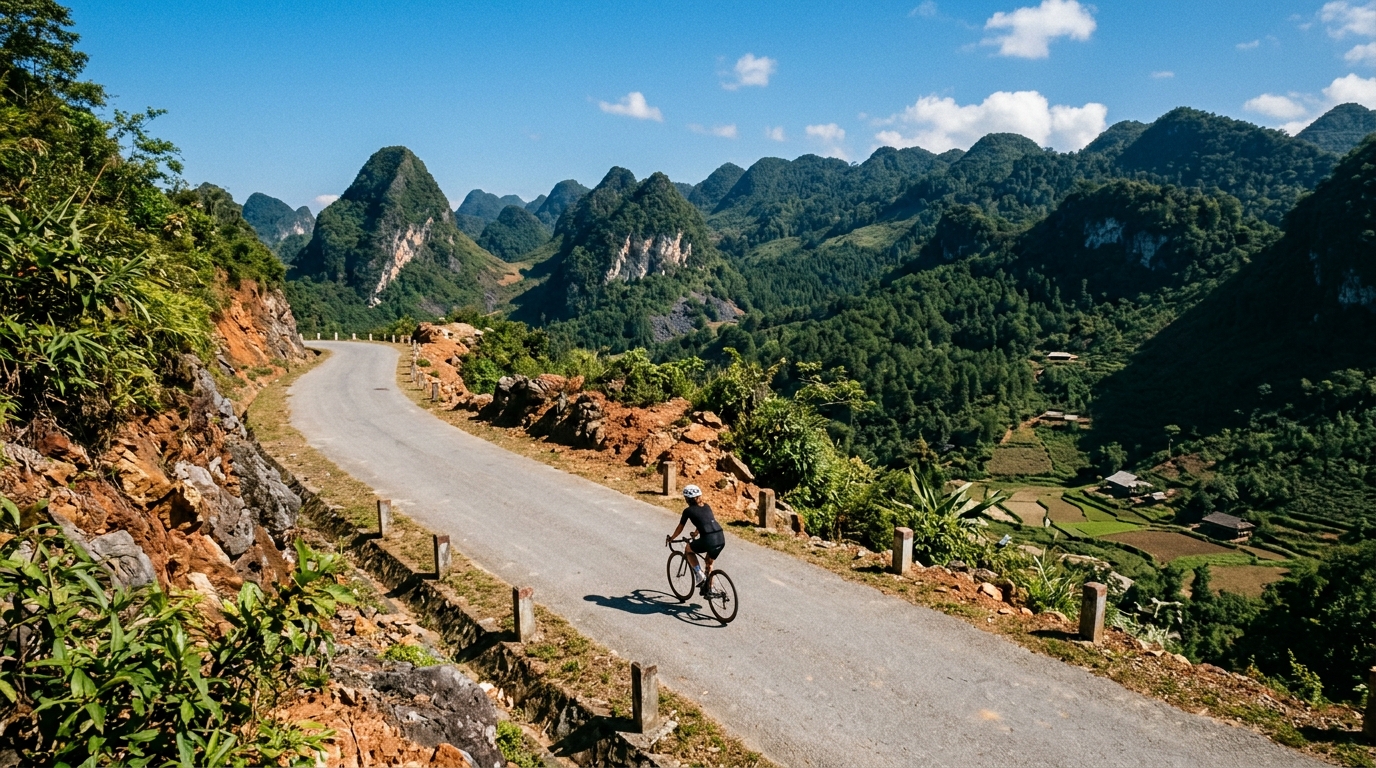 Col de Loung PhaiCat 3VN · 8.2 km · 4.2% · 315 m141pts
The complete guide to climbing in Vietnam
The Riding
Vietnam offers cyclists a distinctive kind of mountain riding, defined by long, winding passes rather than the short, brutal walls found in some parts of the world. Across the country there are six catalogued climbs, and while none of them reaches hors catégorie status, they still demand patience, pacing and respect. The highest summit tops out at 2005 m, high enough that the air thins noticeably and the temperature drops well below what you left behind in the valleys.
The character here is one of sustained effort. Roads tend to climb gradually and relentlessly, tracing river gorges, switchbacking up terraced hillsides and threading through remote highland country. Gradients are generally manageable and rideable, favouring riders who can settle into a rhythm and hold it for the long haul rather than those chasing explosive, punchy efforts. Because none of the six climbs is hors catégorie, a reasonably fit cyclist with the right gearing can take on any of them, provided they respect the length and the altitude.
Standout Climbs
The most prized ascent in the catalogue is Đèo Trạm Tôn, the climb that carries riders toward the country's highest catalogued summit at 2005 m. It is the benchmark against which the others are measured, offering the greatest sustained elevation and the coolest, most exposed air near the top.
Mã Pí Lèng Pass is the most dramatic in feel, a road that clings to steep gorge walls and delivers the kind of scenery that stays with you long after the ride. Ngoạn Mục Pass is another classic, a long and steady haul that rewards a measured pace. Đèo Prenn offers a shorter, more accessible test, while Cù Mông Pass and Cả Pass round out the six with their own steady, honest gradients. Together these climbs form the core of any Vietnamese climbing itinerary, each with a slightly different flavour but all sharing that same long, rhythmic quality.
When to Ride
Timing matters in Vietnam, where climate shapes the riding experience as much as the gradient does. The high summits, particularly around Đèo Trạm Tôn at 2005 m, can be cold, damp and shrouded in cloud, so a clear window makes an enormous difference both for comfort and for the views that make climbs like Mã Pí Lèng Pass worthwhile.
Aim for the drier, more stable stretches of the year when roads are less likely to be slick and visibility is at its best. On the higher climbs, pack for changeable conditions: what feels warm at the base of Ngoạn Mục Pass or Cả Pass can turn distinctly chilly by the summit. Starting early in the day helps you beat both the heat lower down and the afternoon cloud that often gathers around the highest passes.
Practical Notes
Gearing is the single most important preparation. Because Vietnam's climbs reward sustained spinning over brute force, a compact setup with a generous range will let you hold a comfortable cadence all the way up passes like Cù Mông Pass or the long grind of Ngoạn Mục Pass. Carry enough water and food, as resupply points can be sparse on the more remote highland roads.
Altitude is a genuine consideration on Đèo Trạm Tôn given its 2005 m summit, so pace yourself and allow for the thinner air near the top. Descents can be long and fast, so make sure your brakes are in good order before tackling the sinuous drops off Mã Pí Lèng Pass or Đèo Prenn. Finally, treat these roads as shared mountain routes: ride predictably, stay visible, and give yourself margin on blind switchbacks.
Summary
Vietnam's cycling is about long, atmospheric passes rather than savage gradients. With six catalogued climbs, none of them hors catégorie, and a high point of 2005 m at Đèo Trạm Tôn, the country suits riders who love rhythm, scenery and endurance. From the gorge-hugging drama of Mã Pí Lèng Pass to the steady hauls of Ngoạn Mục Pass, Cù Mông Pass, Cả Pass and the more accessible Đèo Prenn, there is a climb here for every level of ambition. Come prepared for altitude and changeable weather, gear appropriately, and Vietnam's mountains will reward you with some of the most memorable climbing days on two wheels.
Looking for full rides in Vietnam?
Routes in Vietnam