Sliku je generisao naš model.
cycling injury prevention
Cycling Injury Prevention Starts in Your Training Data
Use ride data analysis to spot training load injury risk before soreness turns into an overuse injury.
Why overuse injuries rarely come from one bad ride
Cycling injury prevention usually fails when athletes look for a single guilty ride. The hard group ride, the long climb, the sprint session, the extra commute - these can be the moment pain appears, but they are rarely the full cause.
Overuse injuries tend to come from a mismatch between training stress and tissue readiness. Fitness can improve faster than tendons, joints and supporting muscles adapt. That creates a trap for data-driven riders: the engine says yes, the connective tissue is still negotiating.
This is why ride data analysis matters. Not because a chart can diagnose an injury, but because it can show the conditions that make injury more likely. A rising workload, repeated intensity, poor recovery signals and changing perception of effort often show up before a knee, Achilles, back or neck issue becomes impossible to ignore.
The key shift is to stop asking, 'Which ride caused this?' and start asking, 'What pattern made this ride too much?'
Cycling injury prevention depends on patterns, not panic
Training load injury risk is not visible in a single metric. A high training stress score is not automatically dangerous. A low score is not automatically safe. The useful signal comes from the relationship between load, recovery, intensity distribution and how the body responds.
The main warning signs usually cluster around a few themes:
- A sudden rise in total work compared with your recent baseline
- More frequent hard days than your normal rhythm
- Less variation in routes, cadence, terrain or position
- Heart rate behaving differently for the same power on comparable rides
- RPE drifting upward for familiar sessions
- Inability to hit short accelerations you normally make comfortably
- Unusually high perceived effort for endurance power
- Altered pedal stroke, repeated saddle shifting or one-sided compensation
- Soreness that becomes more specific rather than more general
- Soreness that persists into the next morning instead of fading with normal recovery
The last point matters. General fatigue after a hard block is expected. A single-sided knee ache that appears earlier each ride is different. A stiff lower back that always flares after time trial position work is different. Data will not name the injury, but it can help identify the pattern feeding it.
A good injury prevention process for cyclists is not about becoming conservative. It is about separating productive overload from poorly timed overload.
Load spikes: weekly volume, intensity and acute stress
Load spikes are the most obvious place to start because they are easy to see. Look at weekly ride time, total work, elevation exposure if relevant, and intensity. If you use TSS, use it as a consistent reference point, not as a universal injury threshold. The exact metric matters less than consistency. Pick a small set of load markers and watch how quickly they change relative to your own recent baseline.
A common mistake is judging a week only by volume. For many riders, the injury risk is hidden in the intensity layer. A week may look normal in duration but contain more threshold work, more surges, more low-cadence climbing or more standing accelerations than usual. From a cardiovascular perspective, that might be manageable. From a tendon and joint loading perspective, it can be a different story.
Power data helps here because it shows mechanical demand. If your functional threshold power is stable but more of your riding is clustered near hard sustainable outputs, the muscular and connective tissue load may be rising even when total time is not. Likewise, repeated short efforts can accumulate stress in ways that a simple average power number hides.
The practical review is straightforward:
- Compare this week with your recent normal, not with your ideal plan
- Flag any sudden increase in ride time, hard work or climbing-specific load
- Look for stacked stress, such as hard intervals followed by a long ride and then another demanding session
- Treat travel, poor sleep, strength training changes and bike fit changes as load, even if they do not appear in ride totals
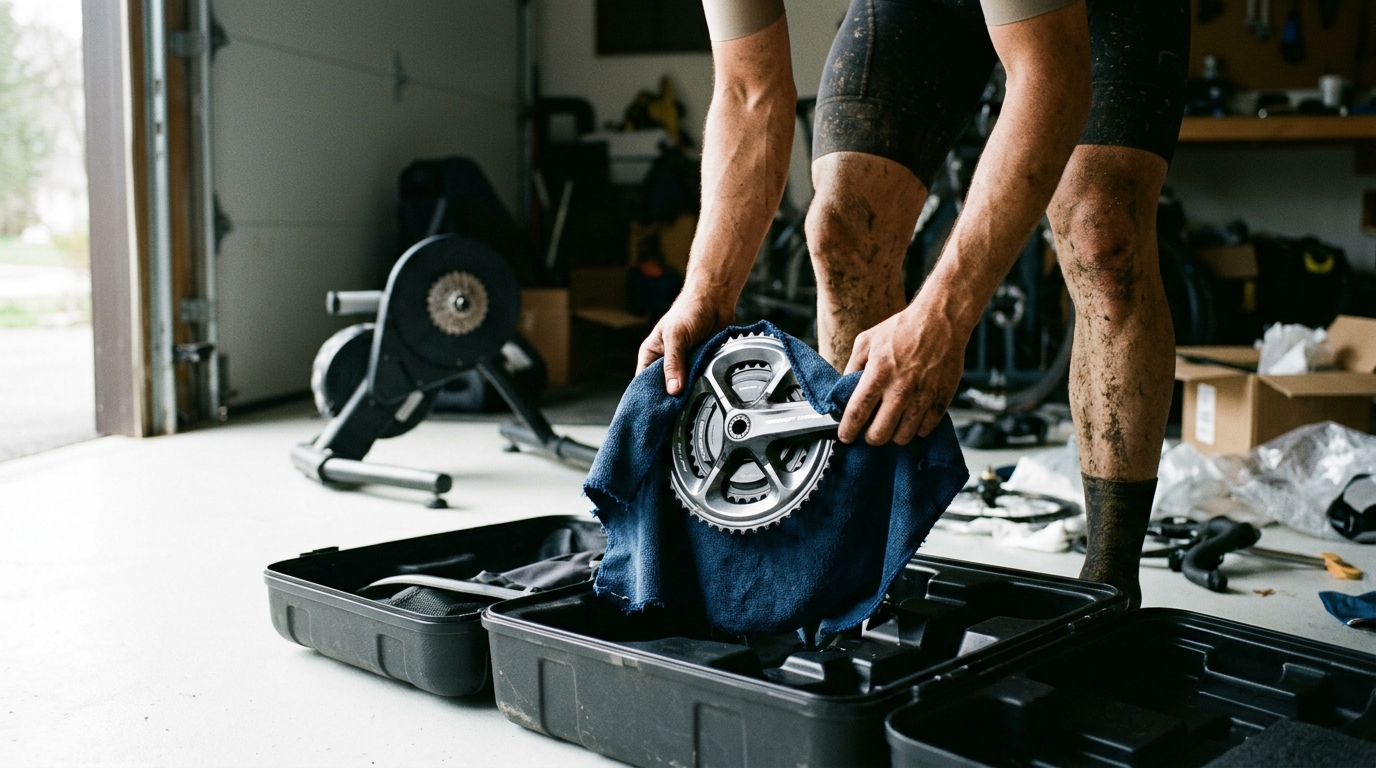
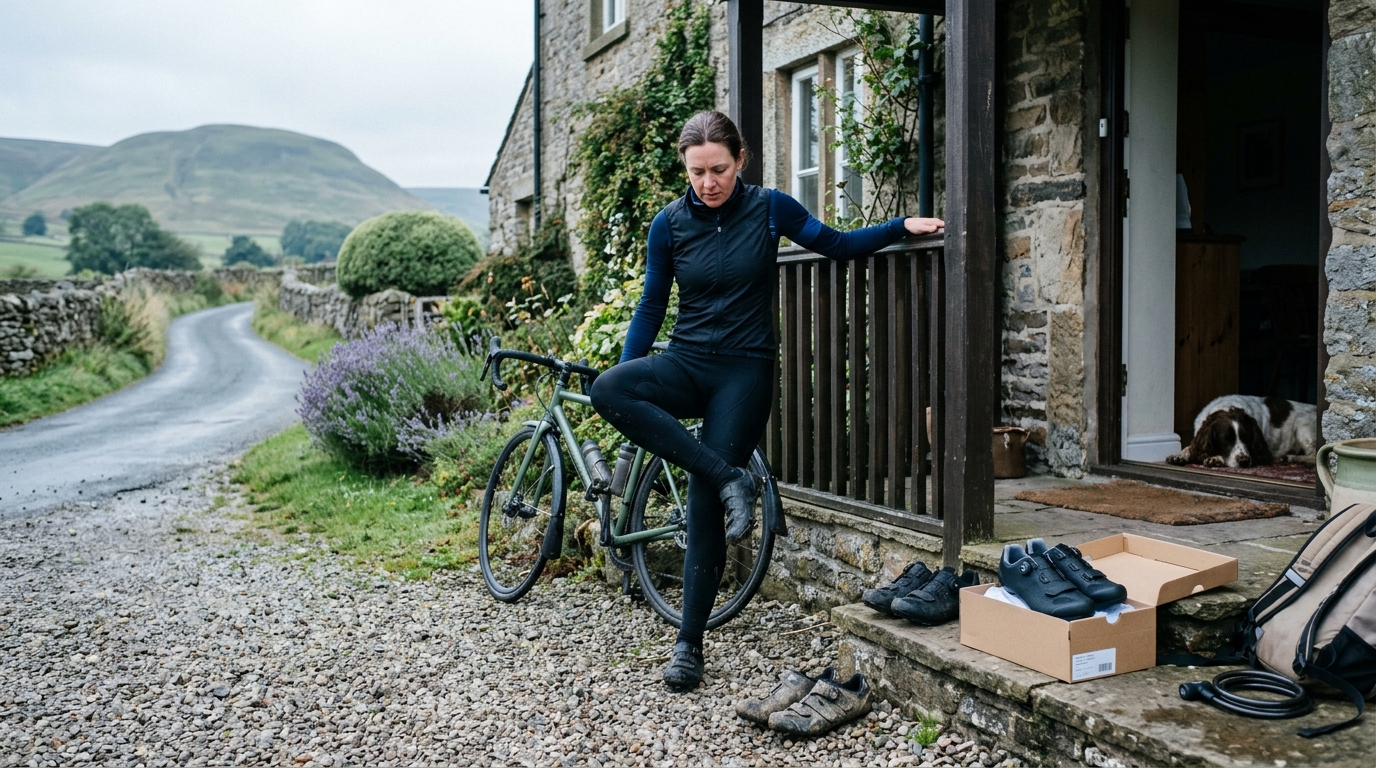
That final point is where many athletes miss the signal. Training load is not only what the bike computer records. New shoes, a saddle change, a different cleat position, more time on an indoor trainer, extra gym work or a sudden switch to hilly routes can all alter tissue stress without making the training file look extreme.
Monotony and repetition: when consistency becomes a problem
Consistency is the backbone of endurance performance, but monotony is not the same thing as consistency. Monotony means the body is being asked to solve the same problem too often, in the same way, with too little variation.
For cycling overuse injuries, this matters because the sport is highly repetitive. A rider can pedal smoothly for a long time and still accumulate stress in a narrow movement pattern. If every ride uses the same bike, same position, same cadence tendency, same terrain and same intensity band, the tissues that handle that pattern do not get much relief.
This is where injury prevention for cyclists becomes more nuanced than simply taking rest days. A rider can reduce monotony without losing training quality. That might mean alternating seated and standing climbing, using a different route profile, changing cadence emphasis, separating aero-position work from high-intensity work, or moving endurance riding away from the exact posture used for racing.
The goal is not randomness. The goal is controlled variation.
For example, if a rider is preparing for a time trial, aero position work is necessary. But placing every quality interval in that position while also adding gym work and long indoor sessions can create a narrow loading pattern. The data may show excellent compliance. The body may experience it as repetition without enough relief.
When reviewing monotony, ask:
- Are hard days truly different from easy days, or are most rides moderately stressful?
- Is the same route or trainer session repeated because it is convenient?
- Is cadence always sitting in the same self-selected range?
- Has a new position or equipment change been layered on top of a normal training load?
- Is strength work creating soreness that carries into key bike sessions?
High consistency with low variation can look disciplined right up to the point it becomes fragile.
Early warning signs in power, heart rate and RPE
Power, heart rate and RPE each tell a different part of the story. Power shows external work. Heart rate shows internal response. Rate of perceived exertion shows perceived cost. Injury risk rises when those three stop matching their usual relationship.
One noisy file is not enough to change the whole plan. Heart rate can be affected by heat, caffeine, hydration, stress and poor sleep. RPE can be skewed by motivation, fueling, life stress or a bad warm-up. The actionable signal is a repeated mismatch across comparable rides.
Pay attention when familiar endurance power repeatedly requires a higher-than-normal heart rate and feels harder than expected. The issue may be fatigue, heat, dehydration, stress or poor recovery, but the decision is similar: reduce the pressure before the body starts expressing the problem through pain.
The reverse can also matter. A suppressed heart rate with heavy legs and high RPE can suggest the athlete is not absorbing the load well. In that case, forcing the planned power target may add stress without delivering the intended adaptation.
Power trends can reveal local fatigue too. If you can still produce steady power but cannot hit short accelerations, cannot hold cadence smoothly, or cannot stay comfortable in your normal riding position, the limiter may be muscular or structural rather than aerobic. That is relevant for cycling injury prevention because overuse problems often start as subtle compensation. A rider shifts on the saddle more often. One hip starts doing more work. The upper body tightens. The file may still show the planned power while the movement quality is getting worse.
Use post-ride notes aggressively. A short note such as 'left knee tight after climbs' or 'neck stiff in aero position' is more useful than a perfect color-coded chart with no context. Pain location, timing and trigger are the important details.
Good notes include:
- Where the sensation appeared
- When it appeared in the ride
- Whether it changed with cadence, position or intensity
- Whether it was present the next morning
- Whether it is becoming easier to provoke
A warning sign becomes actionable when it follows a pattern: symptoms appear earlier than they used to, last into the next day, require less workload to trigger, or change how you pedal. If endurance power feels unusually hard across several rides, heart rate no longer matches its normal relationship to power, and local discomfort is becoming more specific, treat that as a rising risk signal even if your planned workouts are being completed.
A concrete example: when several small changes overlap
Consider a rider who adds low-cadence climbing, moves cleats to a new position and starts lower-body gym work during the same short training block. None of those choices is automatically wrong. The problem is that all three change load at the knee and hip while the training file may still look reasonable.
At first, the rider finishes the sessions. Then knee discomfort appears late in climbing repeats. A few rides later, it appears earlier, at lower power, and the rider notices a slightly guarded pedal stroke. The next morning, the knee still feels irritated on stairs.
That is no longer a random ache. The cause-and-effect chain is visible:
- Low-cadence climbing increases torque demand on each pedal stroke
- The cleat change alters how the leg tracks through that repeated load
- Gym soreness reduces the margin for absorbing hard bike work
- The symptom appears earlier because the tissue is being asked to handle the same stress with less reserve
The first adjustment should be to remove the most direct optional bike stress: low-cadence climbing and high-torque seated efforts. Keep aerobic riding on flatter routes at a comfortable cadence, and shorten rides so they finish before the usual symptom point. That preserves useful endurance work while taking away the stressor most clearly linked to the pain trigger.
Next, look at the cleat change. If the new position coincided with altered pedal stroke, new pressure points or one-sided tracking changes, return to the previous known-good setup or get the position checked. Do not keep testing a new fit variable while the symptom is escalating.
Then manage the gym work. If lower-body soreness carries into rides, reduce or pause the movements creating that soreness. Upper-body work, mobility and light activation can remain if they do not affect the symptom. Hard intervals should wait until endurance power again feels like endurance, heart rate returns to its usual relationship with power, and the knee no longer appears earlier or at lower workload.
The point is not to stop training. The point is to stop stacking unknowns. Keep the work that does not provoke the symptom, remove the clearest trigger first, and avoid changing multiple variables while you are trying to learn what the body is telling you.
How to adjust training before pain becomes an injury
The best adjustment is the smallest change that breaks the risk pattern while preserving useful training. Panic-resting after every ache can make training inconsistent. Ignoring every warning sign can turn a manageable issue into a forced layoff. The middle ground is targeted modification.
Start by reducing the specific stressor, not necessarily all riding. If pain appears during high-torque climbing, remove low-cadence work and choose flatter endurance riding. If discomfort is tied to aero position, keep aerobic training but limit position exposure. If the issue appears after repeated hard days, keep frequency but lower intensity until endurance power feels normal again and symptoms are no longer carrying into the next morning.
Useful adjustments include:
- Replace hard intervals with endurance riding until RPE and heart rate return to their usual relationship with power
- Separate demanding sessions with more recovery space
- Reduce time in the position that triggers symptoms
- Avoid adding equipment changes during heavy training
- Keep cadence comfortable rather than forcing torque
- Shorten rides before symptoms usually appear
- Move strength training away from key cycling stress when soreness carries over
- Keep easy riding if it is truly easy and does not provoke altered movement or next-day symptoms
This is not softness. It is load management. The athlete who modifies early often loses less training than the athlete who waits for pain to dictate terms.
There is also a decision point where training data is no longer the main tool. If pain is sharp, worsening, changes your pedal stroke, affects daily life or does not settle with sensible load reduction, get assessed by a qualified clinician. Data can guide training choices, but it should not become a reason to self-diagnose.
A repeatable weekly review for data-driven riders
A practical review routine should be short enough that you actually do it. The aim is not to create another dashboard. It is to make better decisions before the plan becomes a problem.
Do this against your own recent baseline. These fields are not universal injury thresholds. They are prompts to spot when your training has moved faster than your body is adapting.
Weekly review template
Use the same fields each week:
- Weekly hours: higher, lower or similar to your recent normal
- Total work or TSS: only if you track it consistently and understand your usual range
- Hard-session count: how many rides required real recovery afterward
- Climbing exposure: more torque, more seated climbing or more standing accelerations than normal
- Indoor time: more fixed-position trainer riding than usual
- Strength soreness: none, mild, or carried into bike sessions
- RPE trend: familiar endurance rides feeling normal, easier or harder than expected
- Heart rate and power relationship: normal, elevated heart rate for familiar power, or suppressed heart rate with high RPE
- Symptom notes: location, timing, trigger, whether it changed pedaling, and whether it lasted into the next morning
- Equipment or position changes: shoes, cleats, saddle, bar position, bike, insoles or indoor setup
- Life stress and recovery context: sleep, travel, work stress and anything else that changes recovery capacity
After filling it in, ask three questions:
- What changed from my recent baseline?
- Which changes stacked on top of each other?
- What is the smallest adjustment that reduces the most likely stressor while keeping useful training?
This is where training data becomes practical. The review is not trying to predict injury with precision. It is trying to prevent avoidable mistakes, especially when load, equipment, terrain and gym stress all rise at once.
After each ride
Record the basic context while it is fresh. Note RPE, unusual soreness, position discomfort, equipment changes and anything that made the ride feel different from the file. Keep it plain. The value is in consistency, not prose.
Before planning the next block
Look for load changes. Compare recent training with your normal rhythm. Ask whether volume, intensity, climbing, indoor time, gym stress or life stress has moved up together. The riskiest periods are often the ones where several small increases overlap.
Before key workouts
Check readiness against the purpose of the session. If the workout requires quality and you are seeing high RPE for familiar power, odd heart rate behavior across comparable rides and local discomfort that is appearing earlier, the session is unlikely to deliver clean adaptation. Adjust before you start rather than negotiating with yourself halfway through.
When a warning sign appears
Do not only ask whether you can ride through it. Ask what pattern it belongs to. Did it follow a load spike? A bike fit change? More climbing? More trainer work? More time in one position? The answer tells you which lever to pull.
A simple checklist works well:
- What changed recently?
- What stressor is most likely linked to the symptom?
- Can I reduce that stressor while maintaining aerobic work?
- Is the symptom improving, stable or worsening?
- Does the next session still match the current reality?
That final question is the heart of cycling injury prevention. A plan is only useful if it responds to feedback. Training data does not prevent injury by itself. It helps you see when the plan and the body are starting to diverge.
The bottom line
Cycling overuse injuries are usually pattern problems before they are pain problems. The pattern might be a load spike, too much repeated intensity, too little variation, a position change at the wrong time or early recovery signals that were easy to rationalize.
The strongest riders are not the ones who never feel warning signs. They are the ones who interpret them early and adjust with precision. Use power, heart rate, RPE and ride notes as a feedback system. When the data shows stress rising faster than adaptation, change the input before the body forces a bigger correction.