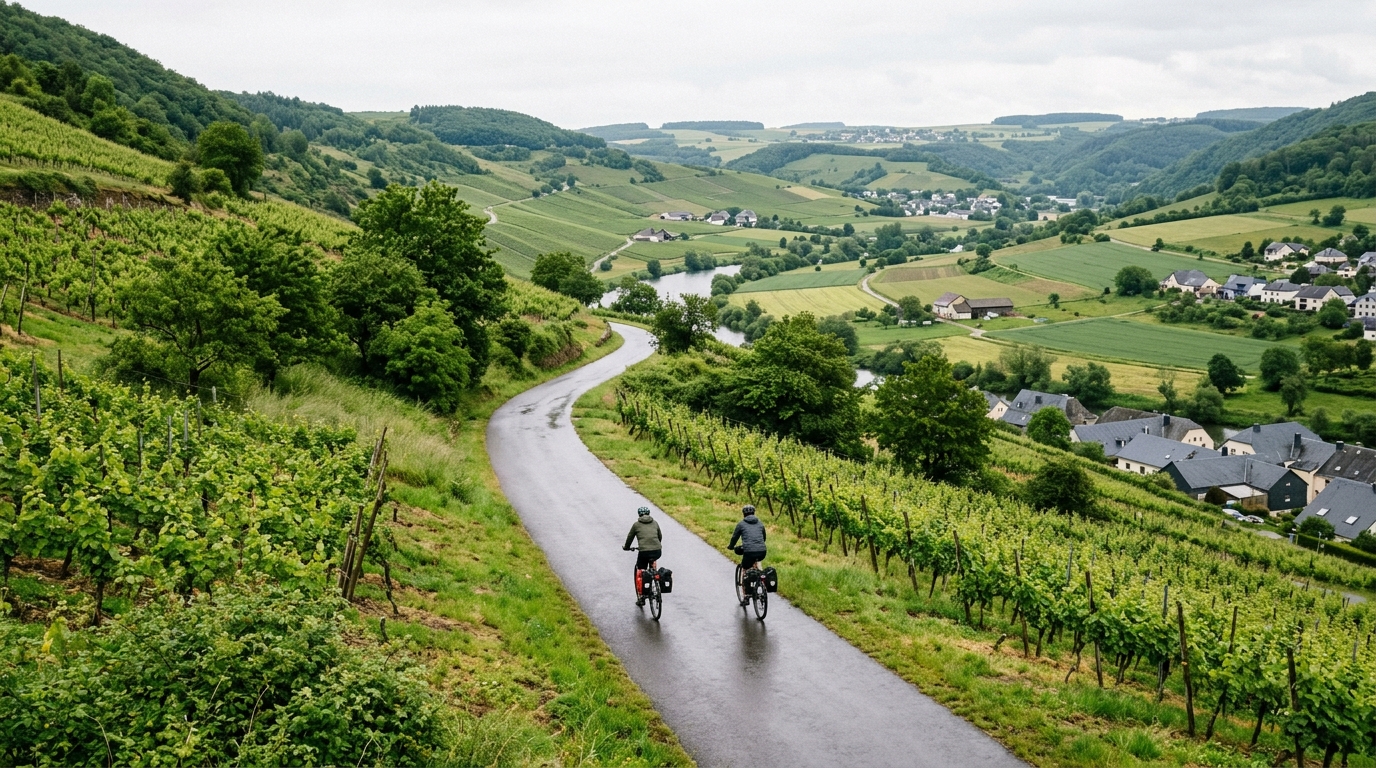
PC3 Cycle Route
A practical guide to the PC3 Cycle Route, an 89.9 km asphalt point-to-point ride in LU with modest elevation gain.
- Distancia
- 89.9km
- Desnivel
- 273m
- Superficie
- —
- Forma
- Punto a punto
La ruta
Perfil de elevación
PC3 Cycle Route cycling route overview
The PC3 Cycle Route is an 89.9 km asphalt ride in LU, set up as a point-to-point route rather than a loop. Its defining feature is not climbing difficulty, but distance management. With 273 m of elevation gain across the full route and no notable climbs listed, this is the kind of ride where the main limiter is likely to be sustained aerobic output, fuelling discipline, and how well you avoid turning a steady day into a sequence of unnecessary surges.
That matters tactically. On a route with modest elevation gain, there is less natural structure forcing hard efforts and recoveries. The ride rewards a rider who can settle into a controlled rhythm early, keep pressure on the pedals without chasing every small change in terrain, and arrive late in the route without having spent too much above threshold. If you track intensity, this is a good course for riding by FTP or by a conservative endurance power target rather than by emotion.
Terrain and ride character
The surface is asphalt, which makes the PC3 Cycle Route well suited to a road bike, an endurance road setup, or a fast all-road bike with slick tyres. Because there are no notable climbs in the route data, the climbing load should feel manageable for most prepared riders, but that does not make the distance trivial. Nearly 90 km still requires a proper pacing plan, especially if the ride is done at tempo rather than as an easy endurance day.
The low elevation gain changes how the effort accumulates. Instead of one or two decisive climbs, fatigue is more likely to come from time in the saddle and repeated small accelerations. The cleanest way to ride it is to keep the first section deliberately under control, avoid using every rise or junction as a reason to spike power, and build into the final third if the legs are still responsive.
Practical notes
Because the route is not a loop, logistics matter. Plan the start and finish separately before riding, especially if you need transport back to the start or want to meet another rider at the end. This is the key practical difference between the PC3 Cycle Route and a standard circuit.
For equipment, asphalt keeps the setup simple. Prioritise comfort and efficiency over overbuilt tyre choice. The route profile points toward steady endurance riding, so position, hydration access, and reliable fuelling will matter more than ultra-low gearing for major climbs.
Best use of the route
The PC3 Cycle Route cycling route is best treated as a controlled endurance ride: long enough to be meaningful, gentle enough in elevation gain to stay aerobic, and linear enough to require planning. It is a strong option for riders who want distance without a climbing-heavy day, or for building durability before more selective routes where the terrain forces harder efforts.
Rutas relacionadas
3-Länder-Radweg
A 302.2 km asphalt route in Germany with 1512 m of climbing and point-to-point logistics shaped by the Reußenkreuz climb.
7 Peaks Alpine Challenge
A 110.9 km point-to-point assault through the Victorian Alps, stacking 3404 metres of climbing across relentless, wind-swept high-country ascents.
Aberdare Range
A 46 km asphalt point-to-point through Kenya's Central Highlands that trades big climbs for a relentless 1,700 m of rolling grind.
Abra Málaga
A 45-kilometer point-to-point ribbon of asphalt through Peru's Sacred Valley, climbing 1,699 relentless meters into the high Andes.
Afriski Mahlasela Pass
A 112.8 km asphalt ascent through the Maloti Mountains, climbing 3,384 m to the roof of southern Africa via the storied Mahlasela Pass.
Ahr Cycleway
An 82.9 km asphalt point-to-point route with 541 m of gain, the Ahr Cycleway is a steady endurance ride rather than a climb-focused day.