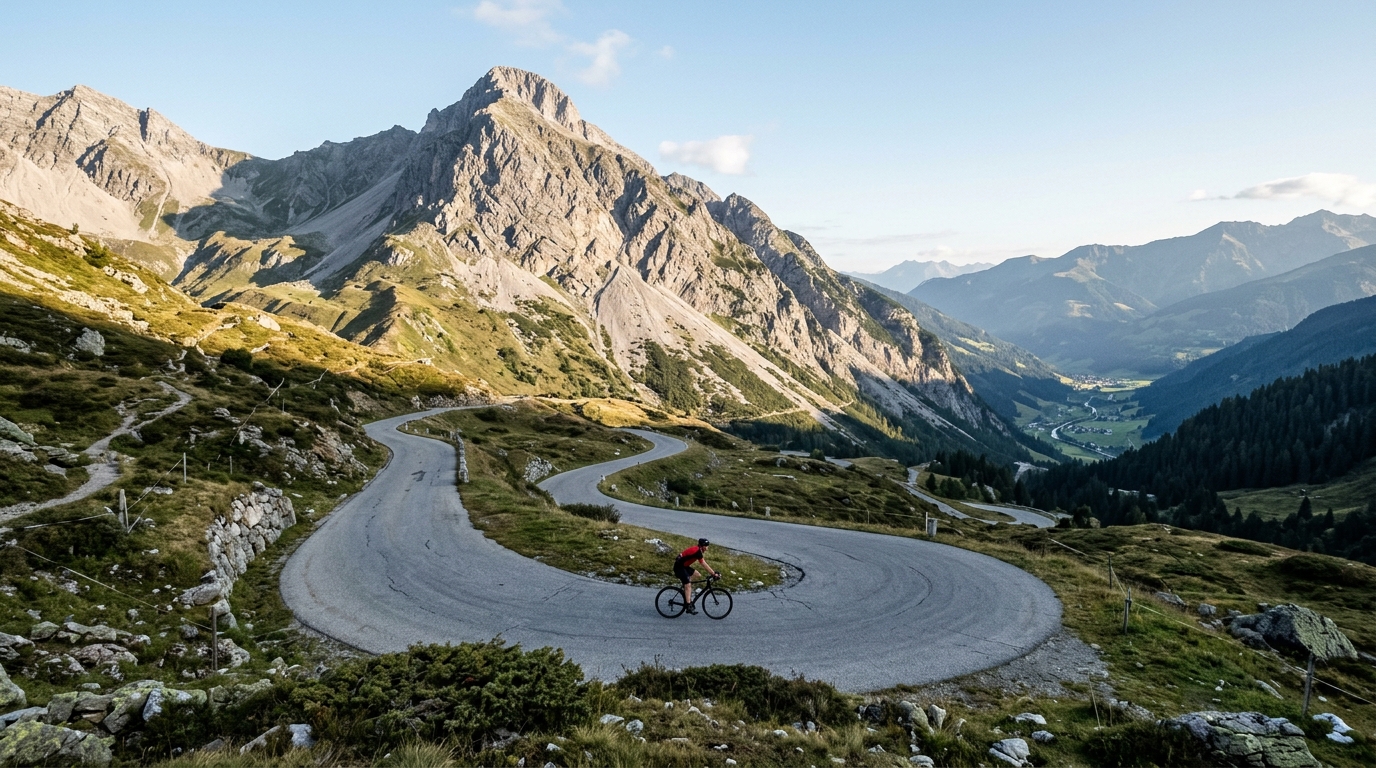
Hörndljoch
A long Austrian category 1 climb where a modest average gradient hides steep ramps and a significant high-altitude finish.
- Länge
- 28.2km
- Ø
- 4.5%
- Max
- 19.1%
- Gipfel
- 2,110m
- Aufstieg
- 1,239m
Der Anstieg
Steigungsprofil
Hörndljoch cycling climb profile
Hörndljoch is a long Austrian category 1 climb that asks more from pacing discipline than the headline average gradient might suggest. On paper, 28.2 km at 4.51% sounds manageable, but that number is softened by the length of the ascent. The important counterweight is the 19.08% maximum gradient. A climb with this spread between average and maximum is not a simple metronomic drag. It is a climb where the easier ground can tempt riders into riding above target, then the steepest ramps punish that early enthusiasm.
The road starts at 837 m and rises to 2110 m, with 1273 m of net elevation gain. That matters because the effort is long enough to become aerobic first and muscular second. If the first part feels comfortable, that is not a signal to chase speed. It is the climb giving you a chance to bank efficiency before the harder pitches arrive.
How the gradient rides
With only the full-climb profile available, the cleanest way to read Hörndljoch is as an uneven endurance climb rather than a steady threshold test. The average gradient tells you the road cannot be consistently severe across the full 28.2 km. The maximum gradient tells you there are sections steep enough to force a real change in torque, cadence, and breathing.
That combination shapes the ride from bottom to summit. The lower slopes should be treated as a controlled entry, not a warm-up to be wasted. Through the body of the climb, the goal is to keep pressure stable across changing gradients rather than matching speed. Near the top, the altitude of the 2110 m summit and the accumulated 1273 m of gain make every surge more expensive. Even if the road briefly eases, recovery will be limited if you have already burned through your sustainable power.
Pacing and gearing notes
The correct approach is to cap effort early and let the climb come to you. Ride by power or perceived effort rather than speed, because the average gradient will not describe the short steep sections in real time. If using power, anchor the first part below your sustainable climbing effort and save threshold-level work for the ramps that demand it. Riders unsure of their benchmark should review /glossary/ftp or estimate it with /tools/ftp-estimator before using this climb as a test.
Gearing should prioritise cadence preservation. The 19.08% maximum gradient is steep enough that riders who arrive over-geared will be forced into low-cadence grinding, which increases muscular fatigue and makes the upper climb harder than it needs to be. Choose a setup that lets you stay seated on most of the climb and only stand when the gradient forces the issue.
The key is restraint. Hörndljoch is not defined by one brutal statistic, but by the mismatch between a moderate 4.51% average and a climb long enough, high enough, and steep enough in places to expose poor pacing.