Anstiegs-Bibliothek · Peru
Cycling climbs in Peru
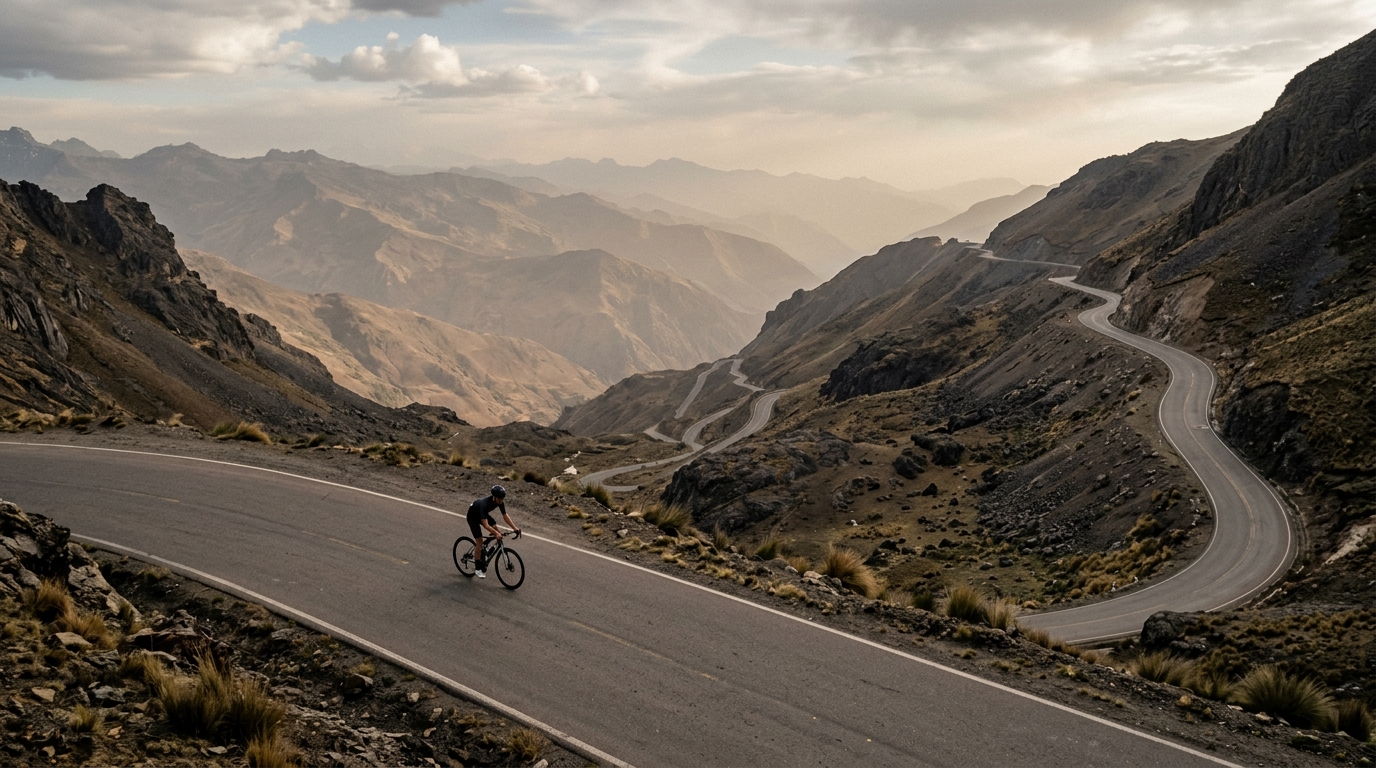
Peru is a climber's proving ground where thin mountain air and relentless gradients define every effort. With nine catalogued climbs and five rated hors catégorie, this is a country built for riders who chase altitude rather than shy from it. The highest summit crests near 4,910 m, and marquee ascents like Ticlio and Poroquingua carry you deep into the high Andes, where the road keeps rising long after your legs beg it to stop.
The variety here rewards the ambitious. Alto de Colpapampa and Alto de Camilaca test sustained climbing at elevation, while Abra de Porculla and Alto de Tala offer their own demanding character. Together they make Peru a destination for cyclists who measure a ride not in kilometres but in vertical metres earned. Come prepared for altitude, and you'll find some of the most rugged, quietly spectacular climbing anywhere on two wheels.
Die berühmtesten Anstiege von Peru
Alle Anstiege in Peru
28 Anstiege
- TiclioKat. 1PE · 24.2 km · 5.6% · 1312 m766Pkt.
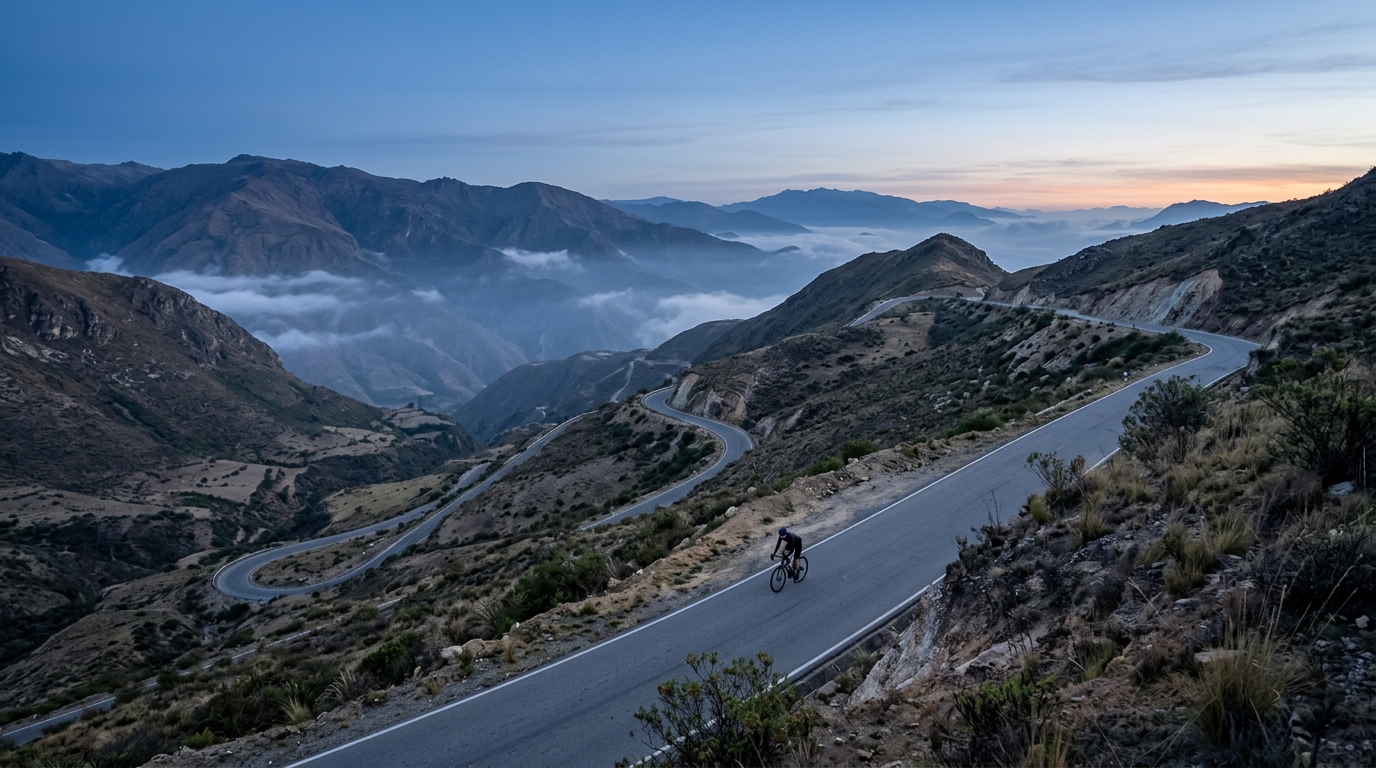 Abra de PorcullaHCPE · 33.3 km · 5.3% · 1737 m925Pkt.
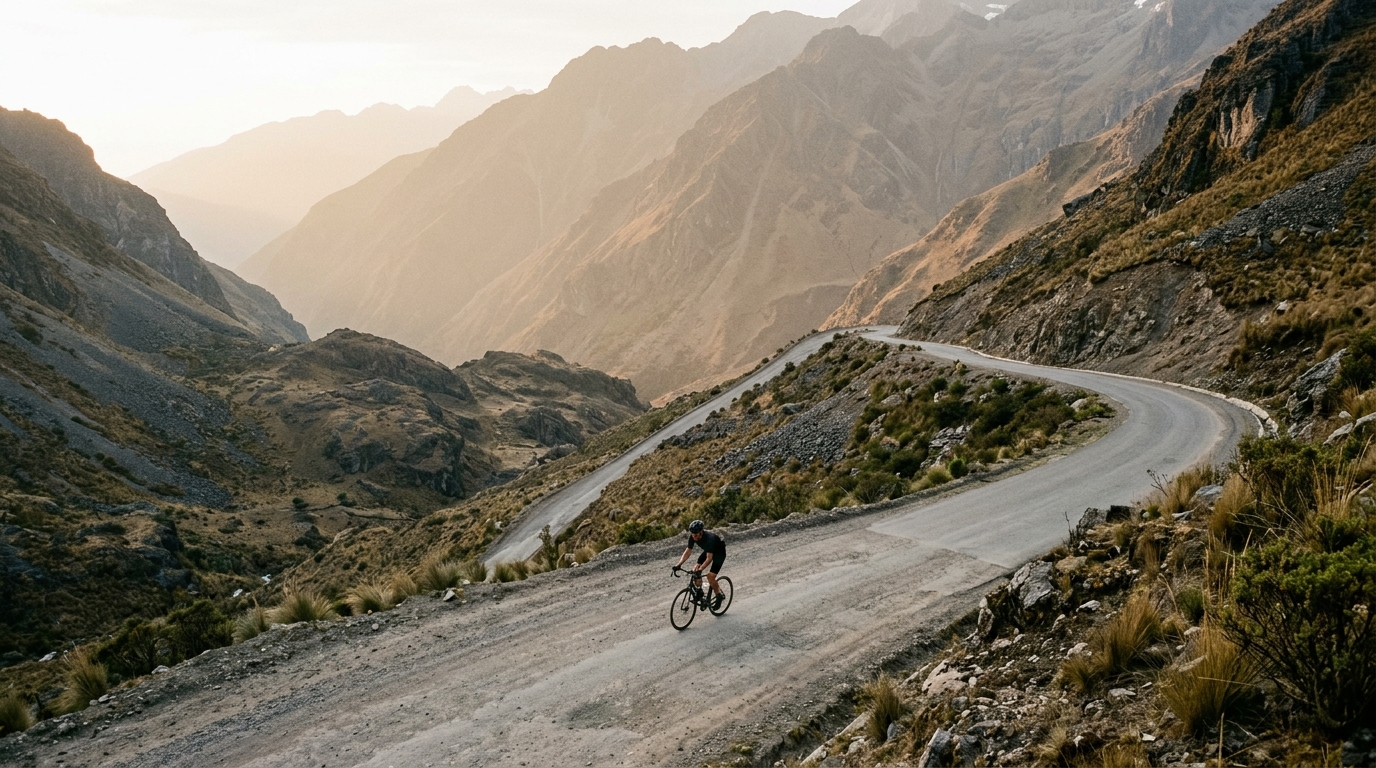 WarmiwañusqaHCPE · 76.1 km · 4.2% · 3145 m1310Pkt.
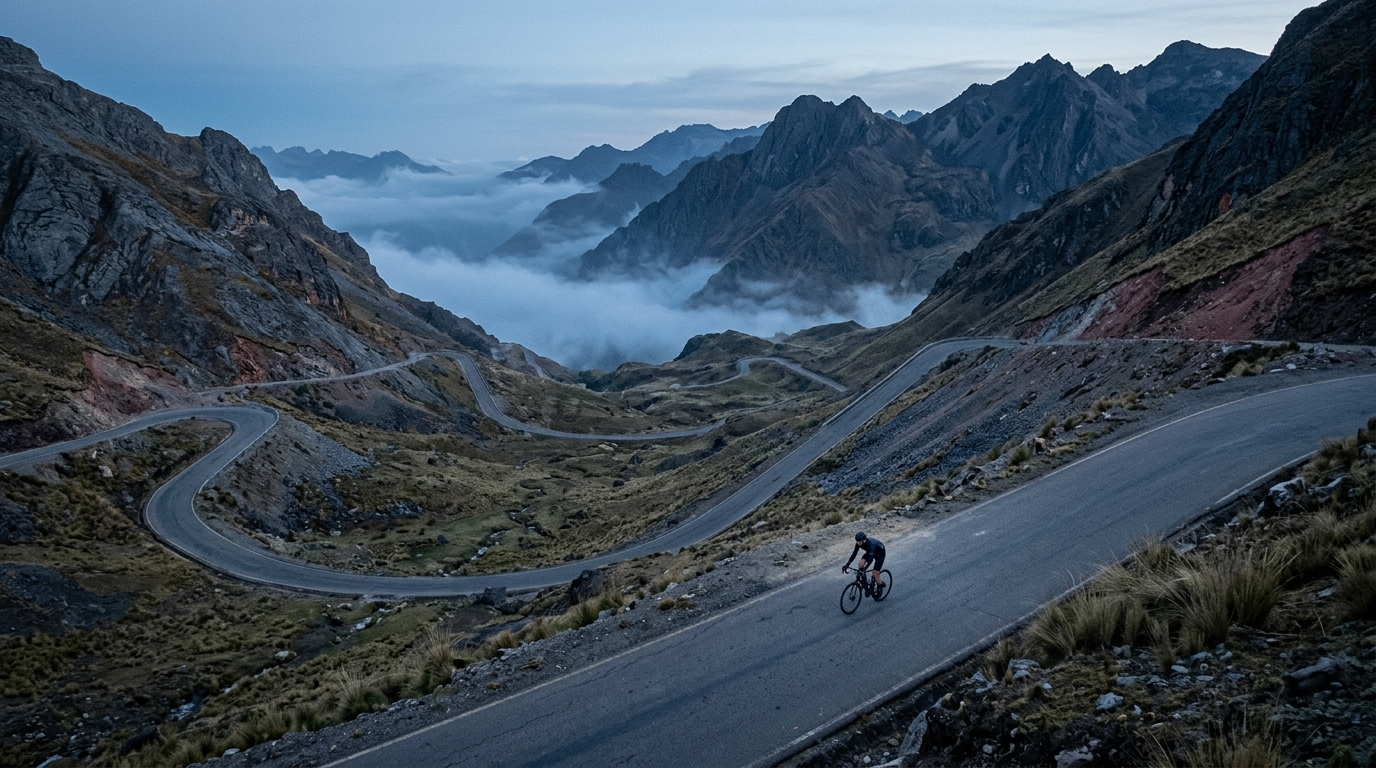 Málaga PassHCPE · 48.5 km · 4.6% · 2221 m1039Pkt.
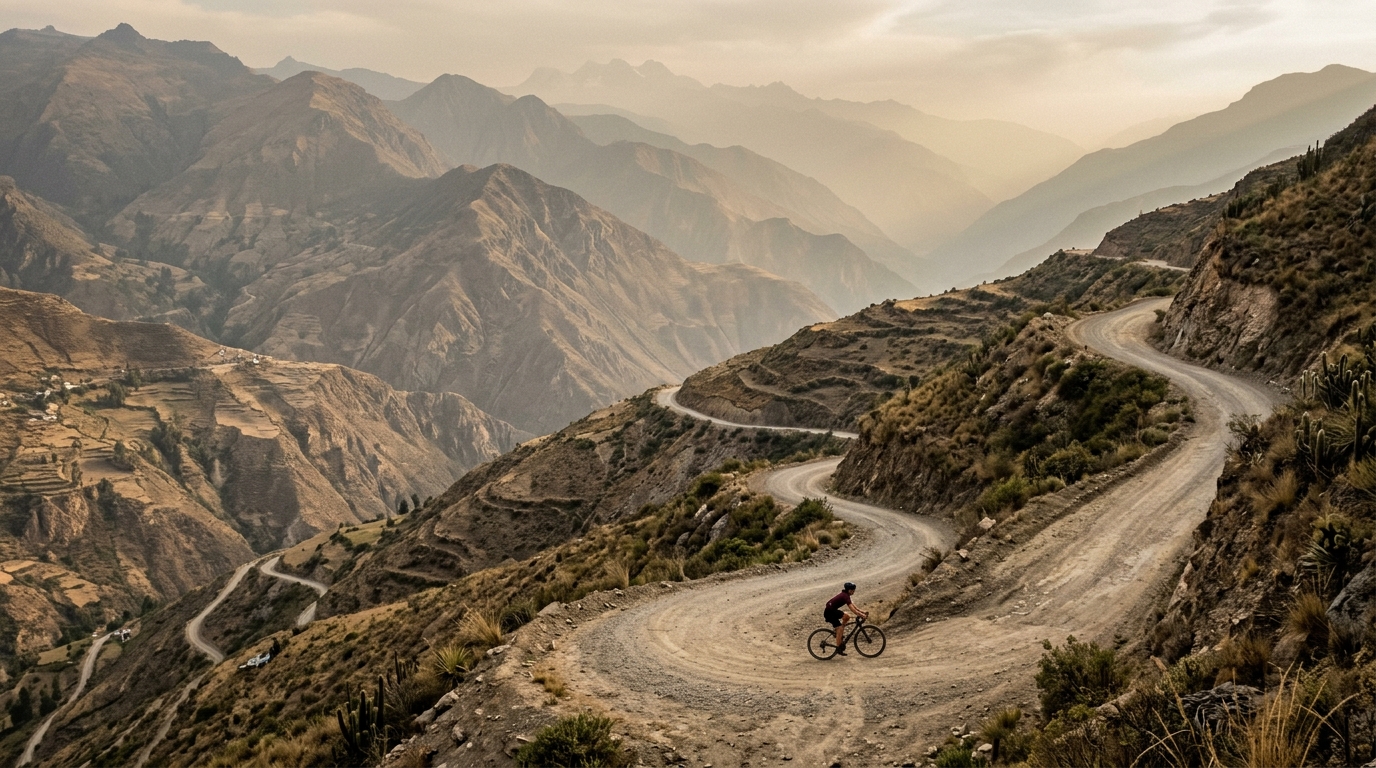 Alto de Santa CruzHCPE · 34.4 km · 5.5% · 1860 m1037Pkt.
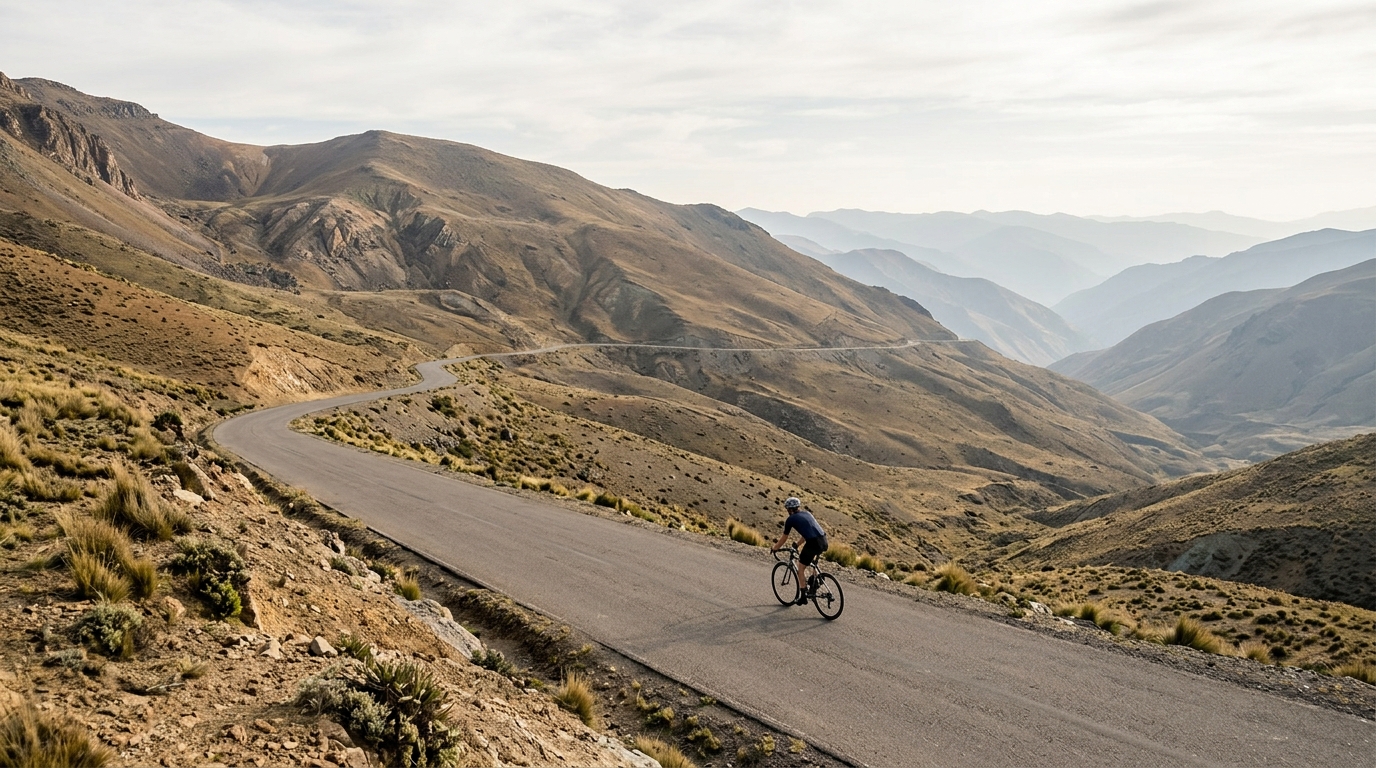 PoroquinguaHCPE · 30.6 km · 6.6% · 2021 m1327Pkt.
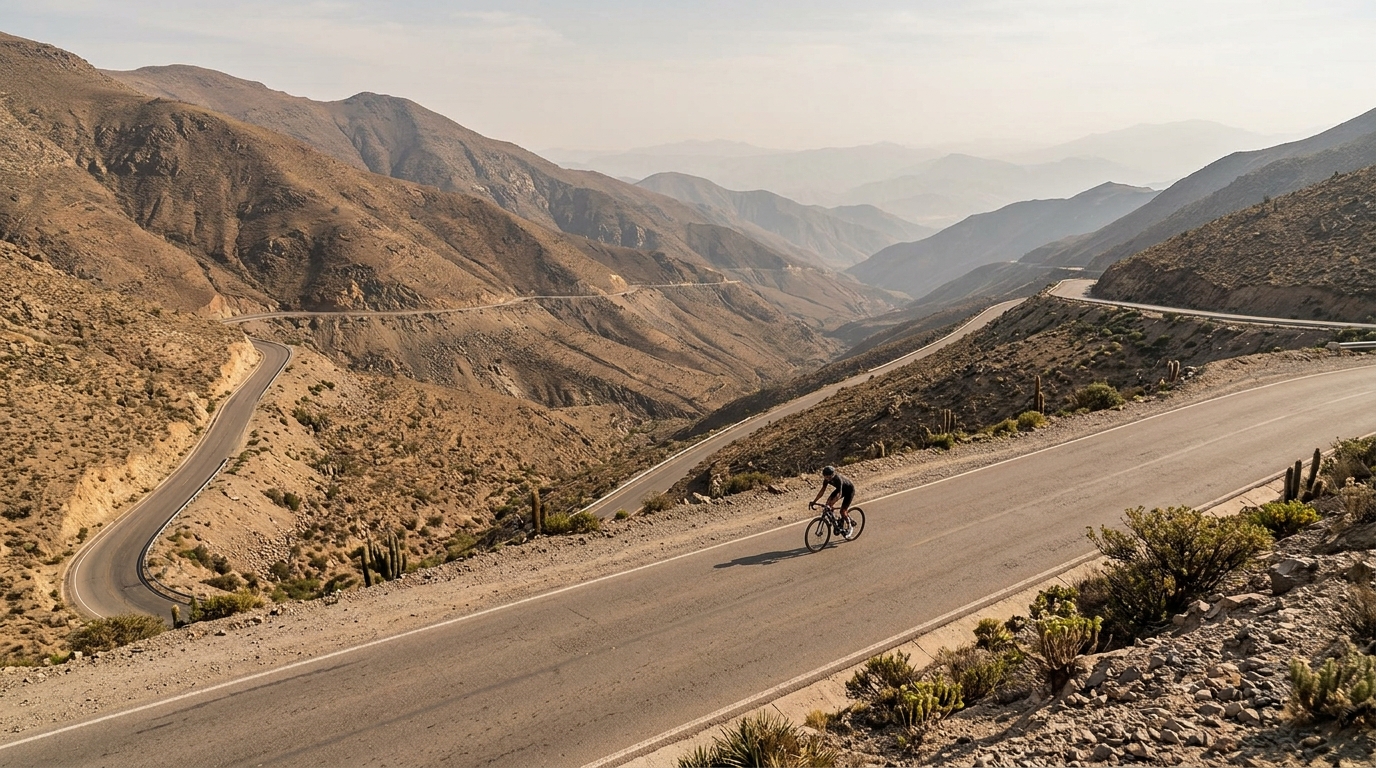 Alto de CamilacaHCPE · 34.2 km · 7.0% · 2357 m1651Pkt.
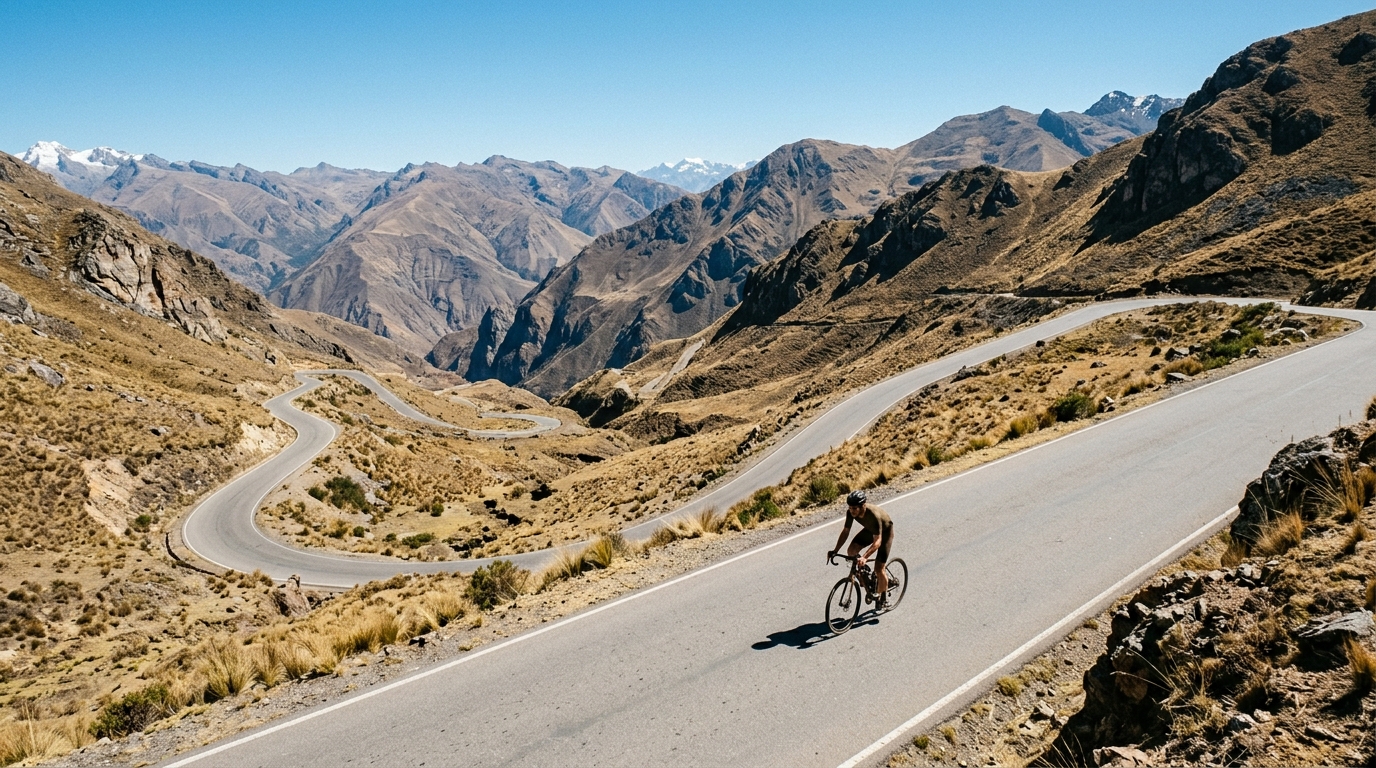 Paso de CallánHCPE · 31.4 km · 7.2% · 2231 m1616Pkt.
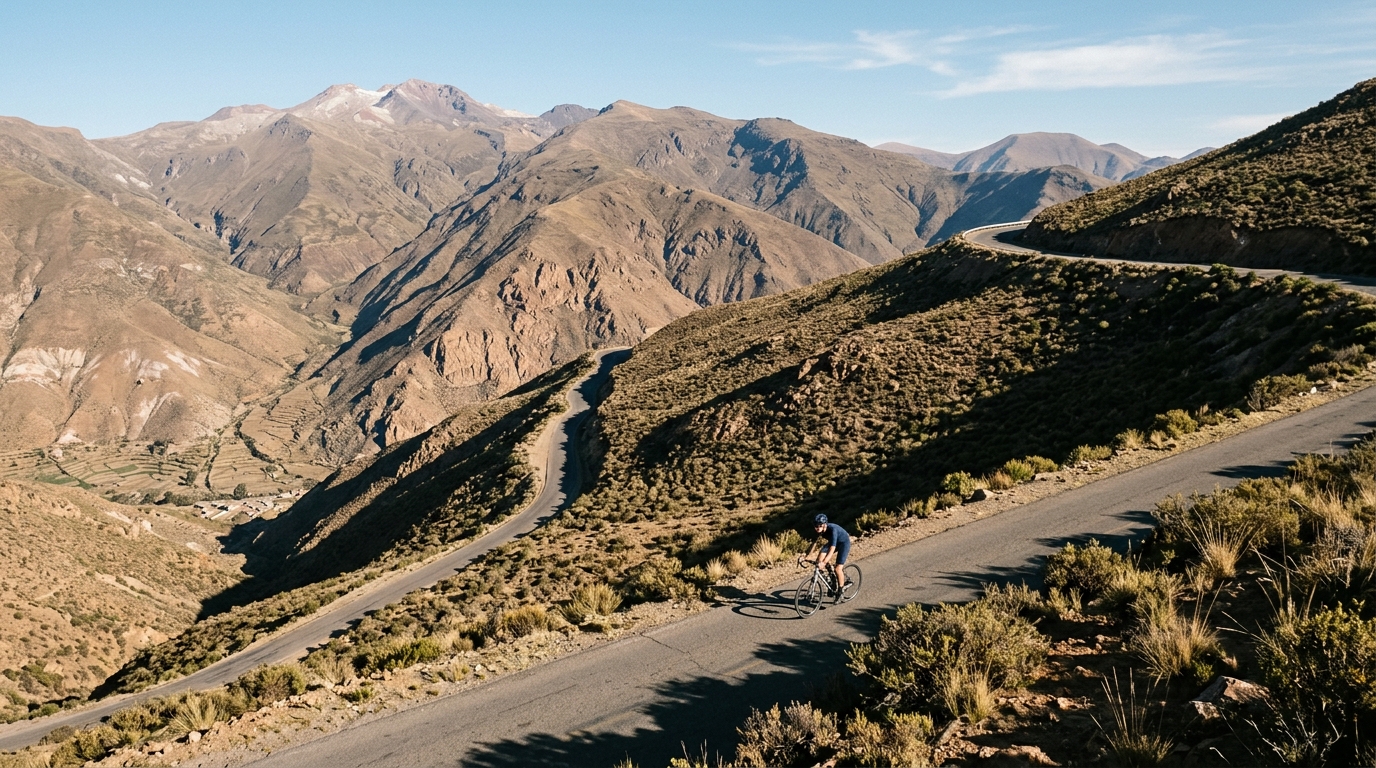 Alto de CamilacaHCPE · 37.4 km · 6.3% · 2341 m1489Pkt.
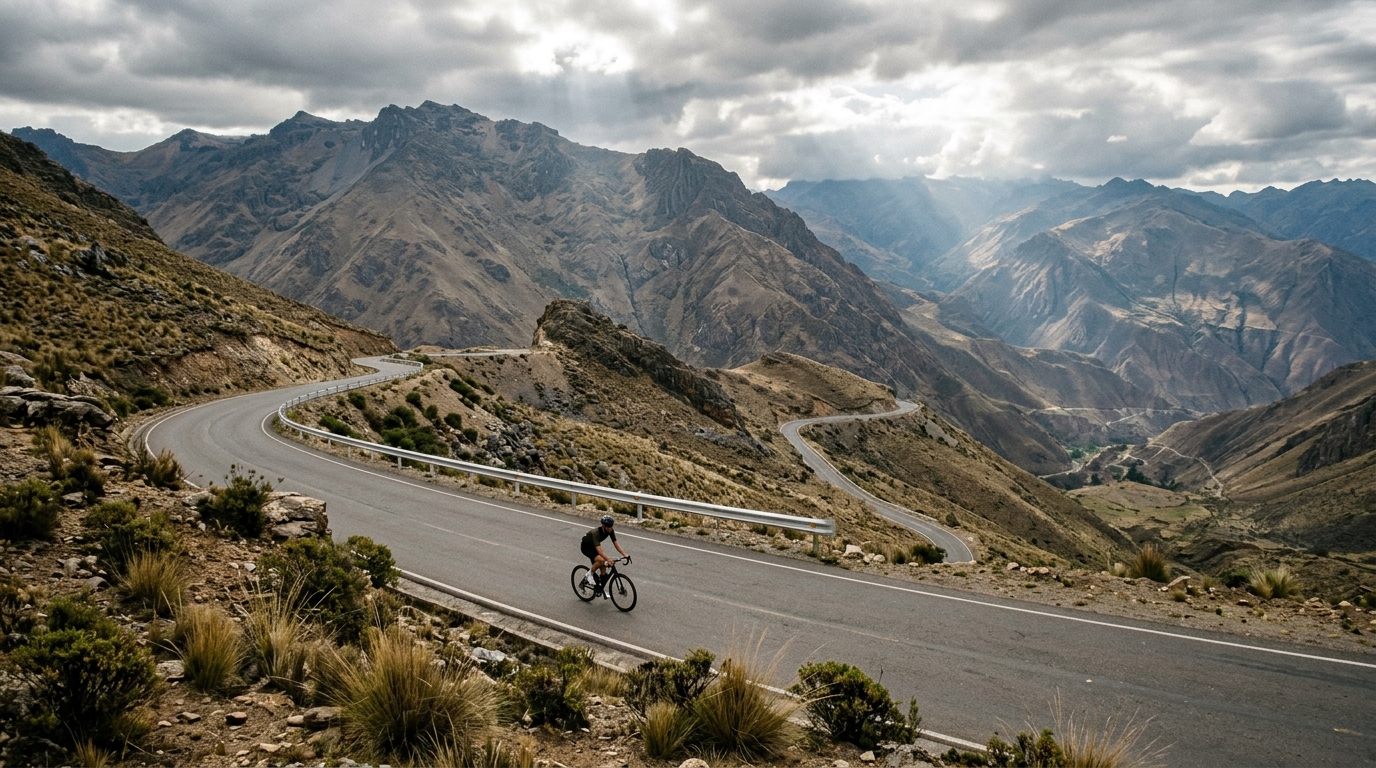 Alto de EscoyaHCPE · 45.9 km · 5.3% · 2441 m1266Pkt.
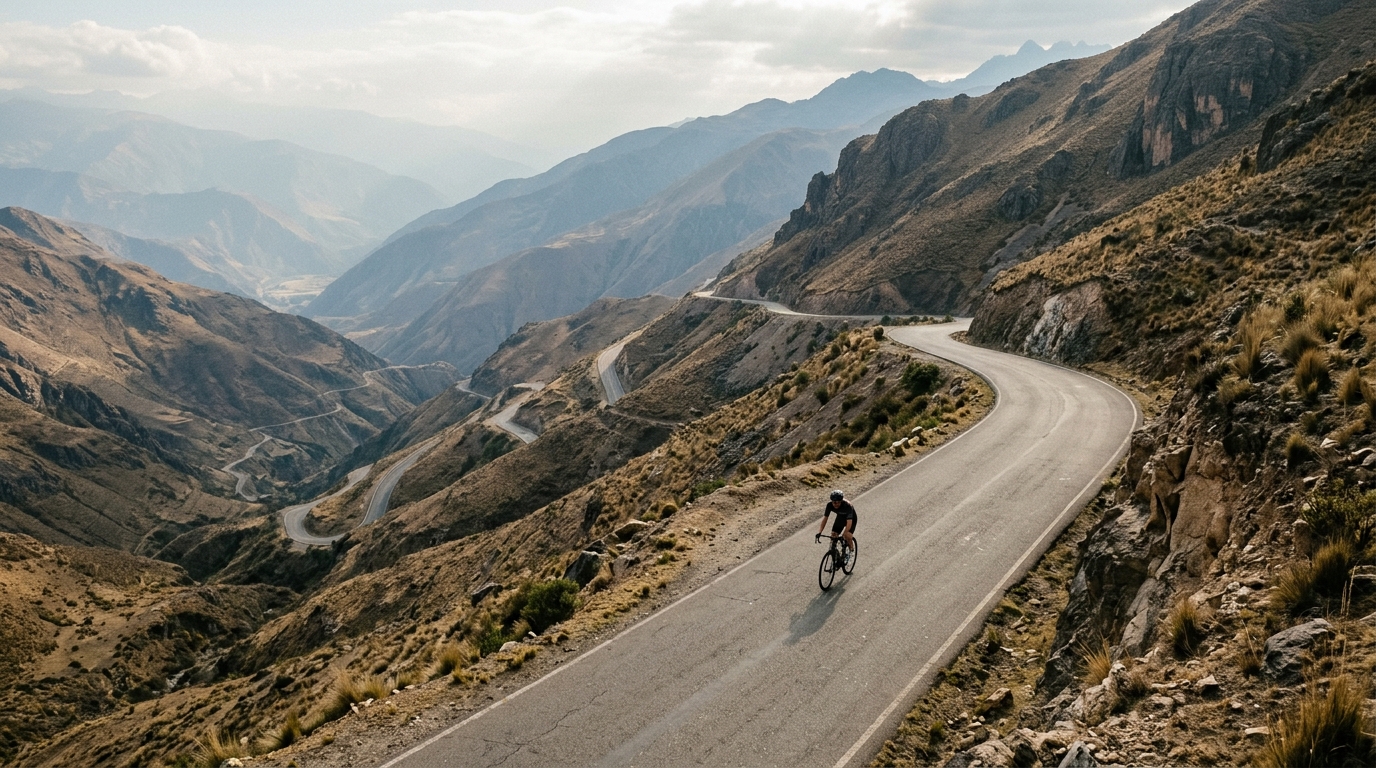 Alto de EscoyaHCPE · 51.0 km · 4.7% · 2446 m1136Pkt.
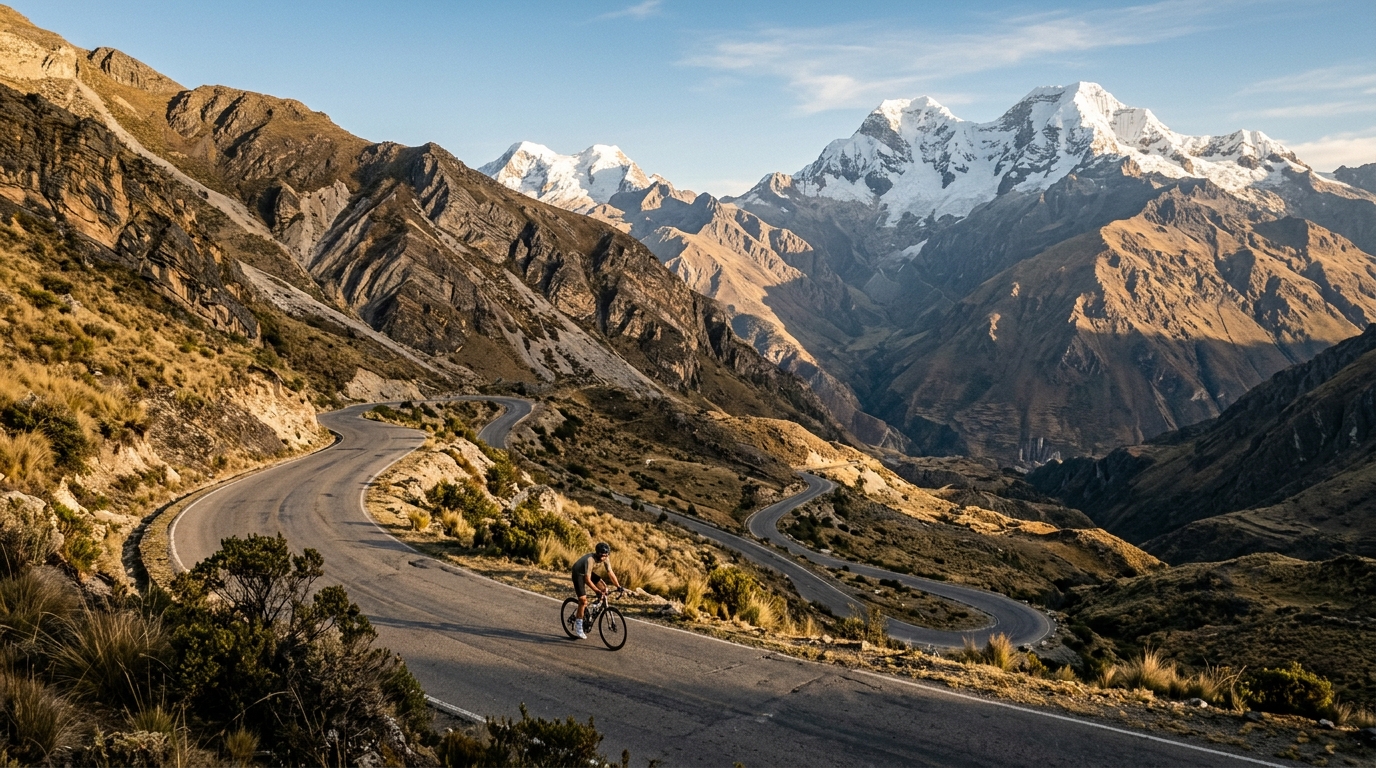 PortachueloHCPE · 58.0 km · 4.3% · 2593 m1097Pkt.
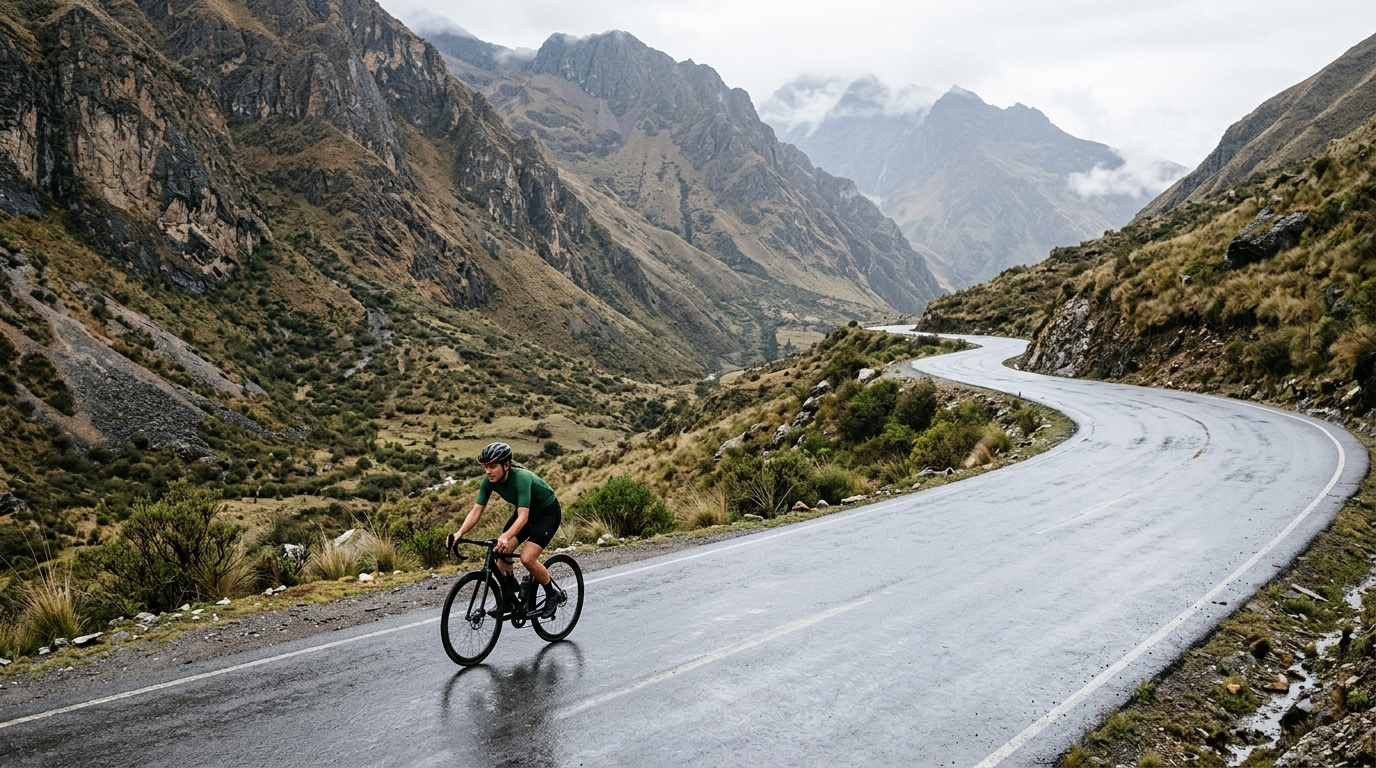 Portachuelo de CulucanHCPE · 27.4 km · 6.1% · 1624 m1005Pkt.
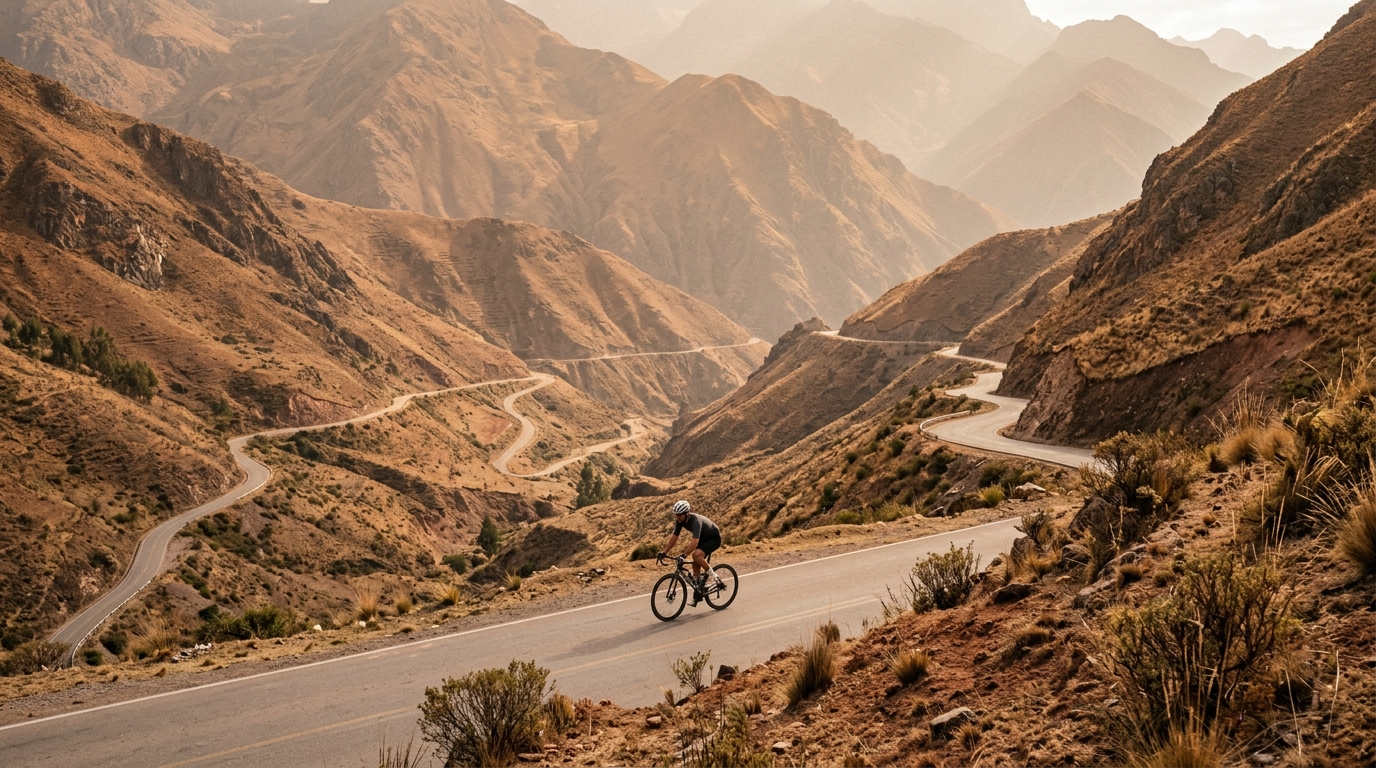 Portachuelo de MatalacasHCPE · 68.7 km · 3.8% · 2833 m976Pkt.
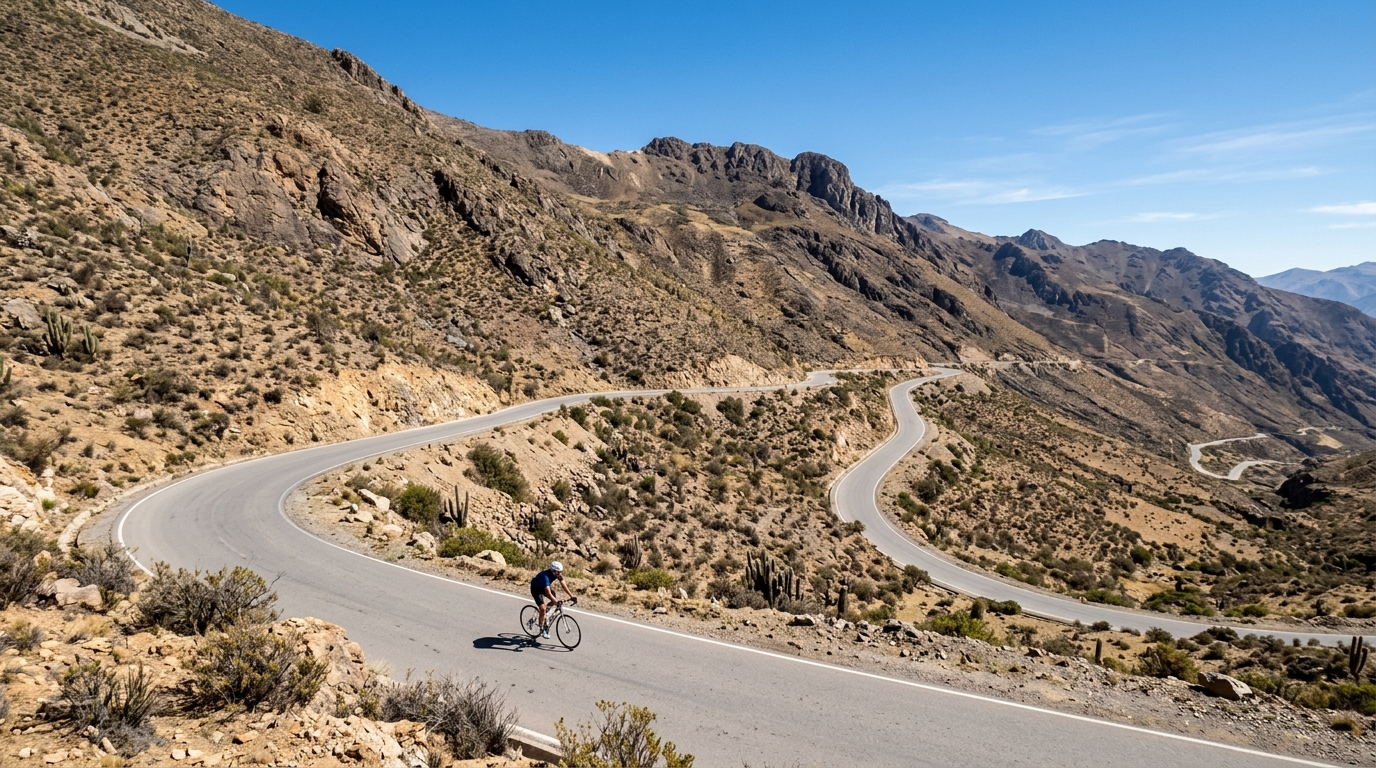 Alto de La LagunaHCPE · 14.2 km · 8.1% · 1121 m939Pkt.
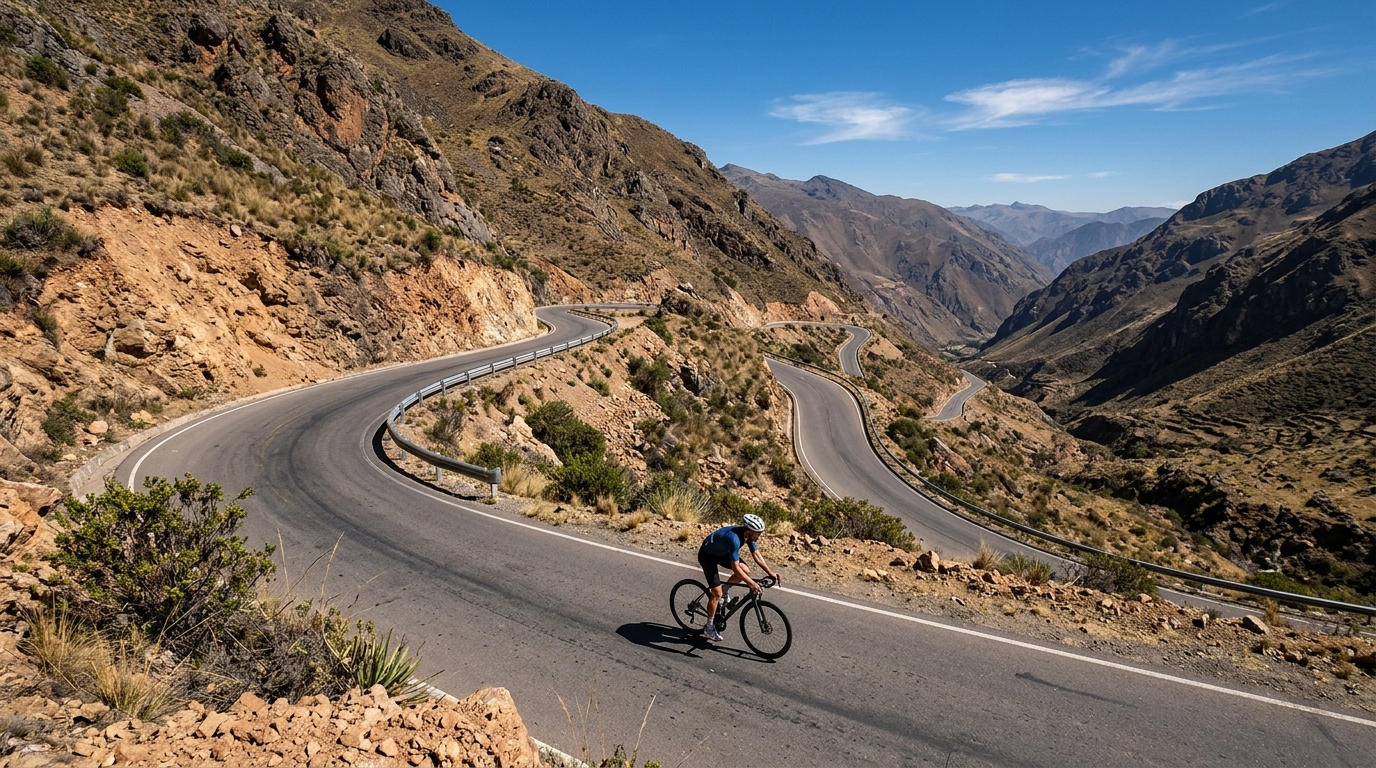 Portachuelo de YantaHCPE · 32.6 km · 5.3% · 1707 m905Pkt.
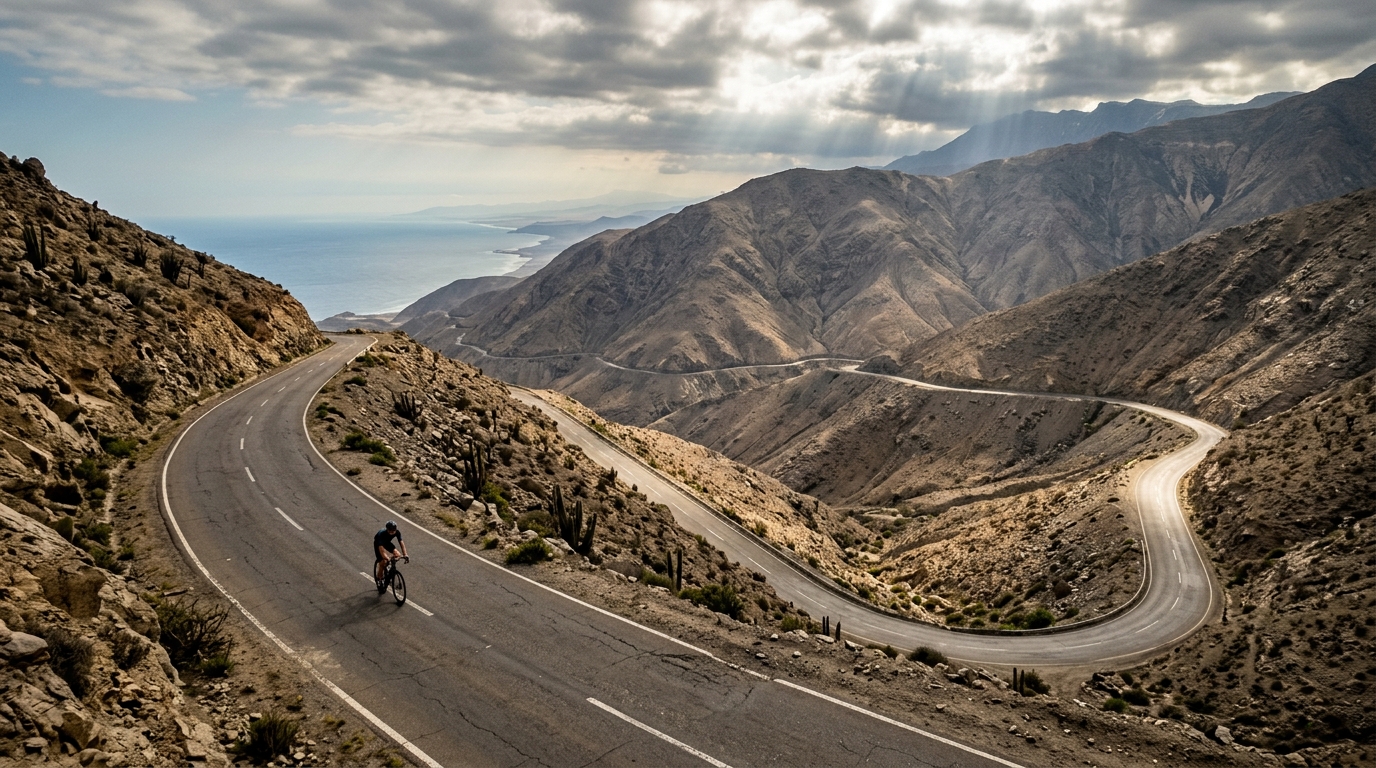 Alto de TalaHCPE · 47.5 km · 4.3% · 2042 m862Pkt.
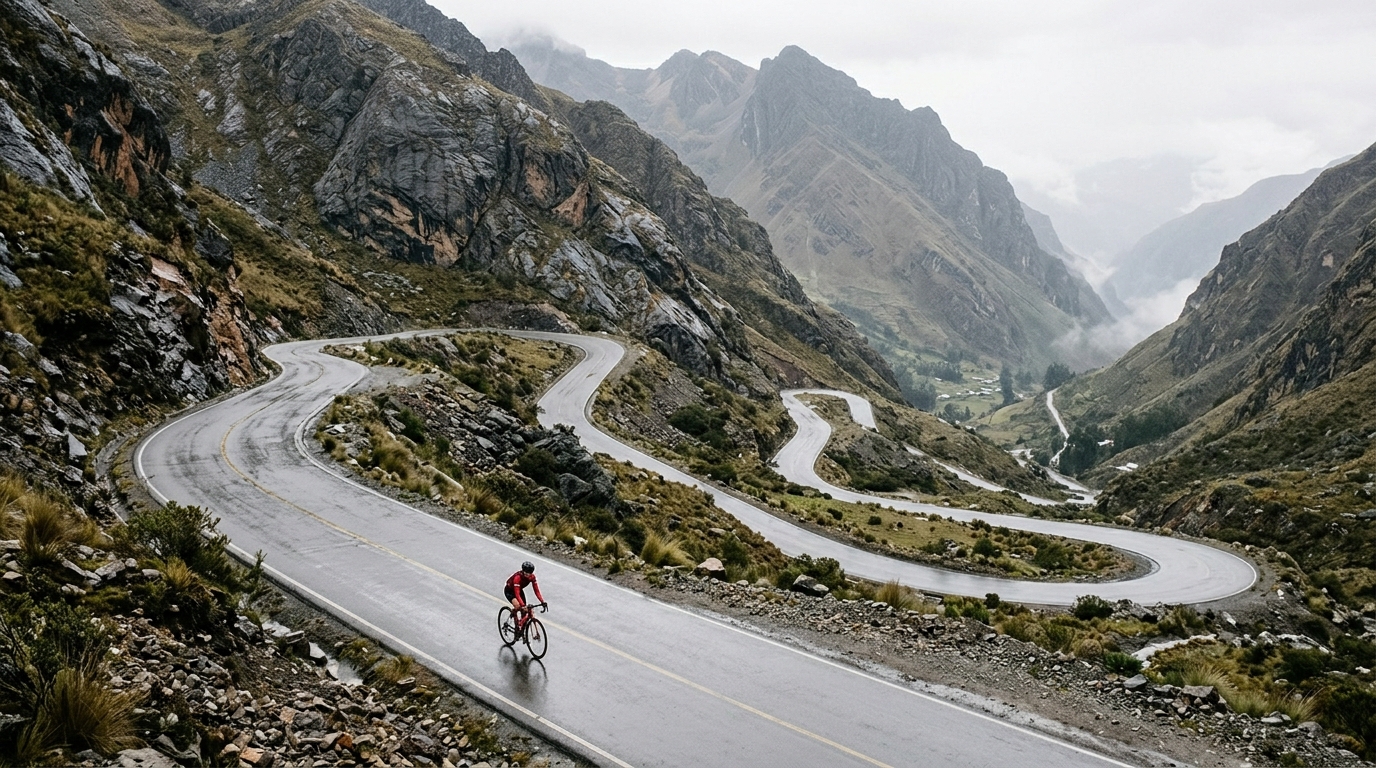 Alto de ColpapampaKat. 1PE · 24.4 km · 5.7% · 1383 m792Pkt.
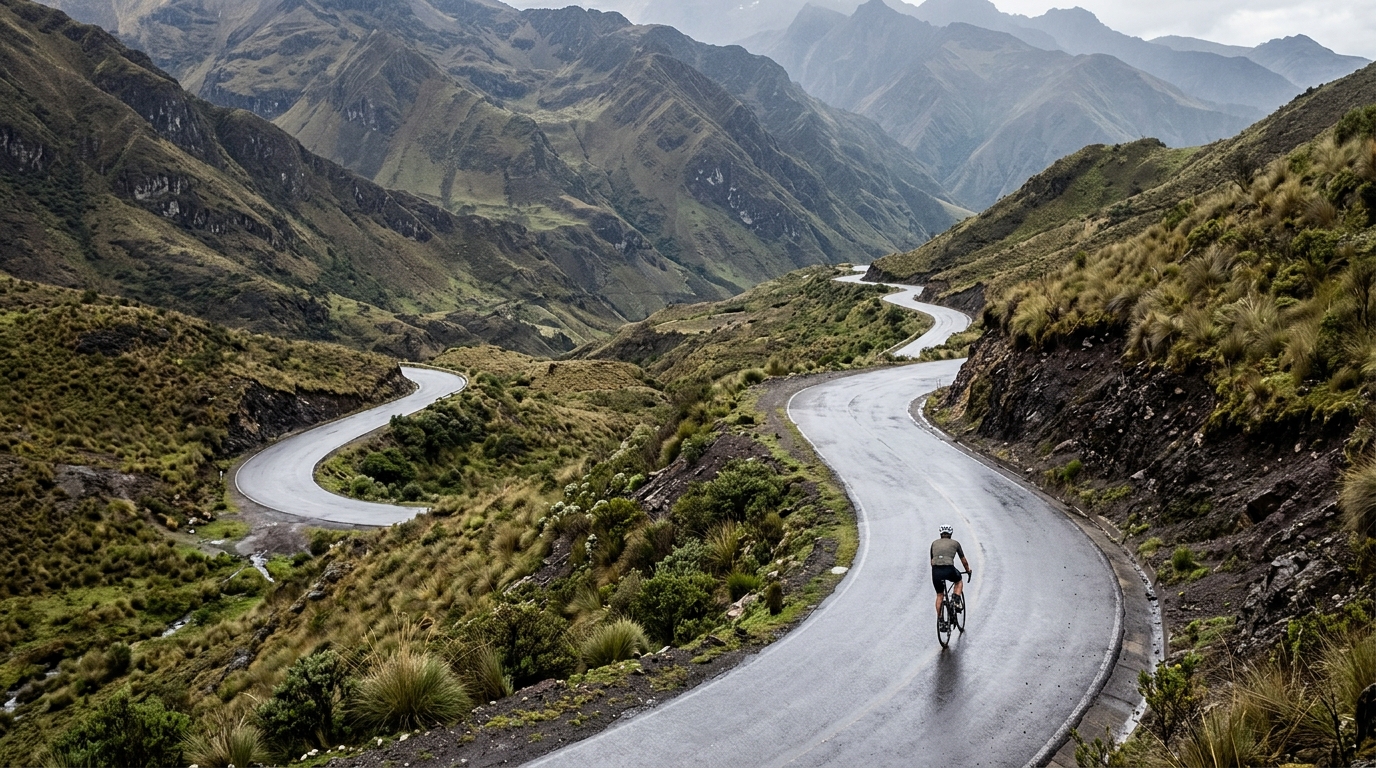 Alto de ColpapampaKat. 1PE · 28.3 km · 4.9% · 1394 m690Pkt.
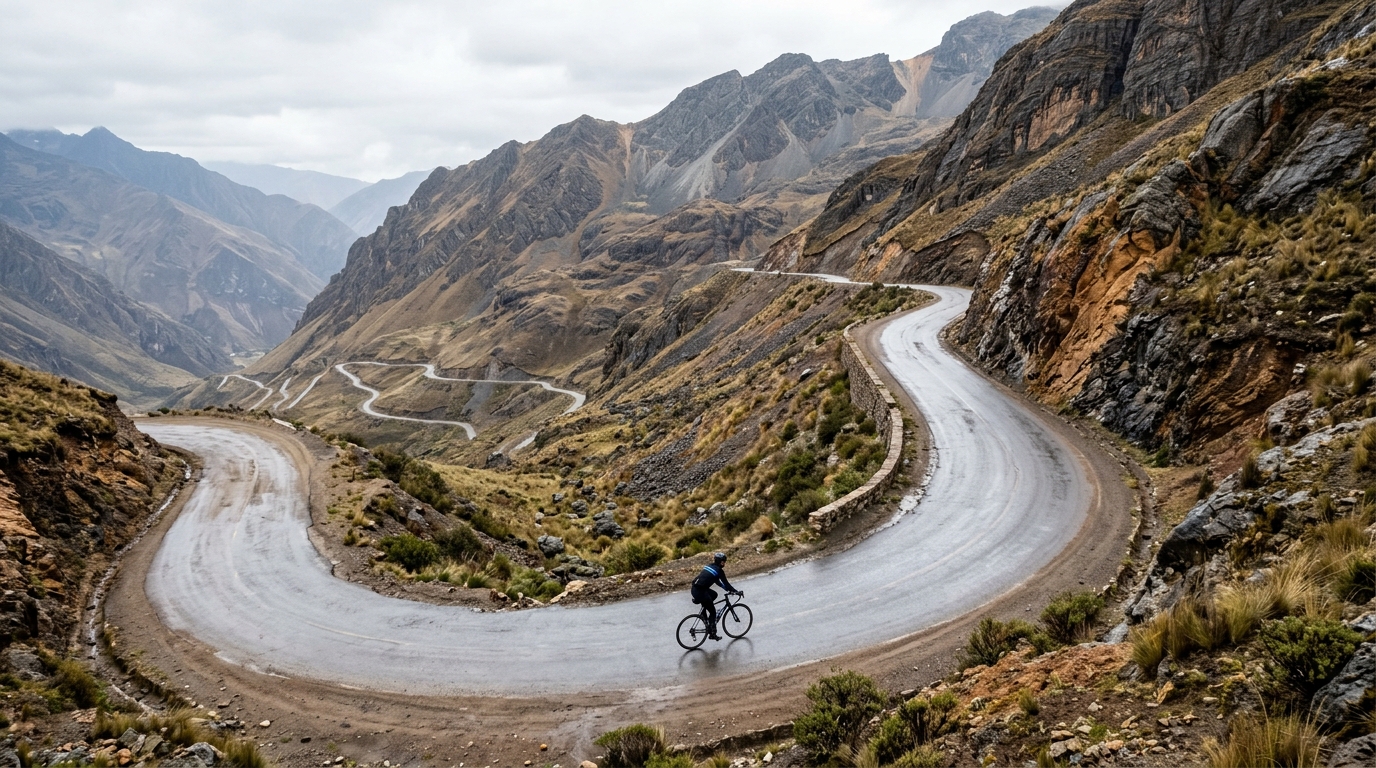 Alto de QuiilahuaniKat. 1PE · 52.9 km · 3.5% · 1945 m640Pkt.
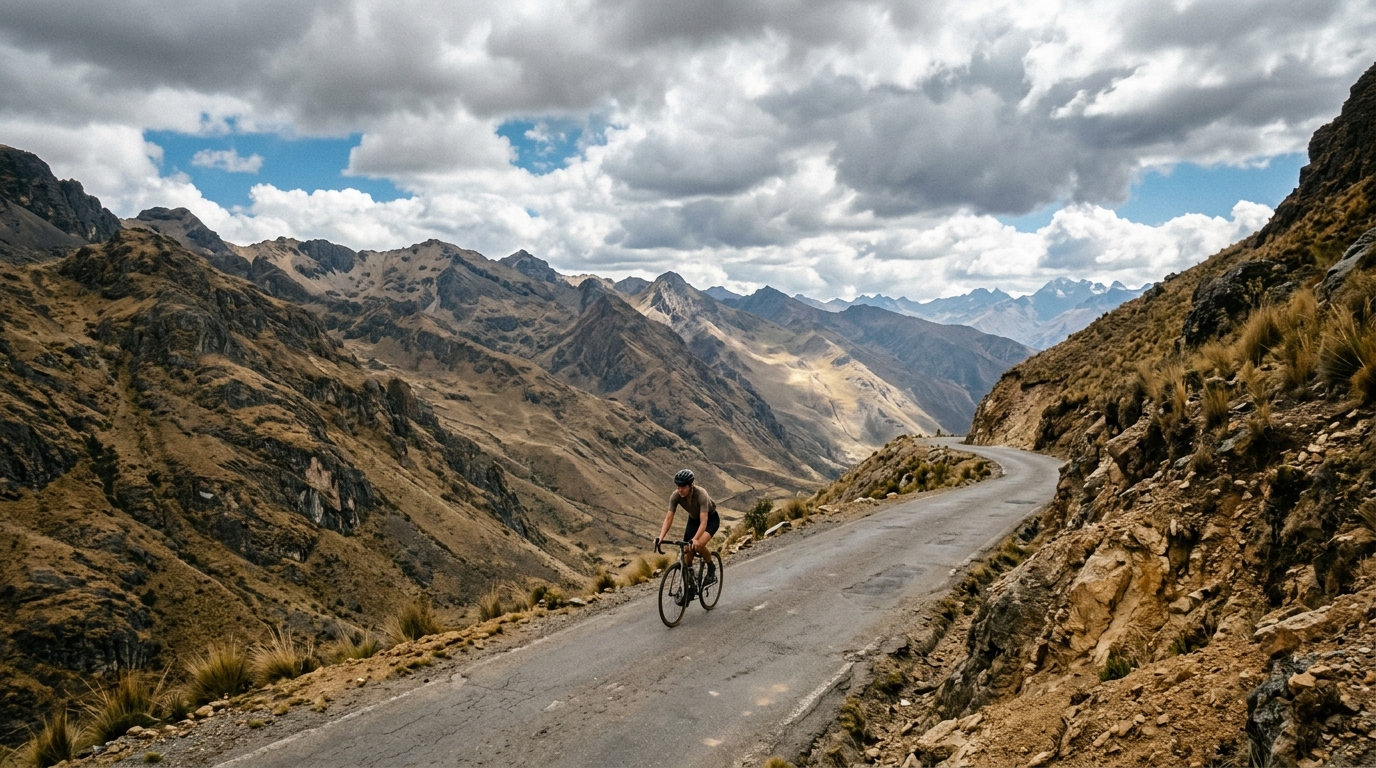 Paso de CotayKat. 1PE · 11.6 km · 7.3% · 819 m621Pkt.
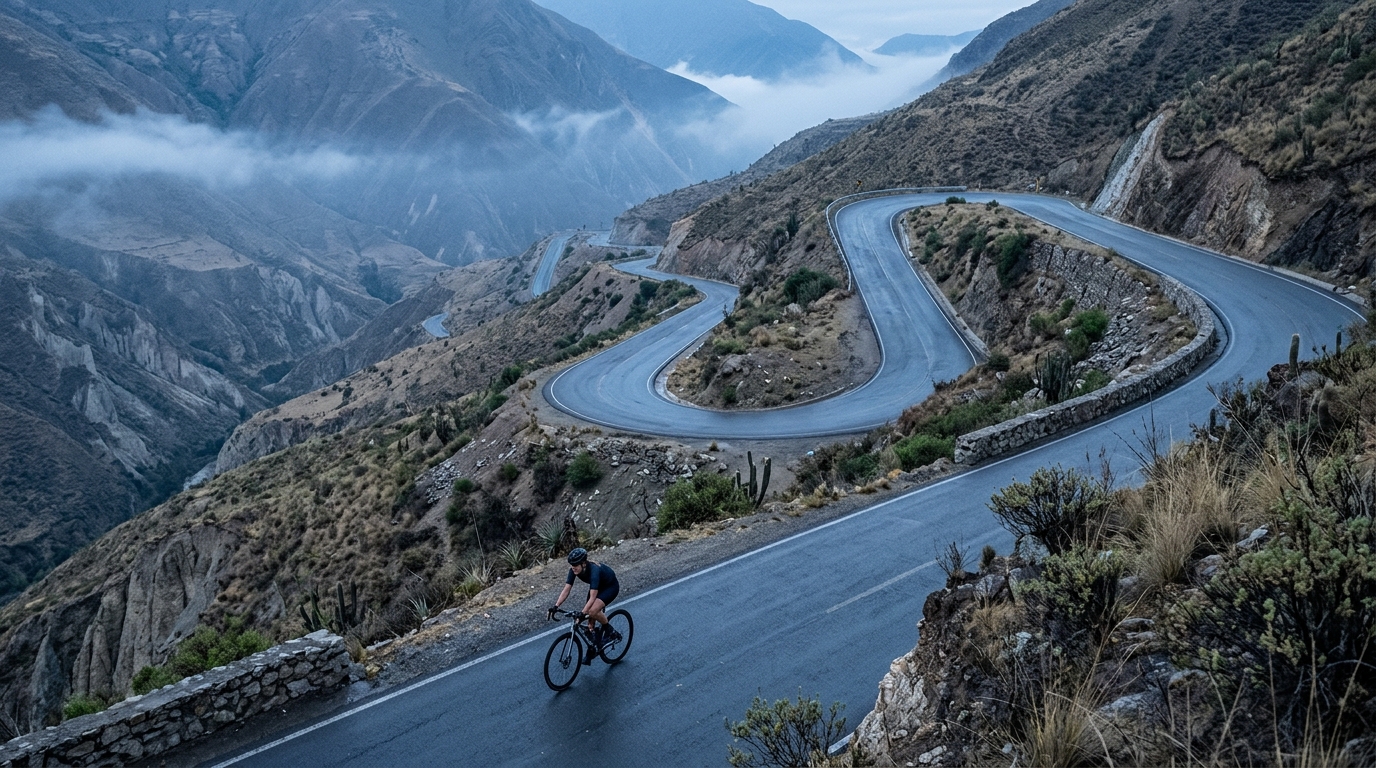 Alto de La LomaKat. 1PE · 24.2 km · 5.0% · 1199 m606Pkt.
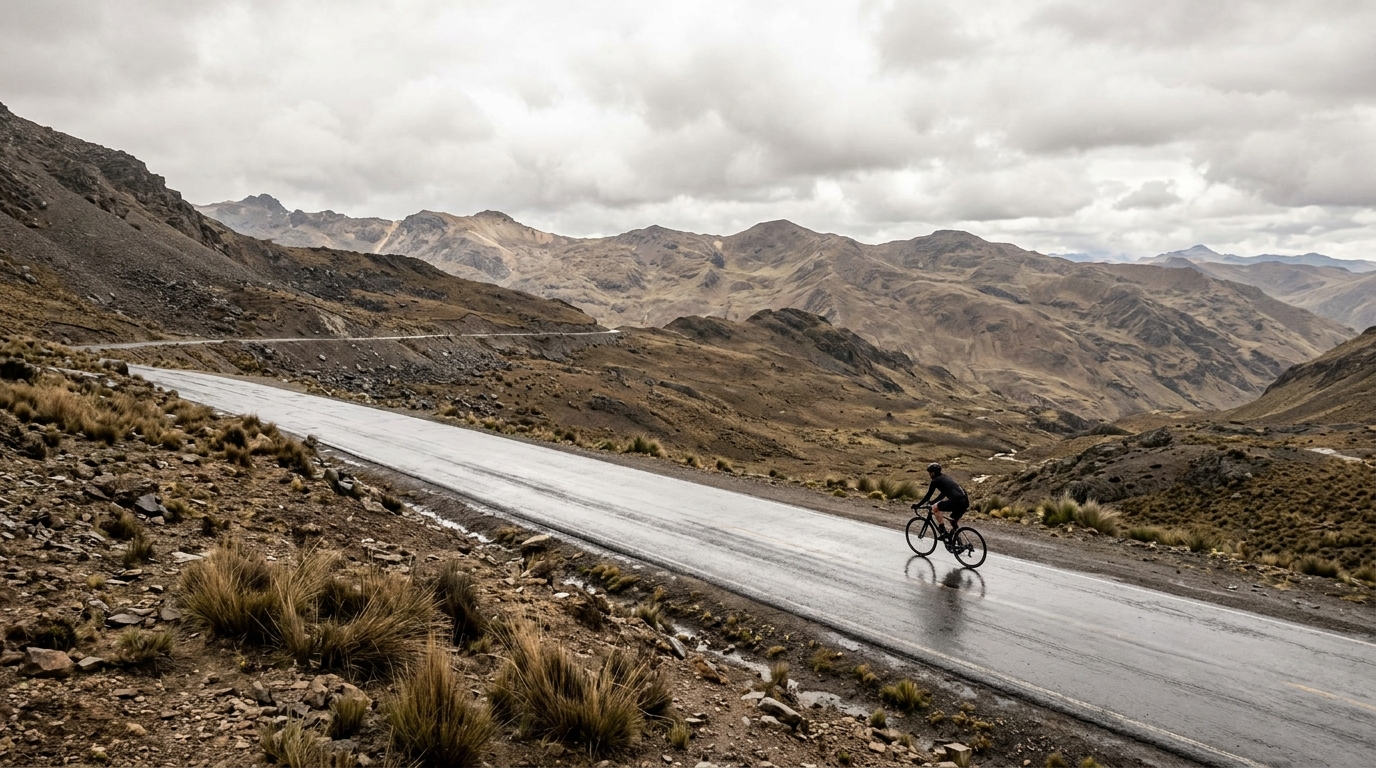 Paso de ChontaKat. 1PE · 30.6 km · 4.0% · 1220 m495Pkt.
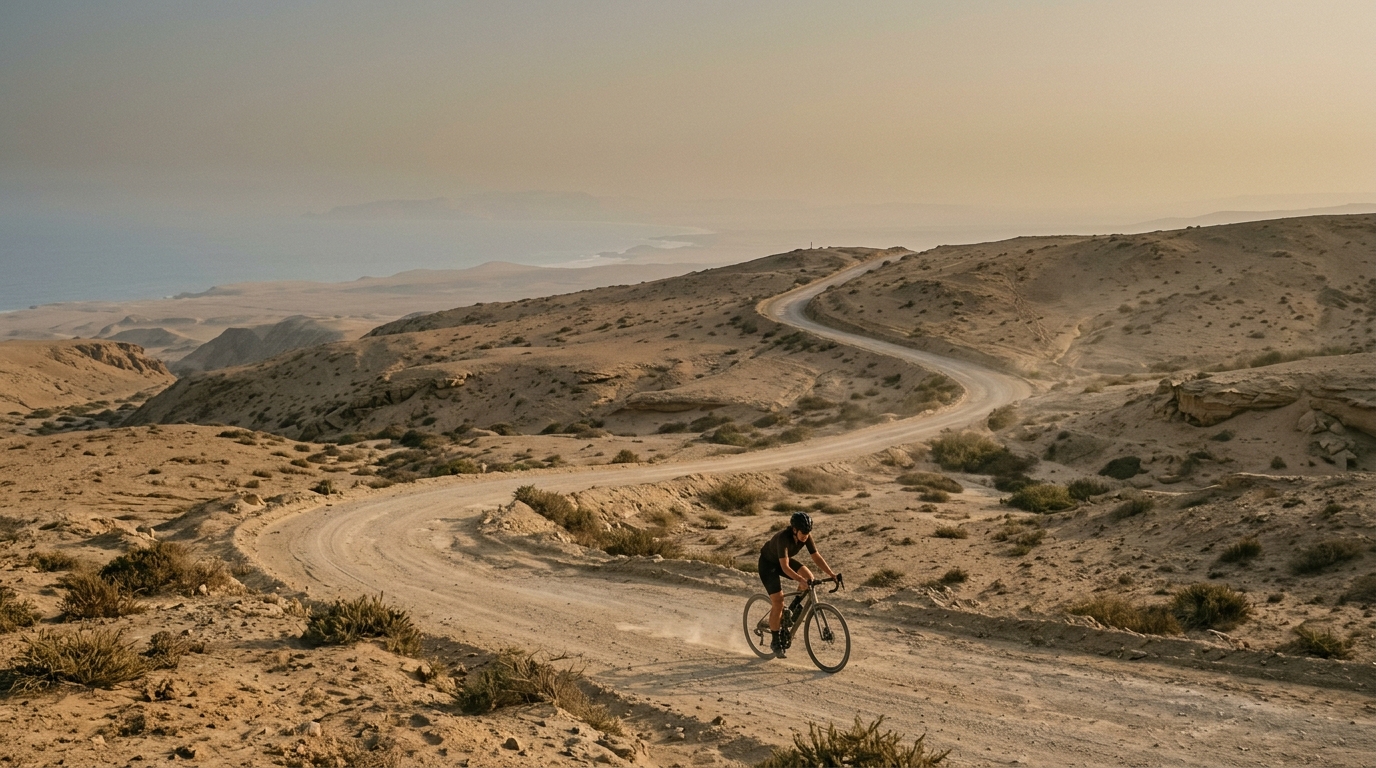 Puerto de PiscoKat. 4PE · 2.5 km · 4.7% · 89 m53Pkt.
Der vollständige Guide zu Anstiegen in Peru
The Riding
Cycling in Peru is defined by altitude. This is high-mountain riding in the truest sense, where the road climbs not for a few hundred metres but for thousands, and where the air thins steadily until every pedal stroke becomes a negotiation with your lungs. The catalogue here is small but severe: nine climbs, five of them rated hors catégorie, the top tier reserved for ascents that overwhelm the usual scale of difficulty. That ratio tells you almost everything. More than half of Peru's known climbs are the hardest kind, which is not an accident of terrain but the natural consequence of riding in the Andes.
The signature challenge is the combination of length and elevation. The highest summit in the catalogue crests at 4,910 m, an altitude at which the body simply cannot process oxygen the way it does at sea level. Long before you reach a figure like that, effort that would feel routine on a lowland climb turns punishing. Gradients matter, but here altitude is the real gatekeeper. A modest slope at 4,000 m can be harder than a steep one near the coast, and pacing becomes less about ambition and more about survival.
Standout Climbs
The most storied ascent is Ticlio, the name most associated with Peruvian high-altitude riding and a fitting introduction to what the country asks of a climber. Among the hors catégorie efforts, Poroquingua, Alto de Colpapampa, and Alto de Camilaca stand out as the kind of sustained, oxygen-starved climbs that reward patience over power. Alto de Bombon and Alto de La Gloria round out the higher shelf of the catalogue, each a serious undertaking in its own right.
Not every climb sits at extreme elevation. Abra de Porculla offers a different flavour, a named pass that shows Peru's climbing is not exclusively a game played above 4,000 m. The catalogue is completed by Alto de Tala and Alto de Escoya, two ascents that fill out the range of what riders can expect. Nine climbs in total, but with five carrying the hors catégorie label, there is very little here that could be called easy. Each name represents a genuine commitment, and stringing several together would test even seasoned mountain riders.
When to Ride
Because these climbs live at altitude, timing is a matter of comfort and safety rather than convenience. High passes are exposed and cold, and conditions at nearly 5,000 m bear little resemblance to the valleys below. The most important preparation is acclimatisation: arriving directly from low elevation and attempting the highest summits without adjustment is a recipe for altitude sickness and a ruined ride. Give yourself days, not hours, to let your body adapt before you tackle anything approaching the 4,910 m ceiling.
Aim for stable, dry weather windows when the roads are clear and visibility is good. The thin air that makes these climbs hard also makes the sun fierce and the shade cold, so plan around daylight and be ready for sharp temperature swings on the same climb. Start early, leave margin, and treat the descent with as much respect as the ascent, since cold hands and fatigue compound quickly at altitude.
Practical Notes
Prepare specifically for elevation. Gearing should be generous, because sustained climbs at altitude leave no room for grinding a hard ratio, and a compact setup with a wide-range cassette will save your legs on the longest efforts. Carry more layers than you think you need: the summit of a high pass can be brutally cold even when the valley below is warm.
Hydration and nutrition demand extra attention when the air is thin and effort is prolonged. Fuel steadily rather than waiting for hunger, and drink consistently. Above all, pace conservatively. The five hors catégorie climbs are not the place to test your ceiling on a first attempt. Ride within yourself, watch for the signs of altitude fatigue, and treat each of these ascents as the significant objective it is.
Summary
Peru offers a compact but formidable catalogue of nine climbs, five of them hors catégorie, reaching a high point of 4,910 m. From the emblematic Ticlio to giants like Poroquingua, Alto de Colpapampa, and Alto de Camilaca, and the lower-set Abra de Porculla, this is riding shaped above all by altitude. Come acclimatised, geared low, and patient, and Peru rewards you with some of the most demanding high-mountain climbing anywhere.
Suchst du komplette Ausfahrten in Peru?
Routen in Peru