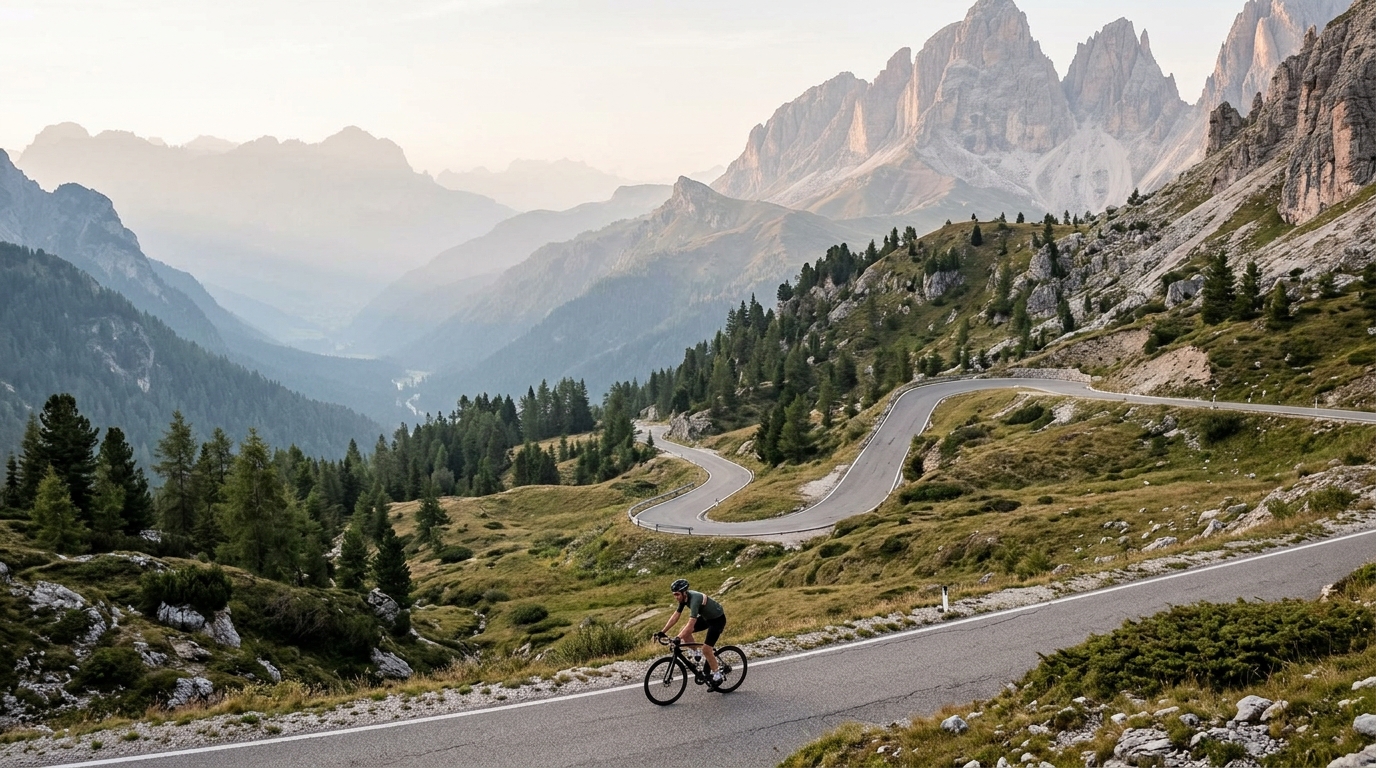
Campolongo Pass
A practical profile of the Campolongo Pass cycling climb, with pacing, gearing, and gradient notes based on its 17.1 km at 5.87%.
- Länge
- 17.1km
- Ø
- 5.9%
- Max
- 8.6%
- Gipfel
- 2,193m
- Aufstieg
- 980m
Der Anstieg
Steigungsprofil
Campolongo Pass cycling climb profile
Campolongo Pass is a Category 1 climb in Italy that rewards control more than aggression. On paper, the key number is not just the 17.1 km length, but how that length combines with a 5.87% average gradient and 1003 m of net elevation gain. This is long enough to become a real aerobic test, but the 8.58% maximum gradient suggests the difficulty comes from accumulation rather than isolated, brutal walls.
That matters for how to ride it. A climb with this profile is easy to underestimate early because the average gradient sits in the zone where many riders feel they can press on without immediate penalty. The problem is the duration. Over 17.1 km, small decisions compound quickly. If the opening effort drifts above sustainable climbing power, the final section will feel much steeper than the data says it is.
Gradient feel from bottom to summit
The climb starts at 1190 m and tops out at 2193 m, so the road gains meaningful height without relying on extreme gradients. With an average of 5.87% and a maximum of 8.58%, the profile points toward a steady pass-style ascent: mostly manageable pressure on the pedals, interrupted by harder sections that are steep enough to expose poor pacing but not so steep that they define the entire climb.
The practical read is simple. The Campolongo Pass cycling climb should be ridden as a sustained tempo effort with short allowances for the steeper pitches. The maximum gradient is not high enough to require a survival strategy, but it is high enough that carrying too large a gear or riding above /glossary/ftp too early can turn the second half into damage control.
Pacing strategy
Start deliberately. The first objective is to settle into a rhythm that feels almost too controlled. On a climb of this length, the correct early effort often feels conservative because the real cost arrives later, once the elevation gain has stacked up.
A good approach is:
- Ride the lower slopes at a controlled endurance-to-tempo feel, not at chase mode
- Keep pressure smooth through the sustained middle of the climb
- Let effort rise only on the 8.58% maximum sections, then return to baseline quickly
- Save any hard acceleration for the final part of the ascent, not the first time the road bites
If using power, anchor the climb around sustainable threshold discipline rather than chasing speed. The gradient is moderate enough that headwind, fatigue, and gearing can distort perceived effort, so /glossary/ftp is a cleaner guide than emotion.
Gearing notes
Choose gearing that lets you stay seated and smooth at the 5.87% average while still having a bailout option for the 8.58% maximum. This is not a climb that demands panic gearing, but it does punish riders who run out of cadence and start grinding every steeper pitch.
The best setup is one that makes the climb boring for as long as possible: stable cadence, controlled breathing, and no repeated spikes. Campolongo Pass is difficult because it keeps asking the same question for 17.1 km. The rider who answers with patience usually reaches the summit fastest.