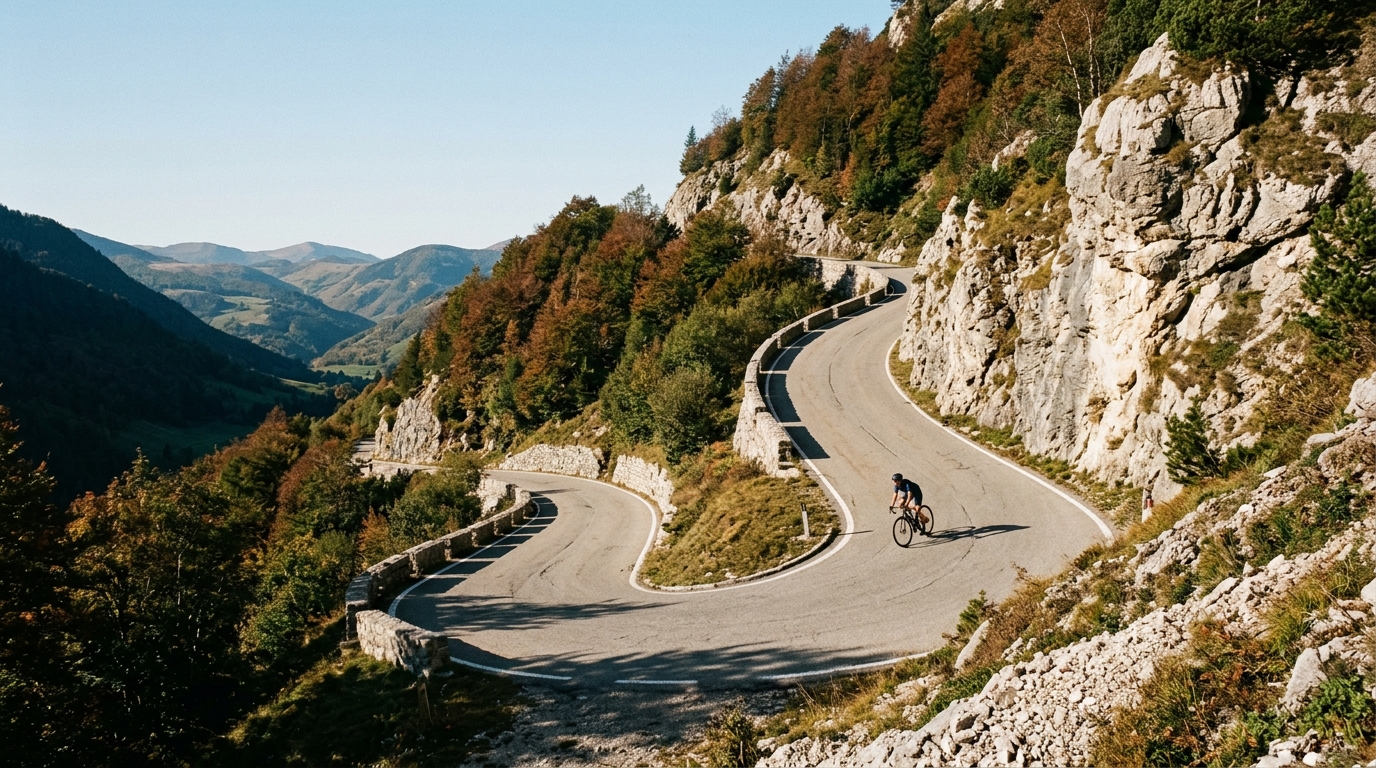
Aurine pass
A practical pacing and gearing guide to the Aurine pass cycling climb in Italy, using its length, gradient, elevation gain, and steepest ramps.
- Länge
- 10.3km
- Ø
- 7.9%
- Max
- 15.4%
- Gipfel
- 1,311m
- Aufstieg
- 780m
Der Anstieg
Steigungsprofil
Aurine pass cycling climb profile
The Aurine pass cycling climb is a category 1 ascent in Italy, and the numbers explain why it needs to be treated with respect. At 10.3 km and an average gradient of 7.92%, it is long enough to punish early enthusiasm and steep enough that there are not many places to hide if the effort drifts above control.
The climb starts at 497 m and tops out at 1311 m, with a listed net elevation gain of 814 m. That is the core character of Aurine pass: sustained vertical gain over a moderate-length climb, rather than a short wall or a long, shallow drag.
How the gradient unfolds
With only the headline profile data available, the honest read is that this is not a climb to break down corner by corner. What the statistics do show is a demanding overall shape. A 7.92% average across 10.3 km means the road is consistently working against you from bottom to summit. The max gradient of 15.4% also tells you the climb is not a perfectly even tempo ramp. Somewhere on the ascent, the road kicks hard enough to force a decision: either absorb the pitch with gearing and cadence, or spike the effort and pay for it later.
That combination matters. On climbs with this average gradient, the steepest ramps are rarely isolated problems. They are expensive because they arrive on top of an already high baseline effort. If you hit the lower slopes too close to your limit, the 15.4% maximum becomes more than a steep section - it becomes the point where pacing errors show up.
Pacing and gearing notes
Ride Aurine pass as a controlled threshold-style climb, not as a series of attacks. The first priority is keeping the opening effort below the level that feels tempting. On a 10.3 km climb, early overpacing has enough time to compound, especially when the average gradient is already close to 8%.
Practical approach:
- Start conservatively and let the climb come to you.
- Use your easiest gear before the steepest ramps force it.
- Avoid standing accelerations unless they are purely for position or relief.
- Pace from sustainable power, not from the feel of the first few minutes.
If you track effort with power, anchor the ride around your known climbing capacity rather than chasing speed. For riders using /glossary/ftp as a pacing reference, the key is not setting a heroic target. It is keeping the effort steady enough that the final section can still be ridden with pressure on the pedals.
Who it suits
Aurine pass suits riders who can hold a disciplined rhythm on sustained gradients and manage torque when the road gets into double-digit territory. The total length is not extreme, but the average gradient and 15.4% maximum mean poor gearing choices are costly. Arrive with a low enough climbing gear, settle early, and treat the steepest pitches as moments to manage rather than moments to prove form.