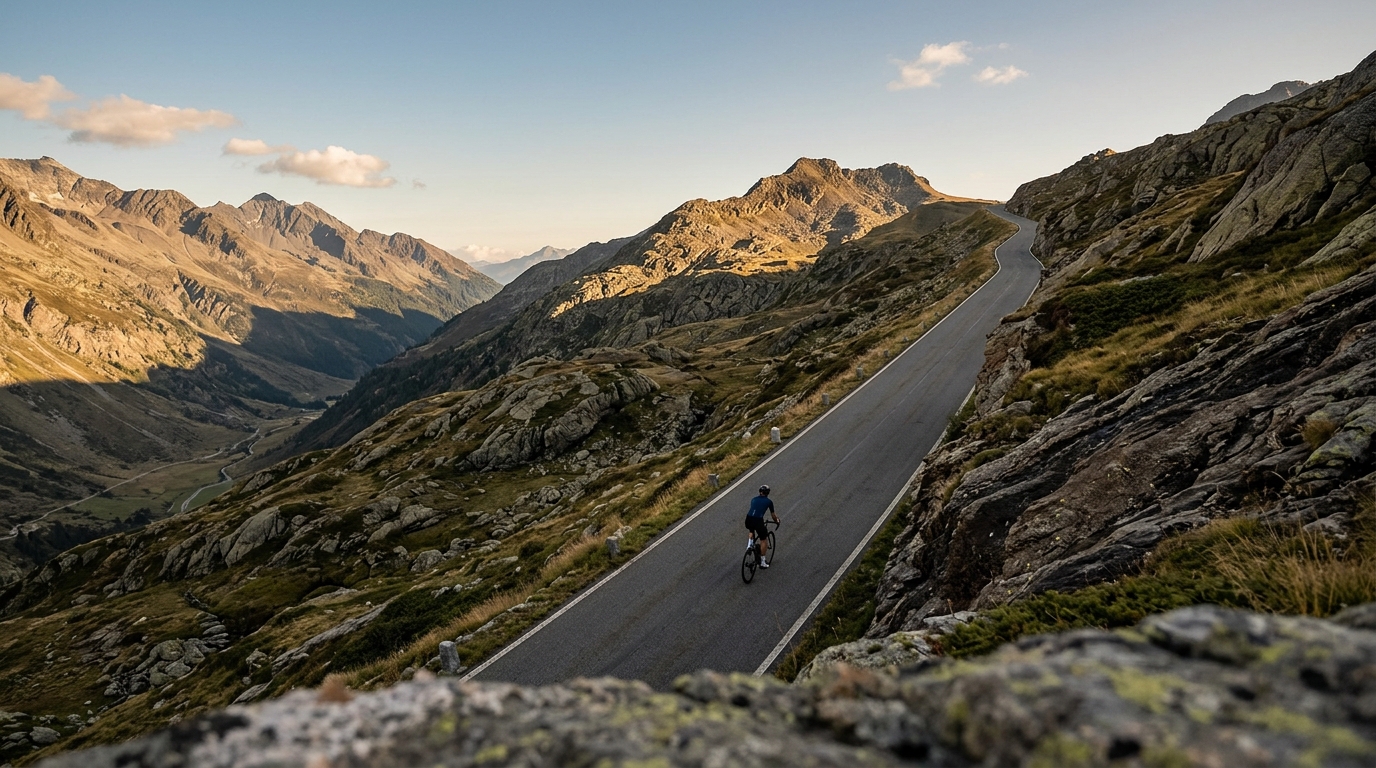
Antronapass
The Antronapass cycling climb is a long CH category 1 ascent: 31 km at 4.93%, rising from 701 m to 2229 m with ramps up to 10.73%.
- Länge
- 31km
- Ø
- 4.9%
- Max
- 10.7%
- Gipfel
- 2,229m
- Aufstieg
- 1,509m
Der Anstieg
Steigungsprofil
Antronapass cycling climb profile
The Antronapass cycling climb is defined less by brutality and more by duration. At 31 km, with an average gradient of 4.93%, it asks for sustained aerobic control rather than repeated surges. The climb starts at 701 m and finishes at 2229 m, gaining 1528 m from bottom to summit, which gives it the feel of a long, accumulating category 1 ascent rather than a short wall.
That average gradient matters. A climb just under 5% can feel manageable early because it often allows a rider to sit, keep the cadence moving, and avoid the immediate muscular damage of steeper terrain. The trap is that 31 km gives small mistakes a long time to compound. Riding the first part like a tempo climb instead of a mountain pass is the easiest way to arrive at the upper slopes with fading power and limited gearing options.
Gradient and rhythm
With a maximum gradient of 10.73%, Antronapass is not a pure steady drag from bottom to top. The headline average hides the fact that there are sections steep enough to change the effort profile. Any ramp near 10.73% will push the ride from aerobic pressure into torque management, especially if it arrives after a long period of climbing.
The practical interpretation is simple: the average says the climb is paceable, while the maximum gradient says it still demands respect. Treat the lower gradients as a chance to stay efficient, not as an invitation to chase speed. On a 31 km ascent, the rider who keeps the effort smooth through the easier gradients will usually handle the steeper pitches better than the rider who tries to bank time early.
Pacing strategy
Use the opening phase to settle below threshold, especially if riding by /glossary/ftp. The climb has enough vertical gain that a small overpace early can become expensive before the summit at 2229 m. A controlled endurance-to-tempo effort is the right default until the climb reveals where the 10.73% maximum gradient sections sit.
A good rule here is to pace for the final third, not the first third. If the legs still feel responsive late, there is room to lift the effort. If they do not, the 31 km length leaves little margin for recovery.
Gearing notes
Gear for the steepest ramps, not the average. A 4.93% average might suggest moderate gearing, but the 10.73% maximum gradient makes cadence preservation important. Riders who prefer seated climbing should choose a low enough gear to stay smooth when the road tilts up, rather than being forced into low-cadence grinding deep into the ascent.
For planning, estimate the effort as a long mountain climb with more than 1500 m of net elevation gain. If unsure about pacing, use a conservative target from /tools/ftp-estimator and leave room for the upper slopes. Antronapass rewards restraint early and discipline throughout.