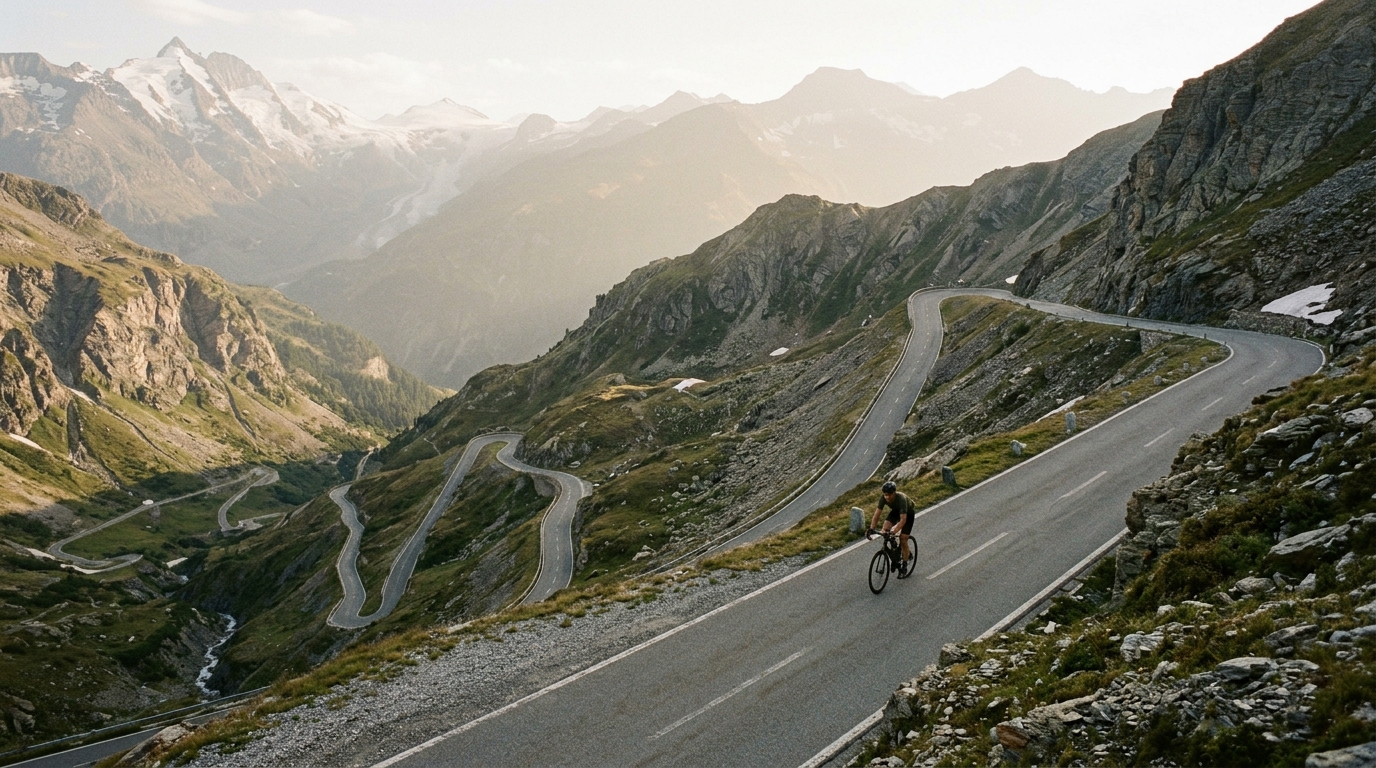
Weißeneckscharte
A practical profile of the Weißeneckscharte cycling climb in Austria: 32 km, 1,748 m of net gain, and an HC effort that rewards disciplined pacing.
- Duž ina
- 32km
- Prosek
- 5.5%
- Maks
- 11.8%
- Vrh
- 2,509m
- Visinska razlika
- 1,858m
Uspon
Profil nagiba
Weißeneckscharte cycling climb profile
Weißeneckscharte is an HC climb in Austria with the kind of profile that punishes impatience. At 32 km long, rising from 761 m to 2,509 m, it is not a climb to ride on instinct alone. The headline average gradient of 5.46% looks manageable, but the full picture is more demanding: the route gains 1,748 m net, includes 1,858 m of total ascent, and reaches a maximum gradient of 11.76%.
That combination matters. A climb this long at a mid-single-digit average can feel deceptively steady on paper, but the max gradient tells you there are sections where the road bites well above the average. The total ascent being higher than the net elevation gain also points to a profile that is not simply one clean ramp from bottom to summit. There is enough variation in the road to interrupt rhythm, which makes pacing more important than chasing a constant speed.
How the gradient unfolds
The defining feature is duration. Over 32 km, even small mistakes compound. The average gradient of 5.46% means much of the climb can be ridden seated and controlled, but the presence of 11.76% ramps changes the energy cost. Those steeper sections will force a choice: either shift early and keep torque under control, or push over threshold and pay for it later.
Because the summit sits at 2,509 m, the climb also finishes high. Without adding assumptions beyond the profile, the practical takeaway is simple: the upper part comes after a long accumulation of vertical gain. By the time the road is near the top, the issue is less whether any single ramp is extreme and more whether the earlier pacing has left enough muscular endurance to keep pressure on the pedals.
Pacing strategy
Treat Weißeneckscharte as a long aerobic climb with repeated chances to overreach. The correct ride is conservative early, patient through the middle, and only more committed once the summit effort is clearly within reach.
Use effort rather than speed. On a 32 km ascent, speed will swing with gradient changes, and trying to hold it steady is a reliable way to turn the 11.76% sections into unnecessary spikes. If riding with power, anchor the effort around sustainable climbing output rather than letting short ramps drag you above your target. For riders calibrating this, /glossary/ftp is the useful reference point, and /tools/ftp-estimator can help set expectations before the climb.
Practical gearing notes
Bring a low gear you are willing to use early. The average gradient does not demand extreme gearing by itself, but the maximum gradient does. The goal is not just to survive the steepest ramps - it is to ride them without grinding so hard that cadence collapses and the next section becomes harder than it needs to be.
A sensible approach is to stay seated whenever possible, shift before the gradient steepens, and keep one easier gear available for the 11.76% pitches. If you are carrying fatigue, extra kit, or riding after previous climbing, err on the side of easier gearing. Weißeneckscharte is long enough that saving the legs is not defensive riding. It is the fastest way to reach the summit with control.