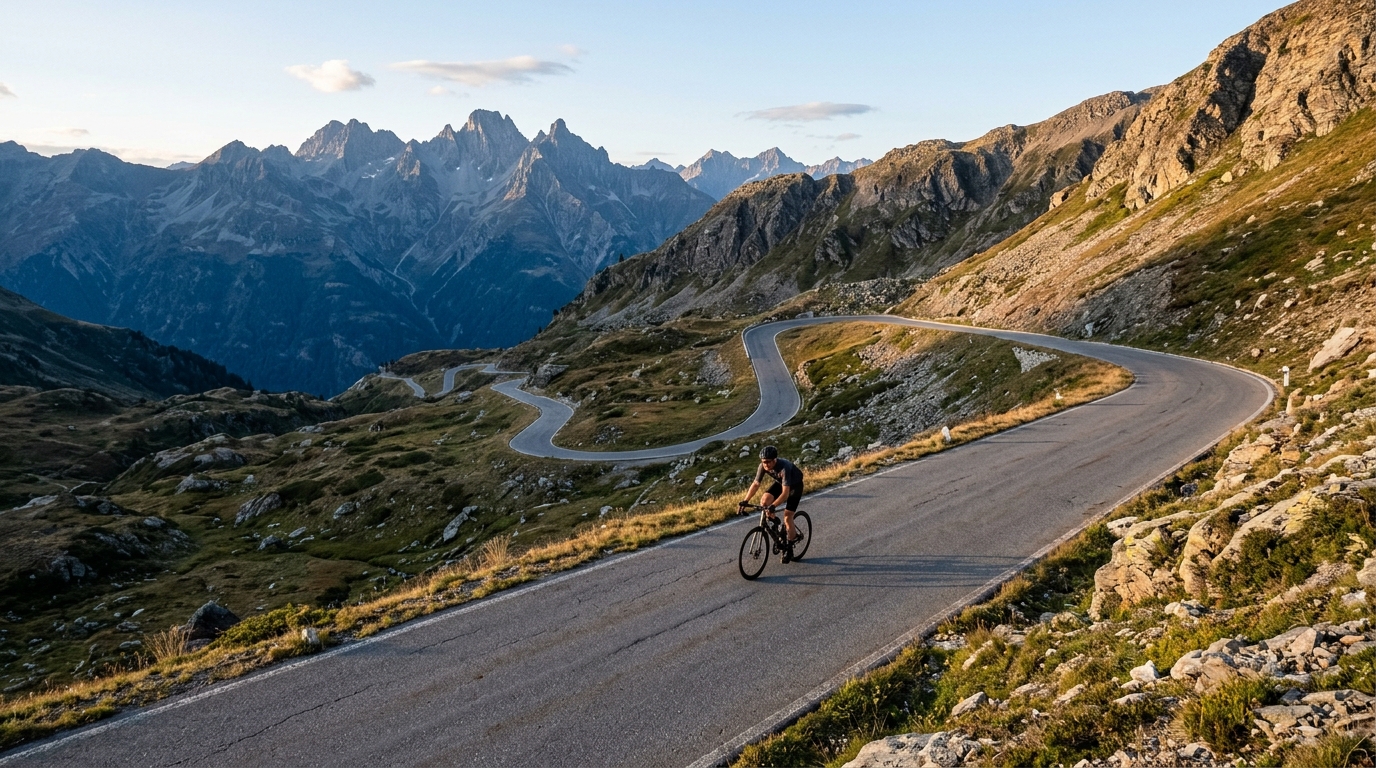
Tomülpass
A practical rider-focused profile of the Tomülpass cycling climb, with pacing and gearing notes based on its length, gain, and severe maximum gradient.
- Duž ina
- 29.3km
- Prosek
- 5.8%
- Maks
- 25.5%
- Vrh
- 2,418m
- Visinska razlika
- 1,701m
Uspon
Profil nagiba
Tomülpass cycling climb profile
Tomülpass is an HC climb in Switzerland that asks for patience before it asks for aggression. On paper, the headline is straightforward: 29.3 km from 702 m to 2418 m, gaining 1716 m at an average gradient of 5.85%. In practice, that average is the number that can mislead you.
A climb this long at just under 6% would normally suggest a steady diesel effort, but the listed maximum gradient of 25.54% changes the way it has to be ridden. That kind of peak tells you the slope is not simply a metronomic alpine road where one gear and one power target carry you to the top. The average is being shaped by easier ground as well as extremely steep ramps, which means pacing has to be flexible rather than rigid.
How the gradient should be read
The lower number to respect is the distance. At 29.3 km, Tomülpass is long enough that early over-pacing becomes expensive well before the summit. The higher number to respect is the maximum gradient. A 25.54% ramp can force a spike in torque and heart rate even if the rest of the climb feels manageable.
That combination creates a specific rhythm: settle below threshold on the more moderate sections, protect momentum when the road kicks up, then consciously bring the effort back down as soon as the gradient eases. If you ride the steepest pitches as if they are attacks, the climb will punish you later. If you treat them as short damage-control sections, the profile becomes much more manageable.
The net elevation gain of 1716 m also matters. This is not a climb where the summit arrives after one hard ten-minute block. It is a prolonged aerobic effort with repeated muscular demands layered on top. The total ascent figure is listed at 1701 m, which broadly reinforces the same practical point: the ride is overwhelmingly about sustained upward work rather than a rolling approach.
Pacing and gearing notes
For pacing, anchor the first part of the climb to controlled endurance or low tempo rather than chasing speed. If riding with power, keep the long-climb target below /glossary/ftp unless you know you can handle repeated steep surges late in the effort. The danger is not one isolated ramp. The danger is accumulating too many small anaerobic costs across almost 30 km.
Gearing should be chosen for the maximum gradient, not the average. A setup that feels comfortable at 5.85% may be inadequate when the slope reaches its steepest point. Prioritise a low climbing gear that lets you keep turning the pedals under high torque without grinding to a stop. That is especially important if you are carrying bikepacking weight, riding tired, or coming into the climb after earlier elevation gain.
The best way to ride Tomülpass is conservative, deliberate, and unemotional. Let the average gradient tempt someone else into riding too hard early. The rider who saves enough cadence and composure for the steepest sections will be the one still moving efficiently near 2418 m.