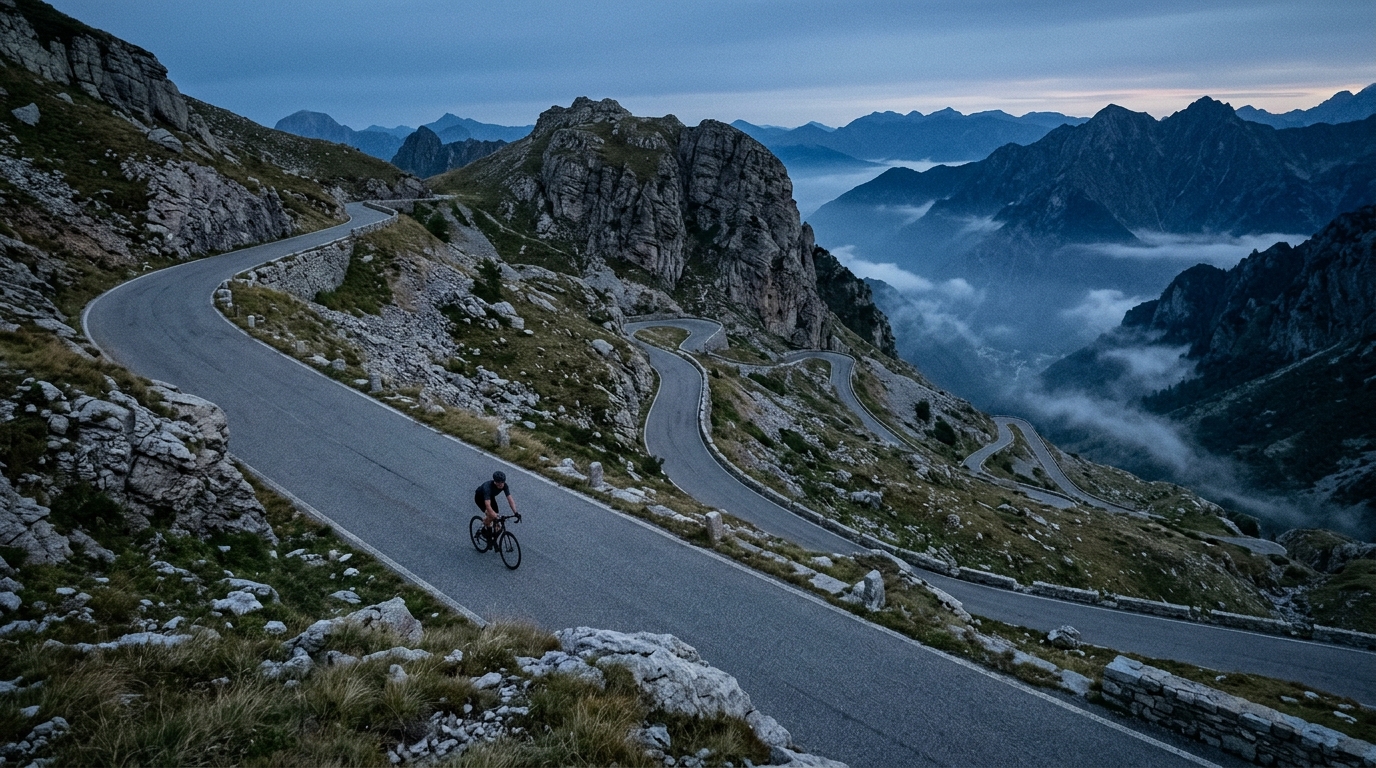
San Marco Pass
A practical pacing and gearing guide to the 27.6 km San Marco Pass cycling climb in Italy, with 1726 m of net elevation gain.
- Duž ina
- 27.6km
- Prosek
- 6.3%
- Maks
- 11.0%
- Vrh
- 1,990m
- Visinska razlika
- 1,717m
Uspon
Profil nagiba
San Marco Pass cycling climb profile
The San Marco Pass cycling climb is an HC effort in Italy, and the defining feature is not a single savage number. It is the accumulation. From a start elevation of 264 m to a summit elevation of 1990 m, it gains 1726 m of net elevation over 27.6 km. That is a long time to be climbing, and the 6.25% average gradient is deceptive if treated as comfortable endurance terrain.
The key reading is this: a climb this long at that average is hard because it gives very few tactical shortcuts. You cannot bluff it with repeated anaerobic surges, and you cannot assume the road will quickly hand back the energy you spend early. The maximum gradient of 10.97% also matters. Even if the climb averages 6.25%, there are steeper ramps in the profile, and those are where poor pacing becomes visible.
How the gradient rides
With only the full profile statistics available, the smartest way to understand San Marco Pass is as a sustained mountain pass rather than a punchy climb. The bottom-to-summit story is shaped by duration and vertical gain. The lower slopes start from 264 m, so the climb begins low enough that the early kilometres can feel manageable if the rider is fresh. That is exactly the risk. On a 27.6 km climb, the first mistake is often made before the climb feels difficult.
The middle of the climb is where the 6.25% average begins to assert itself. This is not steep enough to force everyone immediately into survival mode, but it is steep enough that riding above threshold will compound quickly. The 10.97% maximum gradient means the pass contains pitches where cadence can drop and torque demand rises. Those sections should be expected and budgeted for, not treated as moments to attack unless the summit is close or the ride plan demands it.
By the upper slopes, the decisive factor is fatigue management. The climb reaches 1990 m, so the summit comes only after a very large total vertical commitment. If the early pacing has been too optimistic, the final part will feel disproportionately expensive because every steeper pitch arrives after a long aerobic load.
Pacing and gearing notes
Ride San Marco Pass like a long threshold-controlled effort, not a sequence of short ramps. A good target is to settle below your sustainable climbing ceiling early, then reassess once the climb has already taken shape. If you use power, anchor the ride around your /glossary/ftp rather than around how fresh the first kilometres feel.
Gearing should be chosen for the maximum gradient, not the average. A setup that feels efficient at 6.25% can become costly when the road reaches 10.97%, especially late in a 27.6 km climb. Prioritise a low enough gear to keep cadence controlled on the steepest ramps without having to stand repeatedly. Standing is useful for changing muscle load, but if it becomes the only way to turn the gear, the setup is too ambitious for the climb.
The cleanest strategy is conservative early, steady through the middle, and only progressive near the top if the legs are still responding. San Marco Pass rewards riders who respect the arithmetic: 1726 m of net gain is not beaten by enthusiasm. It is beaten by even pacing, patient gearing, and leaving enough margin for the steepest pitches.