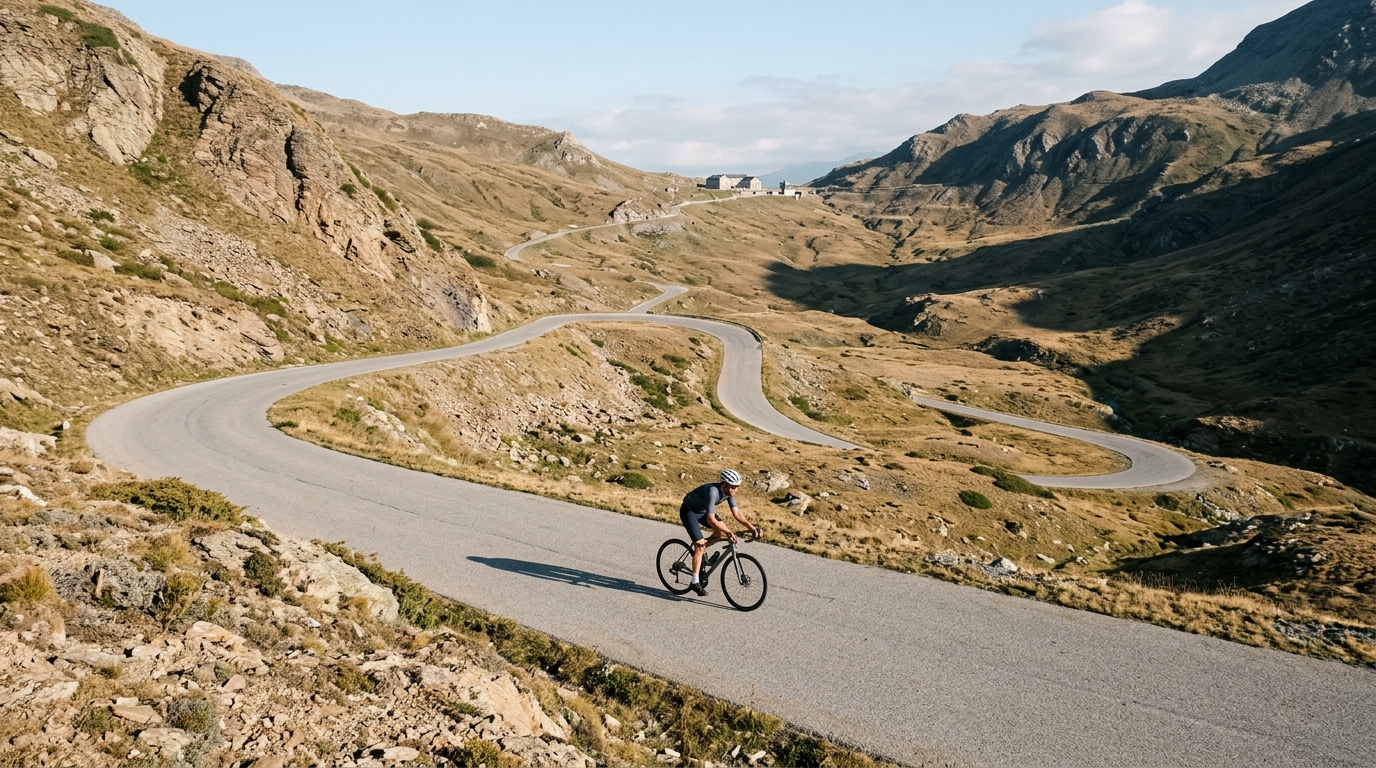
Little St Bernard Pass
A practical pacing and gearing guide to the Little St Bernard Pass cycling climb, a long category 1 ascent with steady gain and ramps above 10%.
- Duž ina
- 25.6km
- Prosek
- 4.9%
- Maks
- 10.2%
- Vrh
- 2,190m
- Visinska razlika
- 1,276m
Uspon
Profil nagiba
Little St Bernard Pass cycling climb profile
The Little St Bernard Pass is a long category 1 climb that rewards restraint more than aggression. At 25.6 km, with 1,263 m of net elevation gain from 927 m to 2,190 m, this is not a climb to ride on impulse. The average gradient of 4.93% can make it look manageable on paper, but the distance is the real load. A rider who treats it like a short threshold effort will pay for that decision well before the summit.
The key number is not just the average gradient, but the relationship between the average and the maximum. A climb averaging just under 5% but reaching 10.2% is unlikely to feel perfectly even. The overall profile points toward a mostly aerobic ascent with sharper ramps that can break rhythm if the gearing is too ambitious or the pacing is too close to the limit.
How the gradient unfolds
From bottom to summit, the pass gains almost continuously. The total ascent is 1,276 m, only slightly above the 1,263 m net gain, which suggests there is little wasted climbing through major descents or repeated losses of elevation. In practical terms, the road keeps asking for power. Even when the gradient backs off, the climb is still long enough that those easier sections should be used to reset, not to chase speed.
Because the average sits at 4.93%, the temptation is to ride a bigger gear and keep momentum high. That can work early, especially from the 927 m start elevation, but the summit at 2,190 m means the climb finishes high enough that accumulated fatigue matters. The 10.2% maximum gradient is the warning label. If those steeper sections arrive when the legs are already loaded, a rider without a low enough gear will be forced above target power.
Pacing and gearing notes
Ride the first part below your sustainable climbing effort, especially if using /glossary/ftp as a pacing anchor. For a climb this long, the goal is not to prove fitness in the opening kilometres. The goal is to preserve torque and cadence so the steeper ramps do not become repeated anaerobic spikes.
A compact or climbing-focused setup makes sense here, not because the average gradient is severe, but because the climb is long and reaches 10.2%. The best gearing is the one that lets you stay seated and keep cadence under control when the road steepens. If you are forced to grind each ramp, the pass becomes much harder than its 4.93% average suggests.
The cleanest strategy is simple: settle early, keep pressure smooth through the middle, and save any real increase in effort for the final approach to 2,190 m. The Little St Bernard Pass is less about surviving a single wall and more about refusing to leak energy across 25.6 km of steady climbing.