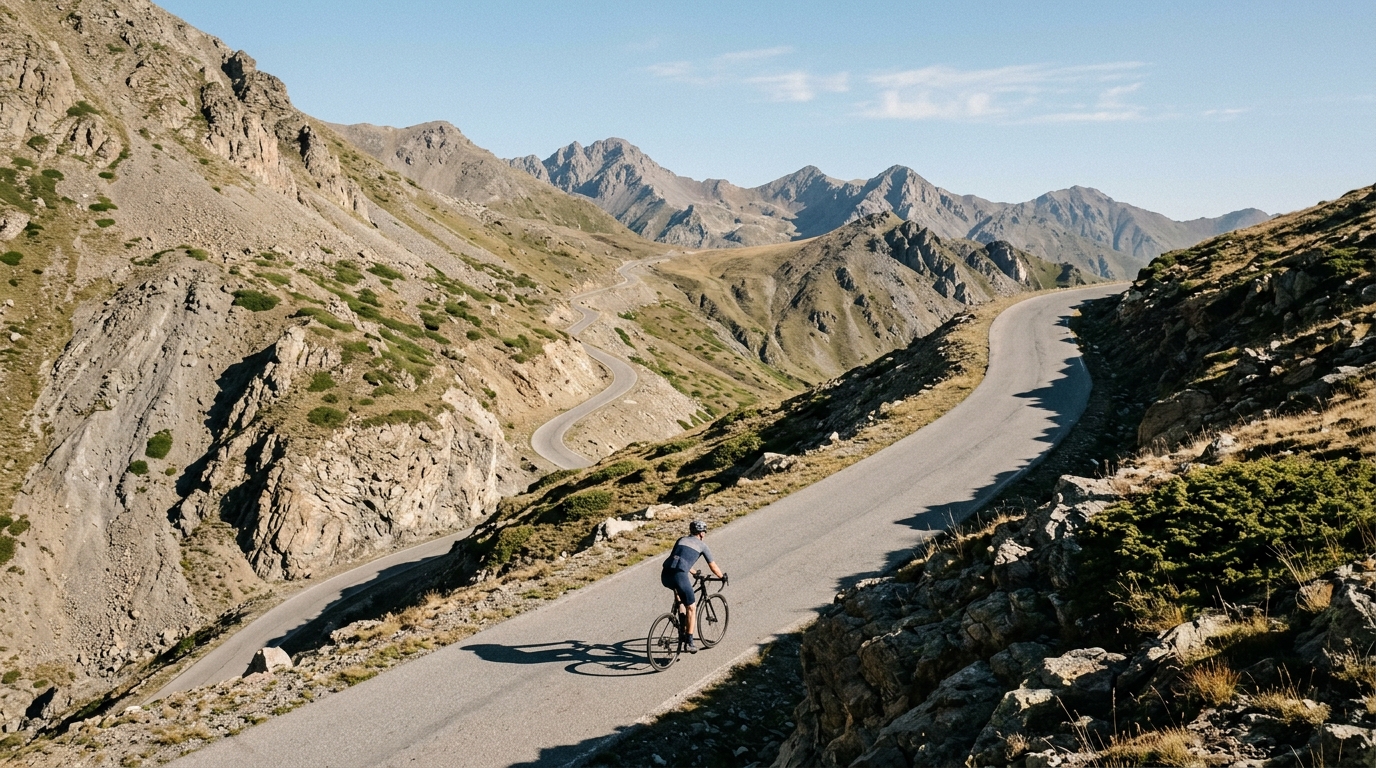
Kerigo Pass
A practical profile of the Kerigo Pass cycling climb, with pacing, gearing, and terrain notes based on its HC scale and severe gradient profile.
- Duž ina
- 24.5km
- Prosek
- 8.7%
- Maks
- 33.4%
- Vrh
- 3,068m
- Visinska razlika
- 2,244m
Uspon
Profil nagiba
Kerigo Pass cycling climb profile
Kerigo Pass is an HC climb in GE, and the numbers explain why it has to be treated with respect from the first pedal stroke. The climb runs for 24.5 km, starting at 940 m and topping out at 3068 m. Across that distance it gains 2128 m net, with 2244 m of total ascent, and averages 8.69%.
That combination matters more than any single headline figure. A climb this long at this average gradient is not a short steep wall where you can bluff your way over the top with a few hard minutes. It is a sustained climbing effort where pacing discipline, low gearing, and torque management decide how much of your power is still available near the summit.
How the gradient unfolds
The available profile stats point to a climb that is consistently demanding rather than gently progressive. An 8.69% average over 24.5 km means the baseline difficulty is already high, before accounting for the maximum gradient of 33.39%.
That maximum tells you the road is not simply a smooth, even ramp. There are likely severe pitches where cadence can collapse if you arrive overgeared or already above your sustainable effort. The gap between 2244 m of total ascent and 2128 m of net elevation gain also matters. Total ascent exceeds net gain by 116 m, which means the route is not a perfectly uniform rise from bottom to top. Any easing or lost elevation has to be repaid later, and on a climb averaging close to 9%, that repayment will not feel free.
The practical takeaway is simple: ride the average, but gear for the maximum. Kerigo Pass asks you to survive the steepest ramps without letting them dictate the entire climb.
Pacing notes
This is a climb to start below ego pace. With 24.5 km and 2128 m of net gain ahead, the early kilometres should feel controlled, even slightly restrained. If you are using power, anchor the effort around sustainable climbing intensity rather than chasing speed on the steeper pitches. On a climb this long, repeated surges above /glossary/ftp can turn the final third into damage control.
A good approach is to separate the climb into three practical phases:
- Lower section: settle the breathing, avoid spikes, and find the lowest sustainable gear early.
- Middle section: hold a steady effort and let speed fluctuate with the gradient.
- Final section: only increase pressure if cadence and breathing are still under control.
Gearing and riding strategy
The 33.39% maximum gradient is the number that should drive gearing choice. Even if that pitch is brief, it is steep enough to force a standing effort for many riders unless the bike is set up with generous low gears. Choose gearing that lets you keep turning the pedals smoothly on very steep ramps, not gearing that only works at the 8.69% average.
Cadence will naturally fall on the hardest sections, but the goal is to avoid grinding so heavily that each ramp becomes a muscular effort rather than an aerobic one. Stay seated where possible, stand to reset pressure and clear the steepest ramps, then return to a rhythm quickly. On Kerigo Pass, the rider who keeps the effort boring for the longest usually has the best final kilometres.