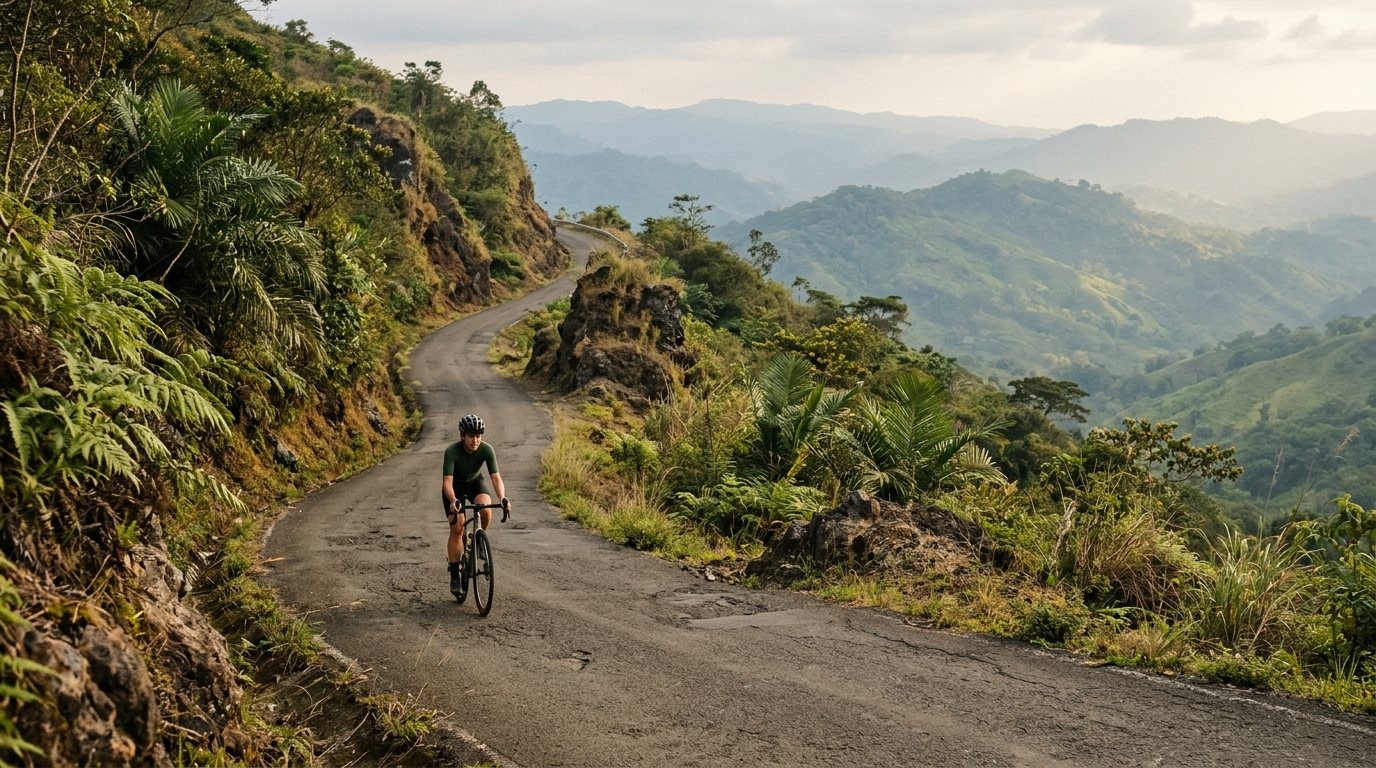
Biblioteka uspona · Panama
Cycling Climbs in Panama
Panama is not a pure altitude play. With 3 mapped climbs, no hors categorie ascents, and a highest summit of 609m, the appeal is not a single monster pass but the way the terrain asks for repeated, disciplined efforts. That makes the riding more tactical than the headline numbers suggest: manage your surges, keep the pressure controlled, and avoid treating every ramp like the finish line.
The key climbs are Alto de la Estancia, Alto de Jesús, and Alto de San Rafael. Together, they make Panama worth a trip for riders who want a compact climbing target rather than a sprawling mountain block. It is a destination for testing form through consistency - how well you can back up hard efforts, recover on the move, and stay efficient when the road keeps asking questions.
Prepoznatljivi usponi u Panama
Svi usponi u Panama
15 uspona
- Alto de San RafaelKat. 1PA · 4.4 km · 10.0% · 412 m440poena
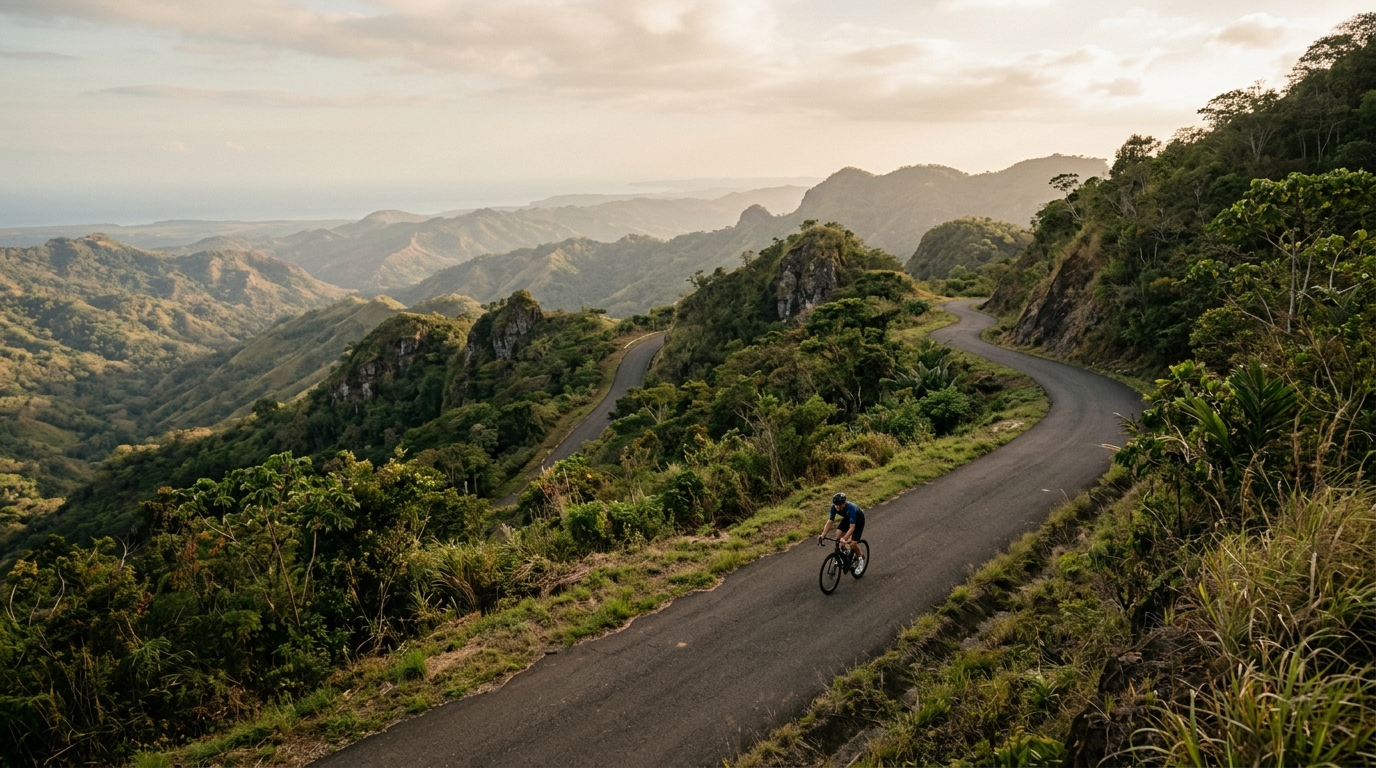 Alto de la EstanciaKat. 3PA · 14.9 km · 3.2% · 447 m148poena
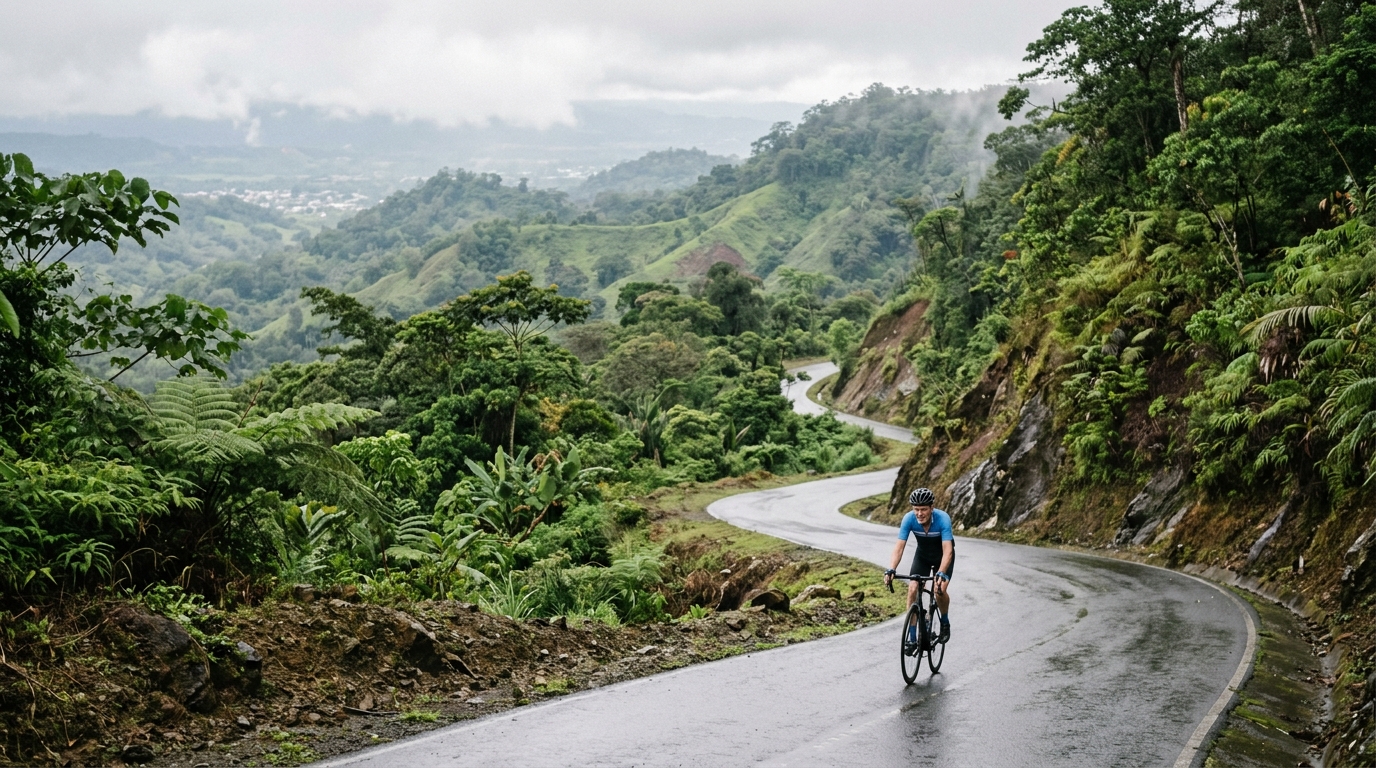 Alto de JesúsKat. 4PA · 2.6 km · 4.2% · 93 m44poena
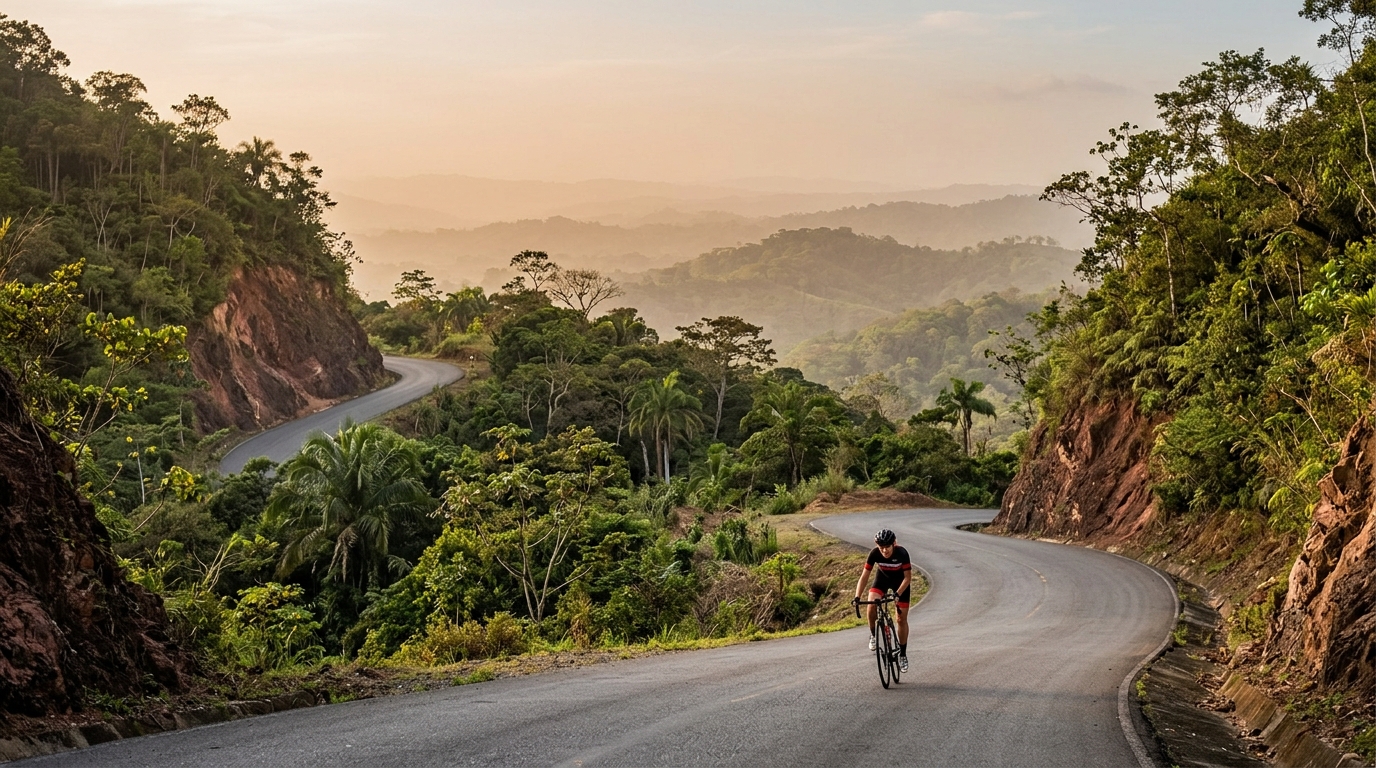 Alto del CiruelitoKat. 1PA · 1.8 km · 15.3% · 225 m422poena
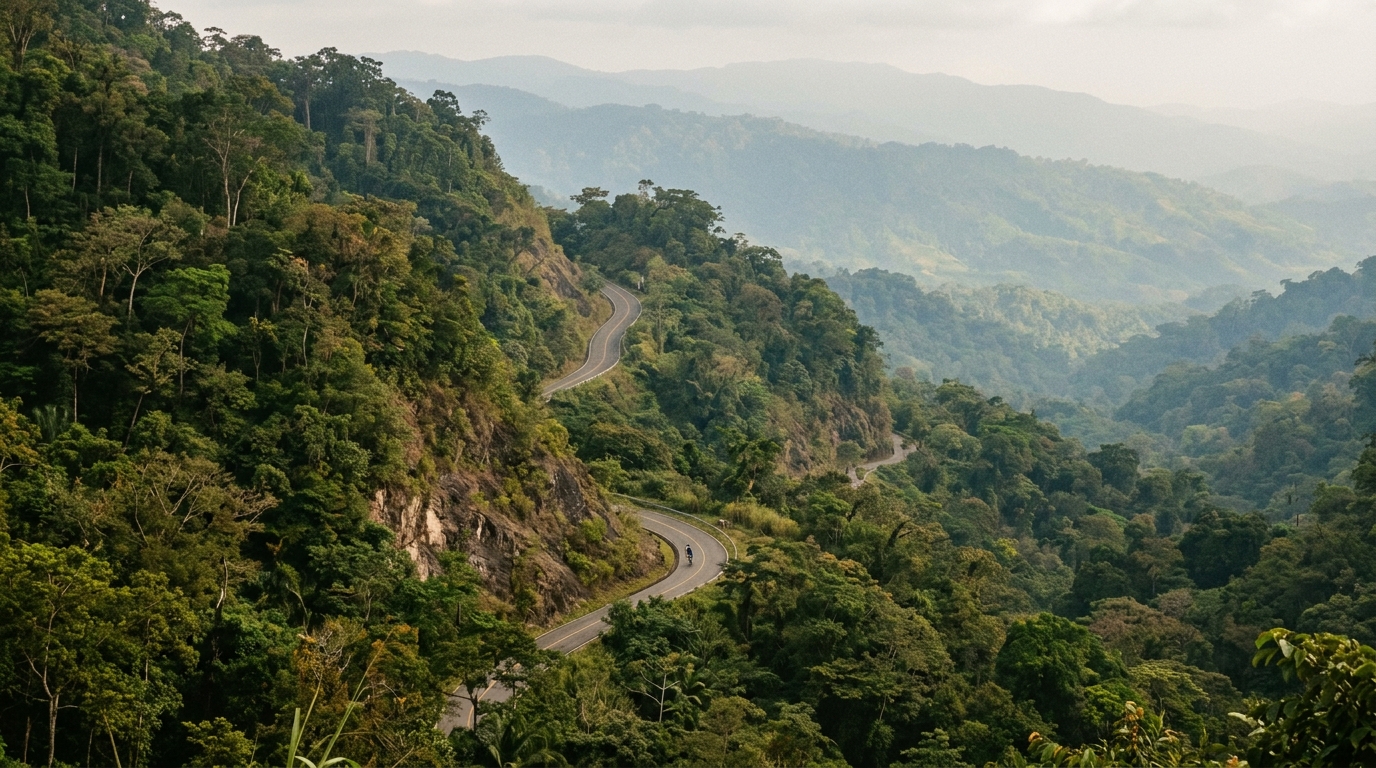 Alto de HuesitalesKat. 1PA · 5.8 km · 8.3% · 455 m401poena
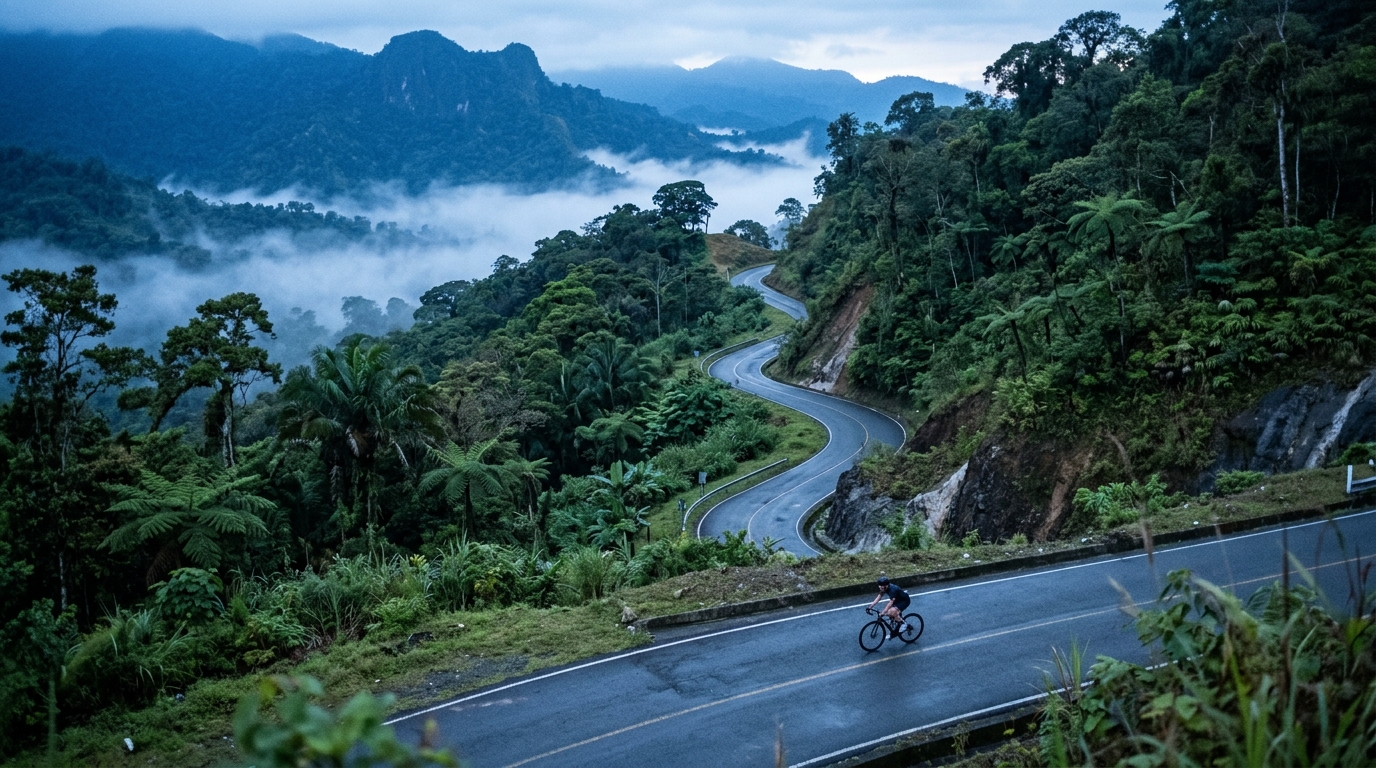 Alto del ManglilloKat. 2PA · 19.9 km · 3.8% · 814 m280poena
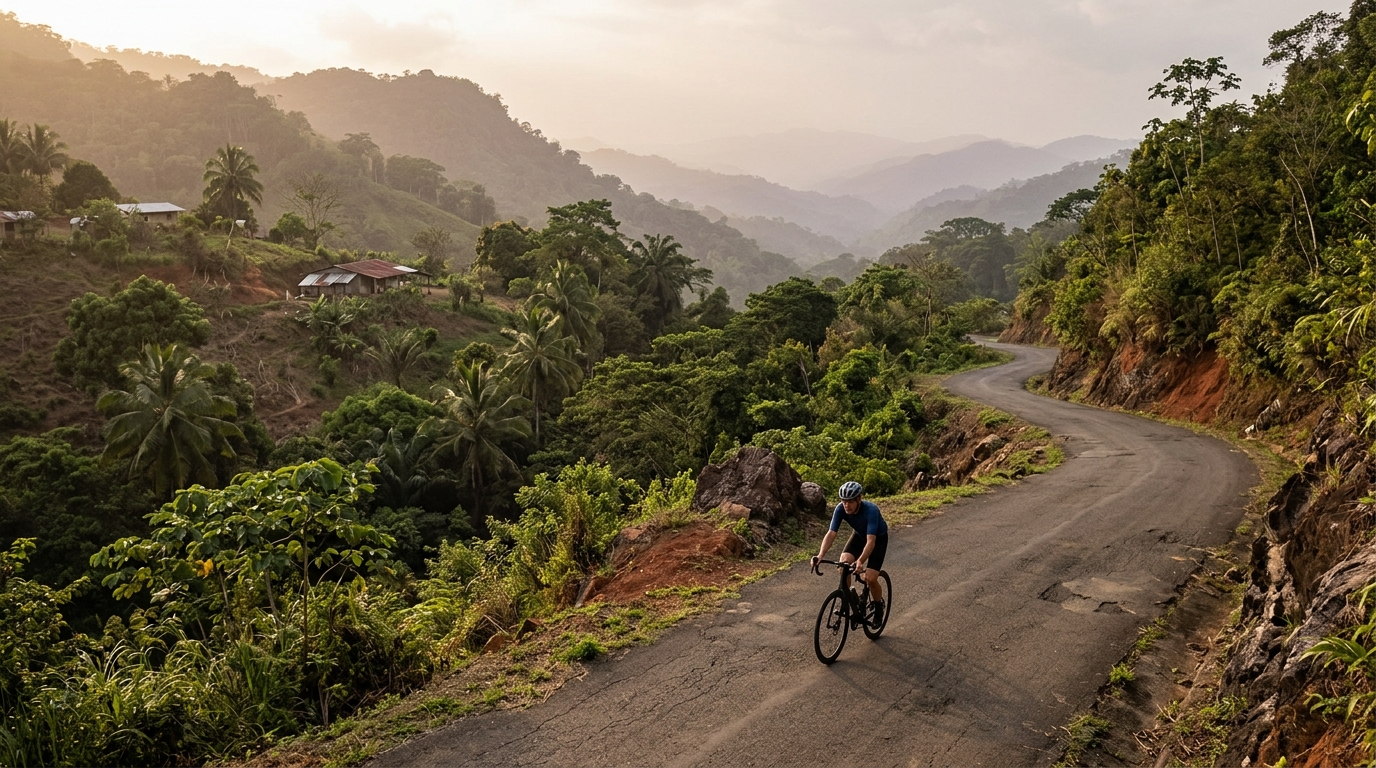 Alto del ChumicoKat. 2PA · 16.3 km · 4.0% · 683 m263poena
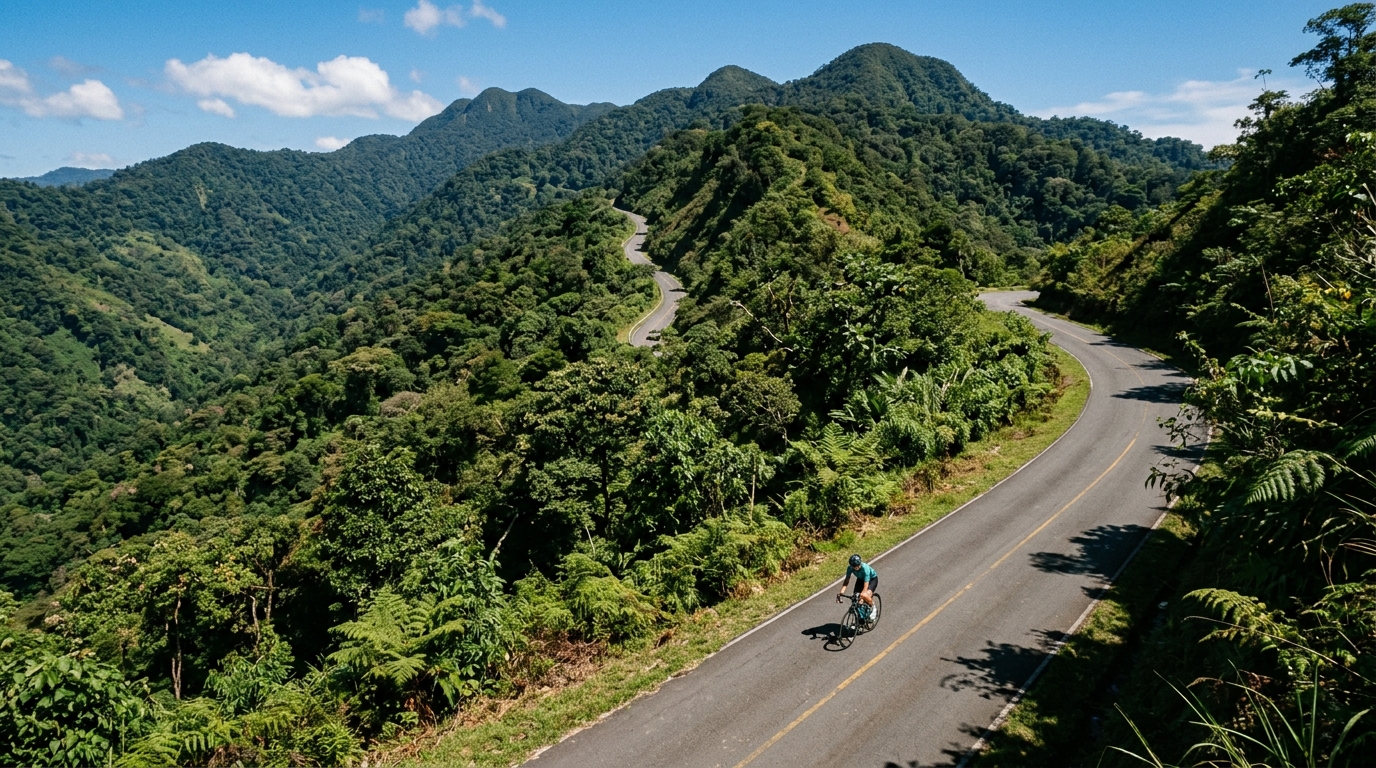 Alto de El JacintoKat. 2PA · 16.2 km · 4.0% · 682 m258poena
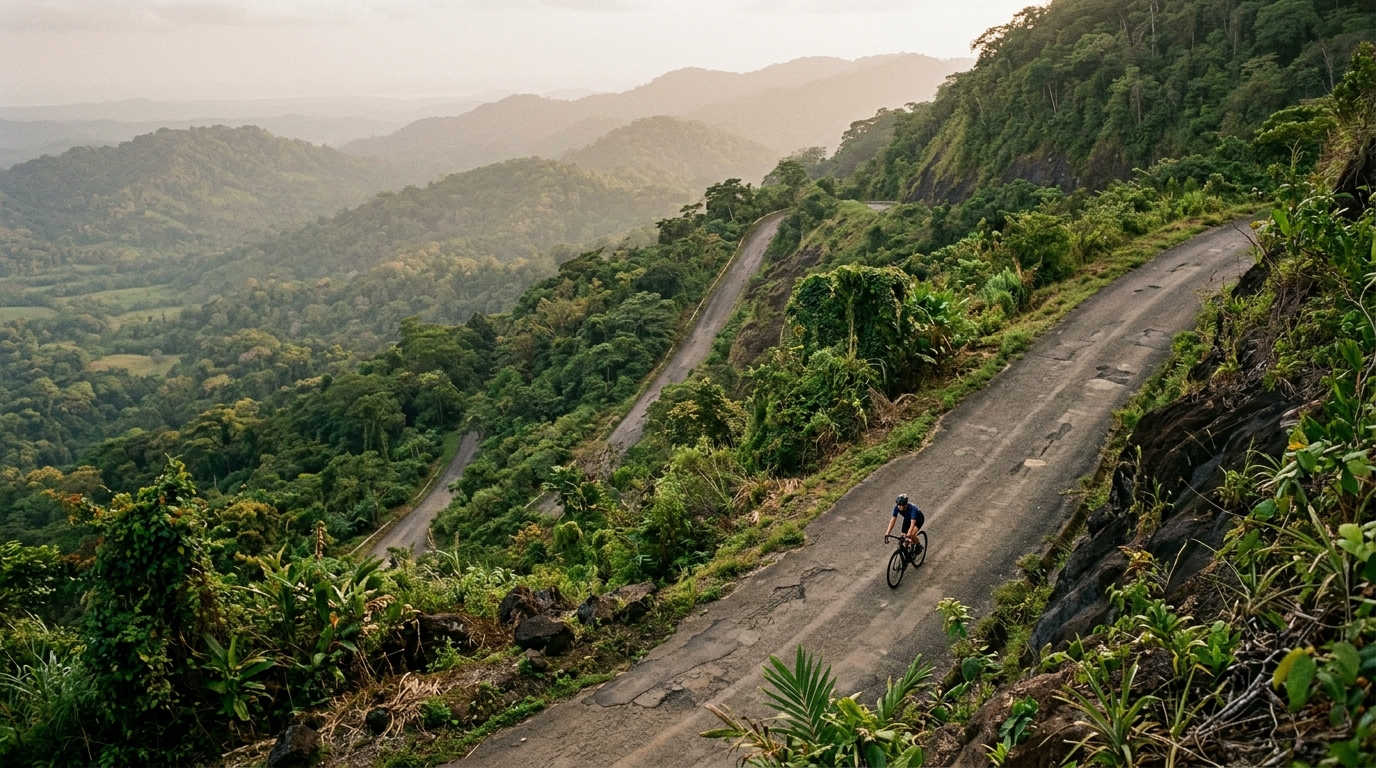 Alto de JacintoKat. 2PA · 3.2 km · 8.1% · 223 m210poena
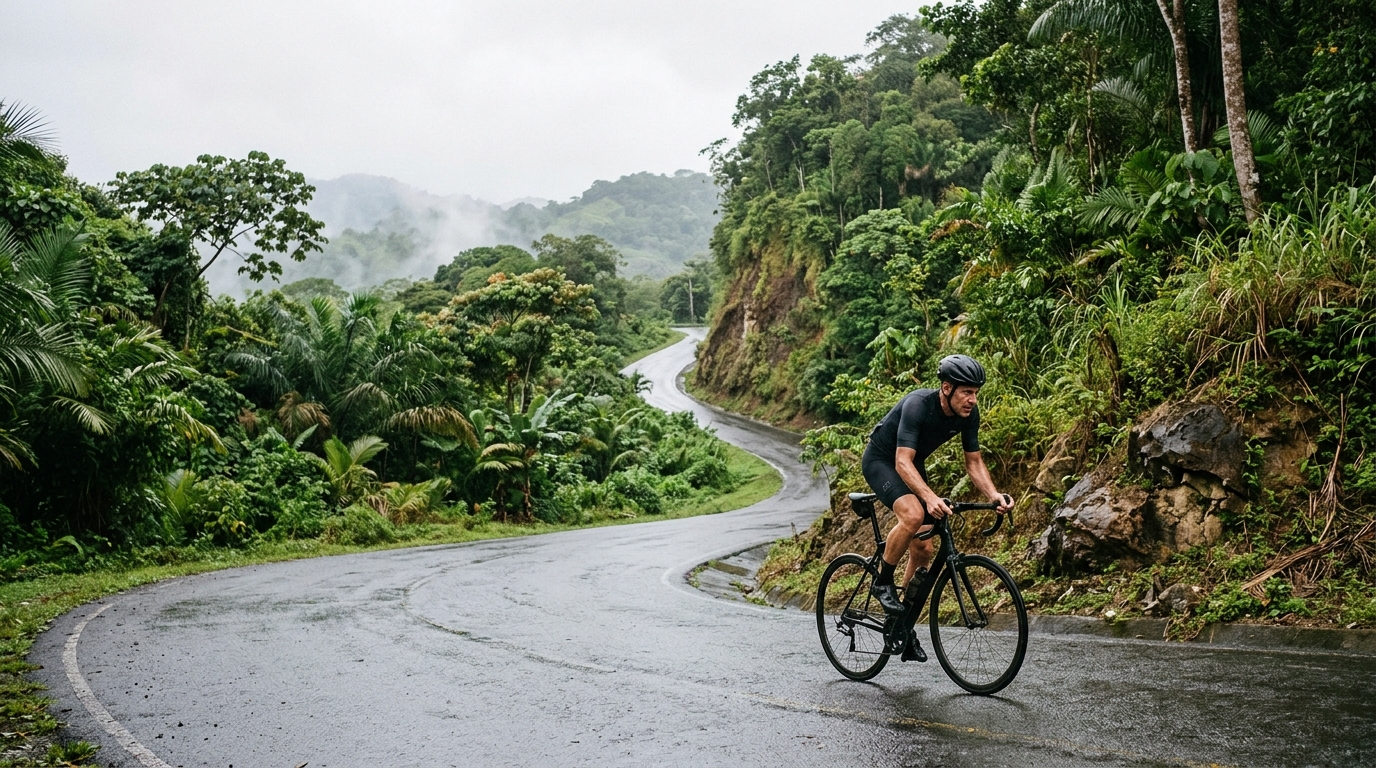 Alto de LimónKat. 3PA · 2.0 km · 9.3% · 156 m177poena
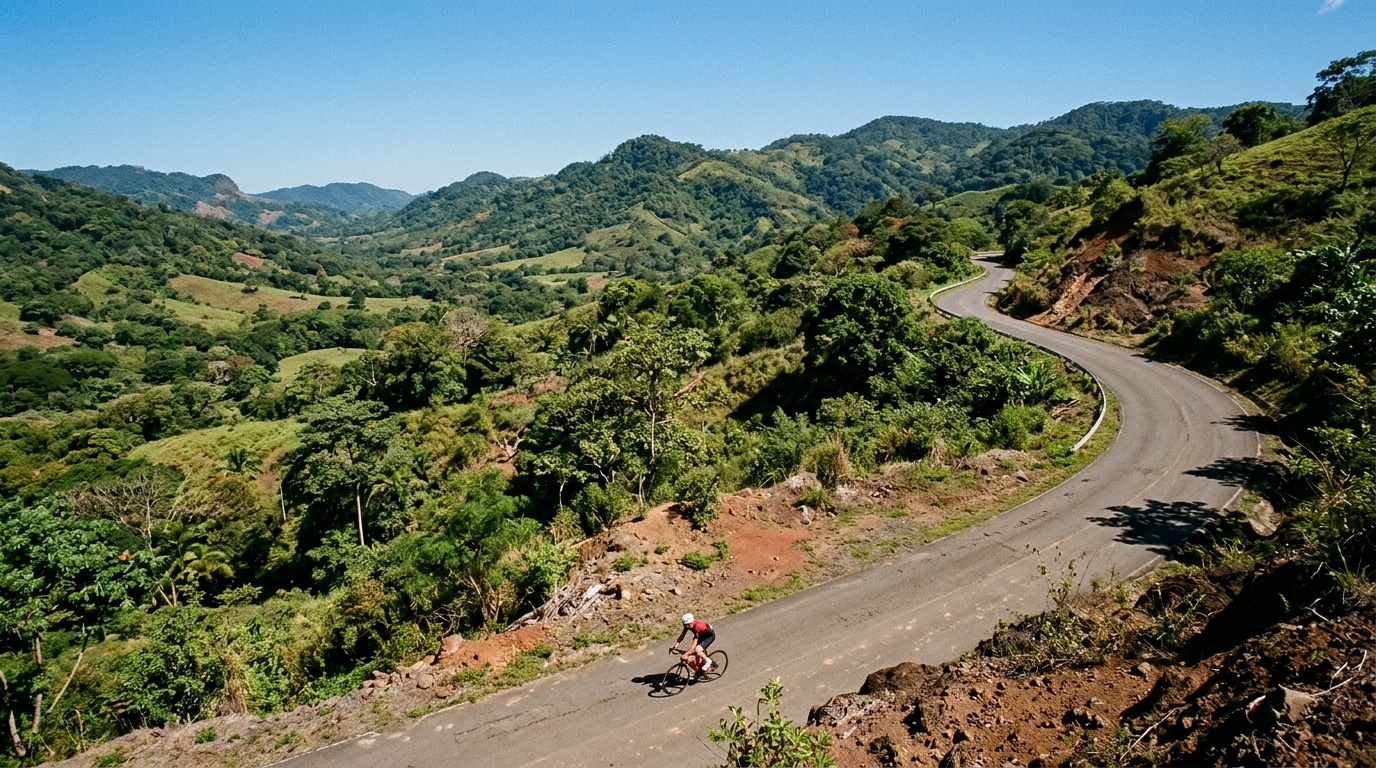 Alto de Los MendozasKat. 3PA · 9.8 km · 3.7% · 342 m136poena
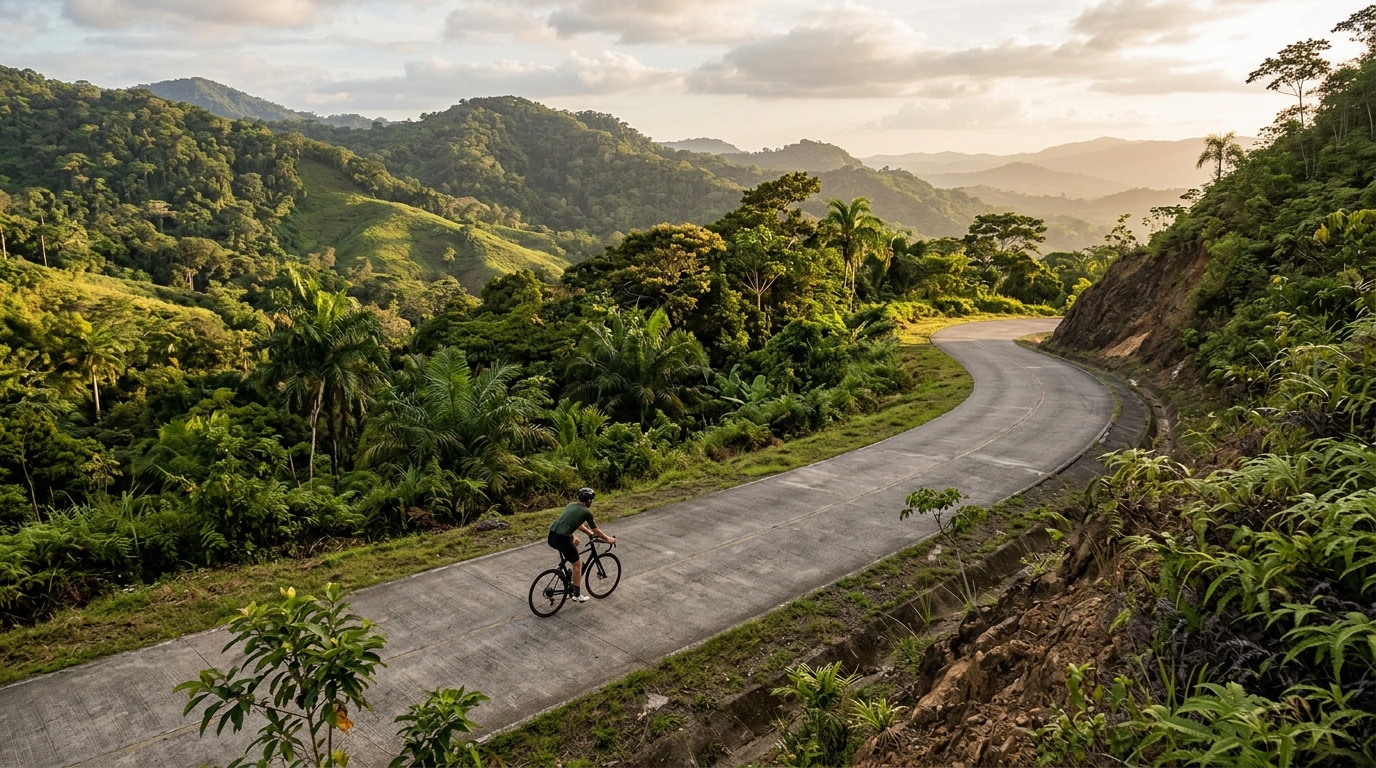 Alto de Los MichosKat. 3PA · 9.4 km · 3.8% · 318 m135poena
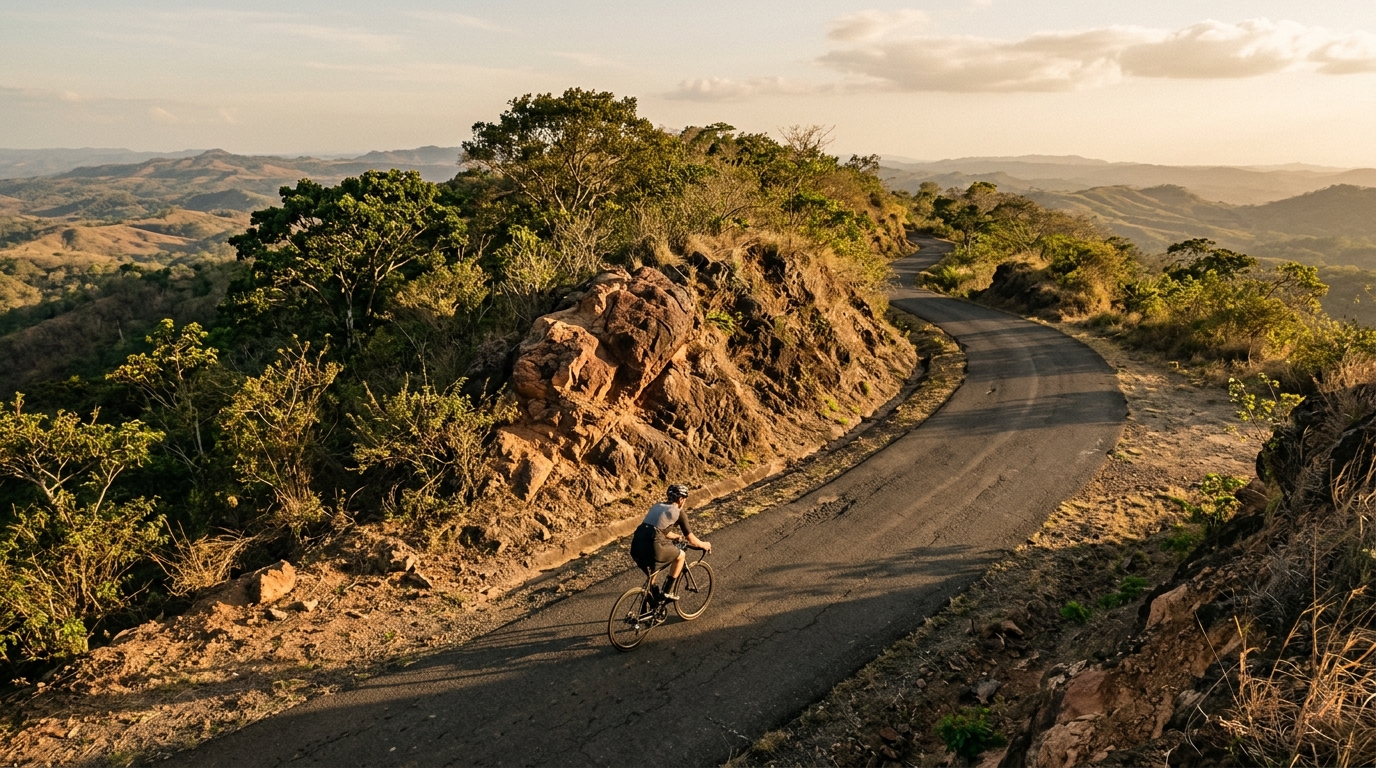 Alto de Las PetrasKat. 3PA · 2.0 km · 8.0% · 125 m127poena
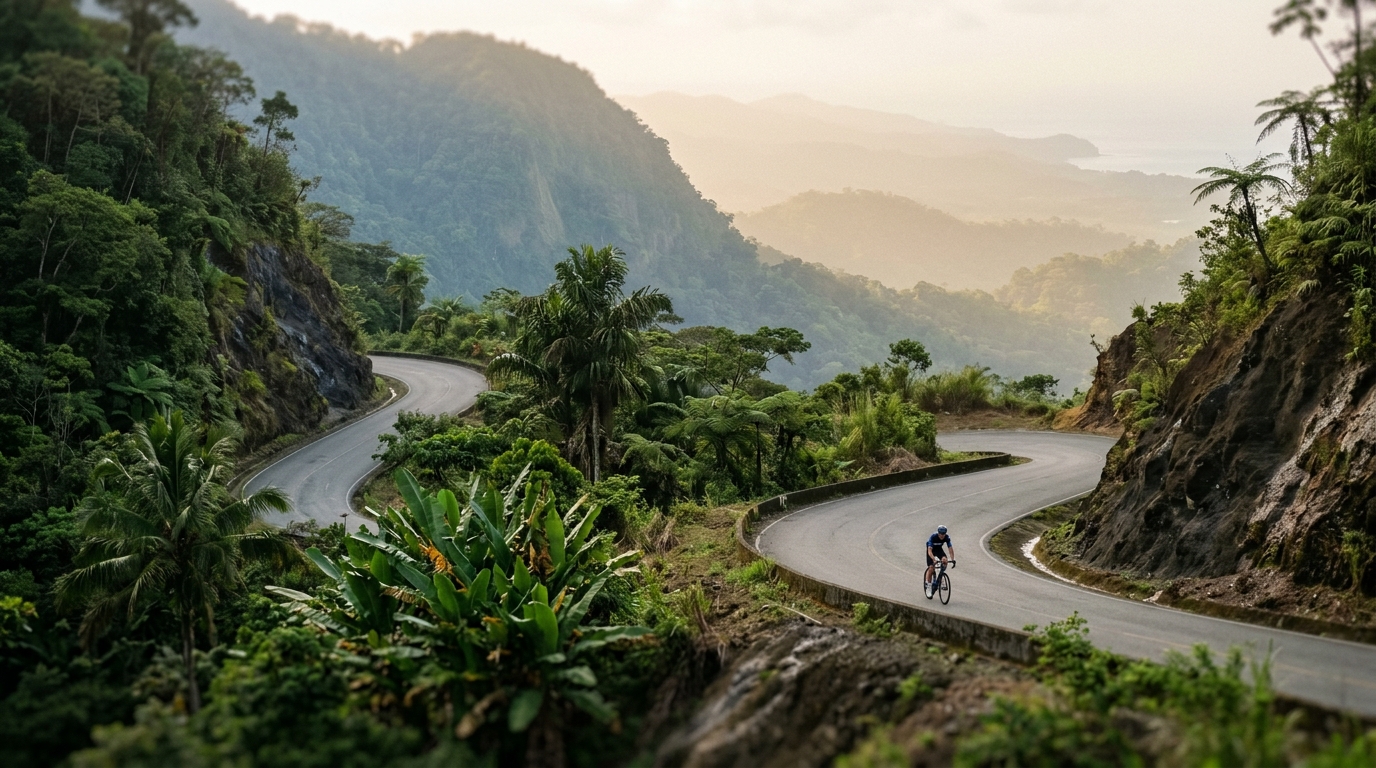 Alto del CopéKat. 4PA · 1.4 km · 8.4% · 76 m97poena
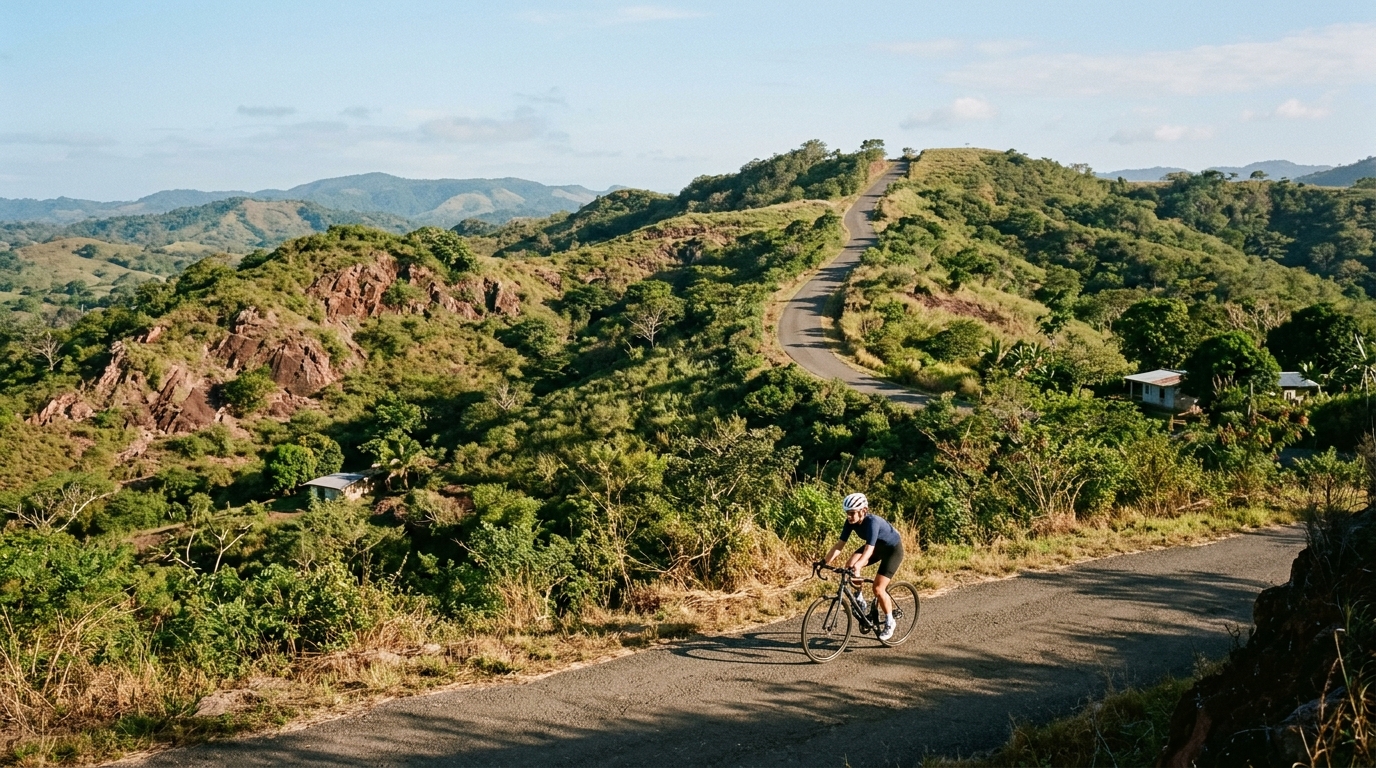 Alto del CortezoKat. 4PA · 2.4 km · 5.6% · 102 m75poena
Sveobuhvatan vodič za uspone u Panama
Terrain and character
Panama is not a high-altitude climbing destination in the alpine sense, and that matters for how you should read the riding. The country has 3 cataloged climbs in the Neverchill climb database, with a highest listed summit of 609 meters and no hors categorie climbs. That profile points toward a very specific kind of climbing: lower elevation, repeatable, heat-influenced, and more about sustained execution than survival at altitude.
The absence of hors categorie climbs does not make the riding easy. It changes the limiter. On big mountain routes, riders often manage long duration, cooling air, and the pacing cost of altitude. In Panama, the decisive factor is more likely to be the accumulation of load in warm, humid conditions, especially if the climb is exposed or the approach roads carry traffic. You can get into trouble not because a climb is objectively massive, but because the environment makes normal power feel more expensive.
That is the key to riding Panama well. Treat the climbs as efforts where cooling, hydration, and pacing are part of the performance equation. A rider who starts at threshold because the summit does not look intimidating on paper can still pay heavily if the heat load rises and fluid intake falls behind. The smart ride here is often controlled rather than heroic: settle early, keep the cadence alive, and finish stronger than you start.
Panama's climbing character also rewards repeatability. With 3 notable climbs in the current database, this is a place where a rider can use climbs as structured training blocks rather than a once-a-day objective. That makes the region interesting for endurance athletes who want to sharpen climbing durability, work on seated torque, or test pacing under environmental stress. If your goal is to build a better relationship between effort, heat, and recovery, Panama offers a useful proving ground.
The standout climbs
Alto de la Estancia
Alto de la Estancia is one of the 3 notable climbs listed for Panama, and it should be treated as a benchmark effort within the country rather than compared directly to famous high mountain passes elsewhere. The useful question is not whether it has alpine scale. It is how well you can manage a lower-altitude climb when the sensations are shaped by warmth, road rhythm, and the approach into the ascent.
For a rider training with power, this is the kind of climb where execution is the story. If the opening ramps feel manageable, resist the urge to convert that freshness into an early overreach. A lower summit does not remove the cost of riding above sustainable power. It simply makes the feedback loop faster: go too hard early, lose cooling efficiency, start missing shifts, and the second half becomes defensive.
Use Alto de la Estancia as a controlled climbing test. Ride the first part just below your target effort, let breathing and cadence settle, then decide whether to lift the pace. If you are calibrating zones, pair the effort with a realistic assessment of /glossary/ftp rather than a best-case number from perfect conditions. Panama is a good reminder that threshold is not a fixed feeling. Heat and fatigue change how much it costs.
Alto de Jesús
Alto de Jesús belongs in the guide because it gives Panama another named climbing reference point. For visiting riders, the value of having multiple notable climbs is that it allows comparison across terrain and conditions. One climb might feel defined by the approach, another by gradient changes, another by the difficulty of staying smooth when the road tilts up after a long warm-up.
Without leaning on unsupported distance or gradient figures, the practical approach is to ride Alto de Jesús with patience and attention. Watch how the climb asks you to produce power: steady seated pressure, accelerations over steeper sections, or a series of resets where cadence and gear choice matter more than raw output. That observation is not trivia. It determines the right training prescription.
If the climb forces repeated surges, it becomes a useful /glossary/vo2-max and over-under session. If it rewards steadiness, it is better used for tempo or threshold work. The terrain tells you what the workout should be. For endurance athletes, that is the difference between simply collecting a climb and actually using it.
Alto de San Rafael
Alto de San Rafael rounds out the notable Panama climbs in the database. As with the others, its importance comes from being part of a small national climbing set. When a country has 3 cataloged climbs, each one carries more weight in defining the riding profile.
Approach Alto de San Rafael as a climb where efficiency matters. Lower-altitude climbs can tempt riders into excessive gear changes, standing accelerations, and unnecessary spikes because the summit feels within reach. That is usually the wrong instinct. The better method is to keep the effort narrow, protect traction and cadence, and let the climb come back to you.
For riders who use heart rate, expect lag and environmental drift to complicate the picture. Heart rate can rise even if power stays constant, especially when cooling becomes harder. That does not make the data useless. It means you should read it in context. If power is steady but heart rate keeps climbing, the body is telling you the cost of the work is rising. Backing off slightly can be faster over the whole climb than forcing the original target until the effort breaks.
Best season and daily timing
Because the context here does not provide official seasonal dates, the most reliable advice is condition-based rather than calendar-based: ride Panama's climbs when roads are driest, visibility is good, and heat can be managed. The best day is not always the clearest-looking day at the start. It is the day where the forecast, road surface, and your ability to stay cool all line up.
Early starts are usually the smarter default for climbing in warm regions. They reduce time spent riding in peak heat, make traffic easier to manage on many roads, and create more margin if weather changes. The performance benefit is simple: lower heat stress lets you allocate more of your limited energy to propulsion rather than cooling.
Do not underestimate how quickly conditions can change the character of a climb. A route that feels steady and enjoyable in cooler morning air can become much harder when the sun is higher and the road surface radiates heat. For riders targeting a hard effort, schedule the key climb early and use the return or secondary climbs for endurance volume.
Practical notes: traffic, resupply, altitude, and gearing
Traffic
Plan each climb around the approach as much as the ascent. In Panama, as in most lower-altitude climbing regions, the roads that get you to the hill can matter more than the climb itself. Start early where possible, avoid sitting in dense traffic before a hard effort, and be conservative on descents where visibility, road debris, or mixed traffic may limit your line.
A good route is not simply the one with the most climbing. It is the one that gives you clean transitions, predictable turns, and safe places to regroup or stop. If you are riding with a group, define the regroup points before the climb begins. That keeps stronger riders from drifting into risky waiting spots and lets everyone descend with a plan.
Resupply
Lower elevation does not mean lower fluid demand. In fact, the opposite can be true when heat and humidity are the main constraints. Start climbs with more fluid than you think you need, especially if you are linking multiple ascents. The cost of carrying an extra bottle is small compared with the cost of running dry midway through a ride.
Resupply planning should be done before the route, not improvised after the first hard climb. Identify where you can refill, where you can buy calories, and where the route becomes more committed. For training rides, keep the fueling simple: steady carbohydrate intake, regular drinking, and enough sodium to support the conditions. The goal is not to finish depleted. The goal is to finish with the ability to repeat the work.
Altitude
The highest listed summit in Panama's current climb database is 609 meters, so altitude is not the defining physiological limiter in the way it is in high mountain regions. That is useful for pacing because riders do not need to build the day around thin-air performance loss.
But it would be a mistake to treat lower altitude as a free pass. The limiter shifts from oxygen availability to heat management, hydration, and muscular endurance. If you arrive fit but poorly adapted to warmth, power targets from cooler training environments may be too ambitious. Use the first climb to calibrate. If perceived exertion is higher than expected at a familiar power, adjust immediately rather than waiting for the data to confirm what your body already knows.
Gearing
With no hors categorie climbs in the Panama database, most riders do not need extreme mountain gearing purely because of altitude or climb scale. Still, gearing should be chosen for cadence control, not ego. A compact or sub-compact setup with a wide enough cassette gives you options when heat, fatigue, or steeper pitches make force production less efficient.
The important principle is to avoid grinding when the body is already fighting to cool itself. Low cadence can be useful for torque work when controlled, but it becomes costly when it is forced. If you are riding several climbs in one day, protect your legs early. Choose the gear that lets you stay smooth while holding the intended power.
If you are unsure what target power is realistic, estimate conservatively using tools like /tools/ftp-estimator and then validate on the road. Panama's climbs are well suited to this kind of feedback loop: set a target, ride it honestly, observe the heat and heart-rate response, then adjust the next climb.
How to build a route in Panama
Because the listed climb set is compact, the best Panama climbing routes should be built around quality rather than quantity. Pick one key climb for the main effort, then decide whether the rest of the ride is endurance, skills, or repeat climbing. That structure prevents the common mistake of turning every ascent into a test.
A strong training day might use Alto de la Estancia as the primary controlled effort, then add Alto de Jesús or Alto de San Rafael depending on road conditions, resupply, and fatigue. Another day might do the reverse: keep the first climb aerobic, then use the second climb for a sharper effort once the body is fully warmed. The right answer depends on the purpose of the ride.
For performance-focused riders, Panama is best understood as a terrain lab for disciplined climbing in demanding conditions. It will not be defined by towering altitude or hors categorie scale. It is defined by execution: pacing before pride, fueling before deficit, cooling before collapse, and route design that respects the full cost of the environment.
That makes the climbs more interesting than their headline stats suggest. The rider who handles Panama well is not just the one with the highest peak power. It is the rider who can keep producing controlled work when the environment quietly raises the price of every watt.