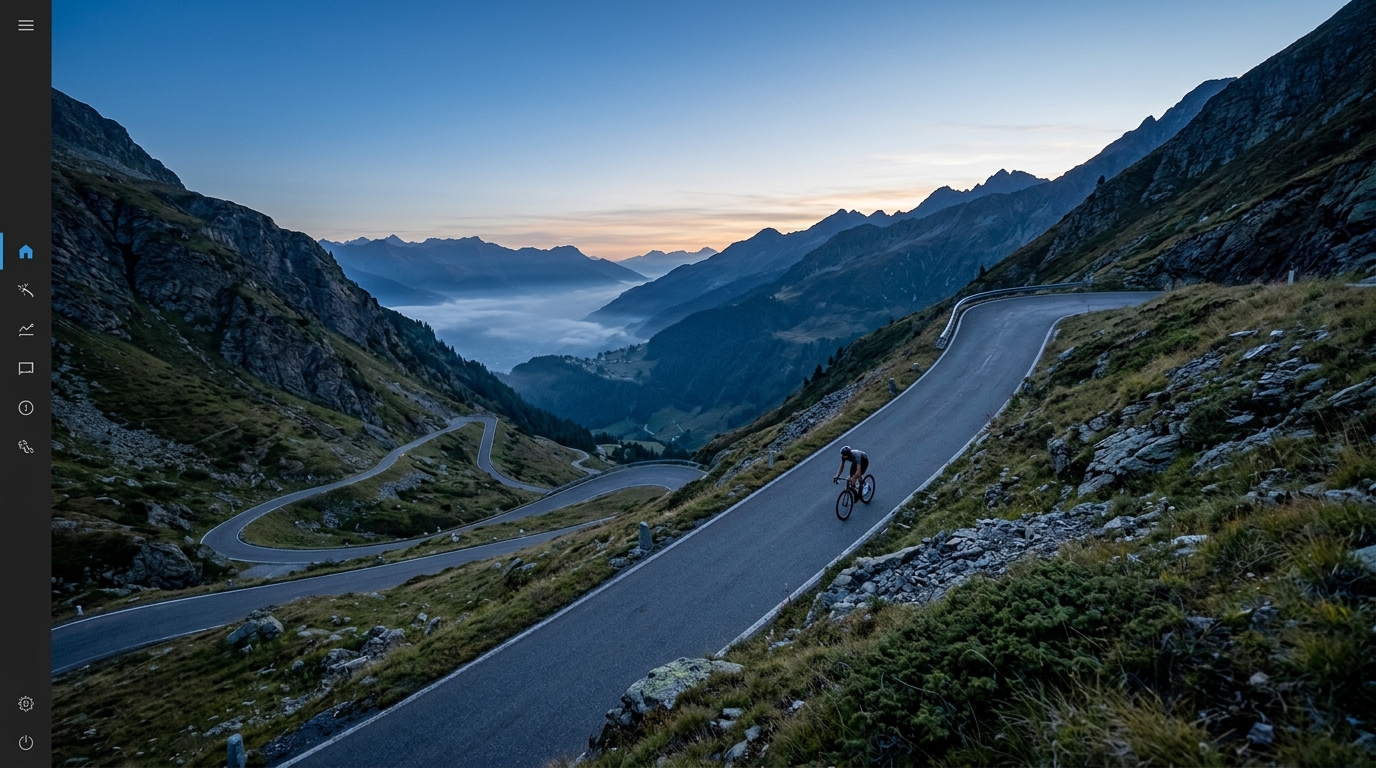
Chrüzlipass
A compact but severe Swiss HC climb: 7.2 km at 10.54%, with ramps up to 21.37% and very little room for pacing mistakes.
- Duž ina
- 7.2km
- Prosek
- 10.5%
- Maks
- 21.4%
- Vrh
- 1,379m
- Visinska razlika
- 691m
Uspon
Profil nagiba
Chrüzlipass cycling climb profile
Chrüzlipass is short enough to look manageable on paper, but the numbers say something different. At 7.2 km with an average gradient of 10.54%, this is not a climb where the difficulty comes from duration alone. It is an HC effort because the road asks for sustained torque almost immediately and gives very little margin if you over-ride the opening.
The climb rises from 619 m to 1379 m, gaining 760 m from bottom to summit. That relationship between distance and elevation gain is the key detail. A climb can average over 10% in two ways: either through long sections of steady double-digit gradient, or through violent ramps that compensate for easier ground elsewhere. Chrüzlipass adds another warning signal with a maximum gradient of 21.37%, so even if the average defines the day, the steepest pitches will decide how cleanly you get to the top.
How the gradient rides
With only 7.2 km to gain 760 m, the climb should be treated as severe from the start rather than something that gradually becomes hard. The average gradient is already high enough that a comfortable seated rhythm will be difficult for many riders, especially if they are carrying too large a gear.
The max gradient of 21.37% changes the pacing equation. On a climb averaging 10.54%, a wall over 20% is not just a brief annoyance. It forces a choice: either stay seated and grind at very low cadence, or stand and accept a spike above sustainable power. Neither is a problem once. The danger is stacking those spikes on top of an effort that is already sitting close to threshold.
Because the climb is not especially long, the temptation is to ride it like a hard interval. That is usually the wrong read. The gradient means muscular fatigue can arrive before aerobic capacity is fully used. If cadence drops too early, the final kilometres become more about survival than pacing.
Pacing and gearing notes
The safest strategy is to start below the effort you think the average gradient requires. On Chrüzlipass, the average is demanding enough that riding by feel can drift too hard very quickly. If using power, anchor the first part under control relative to your /glossary/ftp, then allow the steepest ramps to lift the effort only when the gradient forces it.
Gearing matters more here than on a longer climb with a lower average. Bring a genuinely low climbing gear, not just a standard road setup you can force over moderate gradients. The 21.37% maximum means you need an option that lets you keep traction and cadence when the road pitches up, especially if riding seated.
Practical approach:
- Keep the first minutes deliberately controlled, even if the climb feels short.
- Avoid repeated low-cadence surges unless the gradient leaves no alternative.
- Use the easiest gear earlier than pride suggests, not after the legs are loaded.
- Save standing efforts for the steepest ramps rather than using them to chase speed.
Chrüzlipass is a compact, high-cost climb. The rider who respects the average and prepares for the maximum gradient will climb it far better than the rider who only sees 7.2 km and assumes the effort will be over quickly.