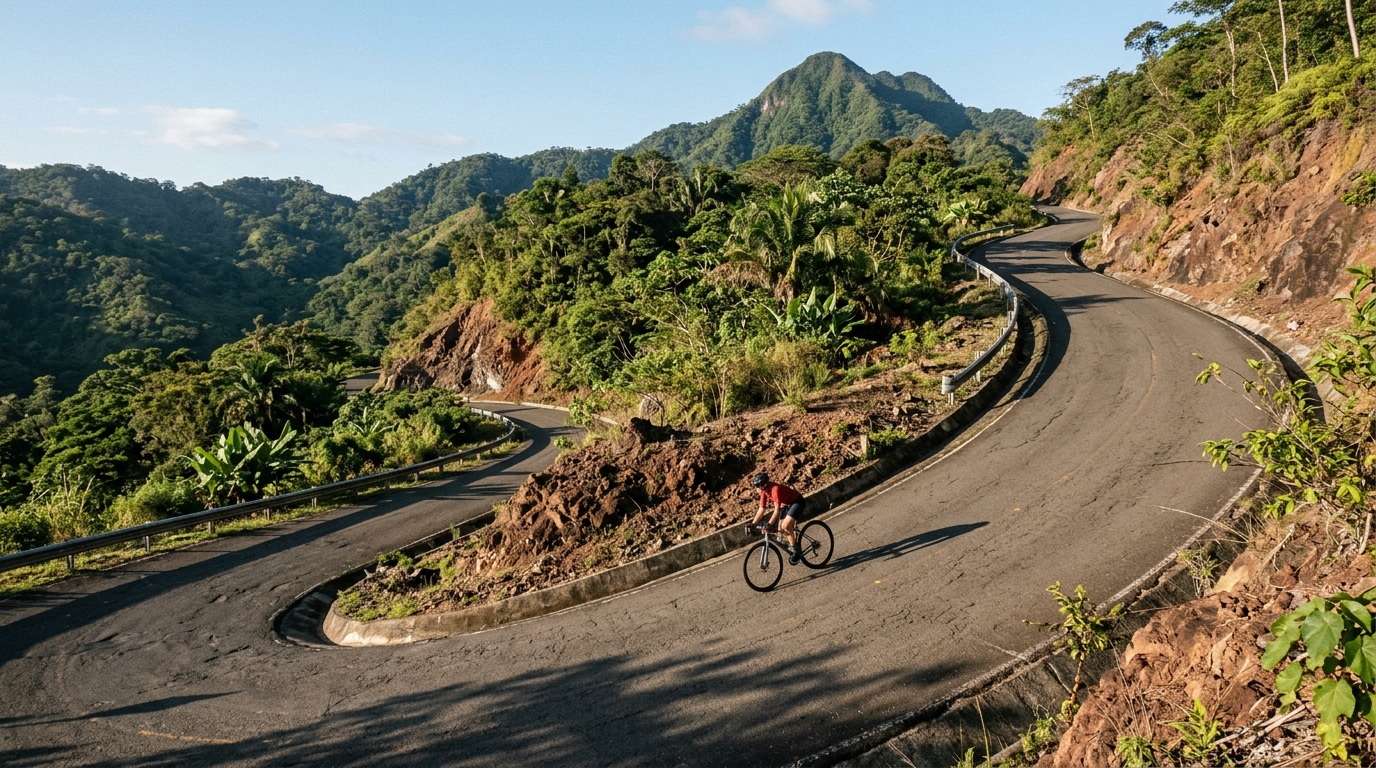
Alto de Culantro
A measured profile of Alto de Culantro, a 9.4 km category 3 climb averaging 3.78%, with a summit at 438 m and a maximum gradient of 6.57%.
- Duž ina
- 9.4km
- Prosek
- 3.8%
- Maks
- 6.6%
- Vrh
- 438m
- Visinska razlika
- 318m
Uspon
Profil nagiba
Alto de Culantro cycling climb profile
Alto de Culantro is a category 3 climb that rewards restraint more than aggression. On paper, the key numbers are straightforward: 9.4 km in length, an average gradient of 3.78%, and a maximum gradient of 6.57%. That makes it a climb where the damage usually comes from duration and poor pacing rather than from a single decisive wall.
The road starts at 81 m and tops out at 438 m, giving a listed net elevation gain of 357 m. The profile also lists total ascent as 318 m, so the cleanest way to read this climb is as a steady upward road with enough variation to prevent it from feeling completely uniform. The average gradient sits well below the maximum, which tells you the climb is not a constant ramp. There will be easier ground mixed with steeper sections, but nothing in the available profile suggests a brutally steep pitch.
How the gradient rides
At 3.78% average over 9.4 km, Alto de Culantro sits in that awkward endurance-climb zone where it is tempting to ride too hard because the opening sensations can feel manageable. That is usually the trap. A gradient like this lets stronger riders stay seated and carry speed, but the length is enough to punish repeated surges.
The maximum gradient of 6.57% matters less as a headline and more as a pacing warning. If you ride the lower-gradient sections above threshold, the steeper moments will force you into anaerobic work. Instead, use the gentler portions to keep pressure on the pedals without spiking effort, then allow cadence or speed to drop slightly when the road lifts.
Pacing and gearing notes
For pacing, treat Alto de Culantro as a controlled aerobic climb rather than a punchy test. If riding by power, staying near a sustainable climbing effort is the sensible default, especially for riders using /glossary/ftp as a reference point. The goal is to avoid turning a category 3 climb into a sequence of small over-threshold efforts.
Gearing should prioritize smooth cadence over hero torque. The maximum gradient is not extreme, but after several kilometres even moderate ramps can become costly if you are over-geared. Choose a setup that lets you stay seated through the steeper sections and keep the upper body quiet.
The best way to ride Alto de Culantro is to let the profile come to you: settle early, avoid chasing speed on the easier ground, and save enough control for the sections that approach the listed maximum gradient. The climb is not defined by severity. It is defined by how efficiently you manage a long, steady upward effort.