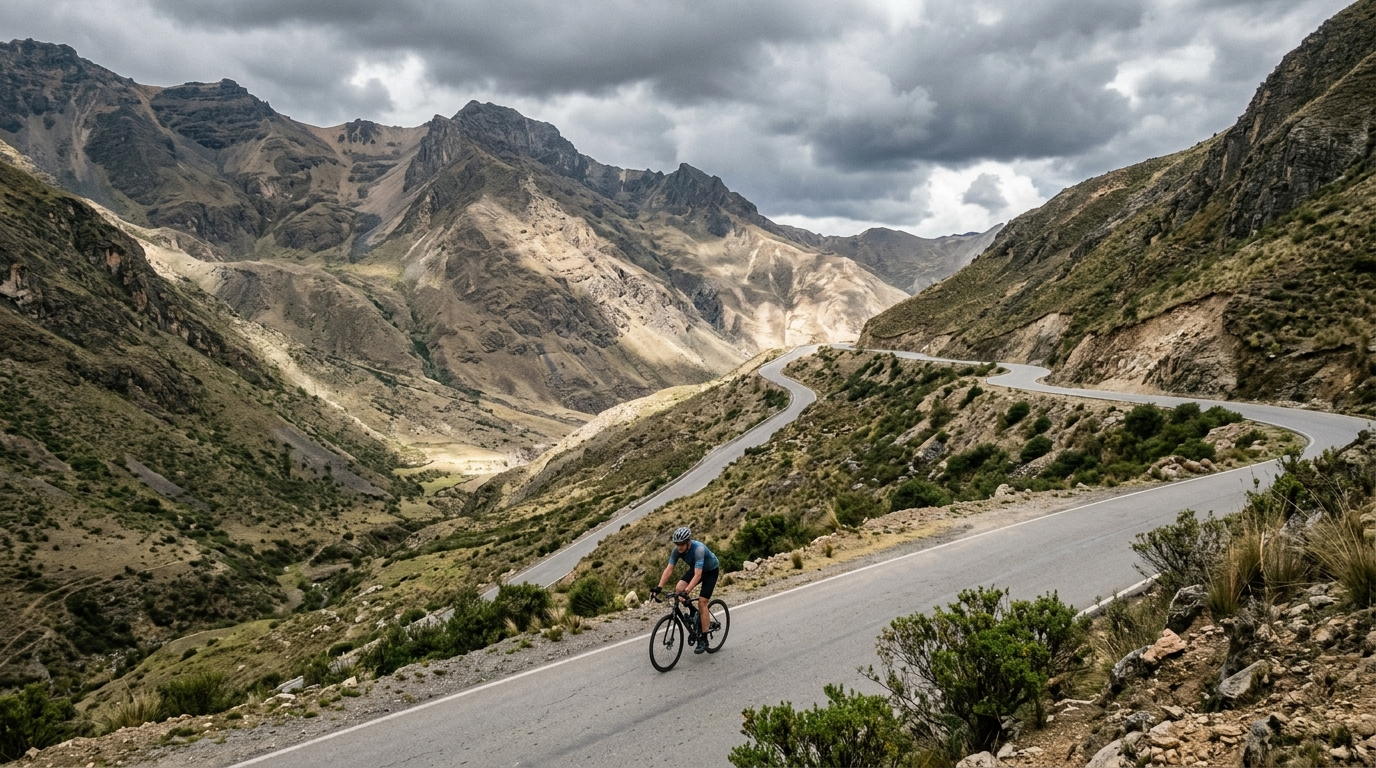
Abra de Porculla
A practical pacing and gearing guide to Abra de Porculla, a long HC climb in Peru built around sustained elevation gain rather than constant steepness.
- Duž ina
- 36.1km
- Prosek
- 4.9%
- Maks
- 9.9%
- Vrh
- 2,125m
- Visinska razlika
- 1,737m
Uspon
Profil nagiba
Abra de Porculla cycling climb profile
Abra de Porculla is an HC climb in Peru that asks for patience more than aggression. At 36.1 km, with 1756 m of net elevation gain from 369 m to 2125 m, this is a long day of climbing even though the average gradient is a relatively measured 4.86%.
That average is the key to understanding the climb. Abra de Porculla is not defined by a brutally steep headline gradient. It is defined by duration. The max gradient of 9.9% tells you there are ramps sharp enough to punish poor pacing, but the overall profile points to a climb where the main difficulty is the repeated cost of keeping pressure on the pedals for a very long time.
How the gradient feels
With an average of 4.86% across 36.1 km, the climb should ride as a sustained aerobic effort rather than a sequence of wall-like pitches. The danger is that the lower average can make the opening feel deceptively manageable. If you ride it like a short climb, the accumulated gain will catch up with you well before the summit.
The 9.9% maximum gradient matters because it changes how you should manage the effort. Even if most of the climb sits below that, any near-maximum ramps will require either extra torque or a short rise in power. If you arrive at those sections already riding at your limit, they become expensive. If you have kept the effort controlled, they are just interruptions in rhythm.
The practical reading is simple: this is a climb to settle into, not attack from the bottom. The profile rewards riders who can hold a steady aerobic output, keep cadence under control, and avoid repeated surges. The summit elevation of 2125 m also means the upper part comes after a large vertical gain, so fatigue will matter even if the road never becomes consistently extreme.
Pacing and gearing notes
Pacing
Start below your natural climbing ambition. On a 36.1 km ascent, the first goal is to prevent early muscular damage. Use a controlled endurance-to-tempo feel and only allow harder efforts when the gradient forces them. If you pace from /glossary/ftp rather than emotion, Abra de Porculla becomes much easier to manage.
Avoid chasing speed changes caused by gradient shifts. A climb with a modest average but a 9.9% maximum will naturally create uneven speed. Let the bike slow on the steeper ramps, keep the pressure smooth, and save any threshold-level work for the final stretch rather than spending it early.
Gearing
Choose gearing that lets you stay seated and keep cadence stable when the road approaches its steepest pitches. The average gradient may suggest a bigger gear is fine, but the length and the 9.9% maximum argue for a lower climbing option. On this climb, an easy gear is not a luxury - it is a way to protect the legs across the full 1756 m of net gain.
If you are riding loaded, tired, or coming from lower elevation, bias the setup even easier. The climb is long enough that small mistakes compound, and the best gearing is the one that lets you keep pedaling smoothly after the early confidence has worn off.