Imagem gerada pelo nosso modelo.
táticas de corrida de ciclismo
Táticas de Corrida de Ciclismo: Como Aprender com Filmagens de Profissionais
Use filmagens de corridas profissionais como treino tático. Aprenda o que observar antes dos ataques, como o posicionamento economiza energia e como transformar clipes em treinos.
Por Que Assistir Corridas Pode Melhorar Suas Próprias Decisões
A maioria dos ciclistas assiste a corridas pelo resultado. A parte útil é tudo o que acontece antes que o resultado se torne óbvio.
As táticas de corrida de ciclismo raramente se resumem a um ataque explosivo isolado. A jogada vencedora geralmente se baseia em decisões mais discretas: quem ficou protegido, quem passou muito tempo no vento, qual equipe parou de se comprometer, qual ciclista avançou antes que a estrada se estreitasse e quem reconheceu a hesitação antes de todo mundo.
É por isso que as filmagens de corridas profissionais podem ser um poderoso treino de táticas de ciclismo para ciclistas amadores. As velocidades, a profundidade do pelotão e as estruturas das equipes são diferentes, mas os padrões de decisão se traduzem. As táticas de corrida de bicicleta são construídas em torno das mesmas restrições em todos os níveis: energia limitada, espaço limitado, informações imperfeitas e um grupo de ciclistas tentando resolver o mesmo problema ao mesmo tempo.
O erro é assistir apenas o ciclista que ataca. Se você quer aprender a analisar corridas de ciclismo, observe o grupo antes do ataque. O ciclista decisivo muitas vezes parece calmo antes de parecer forte. Ele já está perto da frente, já protegido, já seguindo as rodas certas e já posicionado para responder sem precisar de um arranque de pânico.
Você não precisa de potência de nível profissional para copiar um melhor timing, um melhor posicionamento e uma melhor contenção.
O Que Procurar Antes Que A Jogada Chave Aconteça
O melhor aprendizado tático vem de rebobinar antes do destaque.
Comece fazendo uma pergunta simples: o que mudou? Uma corrida não se torna tática de repente porque um ciclista ataca. Algo geralmente cria as condições para que esse ataque funcione.
Procure por estes sinais antes da jogada:
- O ritmo aumenta, depois diminui brevemente
- Uma equipe forte termina um turno e não tem um ciclista pronto para continuar
- Vários ciclistas olham ao redor em vez de manter o ritmo
- O grupo se estende antes de uma subida, curva ou seção exposta
- Um ciclista protegido avança sem parecer apressado
- Domestiques começam a desaparecer da frente
- Um grupo de perseguição se forma, mas falta comprometimento
A chave é causa e efeito. Um ataque após uma seção difícil é diferente de um ataque em um grupo fresco. Uma jogada depois que uma equipe líder queimou ciclistas é diferente de uma jogada quando essa equipe ainda tem controle. Um ciclista saltando de uma posição protegida é diferente de um ciclista atacando depois de fazer um trabalho visível.
Ao revisar as filmagens, pause antes do ataque e identifique quem ainda tem opções. O ciclista com opções nem sempre é o ciclista mais forte no papel. Muitas vezes é o ciclista com a posição mais limpa, o melhor apoio da equipe ou a menor responsabilidade de perseguir.
Essa é a parte que você pode usar em suas próprias corridas. Não pergunte apenas: 'Posso atacar aqui?' Pergunte: 'O grupo criou um momento em que meu ataque custa mais aos outros do que a mim?'
Como O Posicionamento Economiza Energia Antes De Subidas E Ventos Cruzados
O posicionamento é frequentemente enquadrado como uma habilidade de segurança, mas taticamente é uma ferramenta de gerenciamento de energia.
Antes de uma subida, a frente do grupo geralmente se torna mais valiosa porque os ciclistas querem espaço para se deslocar, escolher seu ritmo e evitar serem atrasados por lacunas. Se você começar muito atrás, não está apenas subindo. Você está subindo enquanto responde a cada aceleração, cada parada e cada divisão que se abre à sua frente.
O mesmo princípio se aplica antes de estradas expostas. As corridas com vento cruzado punem os ciclistas que esperam até que o escalão se forme antes de lutar por espaço. A essa altura, o custo de avançar já aumentou. A melhor jogada tática é ler o ambiente cedo: direção da estrada, exposição ao vento, comportamento nervoso da equipe e a urgência repentina de ocupar o lado protegido.
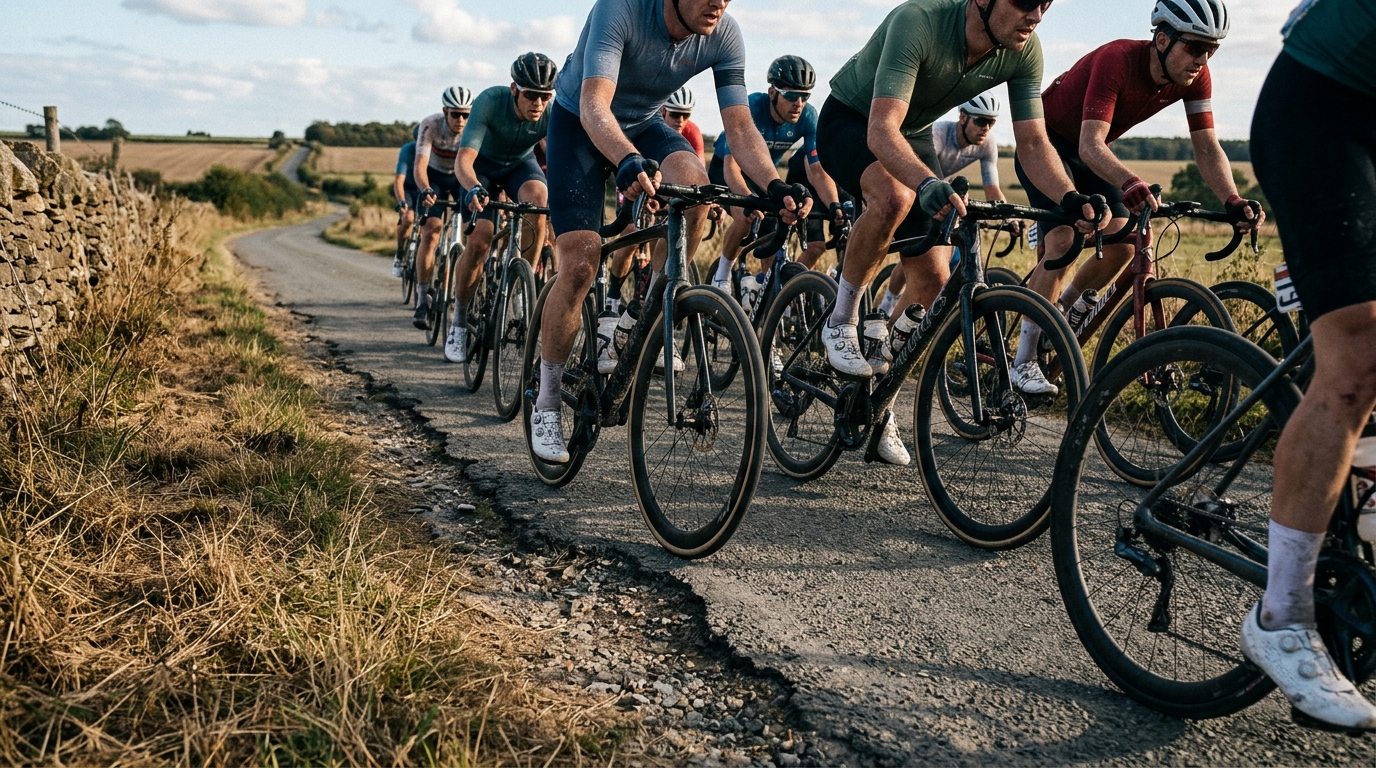
Imagine uma corrida de estrada local virando de uma pista protegida para uma seção aberta. Os ciclistas da frente sentem a mudança e deslizam para o lado protegido antes da curva. Os ciclistas do meio hesitam porque o ritmo ainda não aumentou. Quando o grupo se alinha, a divisão é menos sobre quem é mais forte e mais sobre quem tratou a curva como o gatilho tático.
Ao assistir a filmagens profissionais, concentre-se menos no momento em que o grupo se divide e mais no minuto antes de se dividir. Quem avançou cedo? Quais equipes se alinharam? Quais ciclistas ficaram para trás porque ainda estavam esperando por provas?
Estas são táticas de corrida de estrada que ciclistas amadores podem realmente aplicar. No nível local, as divisões decisivas muitas vezes acontecem menos porque um ciclista produz um ataque extraordinário e mais porque metade do pelotão entra em uma seção difícil mal posicionada. O custo é então pago em arranques repetidos, não em um esforço limpo.
Uma regra útil para a revisão de filmagens é esta: se todos na tela de repente querem o mesmo pedaço de estrada, a decisão tática já era tardia. Identifique o gatilho mais cedo da próxima vez.
Lendo Funções da Equipe, Leadouts e Dinâmicas de Perseguição
Corridas profissionais podem parecer caóticas, mas a estrutura da equipe oferece um mapa.
Quando uma equipe tem um líder claro, observe como eles usam os ciclistas. Um companheiro de equipe pedalando na frente não está apenas tornando a corrida difícil. Eles estão comprando controle. Eles podem estar desencorajando ataques, mantendo o líder protegido, preparando uma subida ou protegendo a posição antes de uma seção técnica.
Os leadouts são especialmente úteis para aprender táticas de corrida de bicicleta porque mostram como a ordem cria velocidade. Um bom leadout não é apenas força bruta. É tempo, posição na estrada e sacrifício. O ciclista final se beneficia porque outros absorveram o vento, gerenciaram a luta por posição e entregaram impulso no momento certo.
Ciclistas amadores frequentemente copiam a parte visível de um leadout e perdem a lógica. O objetivo não é chegar à frente cedo e pedalar forte até você cansar. O objetivo é colocar o ciclista protegido na posição menos comprometida no último momento útil.
As dinâmicas de perseguição são ainda mais importantes para a maioria dos ciclistas porque as corridas amadoras frequentemente carecem de controle organizado. Quando um movimento se destaca, pergunte quem tem o incentivo para perseguir.
Um ciclista com um companheiro de equipe na frente não tem razão para trabalhar. Um forte sprinter pode querer que o movimento volte, mas apenas se ele acreditar que o final lhe convém. Um ciclista sem companheiros de equipe pode ser forte o suficiente para perseguir, mas não querer puxar finalizadores mais rápidos. Um grupo pode conter muita força e ainda falhar porque os incentivos não se alinham.
Imagine um pequeno grupo pendurado à frente após uma seção difícil. Os ciclistas atrás são capazes de fechar a lacuna, mas a equipe mais forte perdeu o movimento e está esperando que outra pessoa entre em pânico. Um sprinter senta na segunda roda porque quer a corrida junta, mas não quer puxar todo mundo. Um ciclista com um companheiro de equipe à frente interrompe a rotação passando suavemente. A lacuna sobrevive porque a perseguição tem força, mas nenhuma responsabilidade compartilhada.
Força importa, mas a cooperação decide como a força é usada. Uma perseguição falha quando todos querem o benefício e ninguém quer o custo.
Em suas próprias corridas, pare de tratar cada lacuna como puramente física. Antes de perseguir, identifique a responsabilidade. Se a equipe mais forte perdeu o movimento, pressione-os. Se um rival tem um companheiro de equipe à frente, não espere ajuda. Se você estiver isolado, decida se fechar o movimento melhora sua corrida ou simplesmente redefine a mesa para os outros.
Traduzindo Táticas Profissionais para Velocidades de Corridas Amadoras
O maior erro ao usar filmagens profissionais é copiar a ação em vez do princípio.
Você não está tentando replicar a mesma velocidade, profundidade de suporte da equipe ou precisão de execução. Você está extraindo a regra de decisão por trás disso.
Um ciclista profissional subindo antes de uma subida ensina você a proteger a posição antes que o terreno torne o movimento caro. Uma equipe que se recusa a perseguir ensina que os incentivos importam mais do que a frustração. Um leadout ensina que os resultados do sprint são moldados muito antes da aceleração final. Um ataque bem-sucedido após uma calmaria ensina que o tempo pode multiplicar a força.
Em velocidades amadoras, os mesmos princípios podem aparecer de forma mais bruta. O pelotão pode ser menos organizado. Os ciclistas podem frear mais forte, acelerar com mais frequência e hesitar por mais tempo. Isso não torna as táticas menos importantes. Isso as torna mais visíveis.
O ciclista que consegue manter a calma enquanto outros reagem exageradamente economiza energia. O ciclista que sabe quando não perseguir preserva energia para o momento que importa. O ciclista que se move para a frente antes que a luta comece evita transformar o posicionamento em um esforço de limiar. Se você rastrear a potência após as corridas, essas escolhas táticas frequentemente aparecem como menos picos desnecessários, não necessariamente um melhor esforço máximo. Compreender conceitos como FTP pode ajudar, mas as táticas são sobre decidir quando vale a pena gastar essa potência.
Esta é a tradução central: as táticas profissionais mostram versões otimizadas de decisões que você ainda enfrenta em condições amadoras confusas.
Crie uma Rotina Simples de Revisão de Filmagens de Corridas
Não transforme a análise de corridas em uma visualização de fundo. Torne-a deliberada e curta o suficiente para ser repetida.
Use esta rotina depois de assistir a uma corrida ou a um clipe selecionado:
Assista à seção decisiva uma vez sem pausar
Entenda a história básica. Quem atacou, quem perseguiu, qual grupo se formou e como a situação da corrida mudou.
Volte para antes do movimento
Observe a frente do grupo, não apenas o eventual vencedor. Identifique quais ciclistas já estavam em posição útil e quais equipes estavam gastando energia.
Acompanhe os ciclistas protegidos
Escolha os favoritos ou líderes óbvios e observe o quão pouco trabalho eles fazem antes do momento decisivo. Observe quem os protege, quando eles avançam e se eles ficam presos em algum momento.
Identifique o gatilho tático
Nomeie a razão pela qual o movimento funcionou. Foi o terreno, hesitação, fadiga, exposição ao vento cruzado, esgotamento da equipe, incentivos de perseguição ruins ou uma combinação?
Traduza isso em uma regra amadora
Escreva uma frase simples que você poderia usar em sua próxima corrida. Exemplos:
- Avance antes que a estrada torne o avanço caro
- Não persiga o movimento de um companheiro de equipe
- Ataque após uma seção difícil apenas se o grupo hesitar
- Se a perseguição não tiver um incentivo compartilhado, faça a ponte ou sente, mas não puxe cegamente
- Proteja a posição antes que a preparação para o sprint comece
Copie este modelo de revisão
Use o mesmo formato sempre para que suas anotações se tornem úteis sob fadiga:
- Timestamp: onde o clipe começa e onde a decisão chave acontece
- Situação da corrida: fuga, perseguição, preparação para sprint em grupo, vento cruzado, subida ou aproximação técnica
- Gatilho: o que mudou antes que o movimento funcionasse
- Ciclistas protegidos: quem foi protegido, quem avançou cedo, quem evitou o trabalho
- Responsabilidade da perseguição: quais ciclistas ou equipes tinham a razão mais clara para fechar a lacuna
- Regra amadora: a decisão que você tomaria em sua própria corrida
- Dica de treino: a habilidade ou esforço que você precisa ensaiar antes do dia da corrida
É assim que se analisam corridas de ciclismo de uma forma que muda o comportamento. O objetivo não é se tornar um comentarista. O objetivo é construir uma biblioteca de dicas táticas que você possa reconhecer sob fadiga.
Transforme Lições Táticas em Sessões de Treino
As táticas não se tornam úteis porque você as entende no sofá. Elas se tornam úteis quando você ensaia a demanda física que suporta a decisão.
Treino de controle de arrancada
Escolha um pedal de resistência ou tempo constante e adicione arrancadas curtas repetidas sem transformar toda a sessão em um esforço máximo. Após cada arrancada, volte imediatamente a pedalar de forma controlada, em vez de flutuar, embalar ou corrigir demais.
O propósito tático é específico: aprenda a absorver mudanças de ritmo sem entrar em pânico, e então produza um esforço limpo quando o grupo hesitar. Revise se você permaneceu composto após cada aceleração ou se deixou a arrancada ditar o resto do pedal.
Sessão de ataque após fadiga
Em uma estrada segura ou no rolo, construa um conjunto onde o movimento difícil vem após pressão sustentada, em vez de pernas frescas. Pedale uma seção difícil controlada, recupere-se apenas parcialmente e, em seguida, faça uma aceleração comprometida com um início e fim claros.
Isso espelha o padrão da corrida onde o movimento vencedor não é o maior esforço individual, mas o esforço mais bem cronometrado depois que todos já gastaram energia. O objetivo deve corresponder ao seu plano de treino atual, não a um número de potência universal.
Exercício de posicionamento em um pedal em grupo
Use um pedal em grupo constante ou uma corrida de treino para praticar o avanço antes que a luta óbvia comece. Escolha momentos seguros, use a proteção e avance gradualmente, em vez de fazer uma grande arrancada pelo lado exposto ao vento.
O objetivo não é dominar a frente durante todo o pedal. É chegar perto da frente antes de uma subida, curva, estrada estreita ou preparação para o sprint sem queimar uma ficha para chegar lá. Se você só avança depois que todos os outros reagem, você está praticando resgate, não posicionamento.
Exercício de consciência de vento cruzado
Em um ambiente de grupo seguro, treine-se para notar a direção do vento, a exposição da estrada e o comportamento dos ciclistas à frente. Pratique encontrar proteção e manter a posição sem movimentos bruscos. A vitória tática é evitar o custo total da divisão antes que ela aconteça.
Ensaio de preparação para o sprint
Pratique a paciência. Muitos ciclistas perdem sprints porque começam a correr o sprint muito cedo. Use esforços controlados para ensaiar ficar protegido, segurar uma roda e atrasar o comprometimento final até que o movimento tenha um propósito.
Lista de verificação de revisão de potência pós-pedal
Conecte as sessões táticas aos seus dados sem transformar a revisão em um concurso de potência máxima. Se você usa um medidor de potência, observe os momentos em que o arquivo mostra picos evitáveis e pergunte:
- O pico veio de um posicionamento ruim?
- Foi causado por reagir tarde ao terreno, vento ou uma curva?
- A perseguição melhorou minha corrida, ou puxou outros de volta à posição?
- Gastei potência antes do gatilho tático ou depois dele?
- Recuperei após a arrancada, ou um erro criou vários outros?
Uma ferramenta como o FTP estimator pode ajudar a ancorar as zonas de treino, mas a pergunta mais valiosa é tática: a potência que você gastou melhorou sua chance de vencer?
Essa pergunta é a ponte entre a filmagem e o desempenho.
O Verdadeiro Valor de Assistir Corridas
Os melhores ciclistas não são simplesmente mais fortes. Eles são melhores em fazer outros ciclistas gastarem energia primeiro.
As filmagens de corridas profissionais oferecem uma maneira clara de estudar essa habilidade. Assista antes do movimento chave. Acompanhe a posição antes que o terreno importe. Leia os papéis da equipe antes que a perseguição se forme. Traduza o princípio, não a velocidade. Em seguida, transforme a observação em uma dica de treino repetível.
As táticas de corrida de ciclismo melhoram quando o reconhecimento de padrões melhora. Quanto mais frequentemente você identificar o momento antes que a corrida mude, menos provável será que você seja surpreendido quando o mesmo padrão aparecer em seu próprio evento.
Não admire o movimento apenas depois que ele acontece. Aprenda por que ele se tornou possível em primeiro lugar.