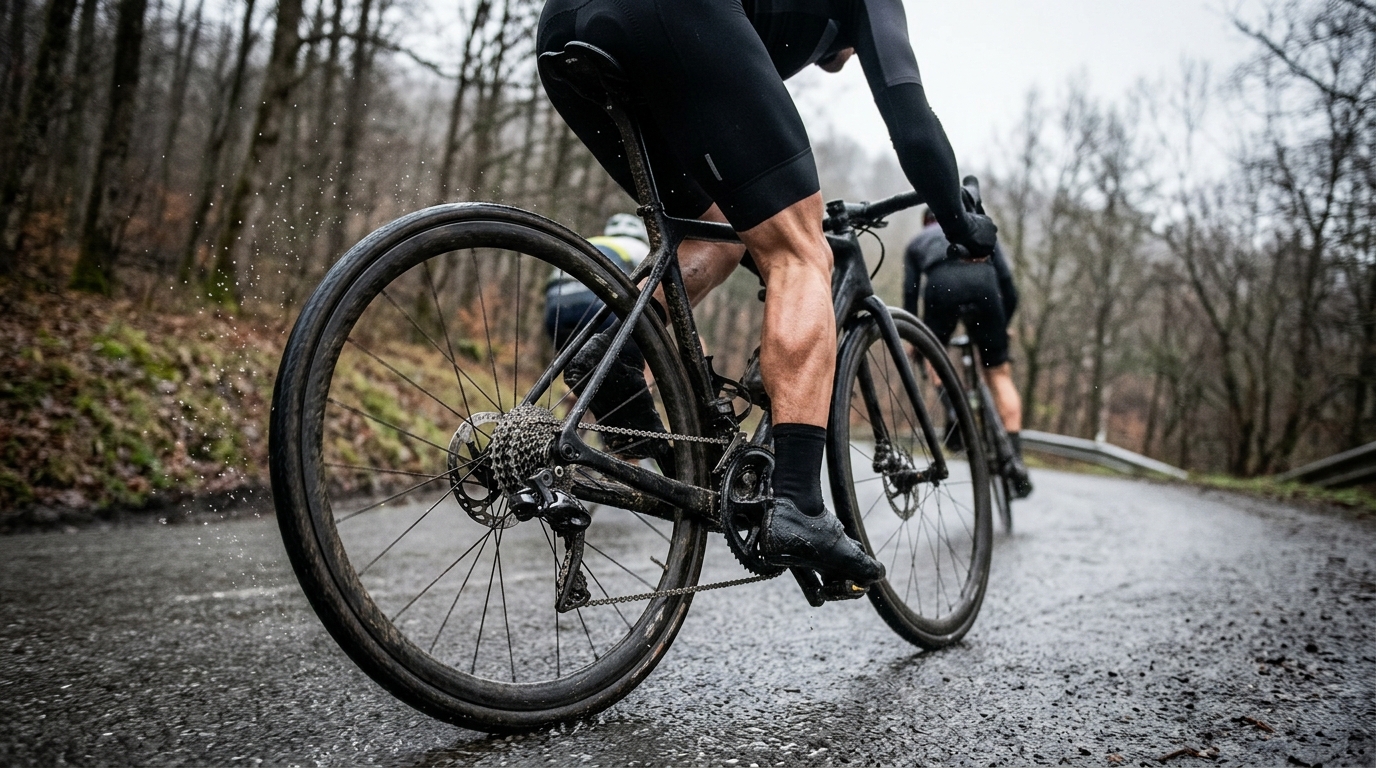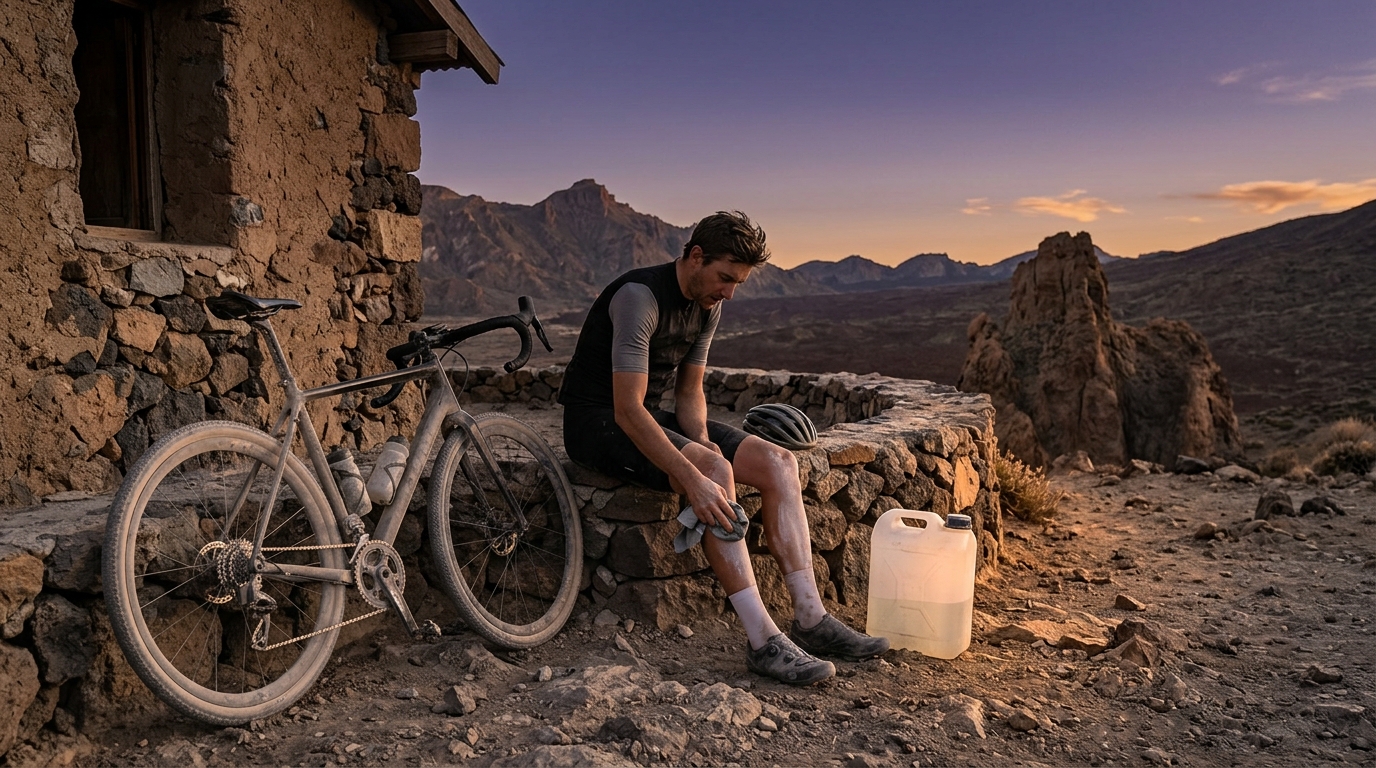
Afbeelding gegenereerd door ons model.
altitude
Altitude Training for Cyclists Without Losing Fitness
Altitude can build resilience or quietly erode fitness. Here is how to adjust power, RPE, fueling, recovery, and camp structure.
Altitude is a stimulus, not a shortcut
Altitude training for cyclists has a simple appeal: go somewhere harder, come back stronger. The reality is more conditional. Altitude can be a useful performance tool, but only when it is layered onto an already sound training system. If the block becomes a string of under-fueled, poorly paced, half-recovered rides, it does not create adaptation. It creates detraining with better scenery.
The central tension is this: altitude increases the physiological cost of riding while usually reducing the absolute power you can produce. You are asking the body to adapt while giving it less mechanical workload. Handled well, this can improve durability, aerobic control, and race readiness. Handled badly, it strips away the intensity and freshness that made you fit in the first place.
The goal is not to prove toughness. The goal is to preserve the key training signals while respecting the new environment.
What altitude changes in your cycling performance
Cycling at altitude changes the relationship between effort and output. The same climb, power, or interval that feels controlled at sea level can feel sharper, more breath-limited, and harder to repeat. Oxygen availability is lower, so the body has to work harder to support the same external workload.
The most obvious effect is lower sustainable power. Threshold work becomes harder to execute, high-intensity repeats lose their snap, and long climbs can feel like they have moved up a training zone even when the head unit says otherwise. Heart rate can also behave differently. Some riders see it run high for a given power early in the block. Others struggle to raise it during hard work because fatigue, dehydration, poor sleep, or accumulated stress is already limiting the system.
This is why altitude exposes poor pacing quickly. At sea level, a rider can often bluff their way through a slightly ambitious interval set. At altitude, the penalty arrives sooner. A hard start creates a deeper oxygen debt, breathing becomes ragged, and the back half of the session falls apart.
The useful question is not, 'Can I hit my normal numbers?' It is, 'Can I create the intended training stimulus without forcing a recovery cost that ruins the next sessions?'
Match the altitude plan to the scenario
Altitude is not one generic stimulus. The right structure depends on whether the event is at altitude, whether altitude is being used before a sea-level race, or whether the rider can separate where they live from where they train.
Racing at altitude
If the target event is at altitude, specificity matters. The priority is not just building fitness. It is learning how your power, heart rate, breathing, fueling, and pacing behave in the same kind of environment you will race in.
The practical approach is to arrive with enough time to stop reacting to every breath and start making normal race decisions again. Early rides should be controlled, with attention to how quickly breathing settles after surges and how much power you can hold without tipping into panic pacing. In the final approach, do not chase confidence workouts. Race readiness comes from being able to repeat efforts without a large recovery penalty, not from one desperate test ride.
On race day, altitude usually rewards restraint. Hard starts, repeated accelerations, and closing every move personally cost more than they do at sea level. Gear selection, warm-up, and positioning should all serve the same goal: avoid unnecessary spikes before the decisive parts of the race.
Using altitude before a sea-level event
When altitude is used before a sea-level event, the goal is different. You are not trying to become the best possible rider at altitude. You are trying to leave the block with enough aerobic stress to adapt, enough intensity to stay sharp, and enough freshness to express the work once oxygen availability improves.
This is where riders often get greedy. They see lower power during the camp, panic, and start adding more volume or more hard days. That is the wrong read. If the sea-level event is the priority, the altitude block should protect the qualities that matter for that event: threshold control, repeatability, sprint or surge capacity if needed, and the ability to freshen up after travel.
The return is part of the block, not an afterthought. Plan the first sea-level days as a taper and monitoring sequence: travel and recovery, easy endurance, a short opener-style session, then harder work or racing only if power, RPE, sleep, and motivation are moving in the right direction.
Living high and training low
Living high and training low can be effective because it separates the altitude exposure from the highest-quality work. In practice, that means the rider accepts the added recovery cost of sleeping or spending more time at altitude, while preserving key power work in a lower-stress training environment when possible.
The danger is assuming this setup removes the need for restraint. It does not. Sleep can still be worse, hydration demands can still rise, and easy rides can still carry more internal load. The advantage is that threshold, VO2-style, and race-specific efforts may be easier to execute cleanly when they are done lower.
For data-driven riders, this scenario should be judged by workout quality. If key sessions remain repeatable and recovery markers are stable, the setup is doing its job. If sleep, mood, or interval execution deteriorate, the altitude exposure is still too much for the current recovery capacity.
A normal mountain camp
Most riders are not running a laboratory-style setup. They go to the mountains, sleep there, train there, and deal with the terrain they have. That can still work, but the plan has to be more conservative.
In a normal mountain camp, climbs make it easy to ride too hard by accident. The default should be controlled endurance, reduced interval volume, and fewer truly hard sessions than a comparable sea-level block. The terrain is already adding load. The plan should not pretend it is business as usual.
Who benefits from altitude training and who should skip it
Altitude training is most useful for riders who already have consistent training, stable fueling habits, and enough experience to separate productive discomfort from warning signs. If you know your normal power, heart rate, and RPE patterns, altitude gives you another lever to pull. If those baselines are messy, altitude just adds noise.
Good candidates include:
- Riders preparing for events held at altitude
- Endurance athletes with a strong aerobic base who can absorb added stress
- Cyclists targeting stage races or long climbing events where durability matters
- Athletes with enough schedule control to recover properly during and after the block
Riders should be more cautious if they are already carrying fatigue, returning from illness, struggling with low energy availability, or trying to force a late fitness gain before a target event. Altitude amplifies what is already present. A well-built athlete may adapt. An under-recovered athlete may slide further into a hole.
The clearest reason to skip an altitude block is not lack of ambition. It is lack of margin. If life stress, work travel, poor sleep, or inconsistent fueling are already compromising training, altitude is unlikely to rescue the build. It will usually make the weak points louder.
A simple altitude-block framework
This is a coaching rule of thumb, not a physiological law. The exact dose depends on the rider, the altitude, the terrain, the target event, and how much training load the athlete brought into the camp. But most cyclists are better served by a simple structure than by improvising every day.
Opening acclimatization
Use the first 2-4 days as easy acclimatization. Ride mostly endurance, keep climbs controlled, avoid maximal testing, and resist the urge to prove that your sea-level zones still apply. The job is to learn the new relationship between power, heart rate, breathing, and RPE.
This phase should feel almost too restrained. That is the point. A rider who backs off early usually trains better later. A rider who attacks the first hard ride because the numbers look familiar often spends the rest of the camp trying to recover from it.
Main training block
After the opening phase, use 1-2 key intensity sessions per week as a coaching rule of thumb. These should be the sessions you most need to preserve: threshold control, race-specific repeatability, or high-aerobic work. Everything else should support those sessions, not compete with them.
Reduce interval volume before you destroy quality. If a normal sea-level workout has several hard repeats, the altitude version should often use fewer repeats, longer recovery, or a slightly lower target. The purpose is to finish with the intended stimulus intact, not to collect failed intervals.
A useful weekly rhythm is:
- Mostly endurance riding, with climbs capped by RPE and breathing
- 1-2 key intensity sessions, chosen for the target event
- Short, controlled accelerations to maintain leg speed when freshness allows
- Recovery days scheduled before they become emergency days
Return-to-sea-level taper
Treat the return as a taper sequence, not a victory lap. The first step is travel and recovery. The next step is easy endurance to restore rhythm. Then add a short opener-style session to check whether power is rising while RPE is falling. Only then should you test, race, or complete a demanding workout.
If you return from altitude and feel flat, that does not automatically mean the camp failed. It may mean the training load has not been absorbed yet. If motivation is low, sleep is poor, and RPE is high for normal endurance power, keep the taper conservative. If power is improving, breathing feels controlled, and the legs respond to short efforts, sharpening can begin.
Adjusting power, heart rate, and RPE at altitude
Your sea-level zones are still useful, but they need interpretation. Treat them as anchors, not commandments.
Power
Power is the easiest metric to misuse at altitude because it looks objective. If your FTP was established at sea level, riding at the same percentage of FTP at altitude may not create the same internal cost. Tempo can drift toward threshold effort. Threshold can become unsustainable. VO2-style work may collapse before it delivers the intended time at high oxygen uptake.
For endurance rides, keep power conservative until breathing and perceived exertion match the goal. For threshold and sweet spot work, reduce the target enough that the full set is controlled, not heroic. For high-intensity work, prioritize repeatability and quality over chasing sea-level numbers.
If you need to reset expectations before the block, the Neverchill FTP estimator can help anchor training zones, but the first rides at altitude should still be treated as field calibration.
Heart rate
Heart rate is useful because it shows internal strain, but it is not clean in isolation. At altitude, heart rate can rise from the environmental demand, dehydration, poor sleep, heat, or accumulated fatigue. It can also be suppressed when the rider is too tired to produce the intended workload.
Use heart rate to ask better questions. If power is low but heart rate and breathing are high, the session is already demanding. If power is low and heart rate is also unusually muted, fatigue may be the limiter. In both cases, forcing the plan because the power target says so is usually the wrong move.
RPE
RPE becomes more important at altitude, not less. Breathing, leg load, concentration, and the ability to recover between efforts all matter. A good altitude rider develops a narrower pacing ego. If the session is meant to be aerobic, it should feel aerobic. If the session is meant to be controlled threshold, the final interval should not require race-day desperation.
Use a simple rule: when power, heart rate, and RPE disagree, trust the pattern rather than one metric. Altitude training works best when the athlete can adjust in real time.
Decision rules when the data disagrees
Altitude makes normal signals noisier, but it does not make them useless. The key is to decide in advance what you will do when power, heart rate, and RPE diverge.
Heart rate is high at endurance power
If heart rate is unusually high at normal endurance power and RPE is also elevated, do not chase the planned watts. Drop power until breathing and RPE match endurance. If that still does not settle, shorten the ride or convert it to recovery.
Then check the obvious limiters: hydration, heat exposure, sleep quality, travel fatigue, and fueling. One high-heart-rate endurance ride is not a crisis. Repeating it while insisting on normal workload is how an altitude block starts to unravel.
Heart rate is suppressed but RPE is high
This is a bigger warning sign than many riders admit. If the legs feel heavy, breathing feels strained, motivation is low, and heart rate will not rise despite hard effort, the limiter is often accumulated fatigue, low carbohydrate availability, dehydration, or poor sleep.
Do not force intervals in this state. Replace intensity with endurance or rest, fuel properly, hydrate deliberately, and reassess the next day. If the same pattern continues, remove the next hard session rather than bargaining with it.
Threshold intervals fail after the first repeat
If the first threshold repeat is completed but the second one falls apart, the session has already given you useful information. First ask whether the opening effort was paced too aggressively. If yes, reduce the target, lengthen recovery, and try to finish a smaller controlled set.
If the reduced target still produces high RPE, ragged breathing, or poor control, stop the threshold work. Convert the ride to endurance or tempo and preserve the next training day. One rescued session is better than a forced failure that compromises the week.
Power is low, heart rate is high, and RPE is high
This is not a toughness opportunity. It is a recovery signal. Endurance only, shorter duration, or rest are all better choices than forcing work that the body is clearly not absorbing.
Power is low, heart rate is normal, and RPE is low
This can happen during early acclimatization or on conservative endurance days. If the ride feels genuinely easy, continue. The goal of the opening phase is not to maximize load. It is to arrive at the meaningful sessions ready to execute.
Structuring workouts during an altitude block
The structure should protect three things: aerobic volume, key intensity, and recovery. Losing any one of them for too long weakens the block.
Start with controlled endurance
The opening phase should be boring on purpose. Ride mostly endurance, keep climbs controlled, and avoid turning every uphill into a threshold test. This lets the body handle the new oxygen cost without adding unnecessary muscular damage.
This is also when you learn your new pacing. Watch how power, heart rate, and RPE relate on steady terrain. Notice whether breathing settles during endurance work or stays elevated. Notice whether recovery between short efforts feels normal or delayed.
Reintroduce intensity carefully
Once easy riding feels more stable, add intensity back with restraint. The first harder workout should be one you can finish cleanly. Controlled tempo, sweet spot, or short aerobic power efforts are often more productive than maximal tests because they preserve training rhythm without creating a recovery debt that ruins the following days.
The key is to keep the purpose of each session intact. If the workout is threshold development, do not turn it into a failed VO2 session by starting too hard. If the workout is high intensity, reduce the volume of work before you reduce the quality. If the workout is endurance, let it be endurance.
Keep neuromuscular sharpness
One underrated problem with altitude camps is that riders spend so much time riding submaximally that they lose snap. Short, controlled accelerations can help maintain coordination and leg speed without adding the cost of full anaerobic work. These should feel crisp, not like a race finish.
This matters because returning to sea level with a bigger aerobic engine but no ability to change pace is not an ideal race outcome. Fitness has to be usable.
Fueling and recovery need to be planned, not hoped for
Altitude raises the cost of normal training, so recovery cannot be treated as leftover time. Sleep, carbohydrate intake, hydration, and easy days are part of the adaptation process. If recovery is poor, the camp becomes a stress accumulation exercise rather than a performance block.
Carbohydrate availability
Do not arrive at key sessions under-fueled. Eat a carbohydrate-focused meal before important workouts, carry carbohydrate on long or hard rides, and refuel soon after finishing. The exact intake should match the rider and the session, but the principle is simple: altitude is not the place to stack hard training on low fuel unless there is a very specific reason and enough recovery margin.
Lower power does not mean the body is under less stress. Breathing harder, adapting to the environment, and maintaining training load all require fuel. Cutting carbohydrate because the head unit shows smaller numbers is one of the easiest ways to sabotage the block.
Hydration monitoring
Hydration should be monitored daily, not guessed at during the final hour of a ride. Use practical signals: morning body-mass trend, urine color, thirst, headache, unusually high heart rate at easy power, and how quickly heart rate settles after efforts.
If several signals point the wrong way, reduce training ambition for the day. Hydration problems often masquerade as poor fitness at altitude. The fix is not another interval. It is fluid, electrolytes when appropriate, easier riding, and sleep.
Sleep and readiness tracking
Track sleep duration, sleep quality, resting heart rate or HRV if you already use them, mood, appetite, and motivation to train. The point is not to obey a device. The point is to notice when multiple indicators line up.
If sleep is poor, RPE is high, and motivation is unusually low, replace intensity with endurance or rest. If sleep is stable, appetite is good, and short efforts feel responsive, the athlete can usually handle more structure. Altitude rewards this kind of conservative decision-making because the cost of denial is higher.
Common mistakes that turn altitude into detraining
Chasing sea-level power
This is the classic error. The rider treats lower power as failure and fights the environment every day. The result is usually too much internal strain, poor recovery, and a steady decline in workout quality.
Doing too much intensity too soon
Hard efforts before acclimatization can create a fatigue hole early in the block. Intensity is not forbidden. The timing and dosage just need to match the athlete's current ability to recover.
Letting volume replace quality completely
Some riders respond to lower intensity by adding more riding. That can work only if recovery remains strong and the added volume has a purpose. Otherwise, it becomes low-quality fatigue. Altitude already raises the cost of endurance work. More is not automatically better.
Under-fueling because power is lower
Lower external output can hide a high internal load. If the rider eats according to ego instead of workload, the camp usually gets worse as it goes on. Key sessions need carbohydrate availability, and long rides need deliberate fueling.
Ignoring mood, sleep, and motivation
Data matters, but altitude fatigue often shows up first in behavior. Poor sleep, irritability, loss of motivation, and an unusual reluctance to ride are signals. They do not need to cause panic, but they should change the plan.
How to return to sea level and time your peak
The return from altitude is not always linear. Some riders feel strong quickly. Others feel flat before the benefits show. The mistake is assuming that the first sea-level ride tells the whole story.
After returning, resist the urge to test immediately unless the event demands it. Start by restoring rhythm: recovery from travel, easy endurance, a short opener-style session, and enough space to let the body express the adaptation. Sea-level power may feel different because oxygen availability improves, but fatigue from the camp can still be present.
For race timing, the principle is to leave enough space to freshen up without losing the training effect. A hard altitude block followed by rushed travel and immediate racing is a gamble. A better approach is to treat the return as a taper with monitoring. If power is rising, RPE is falling, and motivation is good, the peak is coming into view. If power is erratic and RPE is high, absorb first and sharpen later.
The best altitude blocks do not end with one dramatic breakthrough workout. They end with a rider who has maintained aerobic load, protected intensity, recovered well, and returned with more resilience than they left with.
The bottom line
Altitude training for cyclists is valuable when it is used with discipline. It is not magic, and it does not forgive poor planning. The environment makes easy work harder, hard work more expensive, and recovery more important.
The winning strategy is conservative early pacing, adjusted power targets, honest RPE, careful intensity, carbohydrate availability, hydration discipline, and sleep-driven recovery decisions. If the block preserves fitness while adding altitude stress, it can improve performance. If it replaces quality training with constant survival riding, it becomes a scenic way to lose form.
Treat altitude as a precise training tool, not a toughness contest. That is how you adapt without giving away the fitness you came to build.