U.S. Bicycle Route 410
A 55.6 km asphalt point-to-point route with 324 m of climbing, best read as a steady endurance ride rather than a climb-focused test.
- Distanza
- 55.6km
- Dislivello
- 324m
- Fondo
- —
- Forma
- Punto a punto
Il percorso
Profilo altimetrico
U.S. Bicycle Route 410 cycling route overview
U.S. Bicycle Route 410 is a 55.6 km asphalt route with 324 m of elevation gain. On paper, that combination tells you most of what matters: this is not a climbing route, and it is not a short spin either. It sits in the useful middle ground where pacing, fueling, and route logistics matter more than any single decisive ascent.
Because the route is not a loop, treat it as a point-to-point ride from the start. That changes the practical equation. You need a plan for the finish, whether that means a pickup, transit, a second vehicle, or turning it into a longer out-and-back by riding home. The physical demand of the listed route is moderate, but the logistics can be the limiting factor if they are left until the end.
Terrain and ride character
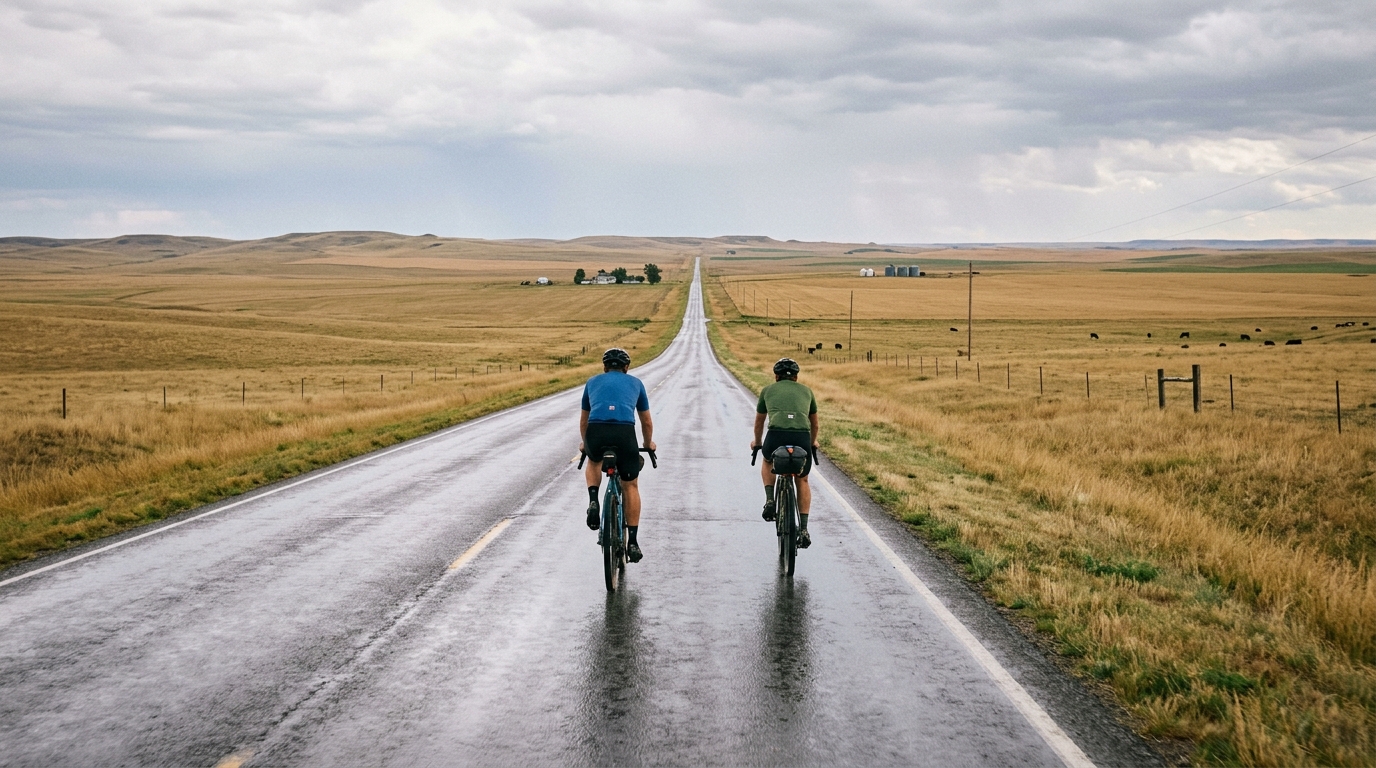
The surface is asphalt, so the route is best approached as a road ride rather than a mixed-surface outing. There are no notable climbs listed, and the 324 m of total gain spread across 55.6 km points toward rolling or gently undulating terrain rather than a route defined by sustained gradients.
That matters tactically. Instead of saving everything for a named climb, the smarter approach is to ride smoothly and avoid wasting energy on every rise. Small surges add up, especially on a point-to-point course where the second half is not guaranteed to feel like the first. If you ride by power, this is the kind of route where staying close to endurance or steady tempo will usually beat repeated over-threshold efforts. For riders calibrating effort, /glossary/ftp is the more useful anchor than any single climb marker.
Pacing and effort
With 55.6 km to cover, the route is long enough that early over-pacing has consequences. The elevation gain is modest, but not zero, so expect some accumulation in the legs if the pace is uneven. The best execution is controlled: keep the flats efficient, stay seated and economical on rises, and resist treating every change in grade as an attack point.
The absence of listed notable climbs does not make the route effortless. It simply shifts the challenge from climbing capacity to consistency. Riders who manage momentum well will get more out of the route than riders who chase speed in short bursts.
Practical notes
- Surface: asphalt, so standard road equipment is appropriate.
- Format: point-to-point, not a loop, so finish logistics matter.
- Distance: 55.6 km, which is enough to justify carrying food and fluids rather than relying on improvisation.
- Climbing: 324 m total gain, with no notable climbs listed, so expect a steadier endurance profile rather than a mountain-style day.
Best use
U.S. Bicycle Route 410 works well as an endurance ride, a controlled aerobic day, or a point-to-point route for riders who want distance without a climb-heavy profile. The key is not to overcomplicate it. Ride it smoothly, plan the finish before you start, and let the moderate elevation profile support a consistent effort rather than forcing a race-day mindset.
Percorsi correlati
3-Länder-Radweg
A 302.2 km asphalt route in Germany with 1512 m of climbing and point-to-point logistics shaped by the Reußenkreuz climb.
7 Peaks Alpine Challenge
A 110.9 km point-to-point assault through the Victorian Alps, stacking 3404 metres of climbing across relentless, wind-swept high-country ascents.
Aberdare Range
A 46 km asphalt point-to-point through Kenya's Central Highlands that trades big climbs for a relentless 1,700 m of rolling grind.
Abra Málaga
A 45-kilometer point-to-point ribbon of asphalt through Peru's Sacred Valley, climbing 1,699 relentless meters into the high Andes.
Afriski Mahlasela Pass
A 112.8 km asphalt ascent through the Maloti Mountains, climbing 3,384 m to the roof of southern Africa via the storied Mahlasela Pass.
Ahr Cycleway
An 82.9 km asphalt point-to-point route with 541 m of gain, the Ahr Cycleway is a steady endurance ride rather than a climb-focused day.