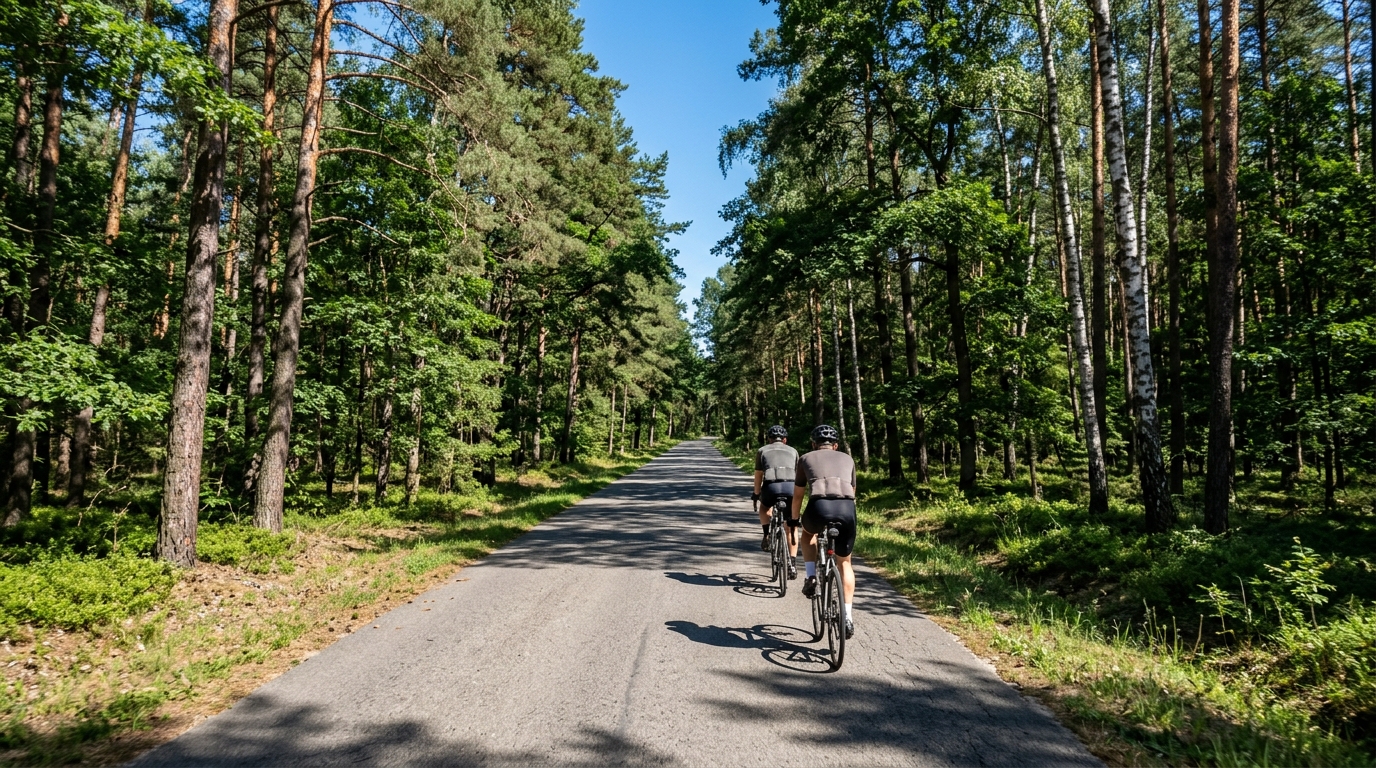
To Ladzka Forest
A 38.5 km asphalt point-to-point route in PL with 119 m of elevation gain and no listed notable climbs.
- Distanza
- 38.5km
- Dislivello
- 119m
- Fondo
- —
- Forma
- Punto a punto
Il percorso
Profilo altimetrico
To Ladzka Forest cycling route overview
The To Ladzka Forest cycling route is a 38.5 km asphalt ride in PL with 119 m of elevation gain. The defining feature is not a climb or a dramatic vertical profile, but the opposite: a restrained amount of climbing spread across the route and no notable climbs listed in the profile.
That matters because it changes how the ride should be approached. This is not a route where the day revolves around saving matches for a single decisive ascent. Instead, the workload is likely to come from maintaining momentum, staying efficient, and avoiding the small surges that can turn an otherwise controlled ride into a more uneven effort.
Terrain and ride character
With 119 m of elevation gain across 38.5 km, the route sits firmly in the steady-road category rather than the climbing category. The asphalt surface makes it suitable for a road-oriented setup, and the absence of listed notable climbs suggests the route should reward smooth pacing more than punchy climbing ability.
That does not mean the ride is automatically easy. A low-elevation route can still become demanding if the rider treats every slight rise, junction, or acceleration as a reason to push above threshold. The better approach is to keep the effort even, especially if using the route as endurance work or as a controlled aerobic ride. If you pace by power, this is the kind of profile where discipline around /glossary/ftp matters more than chasing speed.
Practical notes
This is not a loop, so logistics are part of the route. A point-to-point ride changes the calculation before you even start: decide whether the finish is the end of the day, whether a return ride is planned, or whether transport is needed. That decision affects pacing. If the 38.5 km route is only the outbound portion of a longer day, it should be ridden with more restraint.
The asphalt surface keeps equipment choices simple. A road bike is the natural fit, with tire and pressure choices set for comfort and efficiency rather than rough-surface survival. Since there are no listed notable climbs, gearing does not need to be selected around a major ascent, but a sensible range still helps keep cadence smooth over any rolling changes in the road.
How to ride it well
The best execution is controlled and economical. Settle into a sustainable rhythm early, avoid unnecessary spikes, and let the terrain come to you. On a route with limited total elevation gain, the main performance mistake is over-riding the easy sections and creating fatigue without gaining much time.
For training, the To Ladzka Forest cycling route works well as a steady endurance outing, a light tempo day, or a route to practice consistent pacing on asphalt. Its value is in the simplicity: enough distance to be meaningful, little enough climbing to keep the effort honest, and a point-to-point format that rewards planning before power.
Percorsi correlati
3-Länder-Radweg
A 302.2 km asphalt route in Germany with 1512 m of climbing and point-to-point logistics shaped by the Reußenkreuz climb.
7 Peaks Alpine Challenge
A 110.9 km point-to-point assault through the Victorian Alps, stacking 3404 metres of climbing across relentless, wind-swept high-country ascents.
Aberdare Range
A 46 km asphalt point-to-point through Kenya's Central Highlands that trades big climbs for a relentless 1,700 m of rolling grind.
Abra Málaga
A 45-kilometer point-to-point ribbon of asphalt through Peru's Sacred Valley, climbing 1,699 relentless meters into the high Andes.
Afriski Mahlasela Pass
A 112.8 km asphalt ascent through the Maloti Mountains, climbing 3,384 m to the roof of southern Africa via the storied Mahlasela Pass.
Ahr Cycleway
An 82.9 km asphalt point-to-point route with 541 m of gain, the Ahr Cycleway is a steady endurance ride rather than a climb-focused day.