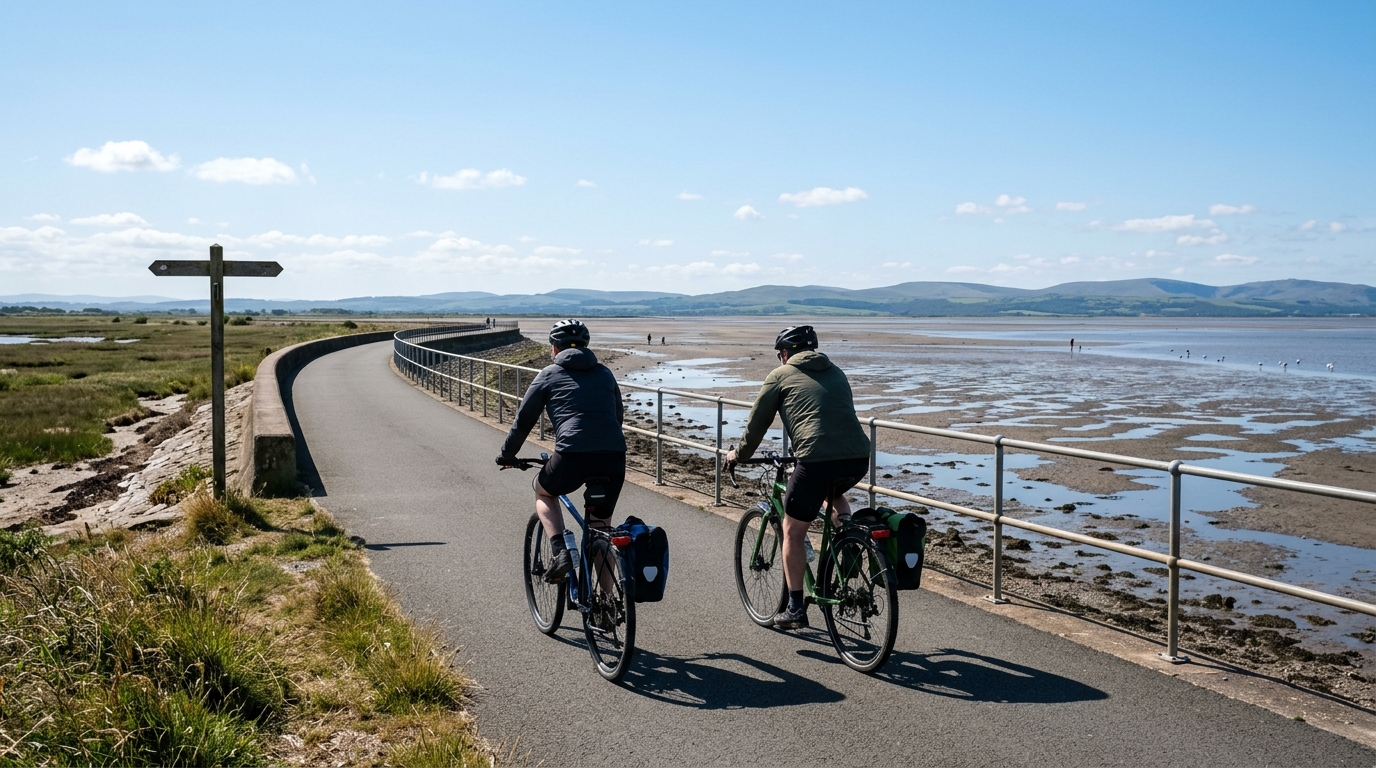
Bay Cycle Way
A point-to-point asphalt route in GB with 167.3 km of riding, modest total climbing, and no listed notable climbs.
- Distanza
- 167.3km
- Dislivello
- 785m
- Fondo
- —
- Forma
- Punto a punto
Il percorso
Profilo altimetrico
Bay Cycle Way cycling route overview
The Bay Cycle Way is a 167.3 km asphalt cycling route in GB with 785 m of elevation gain. It is not a loop, which is the first practical detail that should shape how you approach it. This is a point-to-point ride, so the ride is not finished when the pedalling stops unless transport, accommodation, or a return plan is already sorted.
The headline number is the distance. At 167.3 km, this is an endurance day first and a climbing day second. The elevation gain is meaningful, but spread across the full route it points toward a course where accumulated fatigue matters more than any single decisive ascent. With no notable climbs listed, the route is unlikely to hinge on one obvious set-piece effort. Instead, the challenge is managing the steady cost of a long ride on asphalt.
Terrain and ride character
The surface being asphalt keeps the equipment choice simple. A road bike or endurance-focused setup is the natural fit, with tyre choice leaning more toward comfort and reliability than off-road grip. The absence of listed notable climbs also changes the pacing logic. There is less reason to hold back for a single major climb and more reason to avoid wasting energy early through repeated small accelerations.
That matters because long routes with moderate total climbing often punish impatience. The early kilometres can feel controlled because the terrain does not announce itself as severe, but the total distance still demands discipline. A rider who treats the route like a short rolling spin will usually pay for that later. Keep the effort smooth, stay mostly aerobic, and let the lack of major climbs work in your favour rather than using it as permission to ride above yourself.
For riders using power, this is a route where restraint around /glossary/ftp is more useful than chasing spikes. The goal is not to prove strength on a named climb. It is to preserve enough usable power that the final portion of the route feels managed rather than survived.
Practical notes
Because the Bay Cycle Way is point-to-point, logistics are part of the ride. Plan the finish before the start: return travel, bike transport, and any stop strategy should be settled in advance.
The 167.3 km distance also makes fueling a core performance variable. Do not wait for the ride to become difficult before eating and drinking. The route profile suggests a steady endurance demand, so a steady intake strategy fits the terrain.
With 785 m of gain and no listed notable climbs, pacing should be even rather than reactive. Ride the rises without surging, recover without fully switching off, and keep the effort consistent across the day. The Bay Cycle Way cycling route looks less like a climber's test and more like a long, controlled endurance ride where good decisions compound over time.
Percorsi correlati
3-Länder-Radweg
A 302.2 km asphalt route in Germany with 1512 m of climbing and point-to-point logistics shaped by the Reußenkreuz climb.
7 Peaks Alpine Challenge
A 110.9 km point-to-point assault through the Victorian Alps, stacking 3404 metres of climbing across relentless, wind-swept high-country ascents.
Aberdare Range
A 46 km asphalt point-to-point through Kenya's Central Highlands that trades big climbs for a relentless 1,700 m of rolling grind.
Abra Málaga
A 45-kilometer point-to-point ribbon of asphalt through Peru's Sacred Valley, climbing 1,699 relentless meters into the high Andes.
Afriski Mahlasela Pass
A 112.8 km asphalt ascent through the Maloti Mountains, climbing 3,384 m to the roof of southern Africa via the storied Mahlasela Pass.
Ahr Cycleway
An 82.9 km asphalt point-to-point route with 541 m of gain, the Ahr Cycleway is a steady endurance ride rather than a climb-focused day.