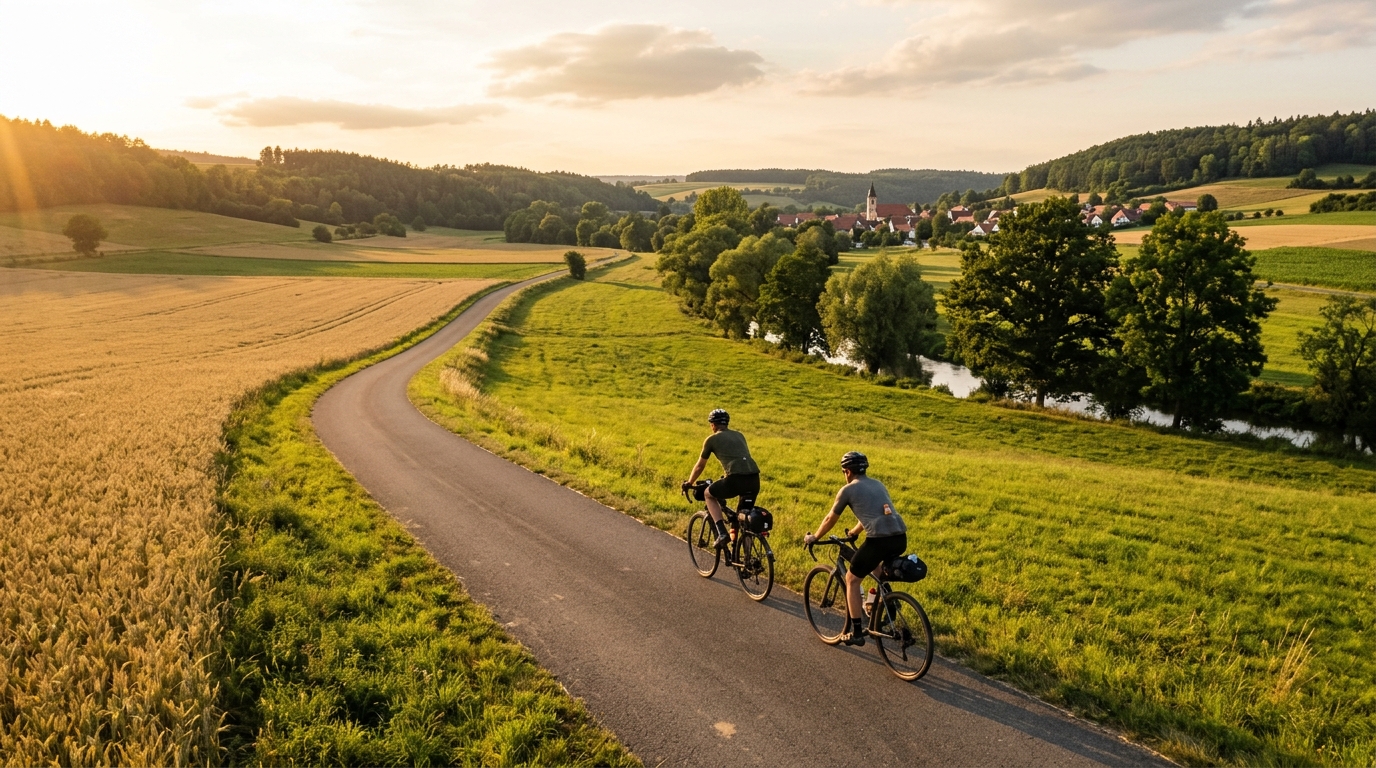
Aischtal cycling route
A 121.4 km point-to-point asphalt ride in Germany with modest elevation gain and a strong endurance character.
- Distanza
- 121.4km
- Dislivello
- 387m
- Fondo
- —
- Forma
- Punto a punto
Il percorso
Profilo altimetrico
Aischtal cycling route overview
The Aischtal cycling route is a 121.4 km asphalt route in Germany with 387 m of elevation gain. That combination defines the ride more clearly than any single label: this is a long endurance day rather than a climbing-focused route.
Because the elevation gain is modest relative to the distance, the main challenge is not repeated steep efforts or altitude management. It is durability. The route asks you to hold a sustainable rhythm, fuel consistently, and avoid letting the early flat or rolling sections tempt you into riding above target.
This is also not a loop, which matters. A point-to-point route changes the day before it starts: transport, pickup, return riding, or a planned transfer need to be sorted in advance. Treat that as part of the route, not an afterthought.
Terrain and ride character
With asphalt as the listed surface and no notable climbs included, the Aischtal cycling route cycling route should suit riders looking for steady road pacing rather than technical terrain or climb-specific efforts. The low total climbing load means the ride is likely to reward smooth power and good positioning more than punchy accelerations.
That does not make it easy. At 121.4 km, fatigue will still accumulate. The difference is how it accumulates: less through single decisive climbs, more through time on the pedals. For most riders, the decisive part of the day will come from pacing restraint in the first half and consistent fueling through the middle, not from saving everything for one major ascent.
If you ride with power, this is the kind of route where staying disciplined around endurance intensity matters. A small drift above target can look harmless early, but over this distance it turns into unnecessary cost. Riders using /glossary/ftp as a pacing anchor should think in terms of repeatable output, not best-effort segments.
Practical notes
Bike and setup
The asphalt surface points toward a road bike or fast all-road setup. There is no listed need for gravel-specific equipment based on the route data, so comfort, rolling efficiency, and reliable contact points should take priority.
Pacing
Keep the opening controlled. With only 387 m of elevation gain across the full route, the course profile is unlikely to force natural recovery in the way a climb-and-descent route might. That makes self-regulation important: eat before you feel behind, drink steadily, and keep surges limited.
Logistics
Because the route is not a loop, plan the finish before committing to the start. A point-to-point ride can be excellent for covering ground, but it punishes loose logistics. Confirm how you are getting back, whether by pickup, transfer, or by building the day into a longer custom ride.
Who this route suits
The Aischtal cycling route is best for riders who want a long, steady asphalt outing without a major climbing profile. It is a good fit for endurance development, group riding at controlled intensity, or a road-focused day where the challenge comes from distance, not vertical gain.
Percorsi correlati
3-Länder-Radweg
A 302.2 km asphalt route in Germany with 1512 m of climbing and point-to-point logistics shaped by the Reußenkreuz climb.
7 Peaks Alpine Challenge
A 110.9 km point-to-point assault through the Victorian Alps, stacking 3404 metres of climbing across relentless, wind-swept high-country ascents.
Aberdare Range
A 46 km asphalt point-to-point through Kenya's Central Highlands that trades big climbs for a relentless 1,700 m of rolling grind.
Abra Málaga
A 45-kilometer point-to-point ribbon of asphalt through Peru's Sacred Valley, climbing 1,699 relentless meters into the high Andes.
Afriski Mahlasela Pass
A 112.8 km asphalt ascent through the Maloti Mountains, climbing 3,384 m to the roof of southern Africa via the storied Mahlasela Pass.
Ahr Cycleway
An 82.9 km asphalt point-to-point route with 541 m of gain, the Ahr Cycleway is a steady endurance ride rather than a climb-focused day.