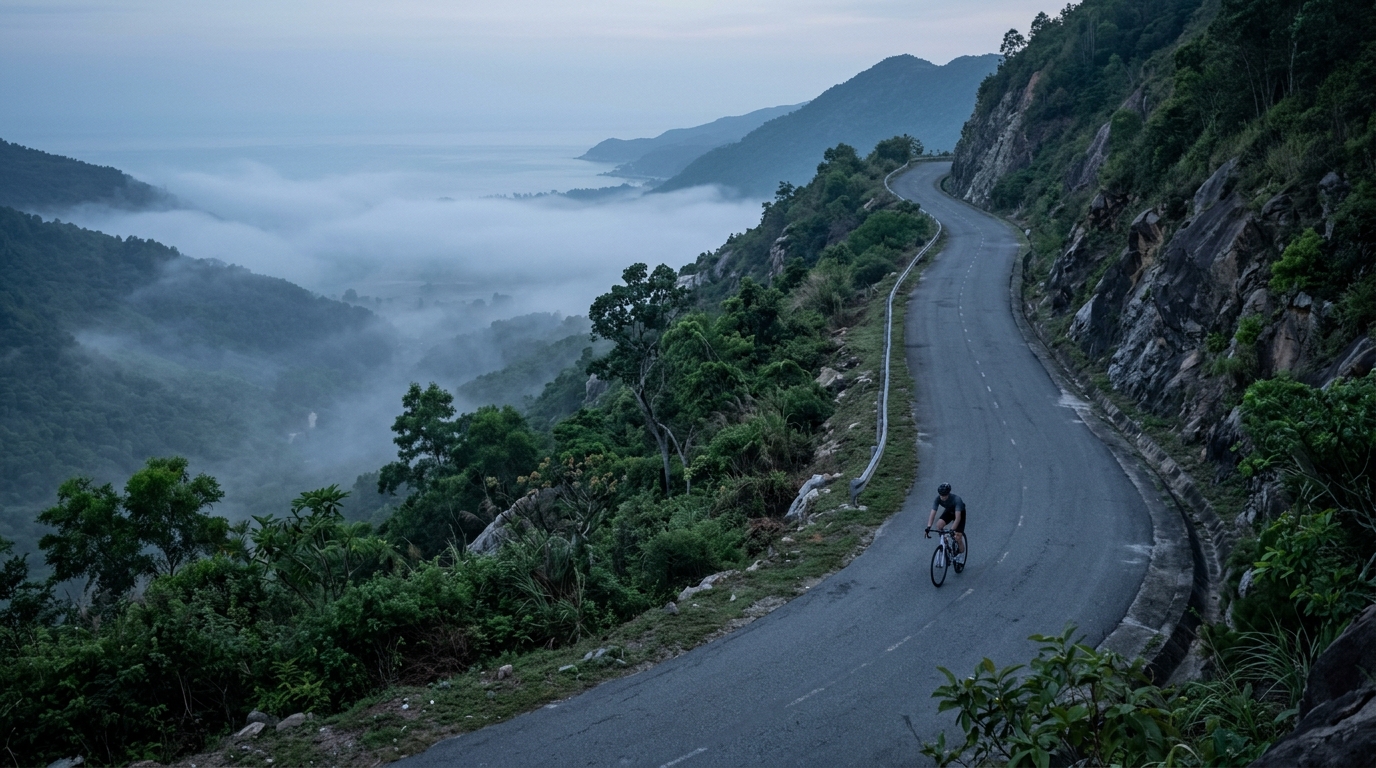
Cả Pass
Cả Pass is a short, steady category 4 climb in Vietnam: 2.4 km at 6.18%, topping out with a listed maximum gradient of 7.11%.
- Lunghezza
- 2.4km
- Media
- 6.2%
- Max
- 7.1%
- Vetta
- 152m
- Dislivello
- 124m
La salita
Profilo altimetrico
Cả Pass cycling climb profile
Cả Pass is a compact category 4 climb in Vietnam, but it is not a throwaway ramp. At 2.4 km long with an average gradient of 6.18%, it sits in that awkward zone where the effort is too short to settle into a long-climb rhythm, yet long enough that going too hard at the bottom will come back quickly.
The climb starts at 3 m and rises to 152 m, for a net elevation gain of 149 m. That tells you the basic character before you even look at the gradient: this is a direct, uphill drag rather than a rolling approach to a high pass. The listed maximum gradient is 7.11%, only a small step above the average, so the profile should be treated as steady pressure rather than a climb defined by violent pitch changes.
How the gradient unfolds
With an average of 6.18% across 2.4 km and a maximum of 7.11%, Cả Pass is likely to feel controlled but persistent. The key point is the narrow gap between the average and maximum gradient. Climbs with big spikes demand repeated accelerations and gear changes. This one asks for sustained torque and disciplined pacing.
That makes the first half more important than it looks. A rider who attacks the opening because the gradient feels manageable can easily drift above threshold and spend the second half trying to defend the effort. The better approach is to ride the early slopes just under your target intensity, let cadence stabilise, and only start squeezing once the summit is clearly within reach.
Pacing and gearing notes
For most riders, Cả Pass is best ridden as a short threshold-style effort. If using power, anchor the pacing around your /glossary/ftp rather than treating it like a sprint. The climb is short, but the 6.18% average means there is enough resistance for fatigue to accumulate fast if cadence drops too low.
Practical approach:
- Start seated and controlled, especially if riding after a fast approach.
- Choose a gear that lets you keep pressure on the pedals without grinding.
- Avoid responding to the first sensation of freshness at the bottom.
- Build through the final section once the sustained gradient has been absorbed.
Because the maximum gradient is listed at 7.11%, there is no obvious need for panic gearing if you are normally comfortable on moderate climbs. Still, riders carrying fatigue or using a tighter cassette should shift early and keep cadence smooth. On a climb this short, one overgeared minute can do more damage than the gradient profile suggests.
What defines the climb
Cả Pass is not hard because of length or altitude. It is hard because it compresses a meaningful climbing effort into 2.4 km, with little statistical evidence of relief. The fastest rides will come from restraint early, steady power through the middle, and a deliberate lift near the top rather than a hard launch from the base.