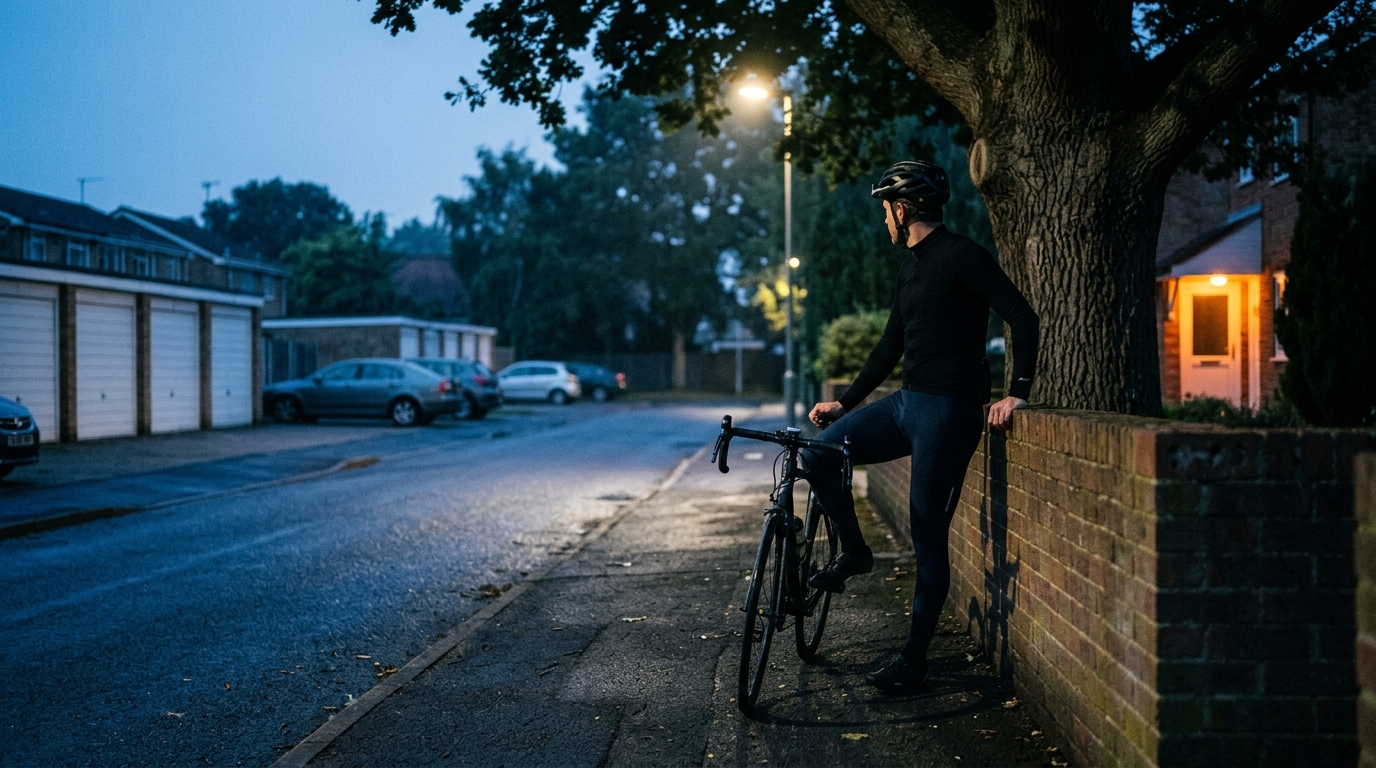
Image générée par notre modèle.
sweet spot
Sweet Spot Training for Cyclists: Use It, Then Back Off
Sweet spot training for cyclists can build durable fitness quickly, but only when the target, workout design, and recovery cost are kept honest.
What Sweet Spot Training Actually Means
Sweet spot training for cyclists is usually described as the productive middle ground between endurance riding and full threshold work. That description is useful, but it can make the intensity sound more magical than it is.
In practical terms, sweet spot is commonly placed around the high-80s to low-90s percentage of FTP. That range gives you an anchor, not a command. The right target still has to survive contact with the actual ride: perceived exertion, heart-rate drift, cadence, fueling, and whether you can repeat the work without flattening the rest of the week.
The purpose is to create meaningful aerobic stress without turning the session into a threshold test. Proper sweet spot work teaches you to hold pressure for sustained blocks while keeping breathing, position, and muscular tension organized. The goal is not to prove toughness. The goal is to accumulate useful sub-threshold work at a recovery cost you can manage.
That is why sweet spot can be so effective, and also why it is easy to overuse.
Why Sweet Spot Work Is Popular With Time-Crunched Cyclists
Sweet spot became popular because it solves a real training problem. Many cyclists do not have the open schedule needed to stack long endurance rides week after week. They still need enough training stress to move fitness, but they cannot simply add more volume.
Sweet spot fills part of that gap. It gives a strong aerobic signal in a compact session. Compared with easy endurance riding, it produces more strain per unit of time. Compared with threshold or VO2 work, it is usually easier to place more often.
The mistake is assuming that time efficiency means unlimited usefulness. A hard hour is not the same as a long aerobic ride. Sweet spot can compress some of the stimulus, but it does not fully replace durability, fueling practice, and low-intensity volume. It is a smart compromise, not a complete training philosophy.
The best use is specific. Sweet spot can build sustained power, prepare you for long climbs or rolling terrain, and bridge the gap between base training and more race-specific work. It should not become the default answer every time you are unsure what to do.
The Best Use Cases: Base, Build, and Limited Training Time
Base training
Sweet spot works well in base training when it is used as aerobic pressure rather than hidden threshold work. During base, the purpose is to expand the amount of quality work you can tolerate while preserving enough freshness to train consistently.
The early base sessions should feel slightly conservative. You should finish knowing you worked, but not feeling as if the ride took something you will still be paying for two days later. If every base ride becomes a test, you are not building a platform. You are spending it early.
A good base-phase approach is simple: keep most riding comfortable, then place sweet spot intervals into selected sessions where you can execute them cleanly. The quality marker is not a dramatic final interval. It is stable power, steady cadence, organized breathing, and the ability to ride easily the next day.
Build training
In the build phase, sweet spot becomes more specific. It can extend the time you can hold strong sub-threshold power, which matters for road racing, gravel, fondos, long climbs, and steady time-trial style efforts.
The key shift is progression. In base, you may use sweet spot to introduce sustained load. In build, ask whether the work is becoming more race-relevant. That could mean longer continuous efforts, shorter recoveries, intervals after prior endurance work, or finishing a ride with pressure rather than doing every interval completely fresh.
This is where sweet spot connects closely with FTP. Raising FTP is valuable, but being able to ride near it after the ride is already demanding is often the more important performance skill. Sweet spot can train that bridge if the progression is deliberate.
Limited training time
If your weekly riding time is limited, sweet spot is often one of the highest-return tools available. But limited time does not mean every ride should be hard.
A productive plan still needs contrast. Some rides should be genuinely easy. Some should target intensity. Some should support skills, cadence, fueling, or recovery. When every session lands in the same moderately hard zone, the training can feel productive while quietly becoming stale.
For time-crunched riders, sweet spot works best as a small number of focused sessions, supported by easier riding around it. The hard part is not writing the workout. The hard part is protecting the easy days when the legs feel decent.
When Sweet Spot Becomes Too Much
Sweet spot fails when the cost starts outrunning the benefit. That usually happens in predictable ways.
The target is set too high. If your FTP is inflated, the prescribed sweet spot becomes threshold work in disguise. You may complete it for a while, but the recovery cost rises quickly. The workout file still carries the right label. Your body does not care about the label.
The progression is too aggressive. Adding duration, reducing recovery, and placing intervals later in the ride can all be useful, but not all at once. If each week is simply a bigger version of the last, fatigue eventually becomes the limiter rather than fitness.
The easy days are not easy. Sweet spot is sub-threshold, but it is still work. If you surround it with tempo riding, group rides, or commutes ridden with constant pressure, you remove the recovery that makes the plan function.
The rider chases completion instead of adaptation. Completing a hard workout is satisfying. Adaptation is quieter. If you need caffeine, perfect conditions, and deep motivation just to finish sweet spot intervals, the training is probably sitting too high in the system.
Warning signs include flat legs on easy rides, rising RPE at normal power, poor sleep, irritability, loss of snap, and a growing need to negotiate with yourself before sessions. One bad day is not a verdict. A pattern is information.
How to Set the Right Power Target
The right sweet spot target starts with a realistic FTP. If FTP is wrong, every percentage built from it is wrong. Use recent steady efforts, repeatable workout data, and field testing rather than ego. If you need a starting point, the FTP estimator can help frame the discussion, but it should not replace honest execution.
Once you have a workable FTP, use the high-80s to low-90s percentage range as a starting lane. Then refine it with the session itself. The effort should be firm and sustainable. Breathing should be elevated but organized. Cadence should feel natural. You should not need to surge into the target, and you should not be counting down from the opening minutes.
Heart rate can help, but it needs context. Heat, fatigue, hydration, and caffeine can all change the response. The better signal is the relationship between power, heart rate, and RPE. If power is stable but heart rate keeps drifting upward and the effort feels increasingly ragged, the target may be too high for that day even if the number on the head unit looks correct.
This is where mature training differs from basic plan-following. The number gives direction. Execution gives feedback. A rider who trims the target slightly and completes high-quality work often gets more from the session than a rider who clings to the number and turns the final block into threshold survival.
Example Sweet Spot Workouts for Different Fitness Levels
These are examples, not universal rules. The right session depends on your current durability, training history, terrain, fueling, and what else is in the week. The same sweet spot target can be productive for one rider and excessive for another.
Newer structured rider
Start with short intervals and generous recovery. The goal is pacing, breathing, and position under steady load, not maximum fatigue.
Example sessions:
- Beginner introduction: three blocks of six to eight minutes at sweet spot, with easy spinning between blocks
- Slight progression: four blocks of six to eight minutes if the first version feels smooth and the next day is normal
- Alternative progression: keep the same interval duration but make the power smoother, reduce surging, and improve cadence stability
Do not add surges, low-cadence grinding, or fast finishes yet. If the first interval feels exciting and the final one feels like a fight, the target was probably too high. Reduce the target slightly or end the sweet spot work and ride easy.
Developing rider
Use longer intervals or slightly shorter recoveries. The goal is to extend concentration and muscular endurance without drifting into threshold.
Example sessions:
- Standard development session: three blocks of ten to twelve minutes at sweet spot
- Longer aerobic-pressure session: two blocks of fifteen to twenty minutes when the shorter version is consistently manageable
- Progression option: keep total sweet spot time similar but place the work after some endurance riding rather than right after the warm-up
- Terrain option: use a steady climb or uninterrupted road section, but keep the effort even rather than chasing every rise in the road
A good progression is not simply harder. It is cleaner. More stable cadence, less power fluctuation, better fueling, and lower RPE at the same workload are all signs that the work is landing.
Stop or reduce the target if you cannot keep power steady without repeated surges, if RPE rises sharply before the final block, or if heart rate drift and breathing both suggest the ride is becoming threshold work.
Experienced rider
For an experienced cyclist, the value is often in the placement of the work rather than the label itself. Sweet spot after endurance riding teaches durability. Sweet spot on rolling terrain teaches pressure control. Sweet spot in an aero or event-specific position can prepare the body for time-trial, triathlon, or long solo efforts.
Example sessions:
- Sustained block: one longer continuous sweet spot effort when terrain and freshness allow clean execution
- Late-ride durability: sweet spot intervals after a block of endurance riding
- Race-specific pressure: sweet spot on rolling terrain while avoiding spikes over threshold
- Position-specific work: sweet spot in the position you need to hold on race day, as long as power and form remain stable
Experienced riders need the most restraint because they can often finish workouts that are no longer worth the cost. If the session compromises a higher-priority intensity workout later in the week, it was not a good trade. Completion is not the same as good placement.
How to progress sweet spot work
Progress one variable at a time. That variable can be interval duration, total sweet spot time, shorter recovery, later placement in the ride, or more specific terrain. Do not increase all of them in the same week just because the last session went well.
A sensible progression looks like this:
- First, make the current workout cleaner
- Then, extend one interval or add a small amount of total work
- Then, reduce recovery only if execution stays smooth
- Later, place the work after endurance riding or on more event-specific terrain
Back off when the cost shows up outside the workout. If easy rides feel heavy, sleep worsens, RPE rises at familiar power, or the next key session suffers, the sweet spot block is no longer doing its job.
How to Track Progress Without Overdoing It
Power matters, but sweet spot progress is broader than a higher number. The point is to make the training week more productive, not just to create a cleaner workout file.
Use a simple post-session review after each sweet spot ride.
Post-session review framework
Ask five questions:
- Power stability: Could you hold the target without repeated surges or fading late in the interval?
- RPE: Did the effort stay firm and focused, or did it become a threshold-style fight?
- Heart-rate drift: Did heart rate rise in a predictable way, or did it climb while breathing and leg tension deteriorated?
- Next-day easy ride quality: Did easy power feel normal, or did the legs feel unusually flat?
- Next key session: Did the sweet spot work support the week, or did it compromise the next important workout?
If most answers are positive, the session probably landed where it should. If the file looks good but the next two rides are compromised, the workout was too costly. That is the difference between completing training and absorbing training.
Look for these longer-term signals:
- You settle into target power without chasing it
- Breathing stays organized deeper into the workout
- Cadence remains stable without constant correction
- Heart-rate response becomes more predictable
- Easy rides still feel easy
- You can fuel the work without stomach issues
- You finish feeling trained, not emptied
Avoid testing too often. FTP matters, but constant testing can turn a training block into a string of evaluations. Use workouts to gather evidence. When sweet spot power feels easier, recovery improves, and harder sessions become more productive, you already have useful proof that fitness is moving.
The Bottom Line
Sweet spot training works best when it has a clear job. It is not easy riding, and it is not full threshold work. It is sustained sub-threshold pressure that can help cyclists build durable power when time, terrain, or training phase make that the right tool.
For base training, keep it conservative. For build training, progress it toward the demands of the event. For time-crunched riders, use it as a high-value session, not the default setting for every ride.
The main risk is not that sweet spot is ineffective. The risk is that it feels effective enough to overuse. Keep the target honest, protect your easy days, and judge success by how well the training week holds together. That is when sweet spot becomes more than a popular workout label. It becomes a reliable part of a smarter cycling training plan.