U.S. Bicycle Route 230
A 64.9 km asphalt point-to-point route with 292 m of elevation gain and no listed notable climbs.
- Distancia
- 64.9km
- Desnivel
- 292m
- Superficie
- —
- Forma
- Punto a punto
La ruta
Perfil de elevación
U.S. Bicycle Route 230 cycling route overview
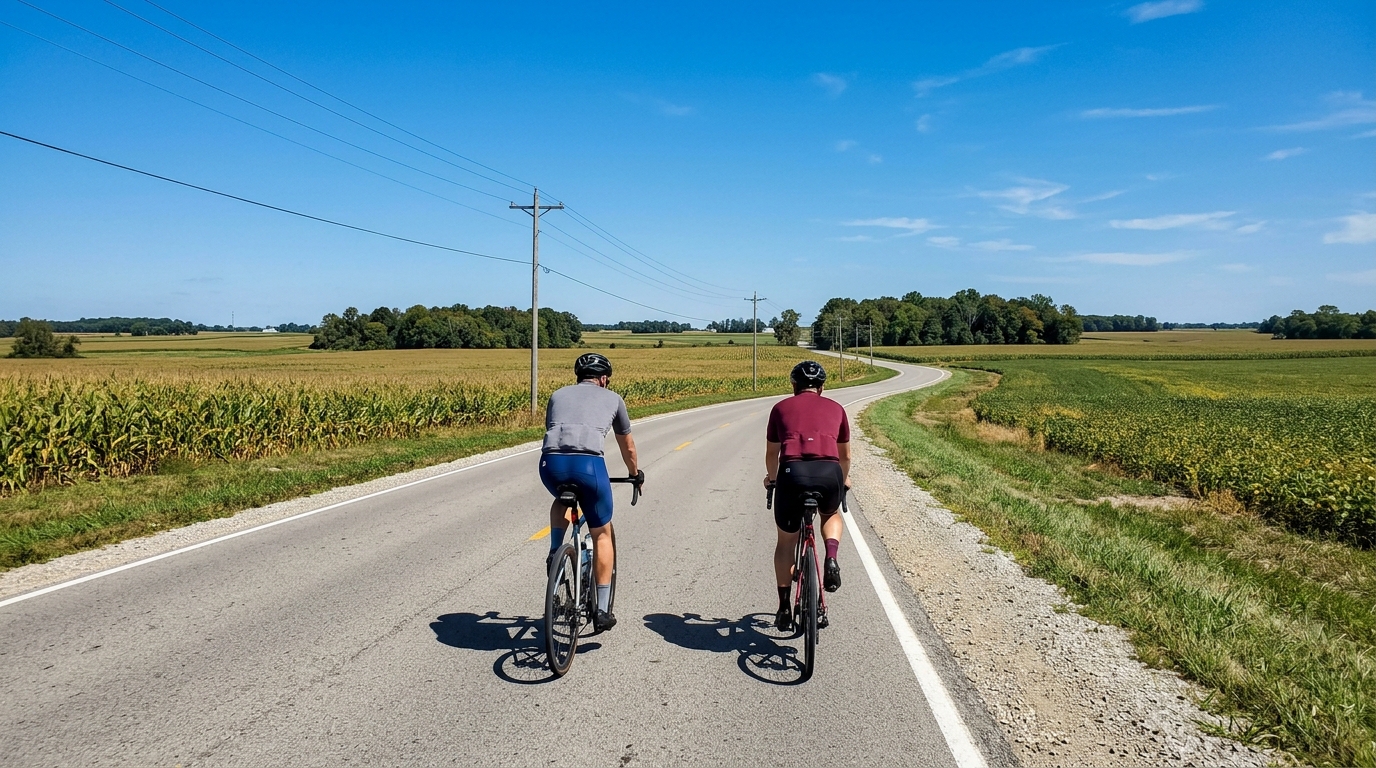
U.S. Bicycle Route 230 is a 64.9 km asphalt ride with 292 m of elevation gain, which tells you most of what matters about its character before you even look for the finer details. This is not a route built around a major climb or a selective mountain feature. The absence of listed notable climbs points toward a ride where rhythm, positioning, fueling, and steady pacing matter more than a single decisive ascent.
Because it is not a loop, the biggest practical variable is logistics. Treat it as a point-to-point ride unless you are deliberately planning an out-and-back extension. That changes the day. You need a clear plan for transport, pickup, or a return route, and you should not assume the finish naturally solves the problem the way a loop does.
Terrain and ride character
The route surface is asphalt, so the default setup is a road-oriented bike and tire choice rather than a gravel or mixed-surface compromise. With 292 m of total gain across 64.9 km, the climbing load is present but not the defining feature. The better interpretation is rolling or gently variable terrain rather than a route that forces repeated high-torque climbing efforts.
That has tactical consequences. On a route like this, riders often lose more from inconsistent pacing than from the terrain itself. Punching every rise, coasting too much after, then chasing speed back on flatter sections can turn a manageable ride into a ragged one. A steadier approach usually wins: keep pressure on the pedals, avoid unnecessary spikes, and let the modest elevation gain come to you rather than trying to dominate every change in grade.
If you are using power, this is a good route to ride just below the point where the effort starts to accumulate quickly. Knowing your /glossary/ftp helps, but the practical goal is simpler: stay controlled enough that the final portion of the point-to-point route does not become a grind.
Practical notes
- Plan the finish logistics first, because the route is not a loop.
- Use an asphalt-ready road setup rather than a surface-compromise build.
- Expect no listed standout climb, so pace for duration, not for one key ascent.
- Carry enough food and fluid for a continuous 64.9 km ride, especially if your return plan adds distance.
The appeal of U.S. Bicycle Route 230 is its straightforwardness. It is long enough to require real pacing discipline, but with only 292 m of gain and no named climbing feature, the ride is more about execution than survival.
Rutas relacionadas
3-Länder-Radweg
A 302.2 km asphalt route in Germany with 1512 m of climbing and point-to-point logistics shaped by the Reußenkreuz climb.
7 Peaks Alpine Challenge
A 110.9 km point-to-point assault through the Victorian Alps, stacking 3404 metres of climbing across relentless, wind-swept high-country ascents.
Aberdare Range
A 46 km asphalt point-to-point through Kenya's Central Highlands that trades big climbs for a relentless 1,700 m of rolling grind.
Abra Málaga
A 45-kilometer point-to-point ribbon of asphalt through Peru's Sacred Valley, climbing 1,699 relentless meters into the high Andes.
Afriski Mahlasela Pass
A 112.8 km asphalt ascent through the Maloti Mountains, climbing 3,384 m to the roof of southern Africa via the storied Mahlasela Pass.
Ahr Cycleway
An 82.9 km asphalt point-to-point route with 541 m of gain, the Ahr Cycleway is a steady endurance ride rather than a climb-focused day.