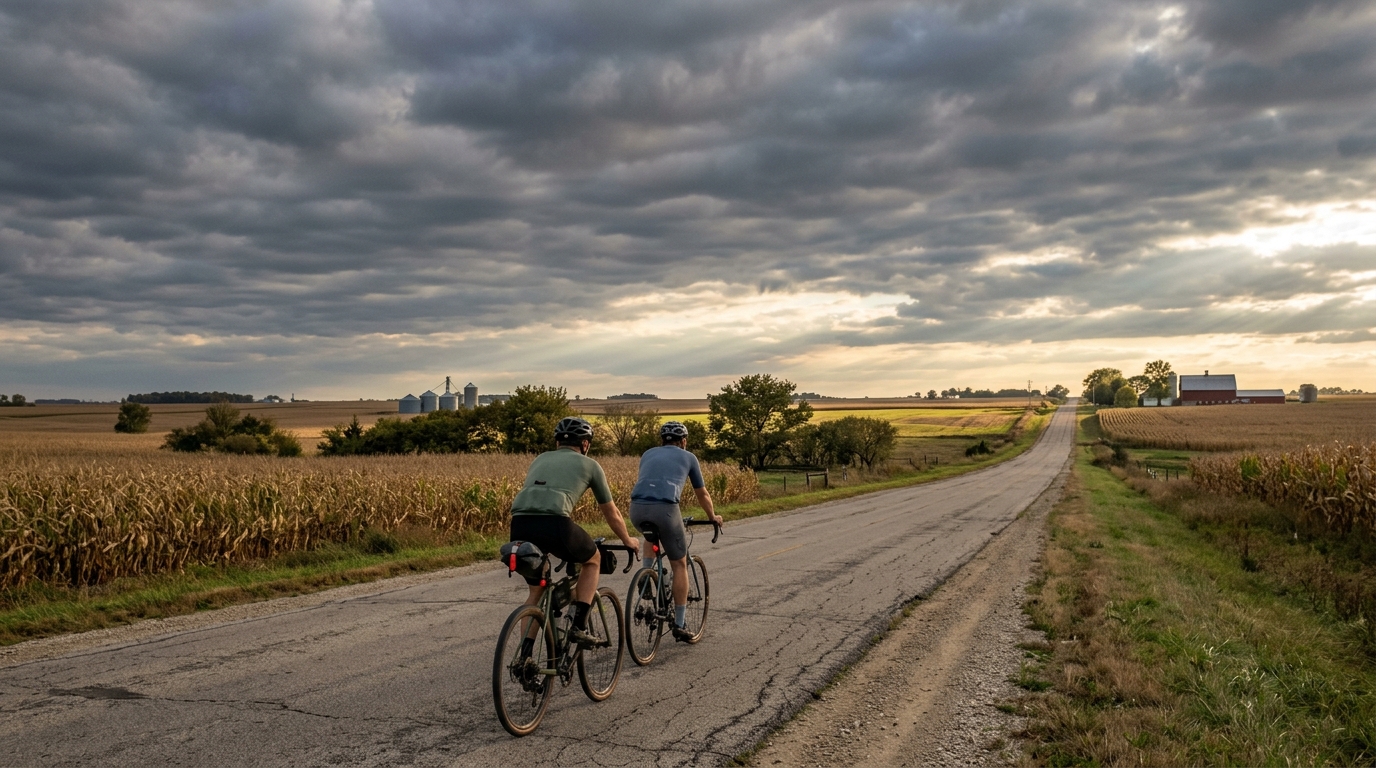
U.S. Bicycle Route 121
A practical guide to U.S. Bicycle Route 121, a 214.6 km asphalt point-to-point route with 1447 m of elevation gain.
- Distancia
- 214.6km
- Desnivel
- 1,447m
- Superficie
- —
- Forma
- Punto a punto
La ruta
Perfil de elevación
U.S. Bicycle Route 121 cycling route overview
U.S. Bicycle Route 121 is a 214.6 km point-to-point asphalt route with 1447 m of elevation gain. On paper, that profile points toward a ride where the difficulty comes less from one decisive climb and more from the accumulation of time, distance, and repeated terrain changes.
There are no notable climbs listed in the route data, which matters for how you should approach it. This is not a course to treat like a single summit objective where the day is built around one major effort. Instead, the smarter read is steady aerobic management: keep the pressure controlled early, avoid surging over every rise, and let the route come to you.
Terrain and ride character
The full route is asphalt, so the main variables are pacing, weather exposure, traffic context, and resupply planning rather than surface choice. The elevation gain is meaningful, but spread across 214.6 km it suggests a route shaped by rolling or intermittent climbing rather than a concentrated mountain day.
That changes the physiology of the ride. A route with this distance can feel manageable for the first section if the opening pace is too optimistic, then become expensive later when small climbs start asking for repeated torque. The best approach is to ride the early terrain below threshold and protect your ability to keep producing steady power deep into the route. If you track power, use /glossary/ftp as a ceiling rather than a target for the first part of the day.
Because the route is not a loop, logistics matter. A point-to-point ride asks for a clear finish plan before you start: transport, pickup, overnight stop, or a route back by another method. That is not a minor detail on a ride of this length. It shapes what you carry, how conservative you need to be, and how much margin you have if conditions turn.
Practical notes
- Bike choice: a road bike or endurance road setup is the natural fit for an all-asphalt route.
- Pacing: treat the 214.6 km distance as the main challenge. The climbing total is enough to punish repeated spikes.
- Fueling: plan around sustained duration, not just the hardest terrain. Eat before the ride feels hard.
- Route planning: because it is point-to-point, confirm start and finish logistics in advance.
- Effort control: stay smooth on rises and avoid turning every short climb into a test.
How to ride it well
The key to U.S. Bicycle Route 121 is resisting the false comfort of a profile without named climbs. Routes like this often become hard through attrition. The asphalt surface reduces technical uncertainty, but the combination of distance and cumulative elevation gain still rewards discipline.
Ride it as an endurance route first. Keep cadence and fueling consistent, stay patient through the middle portion, and save your harder efforts for the final stretch only if the legs are still responding. The route data does not point to a single decisive moment. It points to a day where the rider who manages energy best will have the cleanest finish.
Rutas relacionadas
3-Länder-Radweg
A 302.2 km asphalt route in Germany with 1512 m of climbing and point-to-point logistics shaped by the Reußenkreuz climb.
7 Peaks Alpine Challenge
A 110.9 km point-to-point assault through the Victorian Alps, stacking 3404 metres of climbing across relentless, wind-swept high-country ascents.
Aberdare Range
A 46 km asphalt point-to-point through Kenya's Central Highlands that trades big climbs for a relentless 1,700 m of rolling grind.
Abra Málaga
A 45-kilometer point-to-point ribbon of asphalt through Peru's Sacred Valley, climbing 1,699 relentless meters into the high Andes.
Afriski Mahlasela Pass
A 112.8 km asphalt ascent through the Maloti Mountains, climbing 3,384 m to the roof of southern Africa via the storied Mahlasela Pass.
Ahr Cycleway
An 82.9 km asphalt point-to-point route with 541 m of gain, the Ahr Cycleway is a steady endurance ride rather than a climb-focused day.