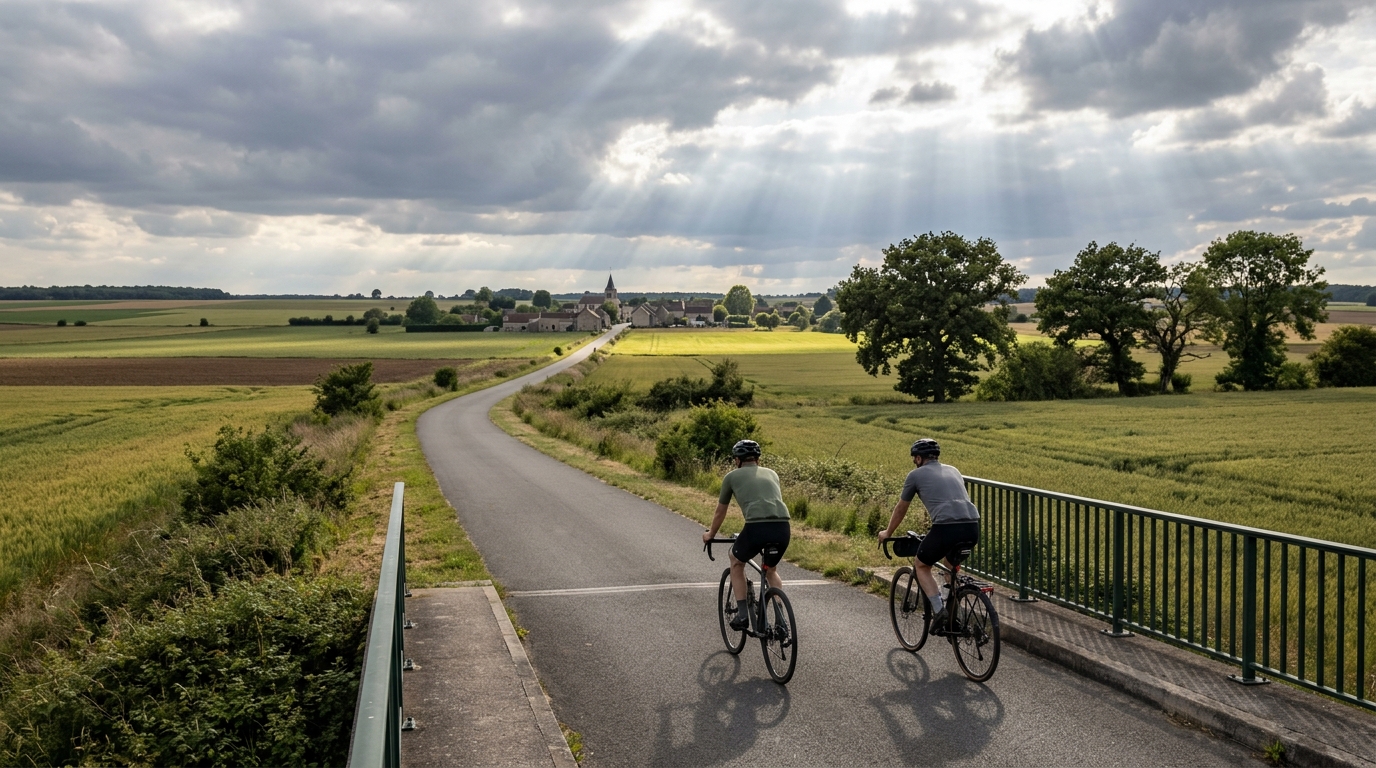
Île-de-France Vélo Line 4
A 131.9 km asphalt route with 358 m of elevation gain, built more around steady endurance pacing than climbing.
- Distancia
- 131.9km
- Desnivel
- 358m
- Superficie
- —
- Forma
- Punto a punto
La ruta
Perfil de elevación
Île-de-France Vélo Line 4 cycling route
Île-de-France Vélo Line 4 is a 131.9 km asphalt cycling route in France with 358 m of elevation gain. The key point is not the climbing load, but the duration. With no notable climbs listed and a modest total elevation gain for the distance, this is the kind of route where the main difficulty comes from keeping the ride controlled for long enough, not surviving a single decisive ascent.
Because it is not a loop, the logistics matter more than they would on a circular ride. Treat the route as a one direction endurance effort: know how you are getting to the start, how you are leaving the finish, and where you can comfortably commit to riding the full distance. A non-loop route also changes pacing psychology. There is no natural midpoint where the terrain turns back toward home, so it is easier to overreach early if the opening kilometres feel fast.
Terrain and ride character
The asphalt surface points toward a road bike friendly setup, and the 358 m of gain across 131.9 km suggests a route that should reward smooth, efficient riding. This is not a route defined by repeated climbing, but that does not mean it is automatically easy. A long, flatter ride can become harder than expected when the effort is slightly too high for too long.
The absence of listed notable climbs means there is unlikely to be a single terrain feature that dictates the day. Instead, the route should be paced as a continuous aerobic ride. The right approach is to avoid spikes, keep pressure on the pedals where the road allows, and resist turning every rise or open stretch into a test. If you ride by power, this is a good candidate for staying below the point where small surges accumulate into late fatigue. For riders using /glossary/ftp as a guide, the discipline is less about proving top-end strength and more about keeping the ride repeatable from start to finish.
Practical notes
Pacing
Start easier than the route profile tempts you to. With only 358 m of gain listed, it would be easy to classify Île-de-France Vélo Line 4 as straightforward, but 131.9 km still asks for durable endurance. The best ride will likely come from even effort rather than chasing average speed early.
Equipment
An asphalt route suits standard road equipment. Prioritise comfort and reliability over aggressive choices. On a route of this length, small contact point issues or a poor fueling plan will matter more than saving a marginal amount of weight.
Fueling and stops
Plan food and fluid for the full 131.9 km, especially because the route is not a loop. The practical risk is not the climbing, it is underestimating how long a steady asphalt route can keep you pedalling. Build in a realistic stop strategy before you start, rather than waiting until the final third to solve it.
Bottom line
Île-de-France Vélo Line 4 is best read as a long endurance route on asphalt: limited listed climbing, no notable climbs, and enough distance to punish poor pacing. Ride it smoothly, keep the effort honest, and treat the logistics of the non-loop format as part of the challenge.
Rutas relacionadas
3-Länder-Radweg
A 302.2 km asphalt route in Germany with 1512 m of climbing and point-to-point logistics shaped by the Reußenkreuz climb.
7 Peaks Alpine Challenge
A 110.9 km point-to-point assault through the Victorian Alps, stacking 3404 metres of climbing across relentless, wind-swept high-country ascents.
Aberdare Range
A 46 km asphalt point-to-point through Kenya's Central Highlands that trades big climbs for a relentless 1,700 m of rolling grind.
Abra Málaga
A 45-kilometer point-to-point ribbon of asphalt through Peru's Sacred Valley, climbing 1,699 relentless meters into the high Andes.
Afriski Mahlasela Pass
A 112.8 km asphalt ascent through the Maloti Mountains, climbing 3,384 m to the roof of southern Africa via the storied Mahlasela Pass.
Ahr Cycleway
An 82.9 km asphalt point-to-point route with 541 m of gain, the Ahr Cycleway is a steady endurance ride rather than a climb-focused day.