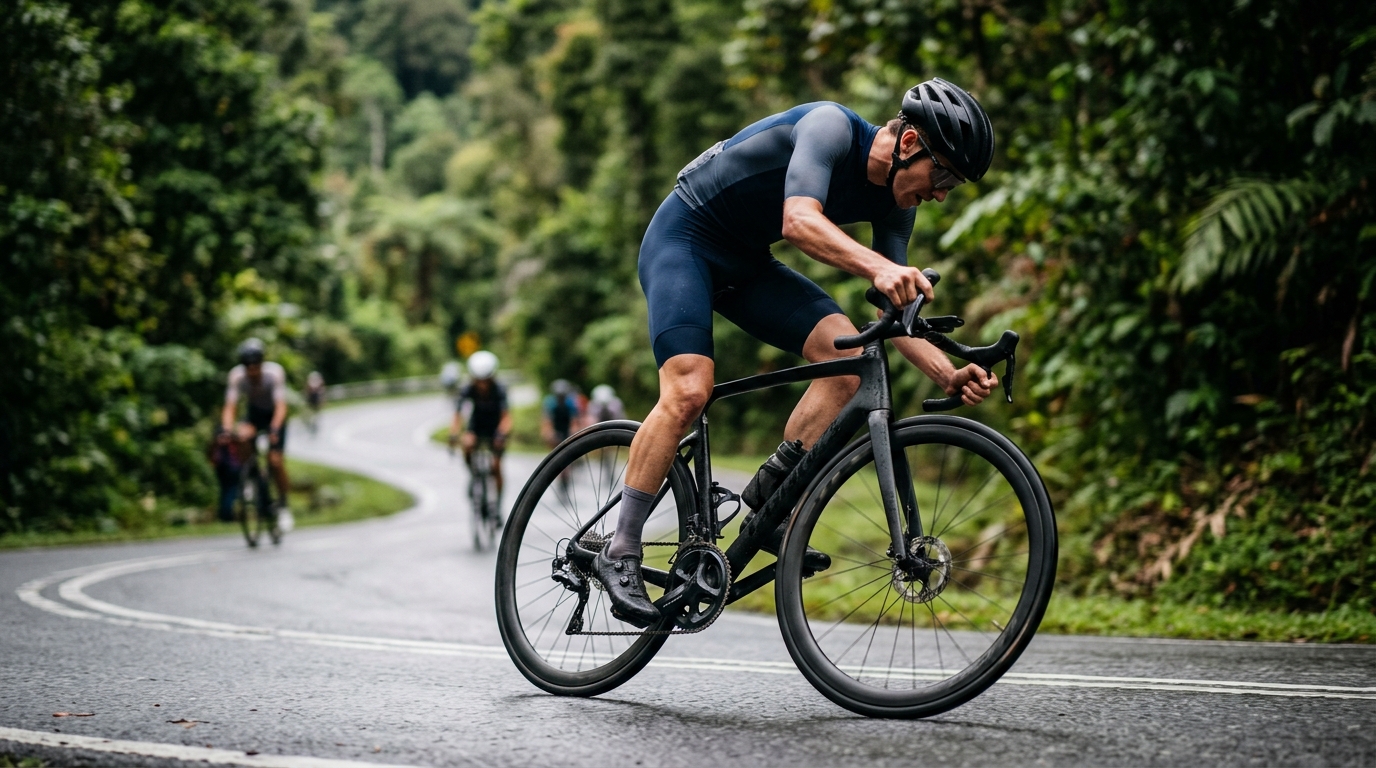
Imagem gerada pelo nosso modelo.
Preview da prova
Le Tour de Langkawi 2026 route preview: three summit finishes shape the race
The 2026 Le Tour de Langkawi runs September 27 to October 4, with 1,258 km, eight stages, and three summit finishes likely to define the GC.
The Petronas Le Tour de Langkawi 2026 runs from September 27 to October 4, with eight stages and 1,258 kilometres on the road. As a men’s 2.Pro stage race, its route balance matters: this is not a race built around one isolated climbing test and a long sequence of transfer stages. The GC structure is front-loaded with climbing pressure, then leaves enough flat and hilly kilometres for the race to be controlled, defended, or potentially destabilised by fatigue.
The important point is simple: three of the first five stages are mountain stages with summit finishes. That gives the climbers repeated opportunities to create separation before the race turns toward more controllable terrain. For riders targeting the overall, the first half is not about surviving until one decisive day. It is about absorbing multiple mountain finishes without giving away time in layers.
Route shape
Stage 1 opens with 193 kilometres from Shah Alam to Kampar on a flat profile. That should make the first leader’s jersey available to the fast finishers, but the distance also means teams will immediately have to manage heat, positioning, and energy expenditure before the climbing begins.
The race changes quickly on stage 2, a 145.6-kilometre mountain stage from Taiping to Gunung Jerai with a summit finish. This is the first real GC filter. Because it arrives so early, it can expose riders who came in undercooked, but it can also reward those willing to race aggressively before the hierarchy has fully settled.
Stage 3 returns to flat terrain over 189.9 kilometres from Sungai Petani to Kuala Kangsar, which gives sprint teams a clear target and GC teams a day where the priority should be avoiding unnecessary losses. Then the race goes back uphill on stage 4, with 140.1 kilometres from Tambun to Cameron Highlands and another summit finish.
The queen-stage candidate
Stage 5 is the obvious queen-stage candidate: 125.7 kilometres from Tapah to Genting Highlands, classified as a mountain stage and finishing at the summit. The distance is shorter than the earlier flat days, which can make the racing more compressed. With two summit finishes already in the legs, Genting Highlands should be less about a single fresh climbing performance and more about who has recovered best from the accumulated stress of the opening block.
That sequencing is what makes the route interesting. Gunung Jerai can establish the first separation, Cameron Highlands can confirm or overturn it, and Genting Highlands gives the strongest climbers a final major chance to make the race difficult before the terrain tilts away from them.
What happens after the mountains
The final three stages shift the race dynamic. Stage 6 runs 121.3 kilometres from Pandan Indah to Rembau on a hilly profile, but it is not a summit finish. That makes it tactically different from the earlier mountain days. It can still punish a weakened team or open space for attackers, but it is less straightforward as a pure climber’s battleground.
Stages 7 and 8 are flat: 159.1 kilometres from Melaka to Batu Pahat, then 183.8 kilometres from Muar to Putrajaya. If the GC is close after Genting Highlands, these stages will test control more than climbing strength. The race leader’s team will need to manage breakaways, bonus opportunities if applicable, and the general risk that comes with flat finales, while sprint-focused teams will have their own interest in keeping the race together.
What the route suggests
The supplied data does not include prior-edition context, so the strongest read comes from the 2026 route itself. This course should reward riders who can climb repeatedly rather than simply peak for one summit finish. It also gives sprinters several clear chances, but the overall race will likely be shaped by how much damage is done across Gunung Jerai, Cameron Highlands, and Genting Highlands.
The decisive feature is not just that there are three summit finishes. It is that all three arrive by stage 5. That compresses the GC contest into the opening two-thirds of the race and changes the risk profile for everyone else. Climbers cannot afford to wait. Leaders who emerge early will have to defend for several days. And teams built only for the flat stages will spend much of the race reacting to a GC battle that should already be well formed before the final weekend.