Biblioteca de subidas · Irlanda
Cycling Climbs in Ireland
Ireland's climbing is not built around huge altitude, which is exactly why it rides differently. With 5 listed climbs, no hors categorie ascents, and a highest summit of 477m, the challenge comes from how often the road changes character. These climbs reward riders who can manage effort through irregular ramps, exposed sections, and surfaces that make traction and pacing matter as much as raw /glossary/ftp.
The headline names give the country a clear climbing identity. Conor Pass and Wicklow Gap are the reference points, while Glengesh Pass, Moll's Gap, and Priest's Leap add the kind of punchy, technical variety that makes Ireland worth a dedicated climbing trip. It is not a destination for altitude bragging rights. It is a place to learn how to ride climbs that rarely let you settle.
Subidas emblemáticas de Irlanda
Todas as subidas em Irlanda
7 subidas
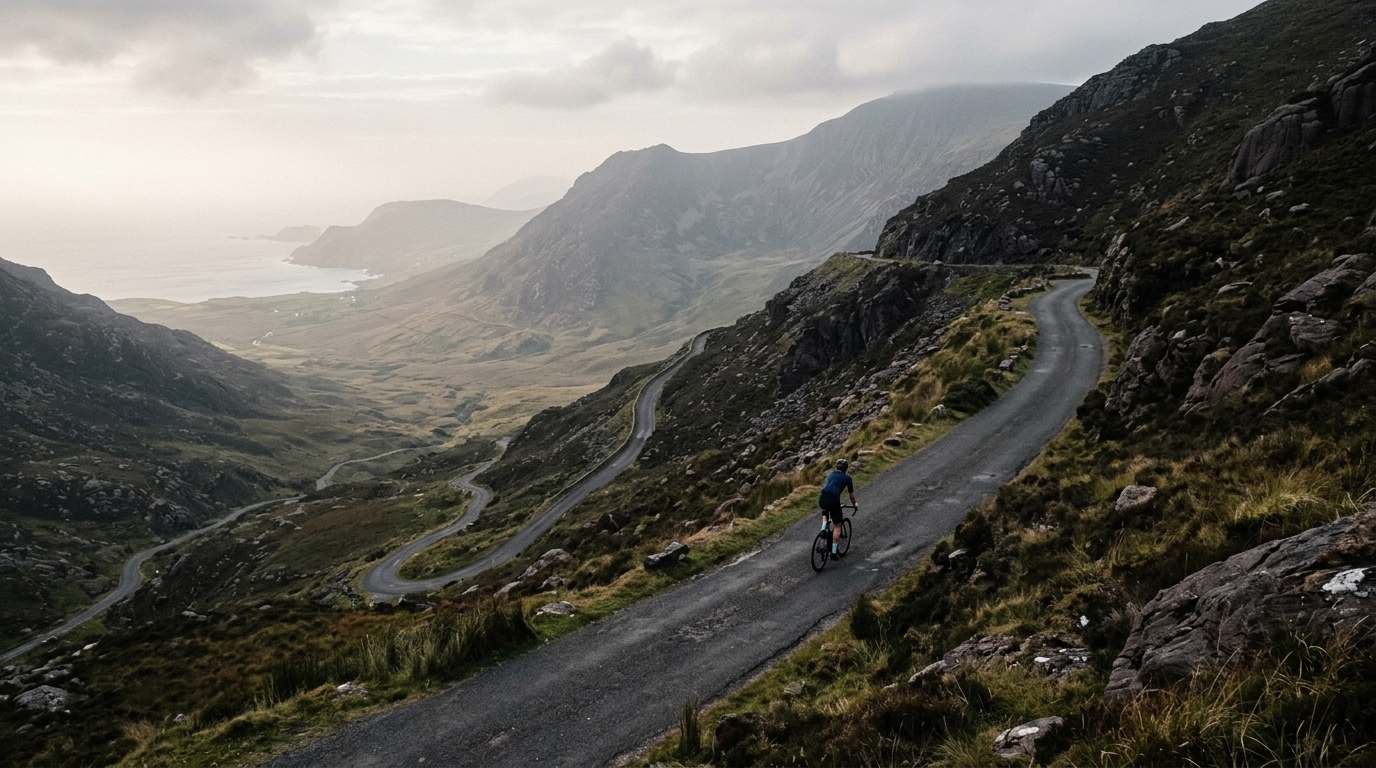
- Conor PassCat 2IE · 6.9 km · 5.7% · 348 m219pts
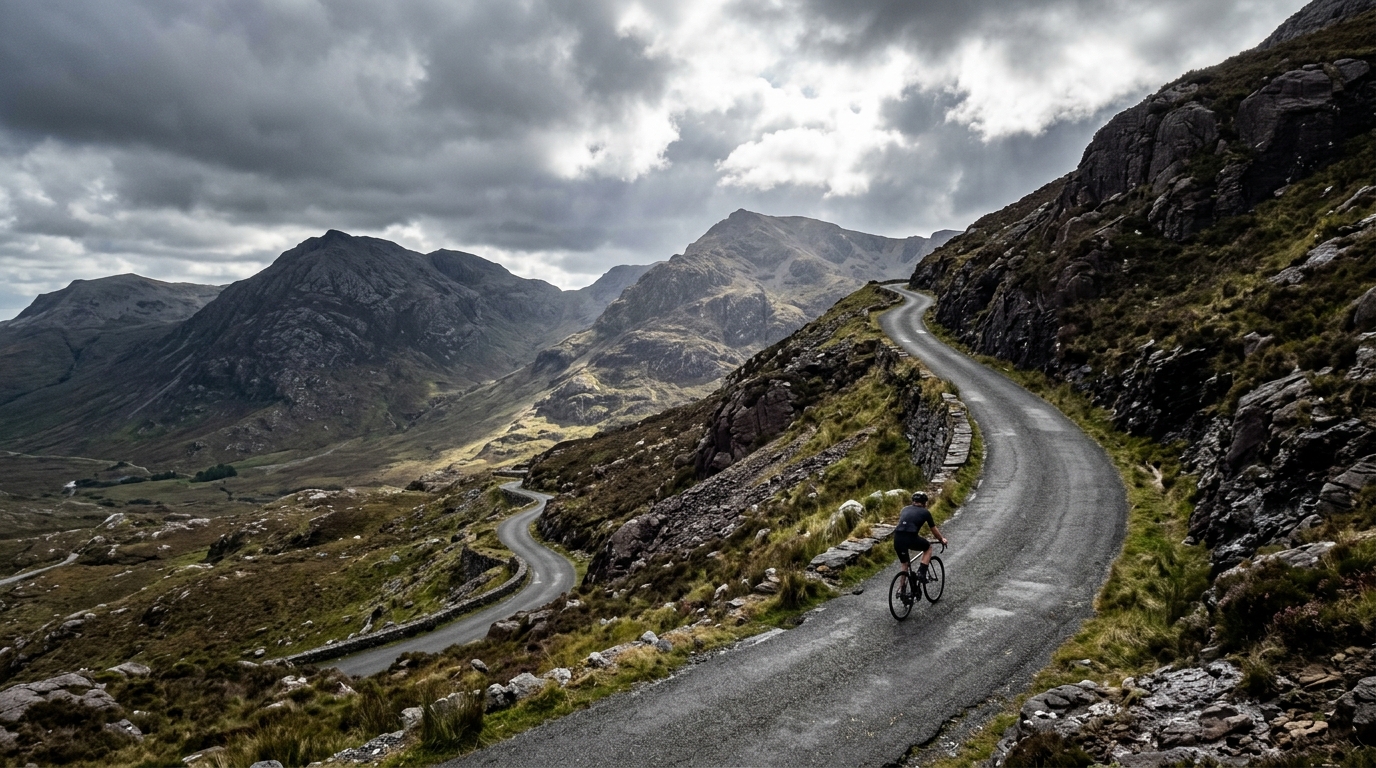 MáméanCat 1IE · 5.4 km · 9.2% · 480 m456pts
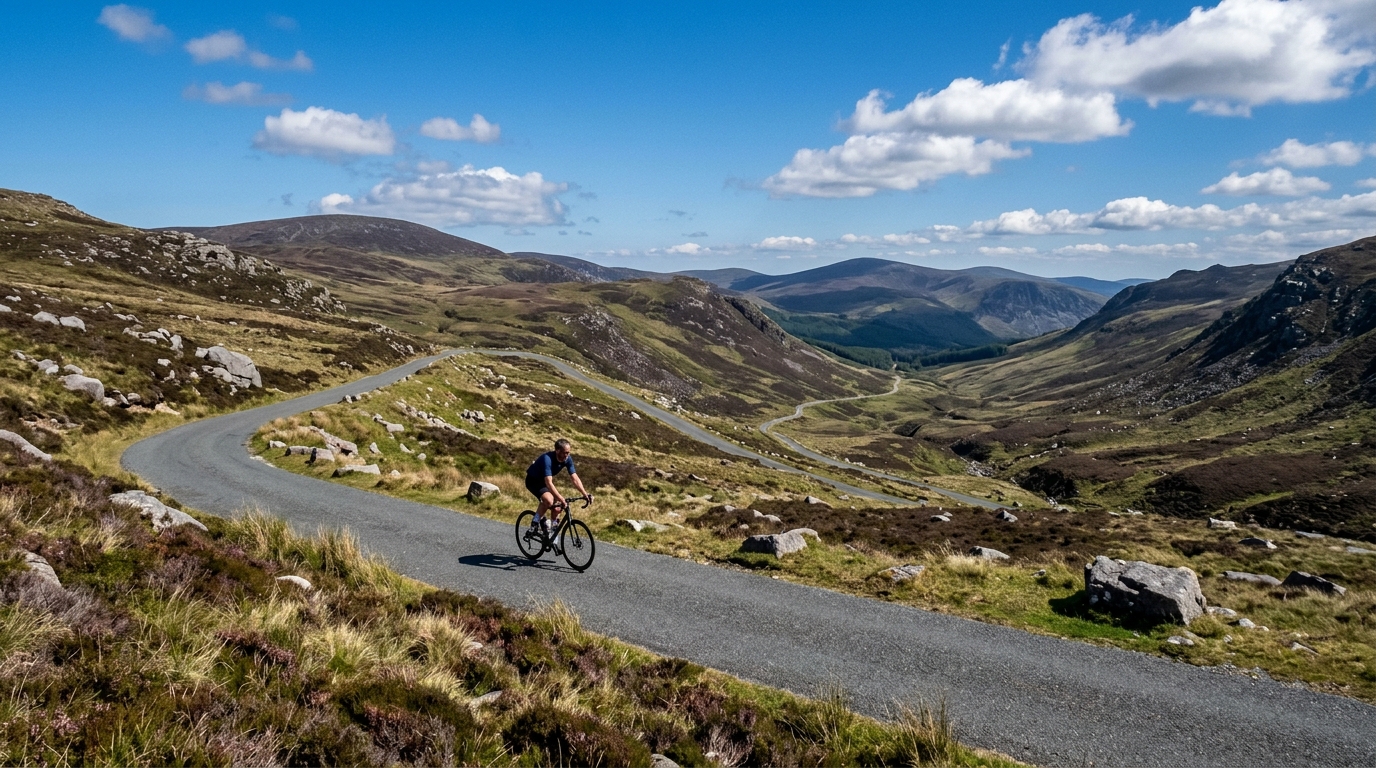 Wicklow GapCat 3IE · 6.4 km · 5.1% · 307 m165pts
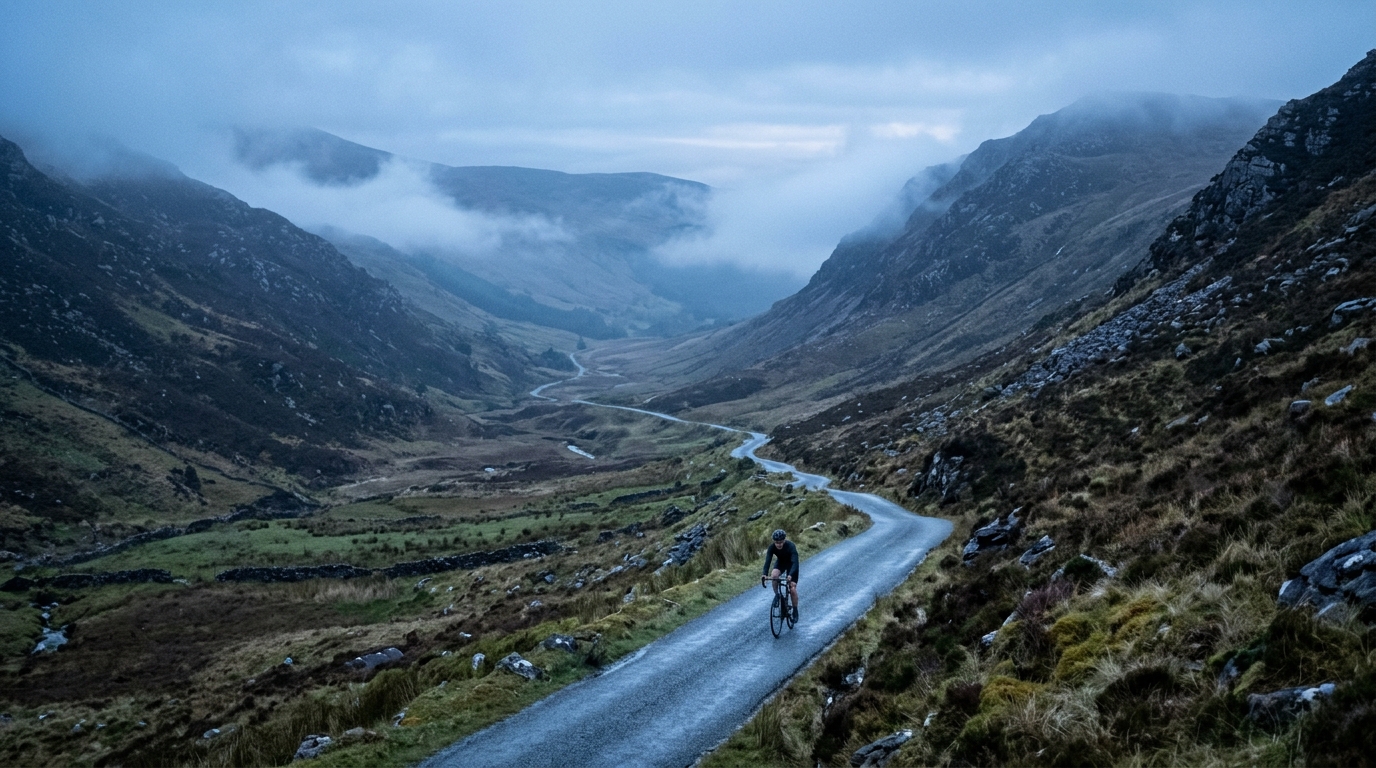 Glengesh PassCat 3IE · 6.6 km · 4.0% · 241 m106pts
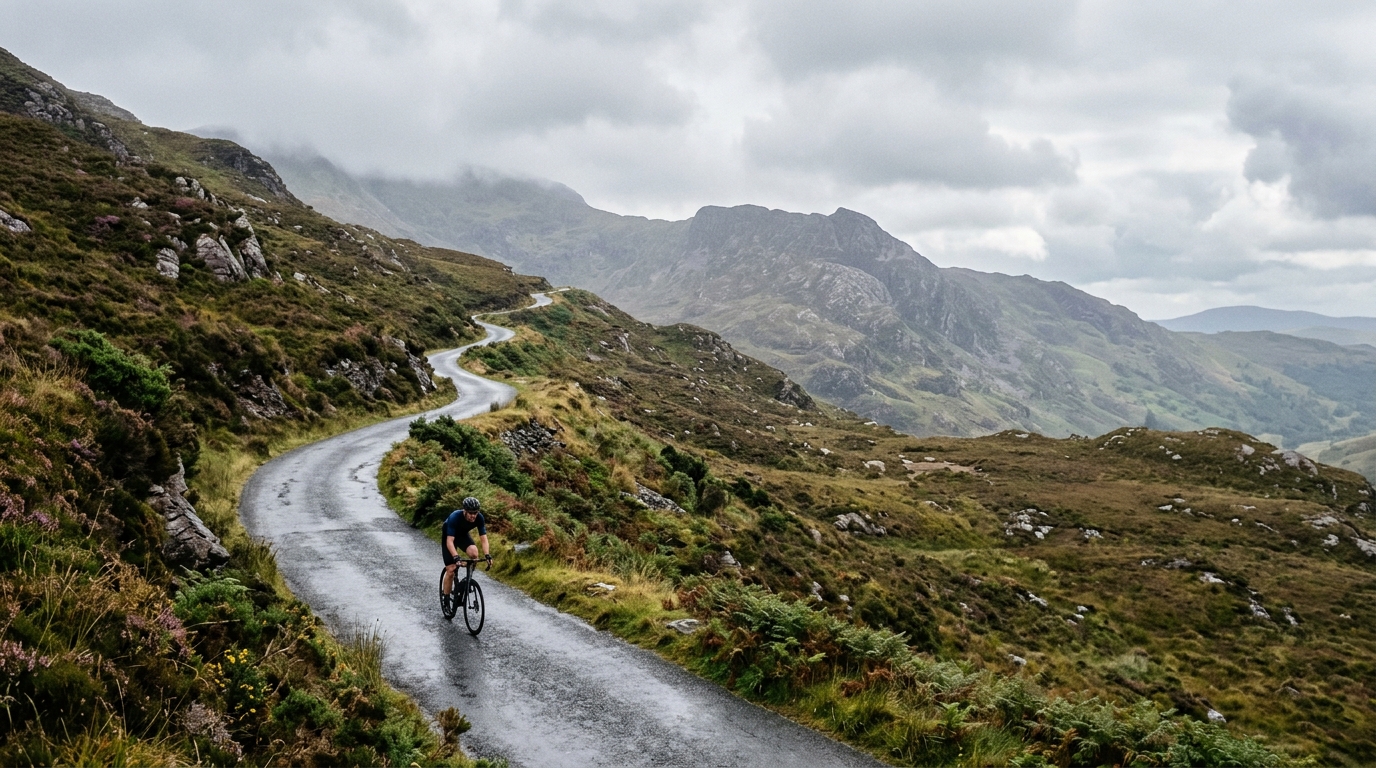 Priest's LeapCat 2IE · 5.4 km · 8.1% · 405 m354pts
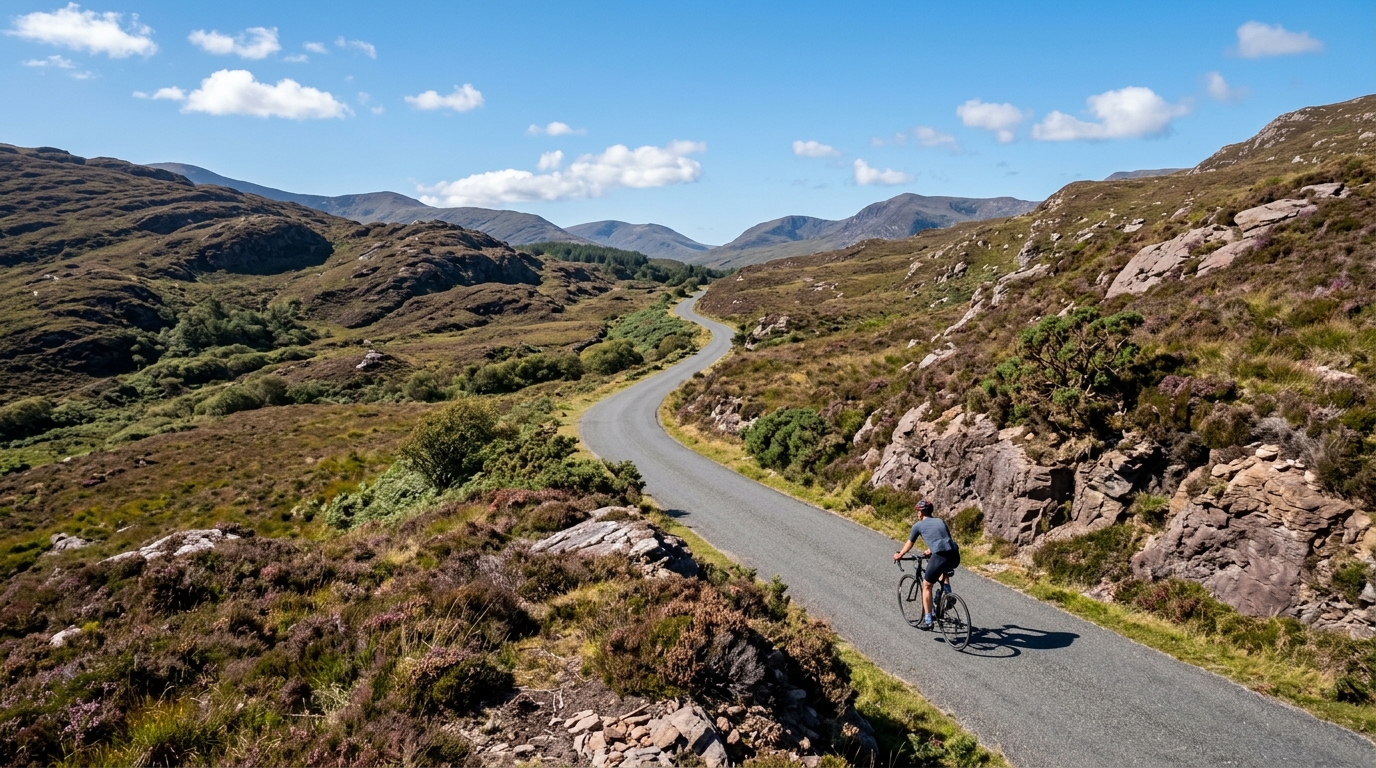 Moll's GapCat 4IE · 6.6 km · 3.0% · 185 m59pts
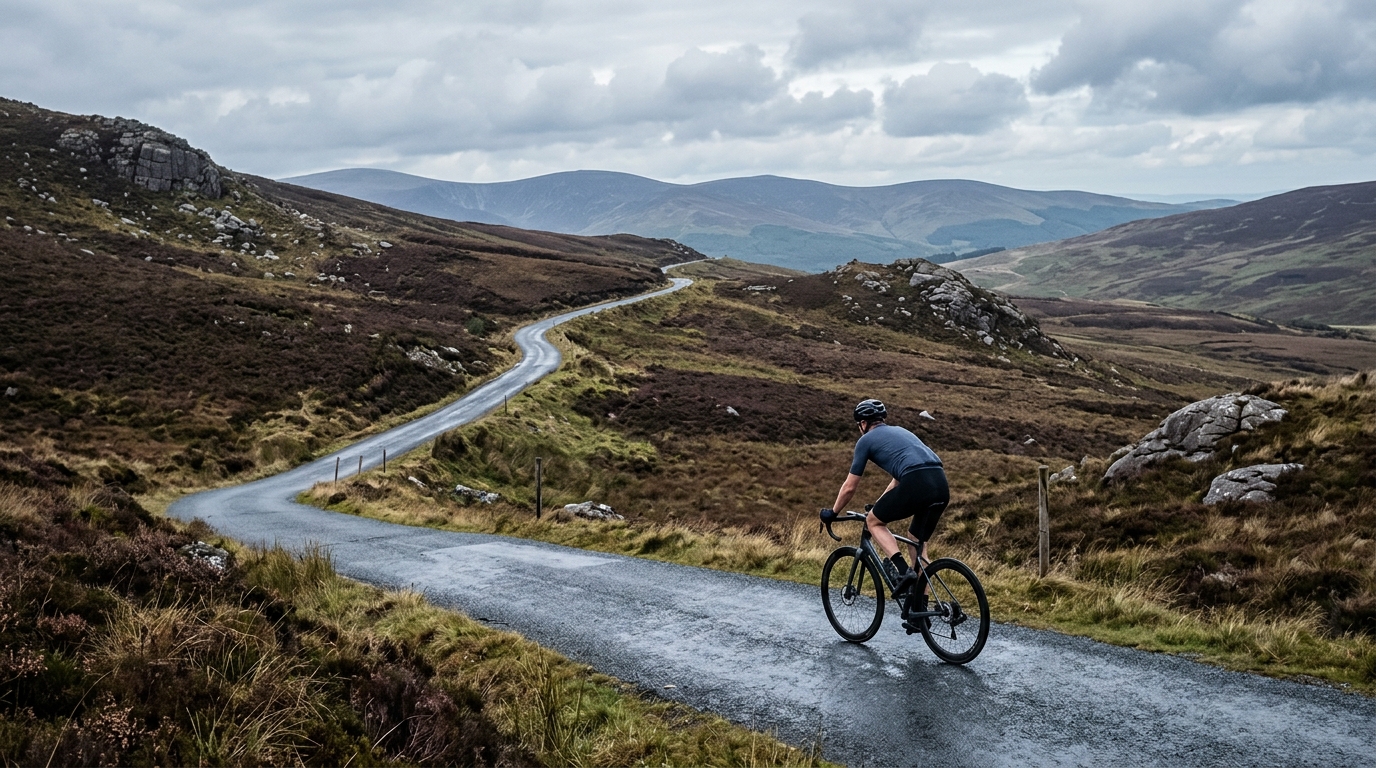 Sally GapCat 3IE · 13.9 km · 3.3% · 430 m146pts
O guia completo de subidas em Irlanda
Ireland's climbing character
Ireland is not a country of giant alpine passes, and that is exactly why its climbs ride differently. The challenge is not usually a single long, metronomic effort where a rider settles at threshold and waits for the altitude to do the work. Ireland's climbing is more irregular, more exposed, and more tactical. The roads rise out of valleys, coastal edges, and upland terrain with frequent shifts in pitch, surface, wind direction, and visibility. That makes pacing harder than the headline profile often suggests.
Neverchill currently lists 5 featured climbs in Ireland, with no hors categorie climbs, and a highest listed summit of 477 metres. Those numbers frame the country correctly: Ireland is not defined by extreme elevation, but by the density of difficulty packed into modest-looking roads. A climb can feel manageable on paper, then become a real test because the road steepens suddenly, the surface asks for more torque, or a headwind turns an exposed shoulder into a sustained threshold effort.
This is the central point for riders planning an Irish climbing trip: do not judge the route only by summit height. The decisive parts are often the transitions. A climb may begin in shelter, move into open terrain, then ask for a final effort just when rhythm breaks down. For a rider training with power, that means the ride rewards discipline. Riding the first steep section too hard can turn the rest of the climb into damage control, especially when there is little protection from the wind.
Why Ireland's climbs feel harder than they look
The best Irish climbs share a similar pattern: they are rarely one-dimensional. The gradient changes, the road character changes, and the exposure changes. That makes them excellent training climbs because they force repeated micro-decisions. When to stay seated. When to stand. When to ride by feel rather than chase a number. When to let the speed fall without panicking.
On a long, steady climb, the limiting factor is often aerobic control. On many Irish climbs, the limiter is how well a rider manages spikes. A short ramp ridden above sustainable power can be fine once. Repeating that across an uneven ascent, especially into wind, creates the kind of fatigue that shows up later in the route. This is where understanding /glossary/ftp is useful, not because every climb should be ridden at a fixed percentage, but because a rider needs to know the cost of repeated over-threshold surges.
The roads also encourage a more defensive style of climbing. In a big mountain range, the route may be obvious: climb, descend, repeat. In Ireland, the climbing often comes embedded in rolling terrain. Riders can burn energy before the named climb even starts, then underestimate the cumulative load. The smart approach is to treat the whole route as the effort, not just the famous section.
Standout climbs in Ireland
Conor Pass
Conor Pass is one of the defining names in Irish climbing because it combines scenery, exposure, and a road that asks for composure. It is the kind of climb where pacing is shaped as much by conditions as by gradient. If the wind is up or visibility is reduced, the effort becomes less about chasing a segment and more about keeping control of the ride.
The key with Conor Pass is to avoid getting drawn into the drama too early. The climb's reputation can make riders start hard, but the better strategy is to ride the lower section with restraint and leave room for the exposed upper road. On a calm day, it can feel flowing and almost generous. In heavier conditions, it becomes a test of balance, gearing, and mental patience.
Practical note: because the road can feel narrow and exposed, this is not a climb to ride distracted. Keep the effort smooth, hold a predictable line, and be ready for changing conditions near the top.
Wicklow Gap
Wicklow Gap has a different character. It is less about coastal drama and more about upland rhythm. For riders based around Ireland's east, it is one of the natural reference climbs because it can sit inside a broader training loop rather than feeling like a one-off destination.
Its value is in how it rewards pacing. Wicklow Gap suits riders who can settle into tempo and resist the urge to surge every time the road tilts. That makes it useful for structured training. A rider can use it for sustained aerobic work, controlled threshold efforts, or as the centrepiece of a longer endurance ride.
The tactical mistake is to ride it as if the summit is the only objective. The roads around it can still take energy, especially if the loop includes repeated rolling sections. If the climb is part of a bigger day, keep the effort capped until the final part of the ascent, then build only if the legs are still responding.
Glengesh Pass
Glengesh Pass is a climb that reminds riders why profile alone can mislead. Its appeal is not just the climbing but the way the road sits in the landscape. The ascent has a distinctive feel, with a sense of enclosure and then release as the road gains height.
From a riding perspective, Glengesh is about torque control. If the pitch kicks up, the temptation is to muscle through in too large a gear. That works briefly, but it can load the legs in a way that compromises the rest of the route. A compact climbing setup or a wide-range cassette makes the climb more enjoyable and often faster in practical terms, because it lets the rider keep pressure on the pedals without grinding.
This is a good climb for riders who want something memorable without needing extreme elevation. It has enough character to anchor a route and enough irregularity to make pacing matter.
Moll's Gap
Moll's Gap is one of Ireland's classic cycling references because it works well as part of a larger ride. Some climbs are destinations. Moll's Gap is more of a connector, a climb that helps shape a proper route through varied terrain.
That matters tactically. A rider rarely experiences Moll's Gap in isolation. The effort before and after the climb changes how it feels. If approached deep into a ride, even moderate slopes can demand respect. If tackled fresh, the climb can be ridden with more rhythm and control.
The best way to ride Moll's Gap is to think beyond the top. Keep enough in reserve for the roads that follow. Ireland often punishes the rider who treats every named climb like the finish line. Smooth pacing here usually beats aggression, especially if the day includes multiple ascents.
Priest's Leap
Priest's Leap has the reputation of the most demanding kind of Irish climb: not necessarily because of altitude, but because of severity, road feel, and the way steep ramps interrupt rhythm. This is the climb on the list that most strongly rewards low gearing and a clear pacing plan.
The mistake is to fight the road. On steep, narrow, irregular climbing, riders often stand too often, spike power repeatedly, and lose traction or rhythm. A better approach is to stay seated where possible, keep the upper body quiet, and accept a lower speed. The goal is not to make the climb feel easy. The goal is to avoid turning the first hard section into the reason the last hard section becomes unmanageable.
For riders planning an Ireland climbing trip, Priest's Leap is the one to treat with the most respect. It is not a place for ego gearing. If there is a climb that justifies choosing the easier cassette before the trip, this is it.
Best season for riding climbs in Ireland
The best season is the part of the year when daylight is longer, roads are more consistently rideable, and the chance of a full-value day is higher. Ireland can still deliver wind, rain, and low cloud at any time, so the goal is not to wait for perfect conditions. The goal is to give yourself enough margin to adapt.
For climbing, that margin matters. Longer daylight makes it easier to delay a start, shorten a route, or add a climb if conditions are better than expected. More settled periods also make exposed passes more enjoyable and safer, especially where the descent demands concentration.
Winter riding can be rewarding for local riders who know the roads and are comfortable adjusting plans quickly, but it is a poor time to build an ambitious climbing itinerary unless flexibility is built in. Cold rain, reduced visibility, and debris on small roads can turn a manageable route into a slow, draining day.
The practical recommendation is simple: plan the main climbing trip for the more forgiving season, then keep the route flexible. In Ireland, a good forecast window is often more valuable than a rigid checklist.
Practical route planning
Traffic and road width
Many of the best Irish climbs use roads that feel intimate rather than engineered for speed. That is part of their appeal, but it changes how they should be ridden. Hold a predictable line, avoid swinging wide on steep ramps, and be conservative on blind bends. The same road that feels quiet for long stretches can still produce local traffic, farm vehicles, or visitors unfamiliar with the route.
Descending deserves as much attention as climbing. Wet surfaces, variable visibility, and rougher edges can reduce the margin for error. A climb ridden at controlled power can still become a risky day if the descent is approached like a closed-road event.
Resupply
Do not assume that every beautiful road has convenient resupply. Ireland's climbing routes can pass through quiet areas where options are limited or irregular. Start with enough food for the core route, and treat shops or cafes as a bonus rather than the foundation of the plan.
This matters more than it sounds. Because Irish climbs often sit within rolling terrain, the energy cost can accumulate without one obvious decisive climb. Riders who underfuel early may find the named climb manageable, then struggle on the return leg. Eat before the problem appears.
Altitude and exposure
With the highest listed summit at 477 metres, altitude is not the physiological limiter in the way it is in major mountain ranges. The limiter is exposure. Wind, temperature shifts, and low cloud can make a modest summit feel more serious than its elevation suggests.
That should shape kit choice. Carry a layer that makes sense for descending in damp or windy conditions. A rider can overheat slightly on the climb and still get cold quickly once the effort stops. The smaller the road and the more exposed the terrain, the more important it is to dress for the descent, not just the ascent.
Gearing
Err on the side of easier gearing. Ireland's climbs reward cadence options because the gradients and surfaces can change abruptly. A gear that feels fine on a steady road may become a liability on a steep, rough, or sheltered-to-exposed transition.
This is especially relevant for riders used to smoother climbs where momentum carries through changes in pitch. On Irish roads, losing cadence can mean a sharp power spike just to keep the bike moving. A wide range gives the rider a way to keep the effort aerobic for longer and save the anaerobic matches for the few sections where they are unavoidable.
How to approach an Ireland climbing trip
The best Ireland climbing itinerary should not be built like a summit-bagging exercise. The better model is a set of high-quality loops, each anchored by one or two major climbs and padded with enough flexibility to respond to weather. Conor Pass, Wicklow Gap, Glengesh Pass, Moll's Gap, and Priest's Leap all offer different versions of Irish climbing, and the value is in experiencing that variety rather than forcing them into one overly rigid plan.
For training, these climbs are excellent because they expose weaknesses that a smoother climb can hide. Poor pacing shows up quickly. Bad gearing choices are punished. Underfueling becomes obvious. Handling and descending matter. The rider who does well in Ireland is not necessarily the one with the biggest number on a short ramp, but the one who can manage effort, conditions, and route demands across the whole day.
That is what makes Ireland compelling as a climbing destination. The numbers are modest compared with larger mountain regions, but the riding is not soft. The climbs ask for judgement. Ride them with respect, prepare for variable conditions, and they deliver the kind of difficulty that makes a route stay with you long after the file is uploaded.
Procurando pedais completos em Irlanda?
Rotas em Irlanda