Biblioteca de subidas · Argentina
Cycling climbs in Argentina
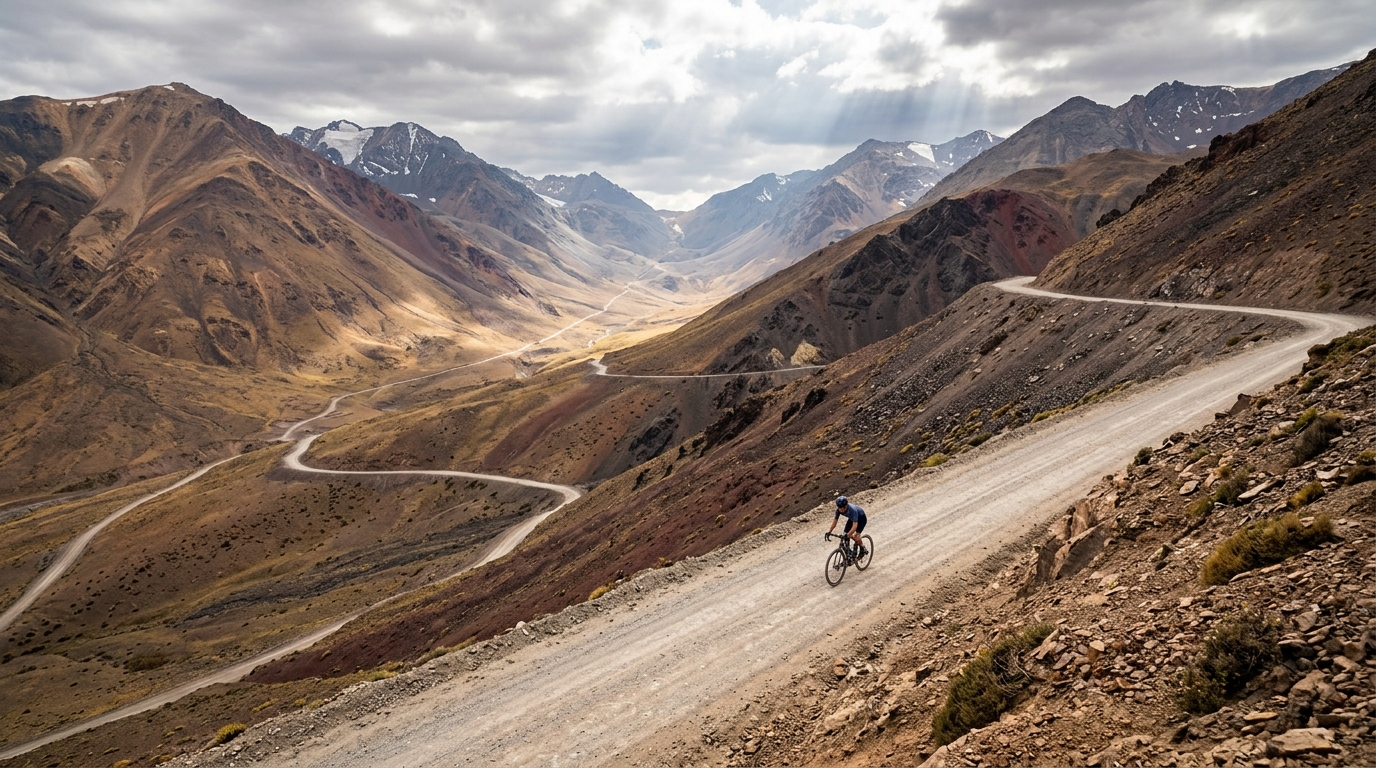
Argentina rewards the patient climber with high, thin-aired ascents that reach a staggering 4951 metres above sea level. None of its seven catalogued climbs carry an hors catégorie rating, yet the sheer altitude tells its own story: this is a place where the road climbs far higher than the muscle-burning gradients of Europe, and where the challenge is measured as much by the sky as by the slope.
The marquee ascents span the country's dramatic range of terrain. Abra del Acay and Paso Socompa push riders toward the highest reaches of the catalogue, while Paso del Planchón, Pino Hachado Pass and Lilpela Pass thread through mountain crossings that link one valley to the next. Alto de las Juntas rounds out a collection built for cyclists who want long, remote days in the saddle and the quiet satisfaction of topping out somewhere genuinely high.
Subidas emblemáticas de Argentina
Todas as subidas em Argentina
90 subidas
- Agua Negra PassHCAR · 91.0 km · 3.0% · 2786 m841pts
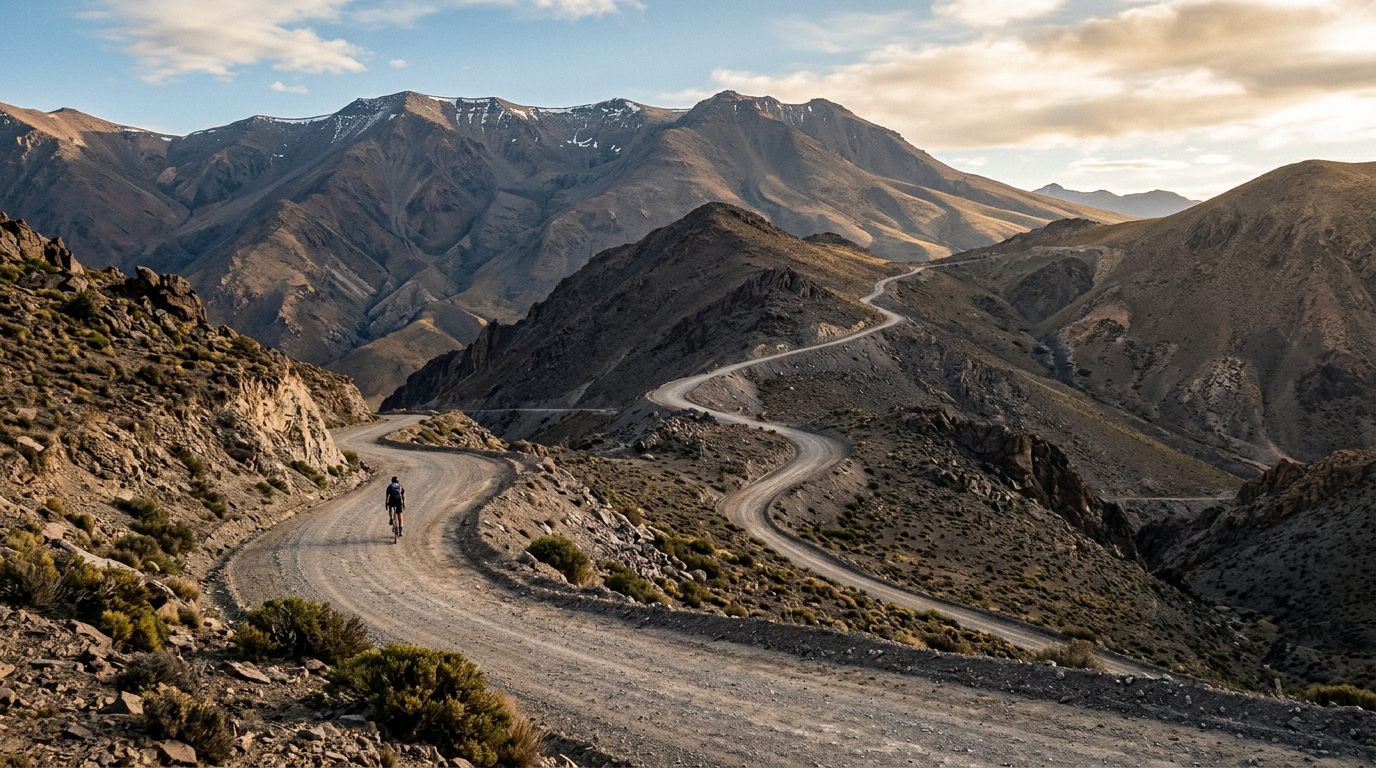 Abra del AcayCat 1AR · 23.1 km · 4.5% · 1024 m461pts
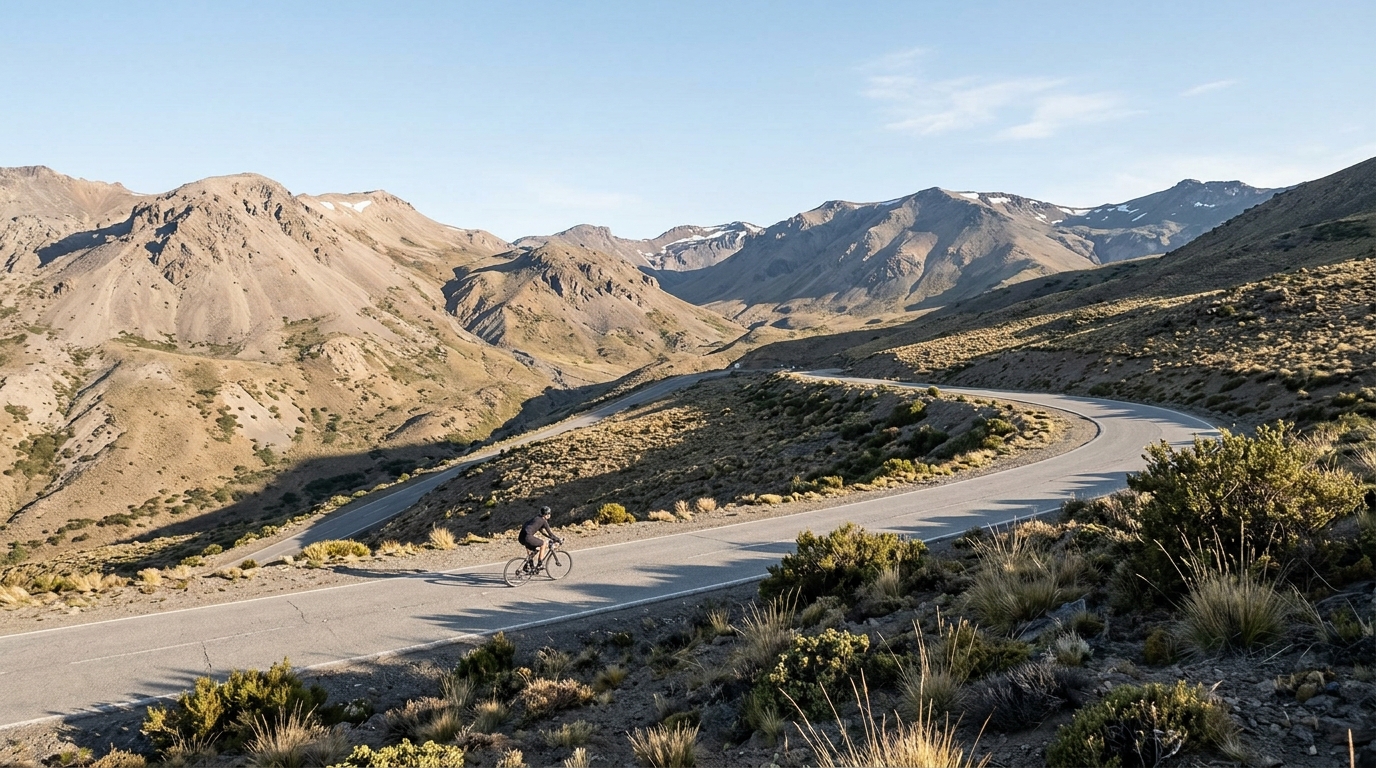 Cardenal Antonio Samoré PassCat 2AR · 27.2 km · 3.5% · 1026 m343pts
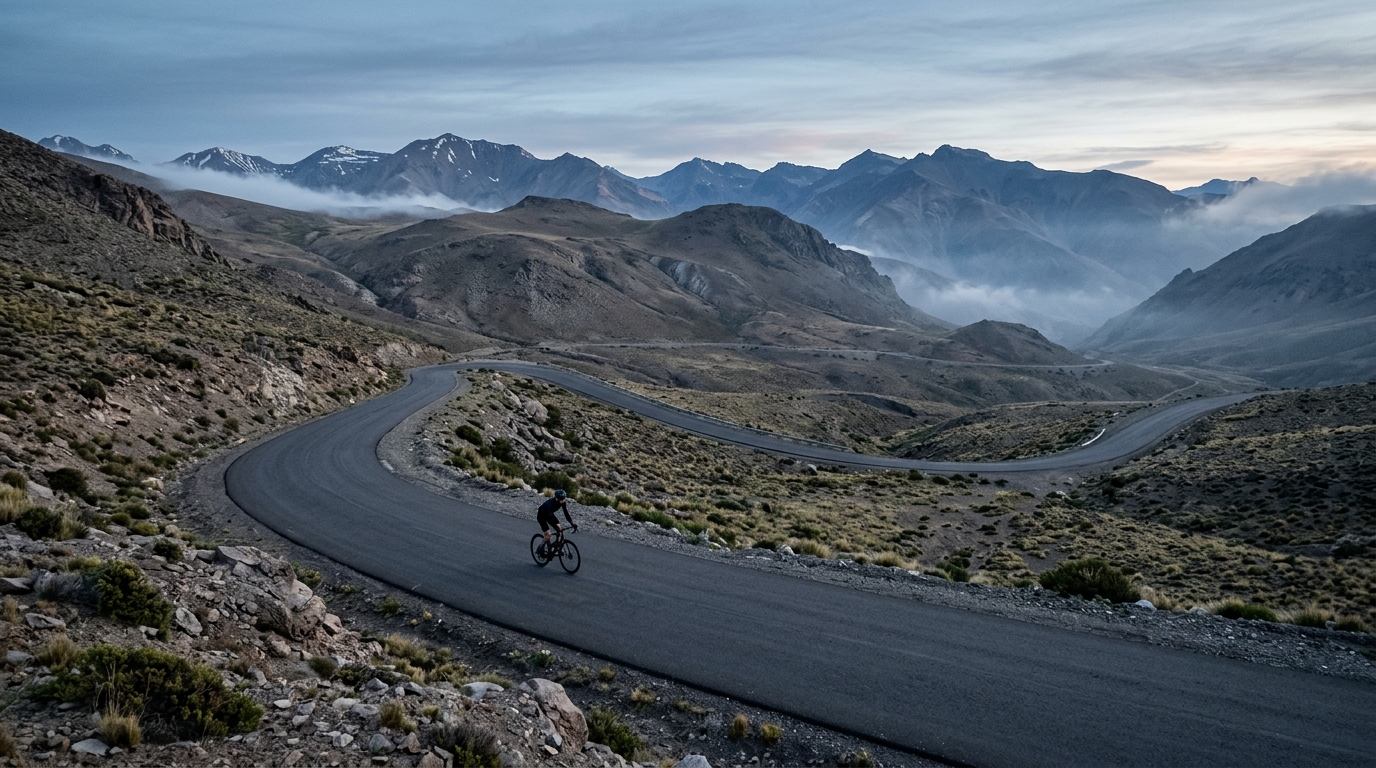 Pino Hachado PassCat 2AR · 17.7 km · 4.6% · 804 m372pts
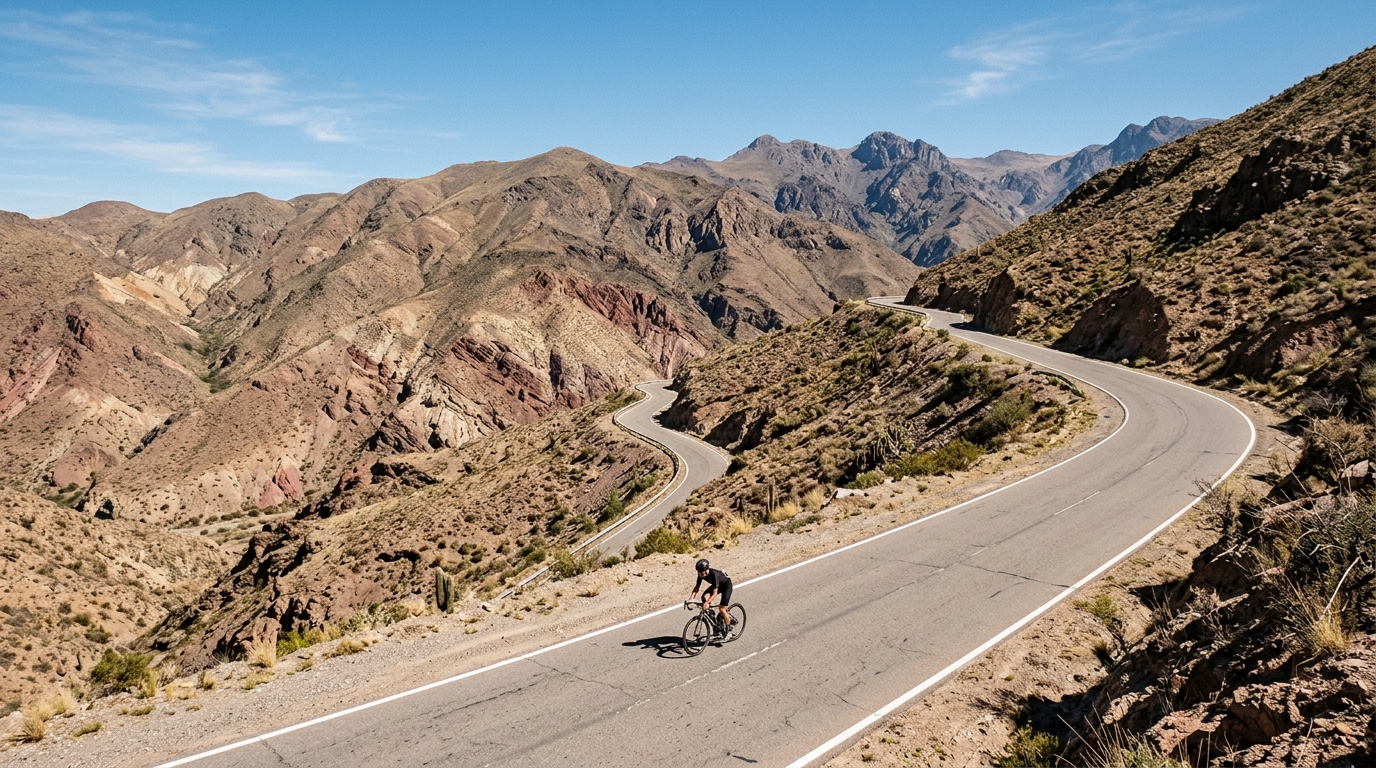 Alto de las JuntasCat 1AR · 35.1 km · 4.2% · 1470 m610pts
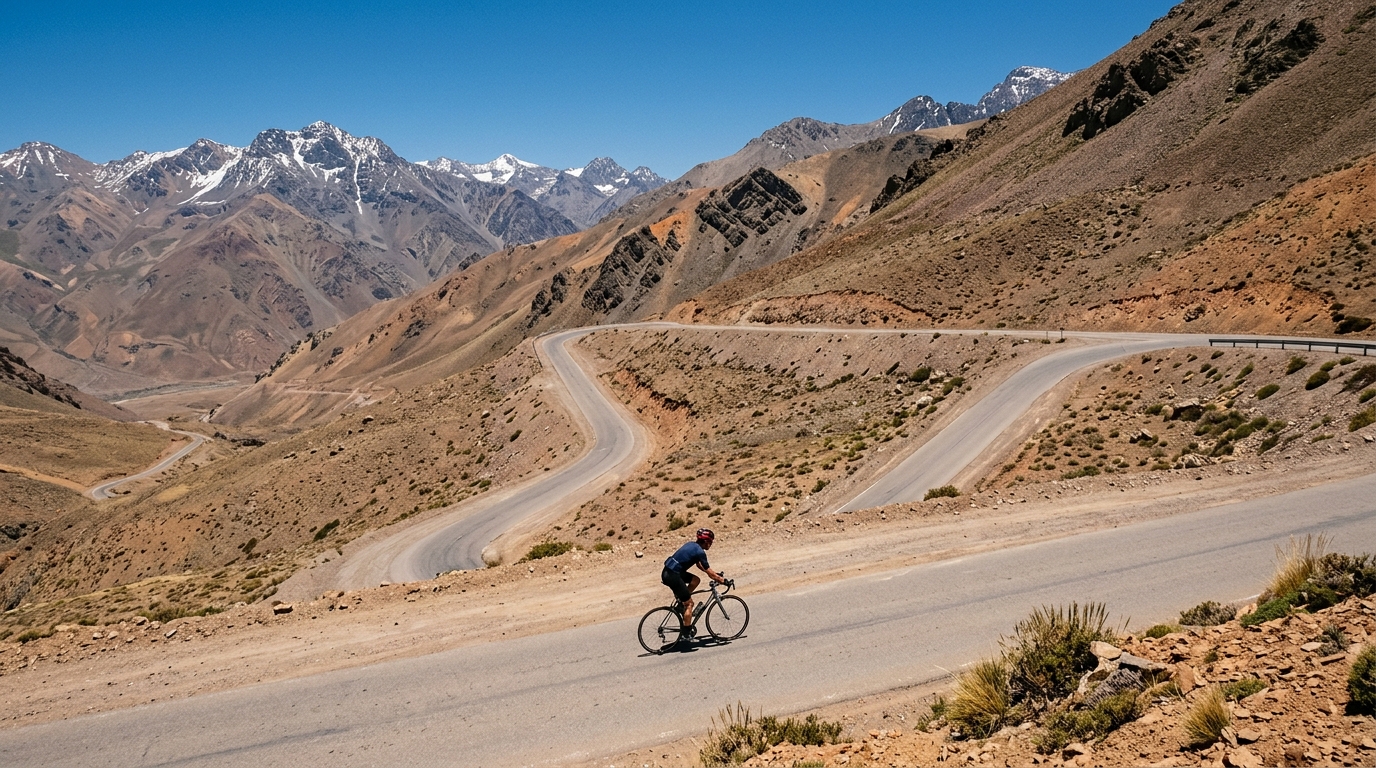 Paso de GuanaHCAR · 74.1 km · 4.8% · 3591 m1715pts
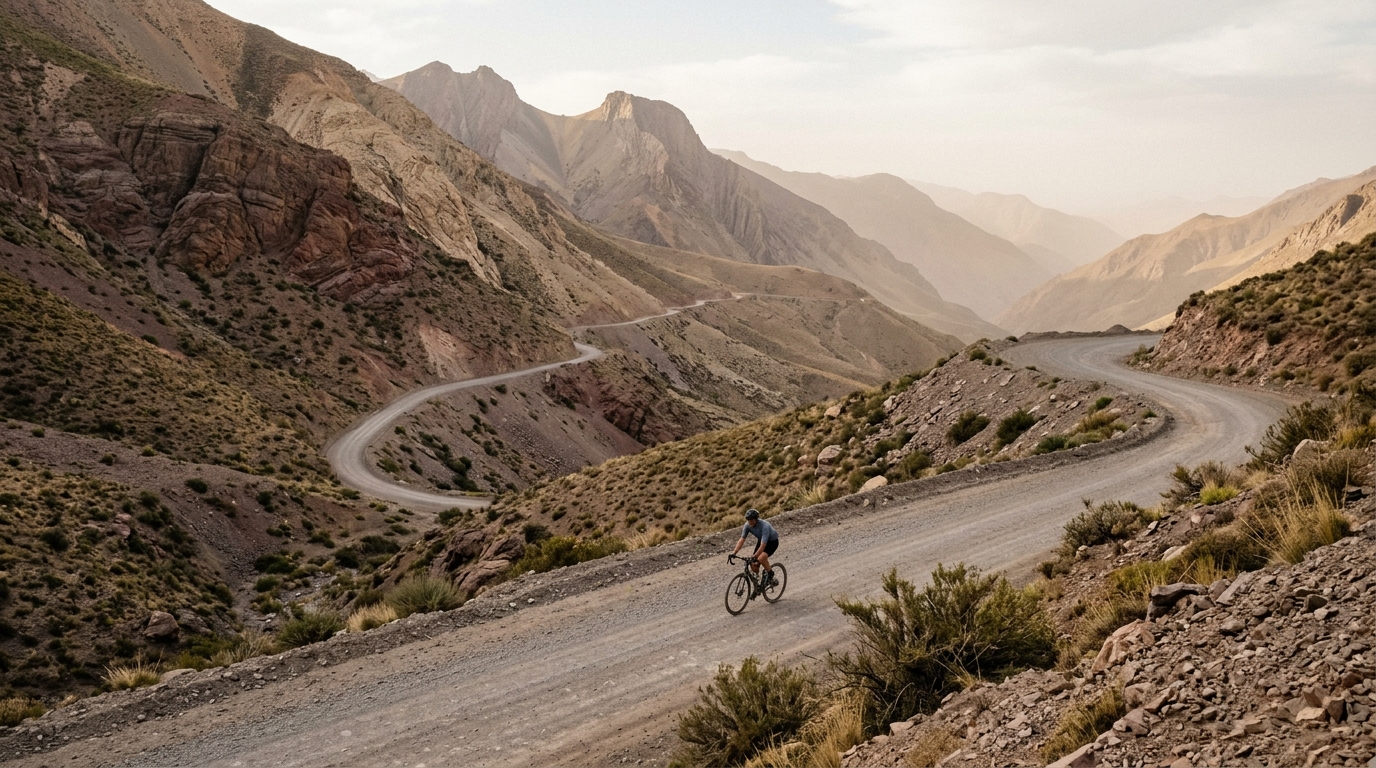 Paso de Los PatosHCAR · 72.7 km · 4.7% · 3651 m1578pts
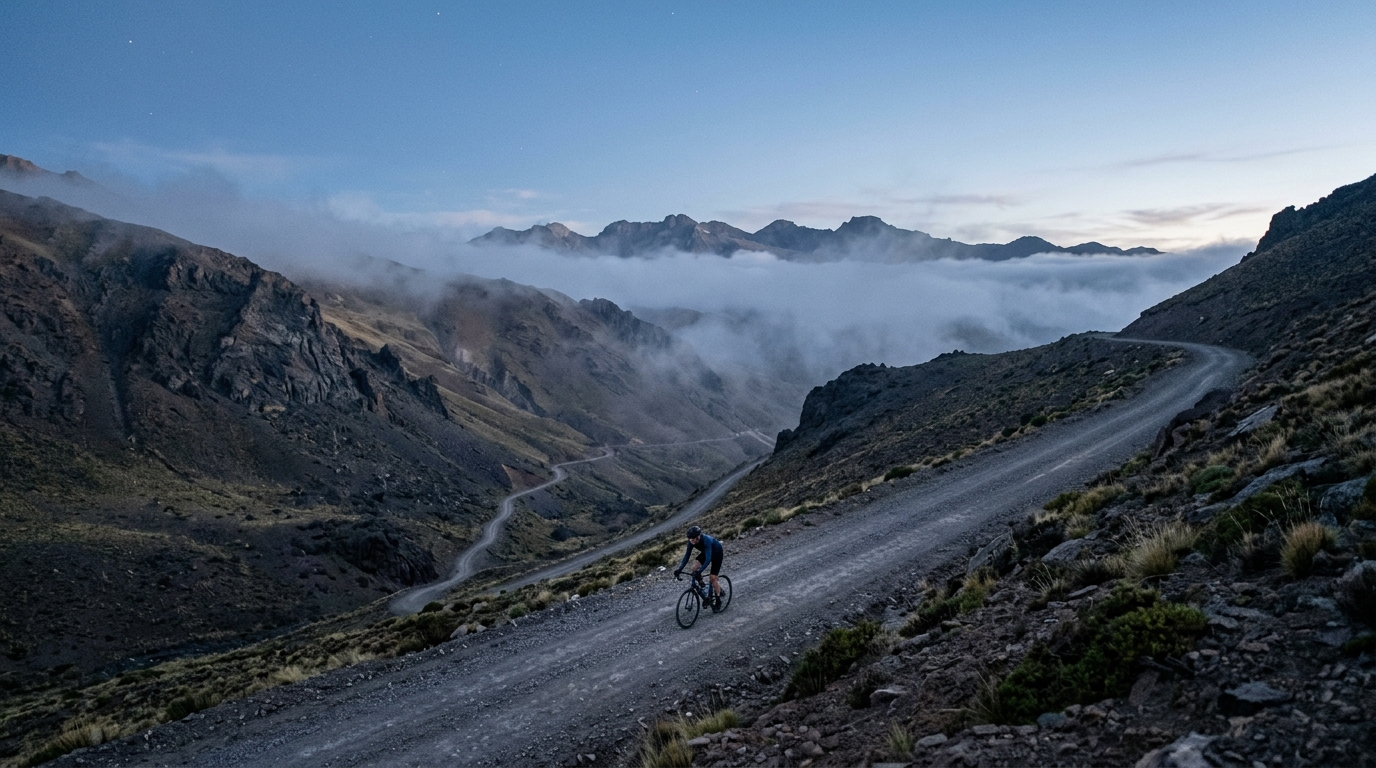 Paso Peña NegraHCAR · 14.0 km · 11.2% · 1545 m1748pts
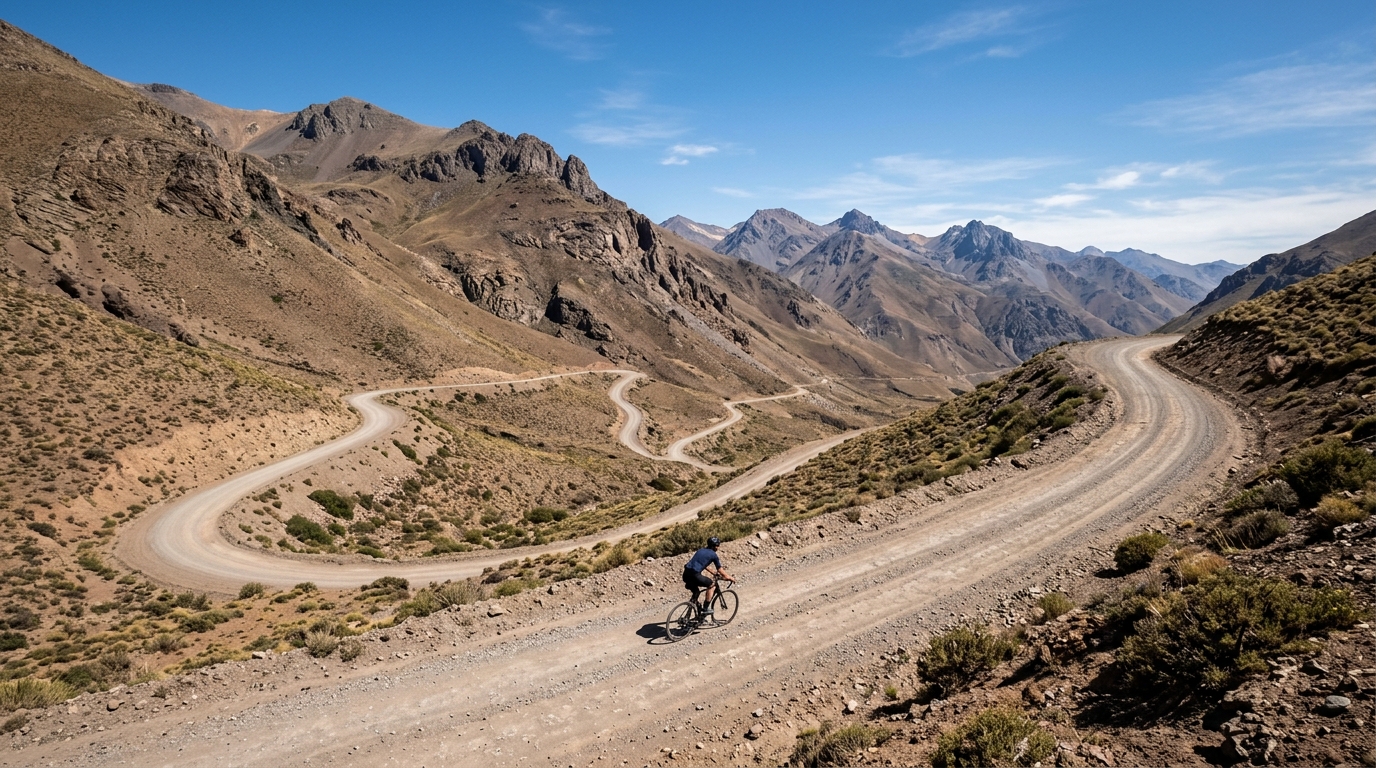 Paso del PlanchónCat 1AR · 28.5 km · 5.0% · 1431 m699pts
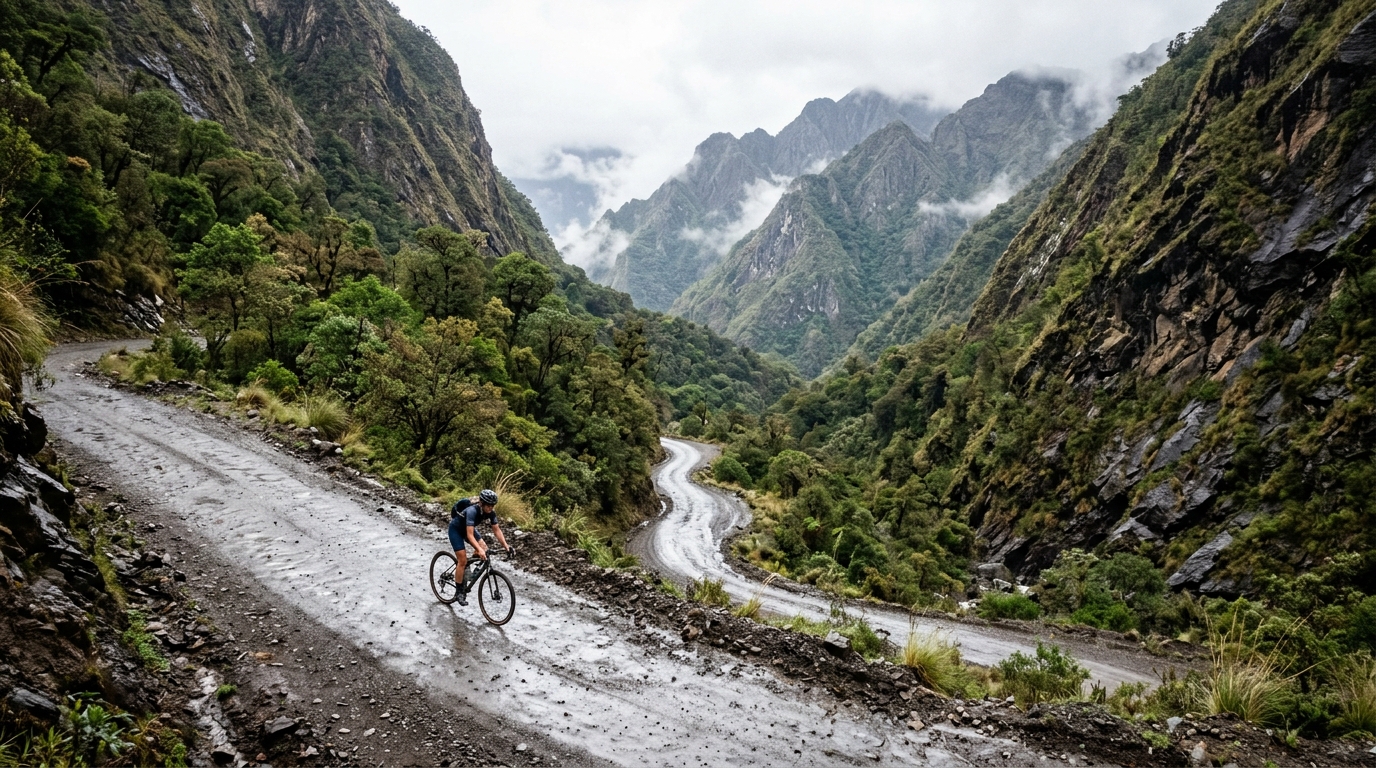 Paso de las NubesCat 1AR · 7.2 km · 9.4% · 641 m635pts
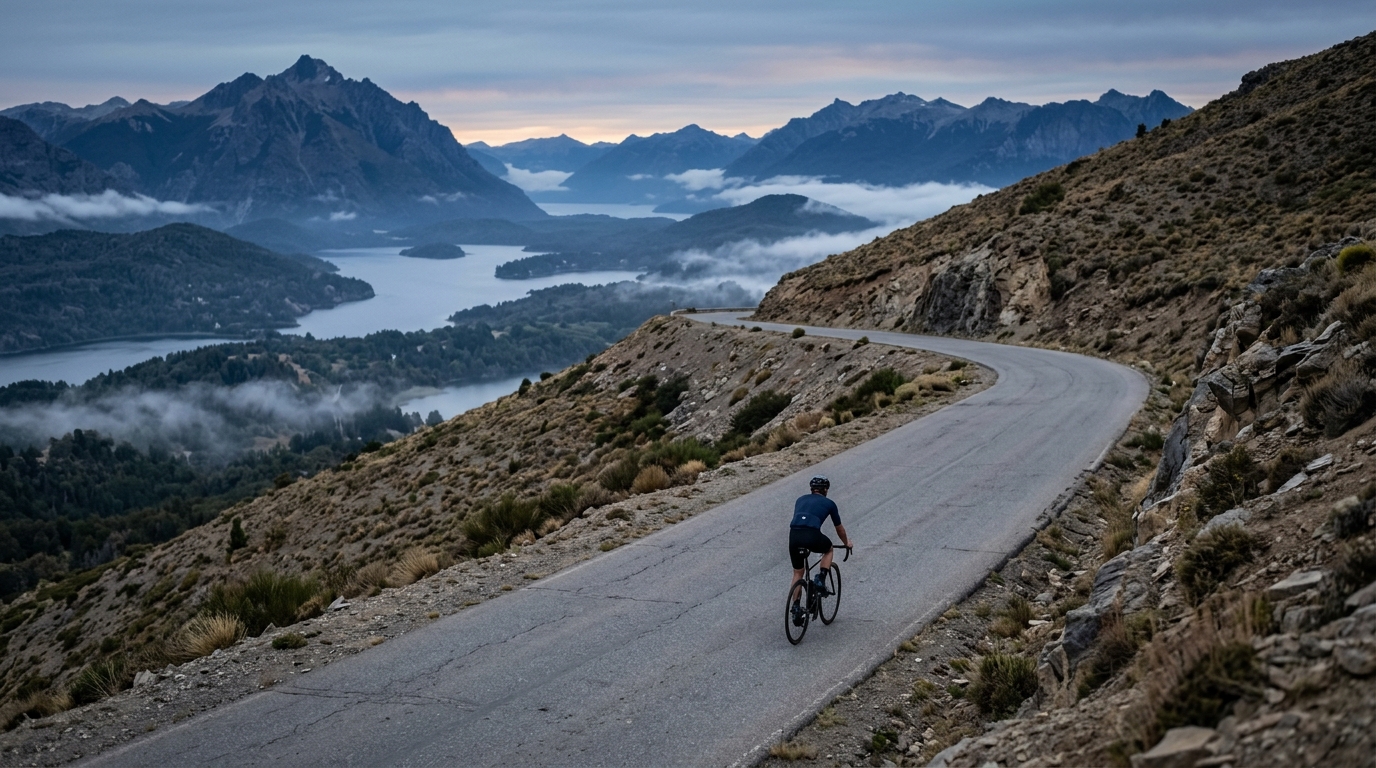 Lilpela PassCat 3AR · 3.2 km · 6.5% · 165 m134pts
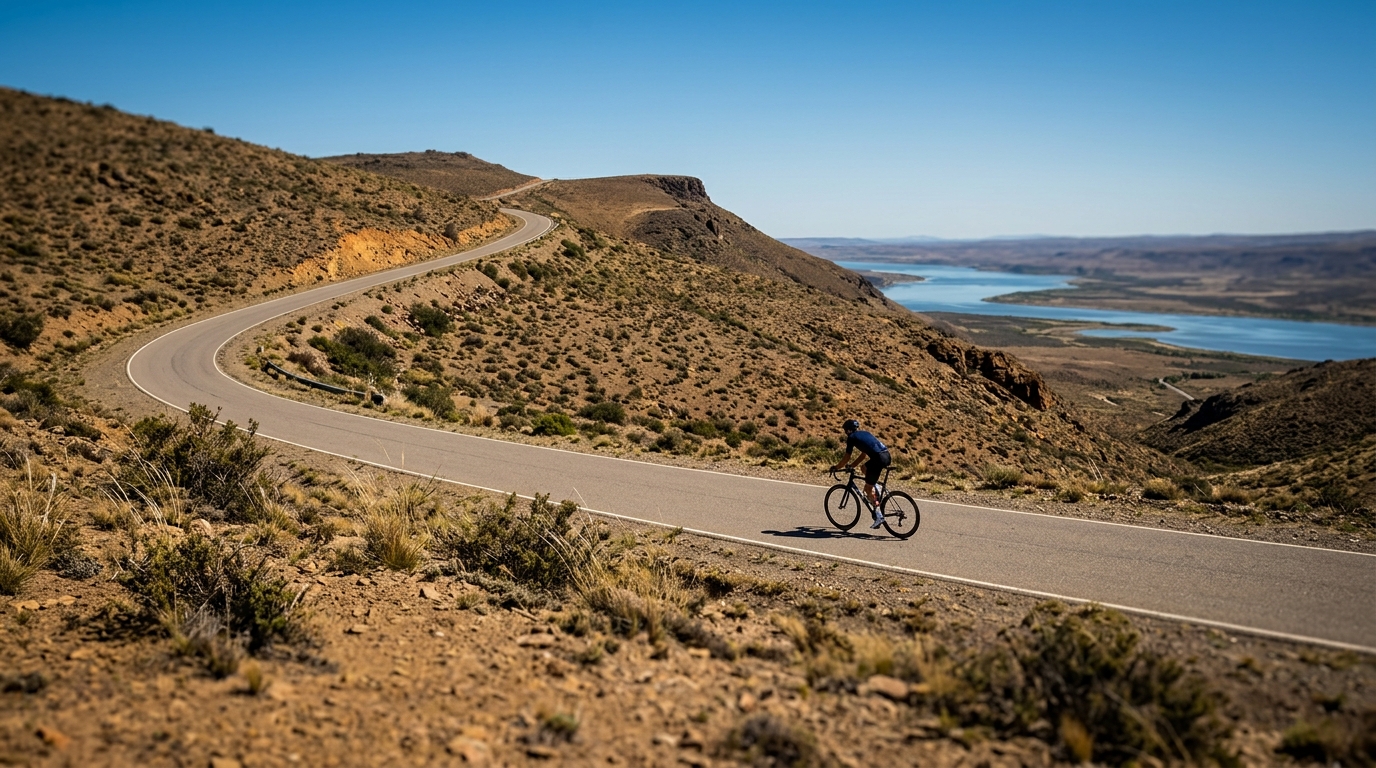 Paso de IndiosCat 4AR · 1.8 km · 4.4% · 62 m36pts
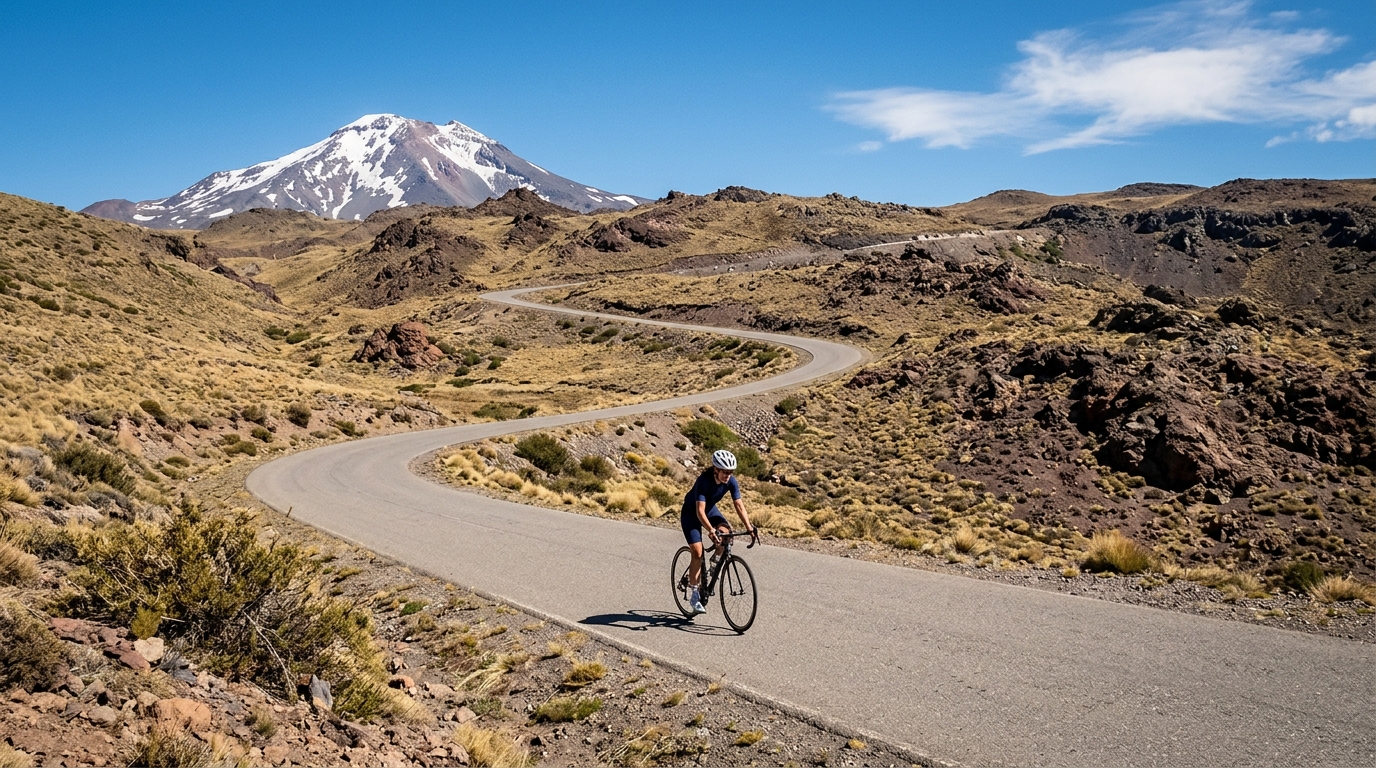 Termas de CopahueCat 2AR · 29.4 km · 3.0% · 864 m273pts
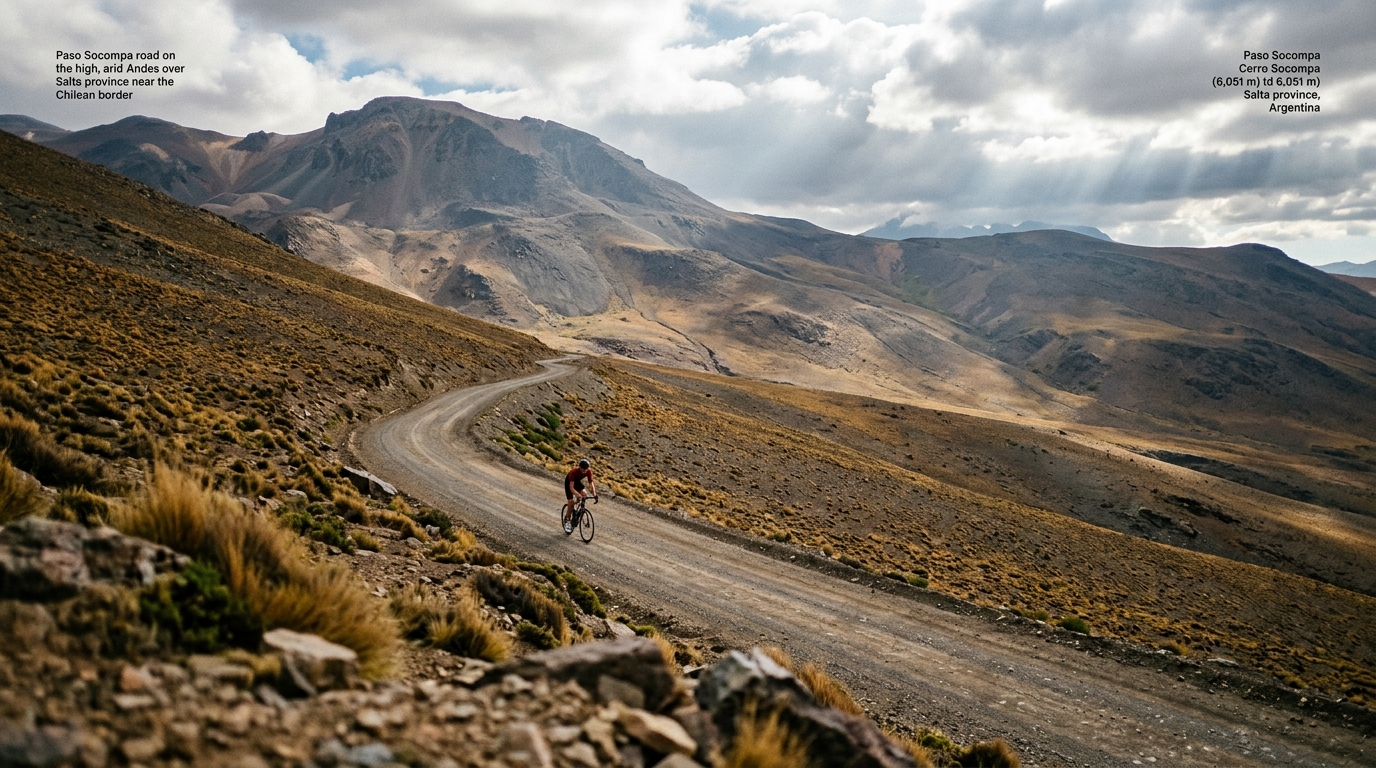 Paso SocompaCat 4AR · 5.9 km · 3.4% · 190 m69pts
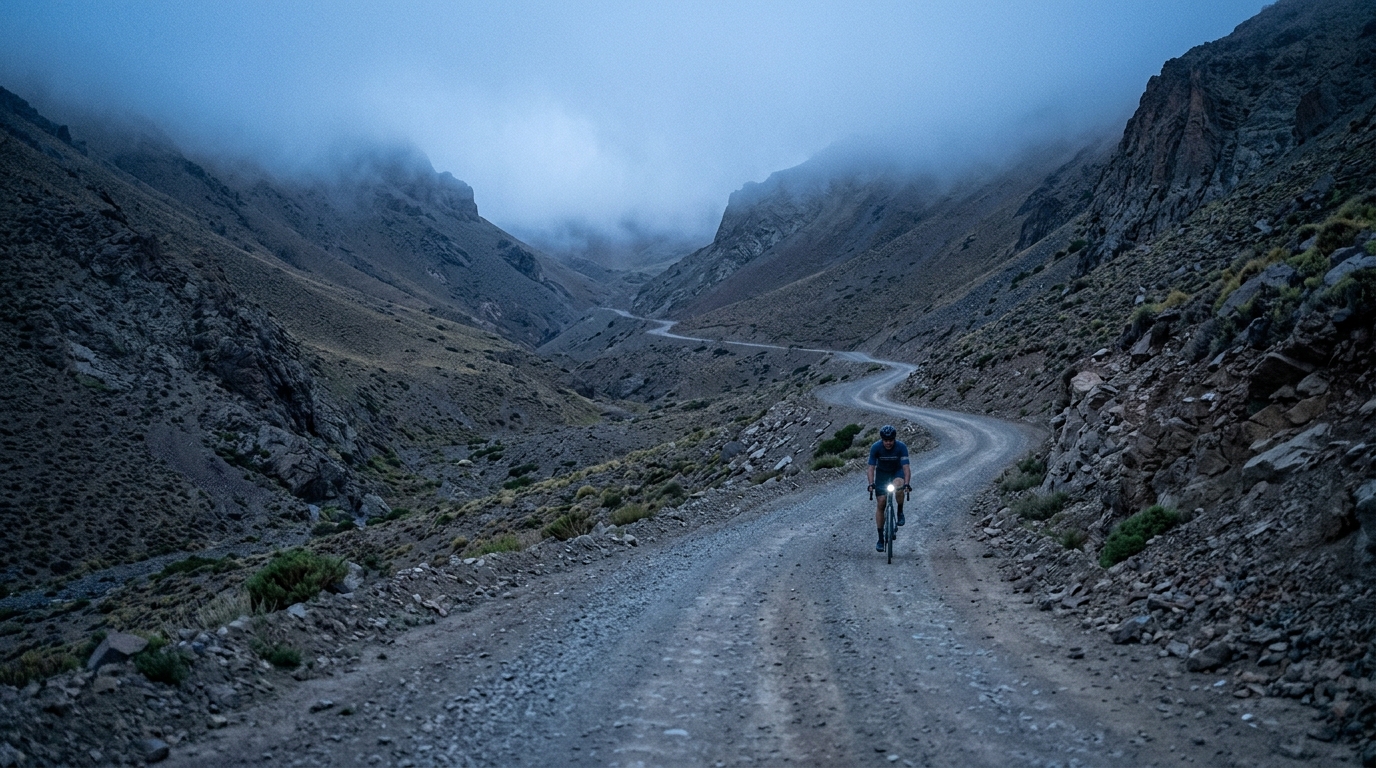 Paso de Buta MallínCat 3AR · 8.7 km · 4.5% · 366 m173pts
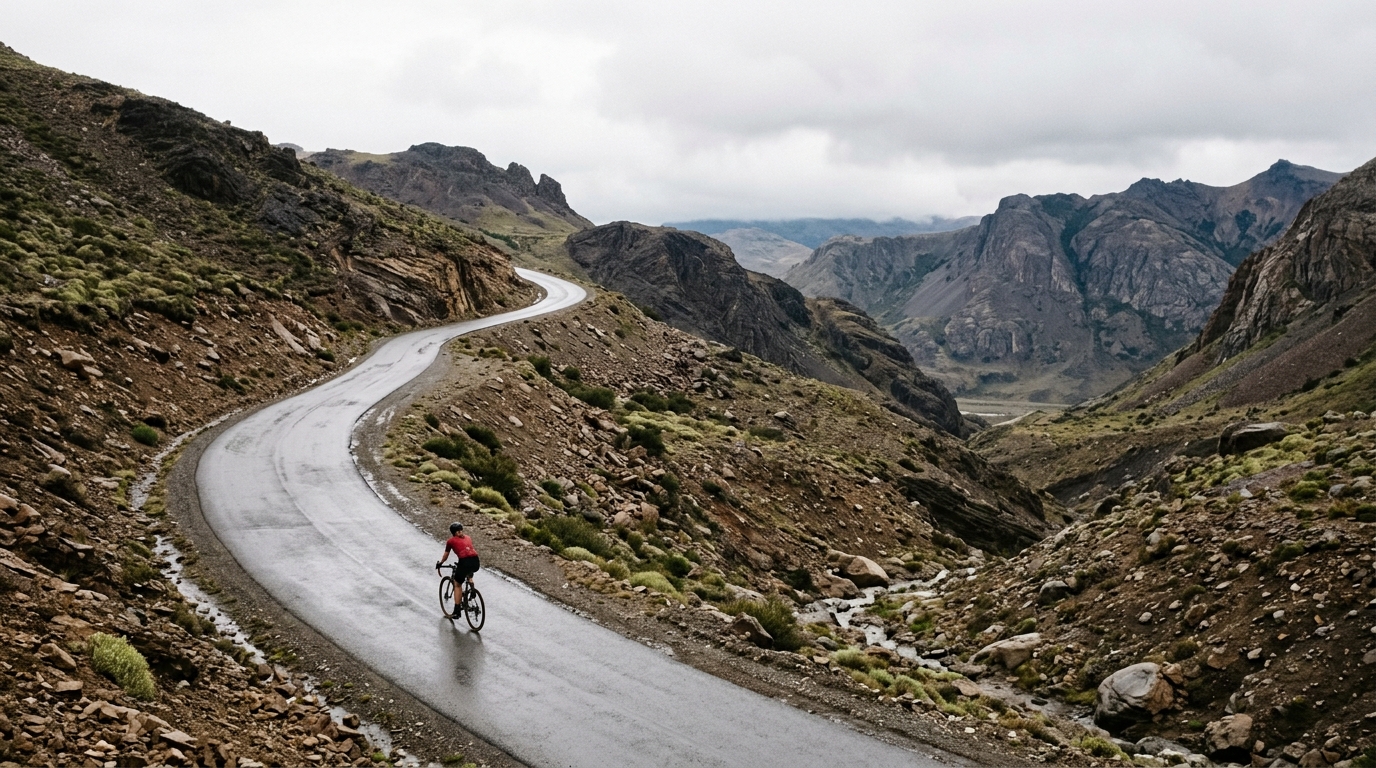 Paso HuemulCat 3AR · 5.4 km · 4.6% · 230 m114pts
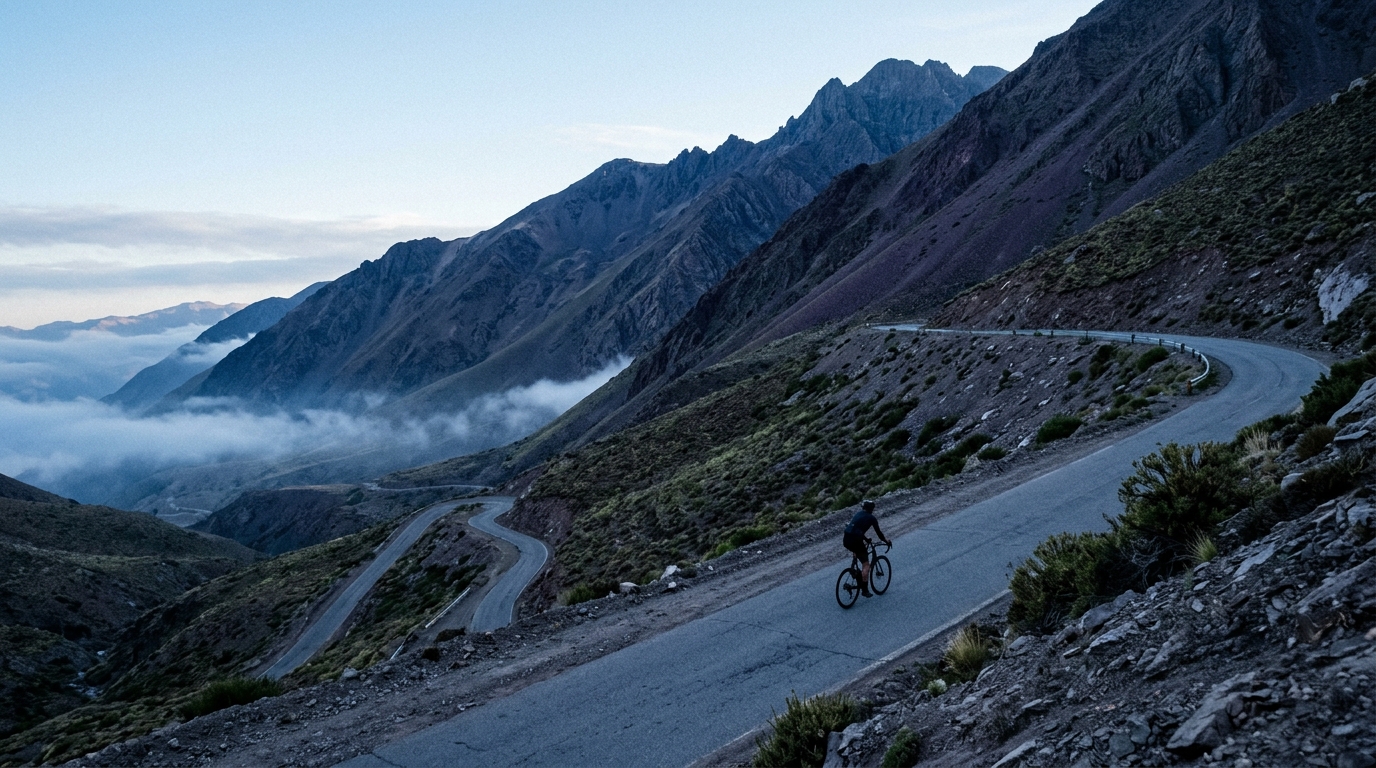 Alto del ManantialHCAR · 22.1 km · 11.0% · 2410 m2696pts
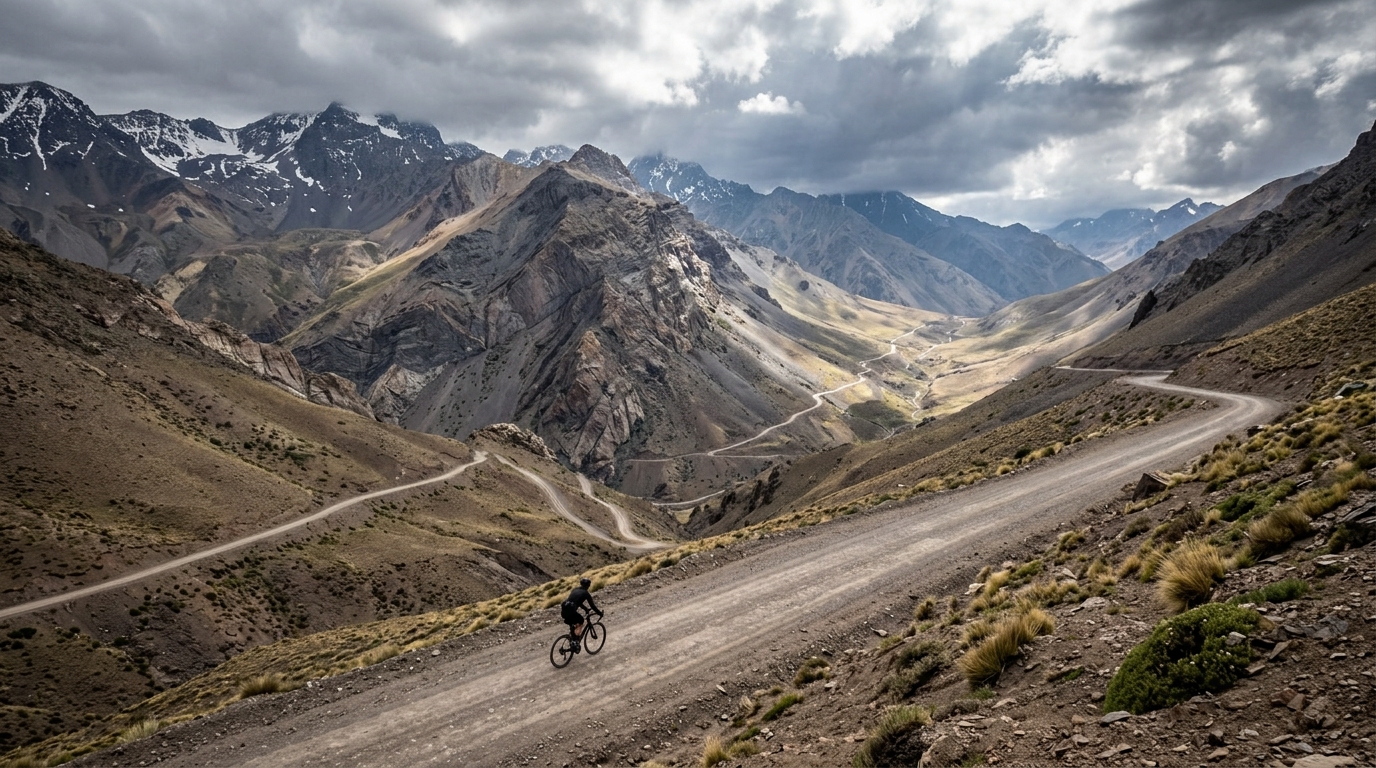 Paso de Vacas HeladasHCAR · 31.6 km · 9.0% · 2828 m2583pts
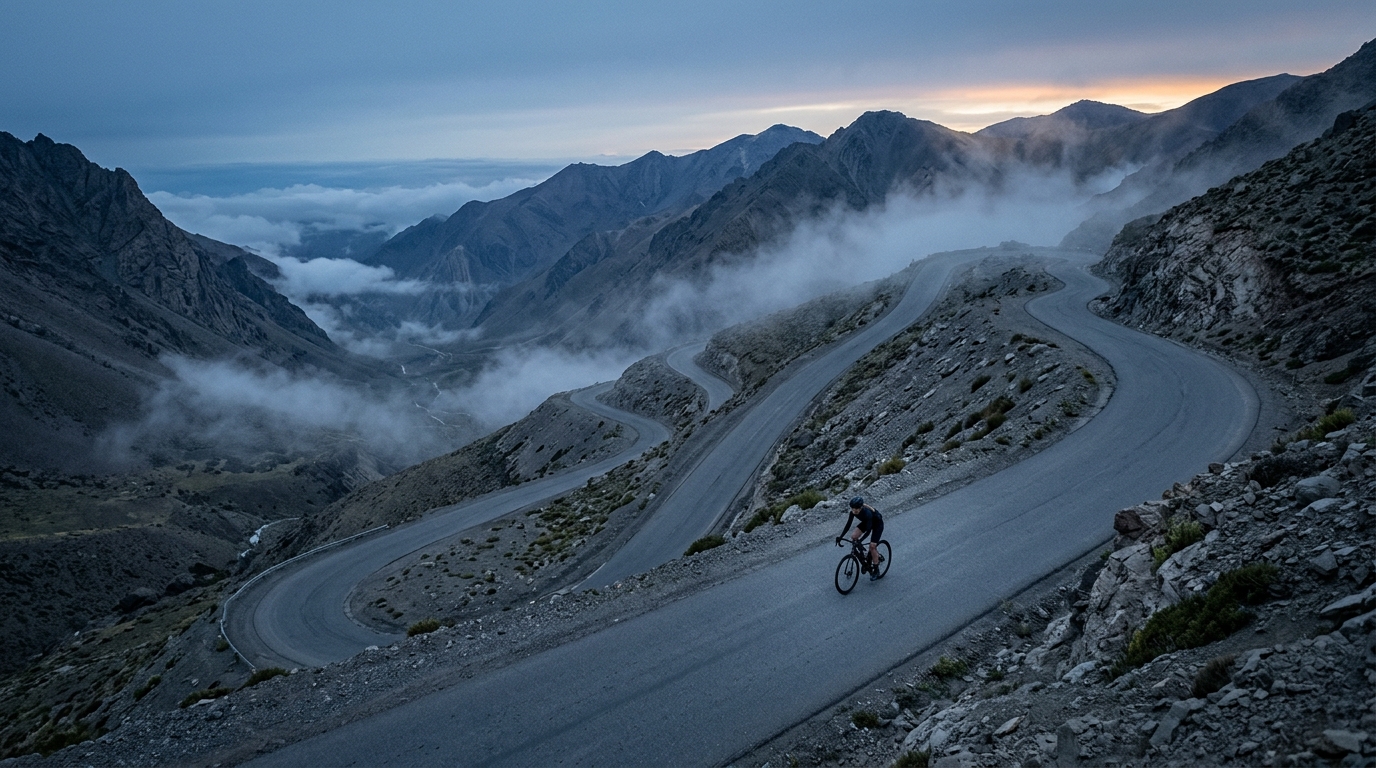 Alto del ChorroHCAR · 27.7 km · 9.6% · 2727 m2552pts
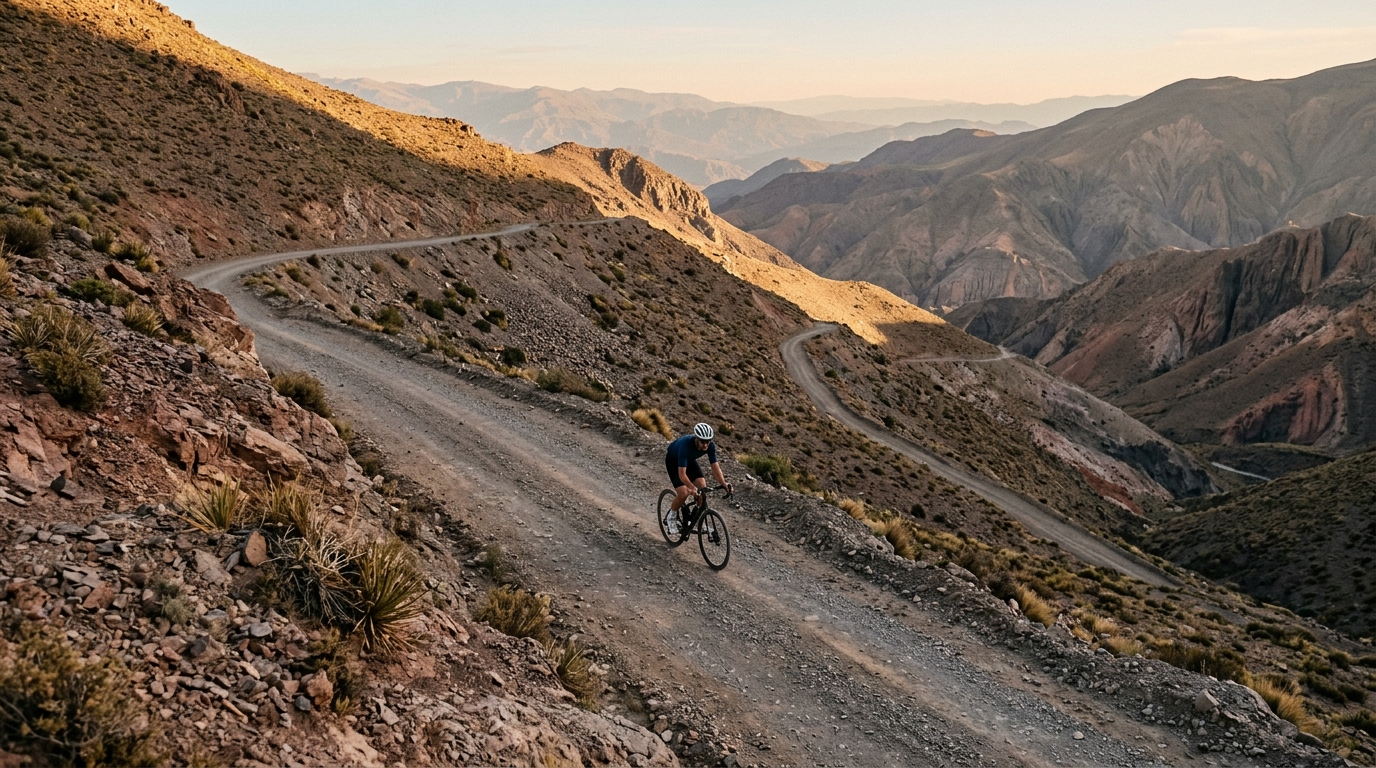 Alto de ApachetaHCAR · 20.8 km · 10.9% · 2248 m2472pts
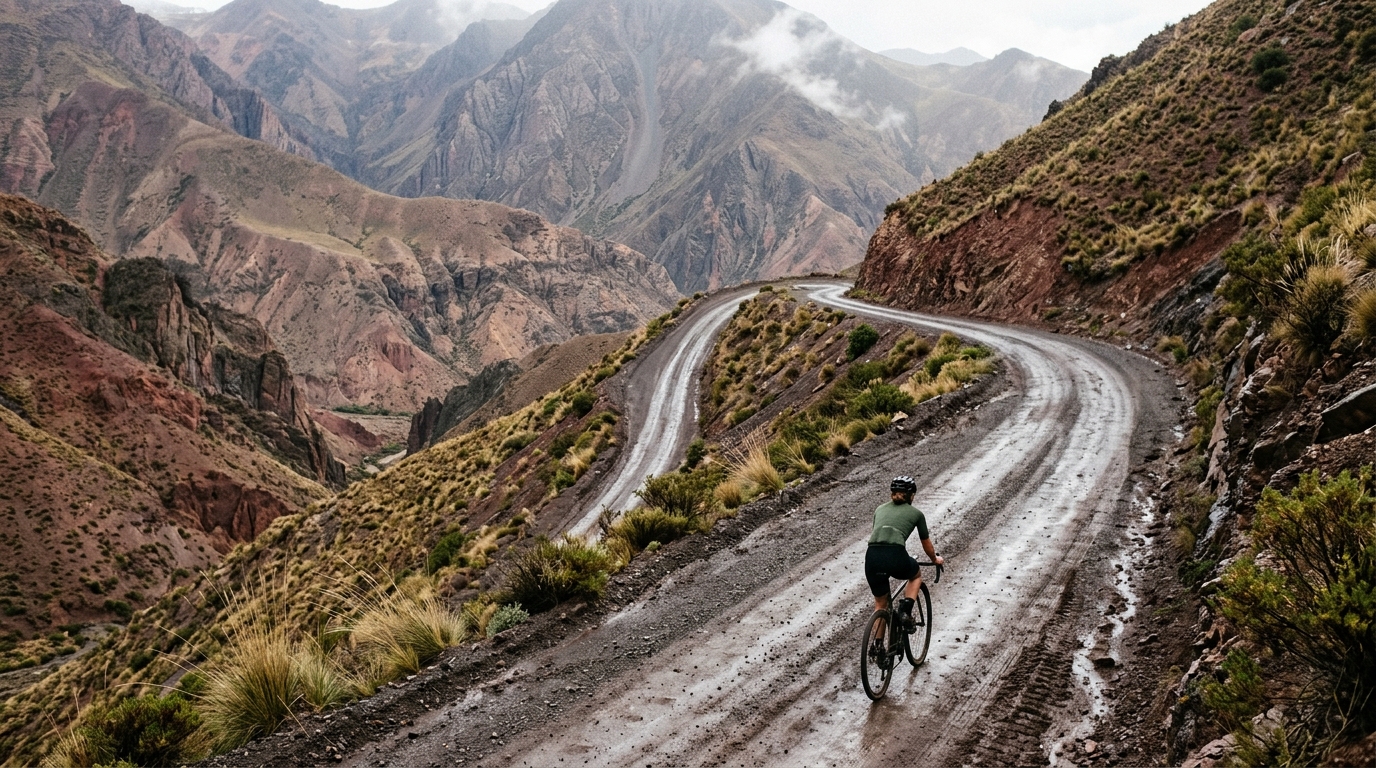 Paso de la Laguna de la Overa PrimeroHCAR · 19.2 km · 11.1% · 2084 m2367pts
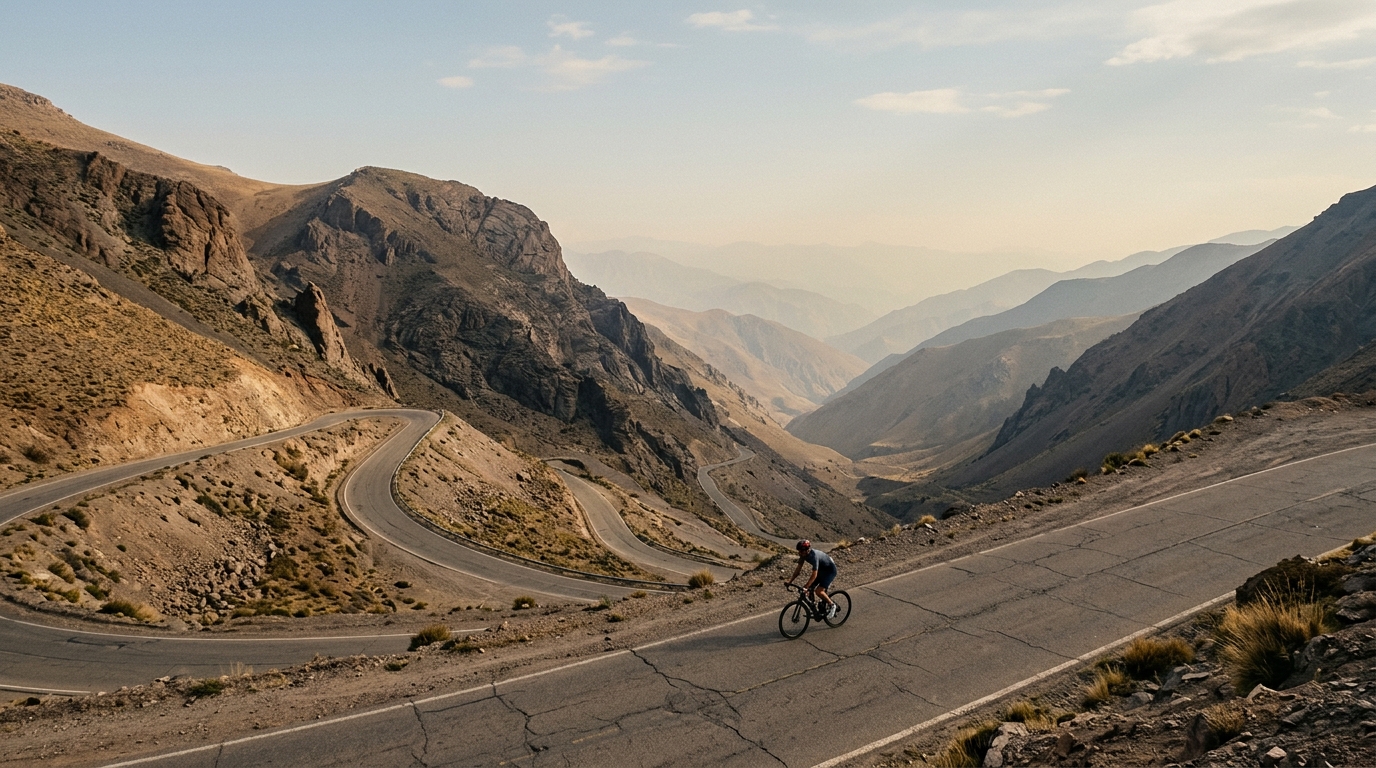 Paso de Peña NegraHCAR · 16.5 km · 11.7% · 1909 m2259pts
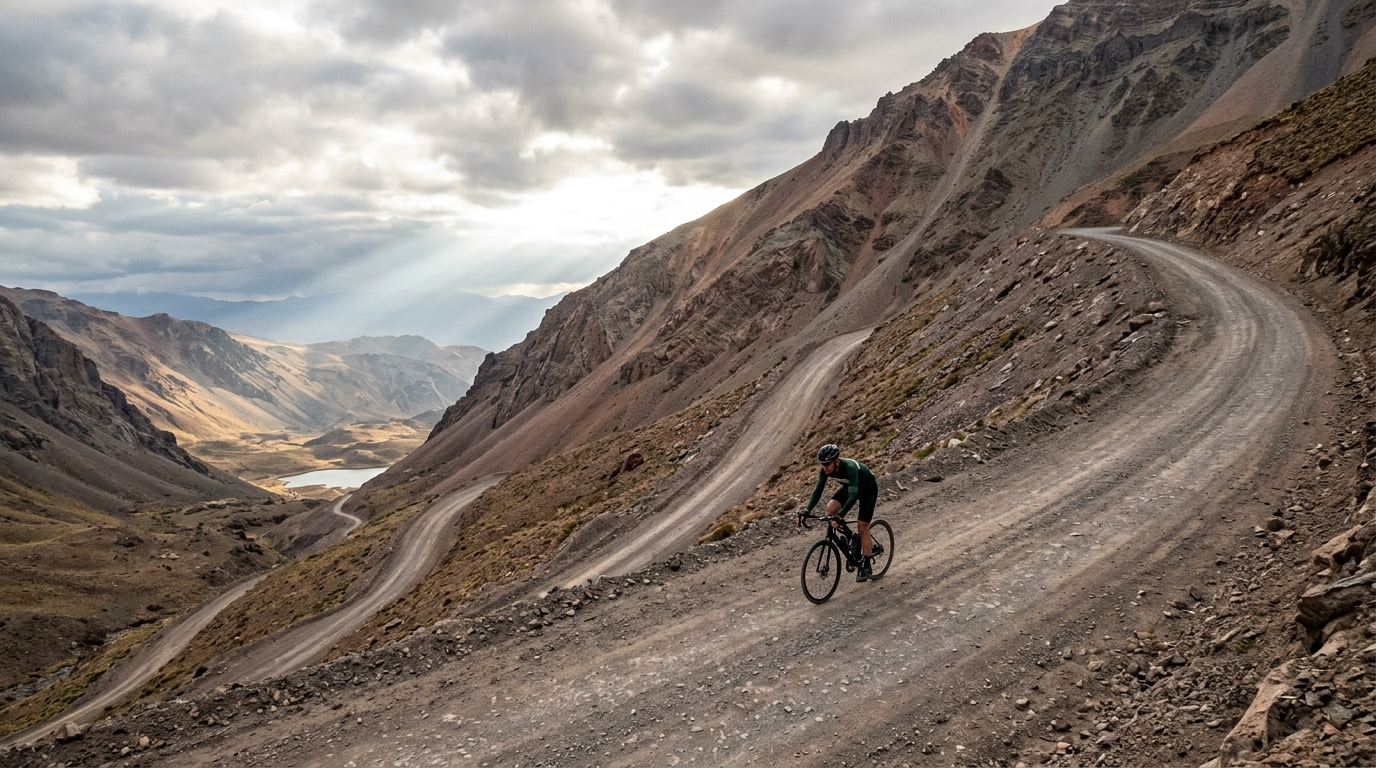 Paso de la Laguna IntermedioHCAR · 18.0 km · 11.2% · 1946 m2242pts
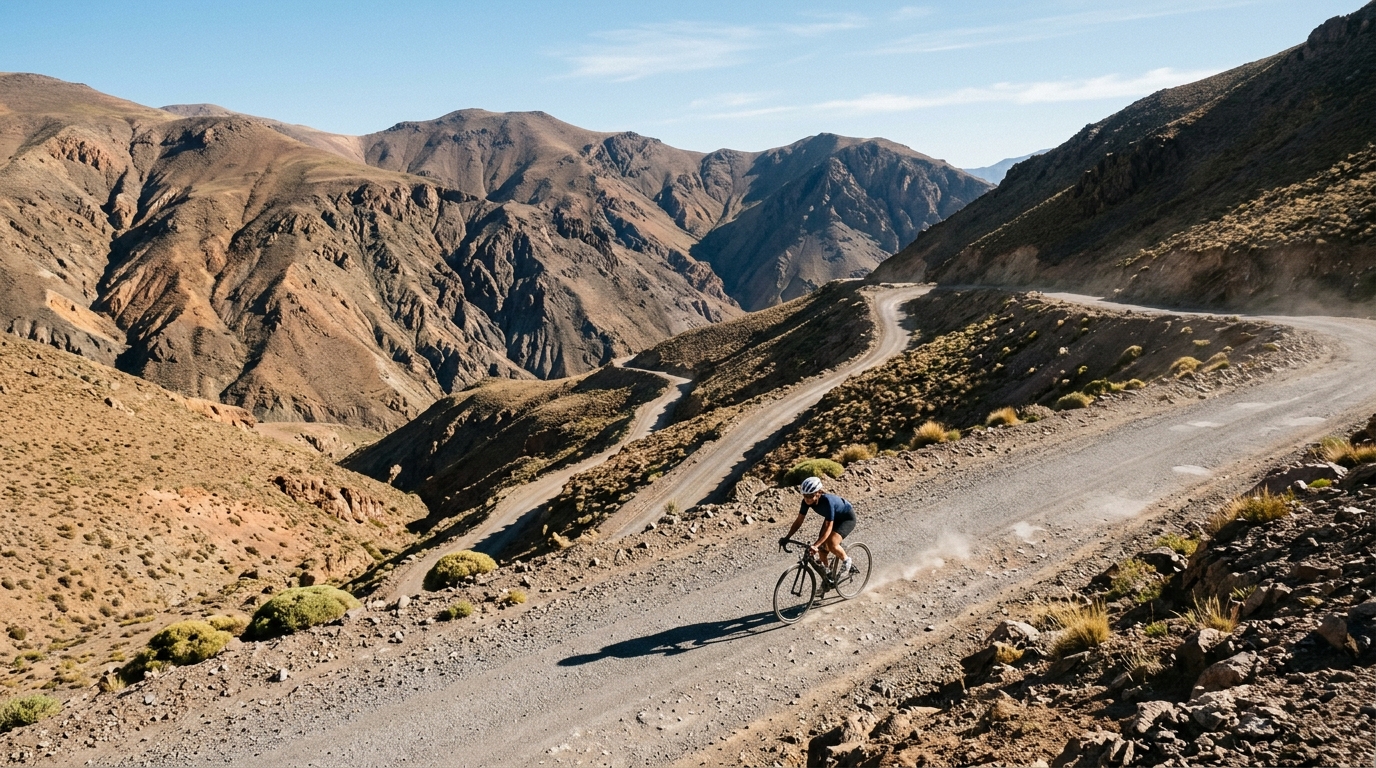 Paso de las CuevasHCAR · 18.8 km · 10.8% · 1972 m2172pts
O guia completo de subidas em Argentina
The Riding
Argentina offers a small but formidable catalogue of cycling climbs. Seven ascents are catalogued here, and while none of them is rated hors catégorie, they demand respect for reasons that have little to do with formal difficulty ratings. The defining feature of climbing in Argentina is altitude. These are Andean roads, and the highest catalogued summit reaches 4,951 metres, high enough that thin air, not gradient alone, becomes the rider's chief adversary.
The character of the riding is one of scale and remoteness. Roads here tend to unfold over long distances, gaining height gradually across broad, arid landscapes rather than attacking the slope with sharp, sustained ramps. Because so many of the climbs are high mountain passes, riders spend hours at elevation where every pedal stroke costs more than it would nearer sea level. This is endurance climbing in the truest sense: patient, exposed and rewarding for those who prepare for the conditions.
Standout Climbs
The centrepiece of Argentina's catalogue is Abra del Acay, one of the highest rideable passes anywhere and a genuine test of altitude tolerance. Reaching this kind of elevation on a bicycle is an achievement measured as much in acclimatisation as in fitness.
Paso Socompa is another marquee high-altitude crossing, a remote Andean pass that rewards self-sufficient riders willing to travel far from support. Paso del Planchón and Pino Hachado Pass offer further mountain crossings, each with the long, steady gradients typical of Argentine passes.
Alto de las Juntas brings a distinct flavour to the list, while Lilpela Pass and Paso de Indios round out the seven catalogued climbs. Together these ascents showcase the range of Argentina's high roads, from its loftiest summits to its more approachable crossings.
When to Ride
Timing matters enormously for these climbs. Because the highest catalogued summit sits at nearly 4,951 metres and several of the standout efforts are high passes, weather and snow are the primary constraints. The warmer months generally offer the most reliable conditions, when the high passes are most likely to be clear and temperatures at altitude are more forgiving.
At these elevations, conditions can shift quickly regardless of the calendar. Riders targeting passes such as Abra del Acay or Paso Socompa should plan around stable weather windows and be ready to adjust. Attempting the highest crossings outside the favourable season risks snow-blocked roads and dangerous cold.
Acclimatisation should also shape your schedule. Arriving with time to adjust to altitude before attempting the loftiest climbs makes an enormous difference to both safety and enjoyment.
Practical Notes
The single most important consideration for cycling climbs in Argentina is altitude. With the highest summit at 4,951 metres, riders must take acclimatisation seriously. Ascending gradually over several days, staying hydrated and recognising the early signs of altitude sickness are essential precautions, not optional extras.
Remoteness is the second defining factor. Passes like Paso Socompa and Abra del Acay carry riders far from towns and support, so self-sufficiency is vital. Carry ample water, food, spare parts and warm layers, and never underestimate how quickly high-mountain weather can turn.
Gearing should be chosen for long, sustained efforts at elevation rather than for short, punchy walls. The combination of thin air and extended climbs means that low, manageable gears help preserve energy over the many hours these ascents can take. Finally, tell someone your route and expected timing before tackling the more isolated passes.
Summary
Argentina's cycling is built around seven catalogued climbs that trade formal difficulty ratings for the raw challenge of altitude and remoteness. With no hors catégorie ascents but a highest summit of 4,951 metres, the difficulty here lives in the thin air and the long, exposed roads. Marquee efforts such as Abra del Acay and Paso Socompa anchor the list, supported by Paso del Planchón, Pino Hachado Pass, Alto de las Juntas, Lilpela Pass and Paso de Indios. Ride in the favourable season, acclimatise properly and travel prepared, and these high Andean roads deliver climbing experiences that reward patience and respect in equal measure.
Procurando pedais completos em Argentina?
Rotas em Argentina