U.S. Bicycle Route 677
A 75.7 km asphalt point-to-point route in the US with 229 m of elevation gain and no listed notable climbs.
- Afstand
- 75.7km
- Hoogtemeters
- 229m
- Ondergrond
- —
- Vorm
- Punt-naar-punt
De route
Hoogteprofiel
U.S. Bicycle Route 677 cycling route overview
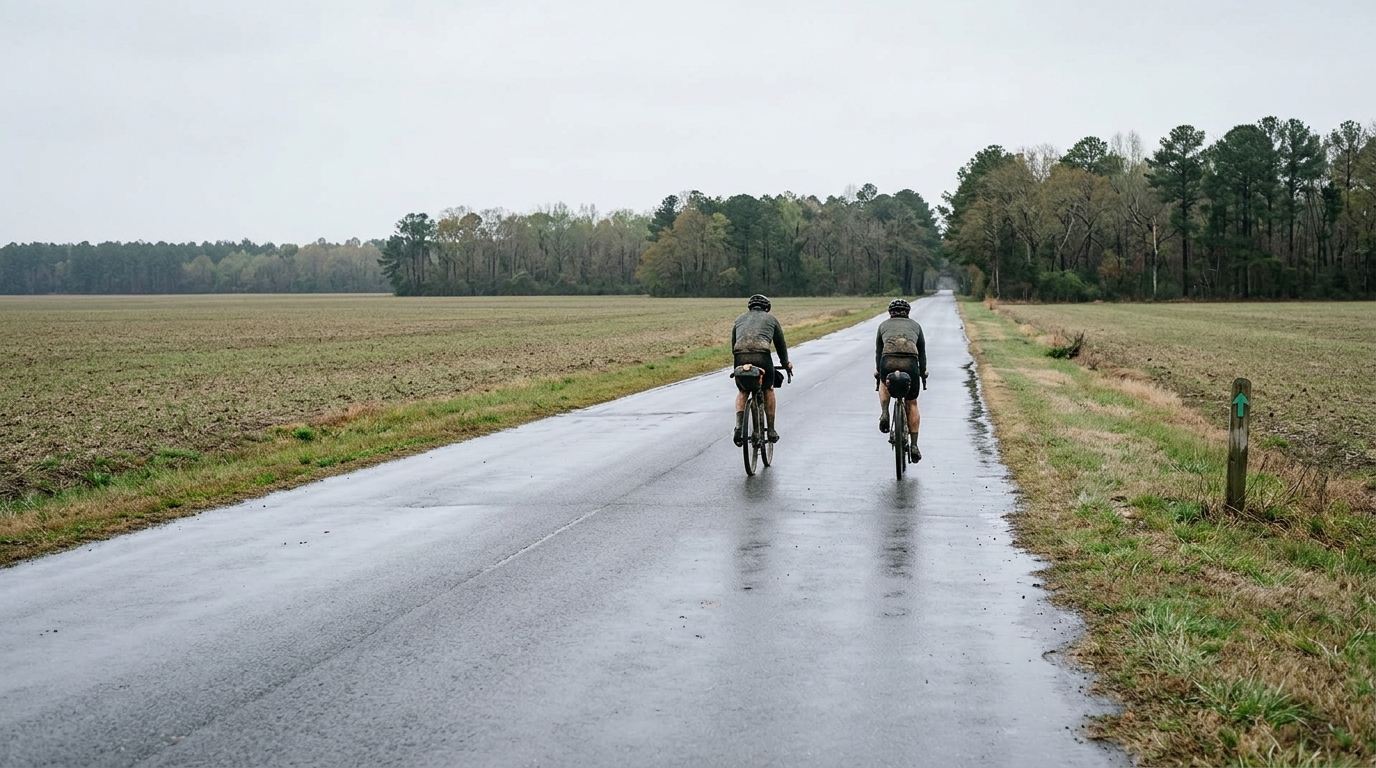
U.S. Bicycle Route 677 is a 75.7 km asphalt route in the US with 229 m of elevation gain. The key thing to understand is not just that the climbing number is low, but what that does to the ride. Spread across this distance, the elevation gain points toward a route where rhythm matters more than climbing strength. There are no listed notable climbs, so the route should ride as a predominantly steady endurance effort rather than a day shaped by major gradients.
This is also not a loop, which changes the practical setup. A point-to-point ride rewards planning before the first pedal stroke. Transport, pickup, or a return option need to be sorted in advance, because the route data does not describe a circular finish back at the start.
Terrain and ride character
The surface is asphalt, so the route is best approached as a road-oriented ride rather than a gravel or mixed-surface outing. With only 229 m of total elevation gain over 75.7 km, the limiting factor is unlikely to be repeated climbing load. Instead, expect the ride to favor aerobic durability, position discipline, and steady fueling.
That matters for pacing. On a route like this, it is easy to ride slightly too hard because the terrain may not force obvious recovery moments. A smoother approach is to keep the early effort controlled and avoid turning every gentle rise or faster section into a surge. If using power, this is the kind of profile where staying close to endurance intensity can produce a much better ride than chasing speed fluctuations. For reference, riders can anchor pacing around concepts like /glossary/ftp and aerobic endurance rather than treating the day as a climbing test.
Practical notes
Best suited for
- Road bikes and endurance setups, based on the asphalt surface
- Riders looking for a steady 75.7 km point-to-point effort
- Training days where consistent pressure matters more than climbing specificity
Plan before riding
Because the route is not a loop, the biggest logistical variable is the finish. Build the day around the one-way nature of the course rather than assuming an easy return. The available route data does not list notable climbs, and the total elevation gain is modest, so gearing does not need to be chosen around sustained climbing. The smarter priority is comfort over 75.7 km: reliable tires, a position you can hold, and enough food and fluid for a steady endurance ride.
Bottom line
U.S. Bicycle Route 677 looks like a controlled, asphalt, point-to-point endurance route. Its 229 m of elevation gain keeps the terrain from becoming the story, which makes pacing, logistics, and consistency the decisive parts of the ride.
Vergelijkbare routes
3-Länder-Radweg
A 302.2 km asphalt route in Germany with 1512 m of climbing and point-to-point logistics shaped by the Reußenkreuz climb.
7 Peaks Alpine Challenge
A 110.9 km point-to-point assault through the Victorian Alps, stacking 3404 metres of climbing across relentless, wind-swept high-country ascents.
Aberdare Range
A 46 km asphalt point-to-point through Kenya's Central Highlands that trades big climbs for a relentless 1,700 m of rolling grind.
Abra Málaga
A 45-kilometer point-to-point ribbon of asphalt through Peru's Sacred Valley, climbing 1,699 relentless meters into the high Andes.
Afriski Mahlasela Pass
A 112.8 km asphalt ascent through the Maloti Mountains, climbing 3,384 m to the roof of southern Africa via the storied Mahlasela Pass.
Ahr Cycleway
An 82.9 km asphalt point-to-point route with 541 m of gain, the Ahr Cycleway is a steady endurance ride rather than a climb-focused day.