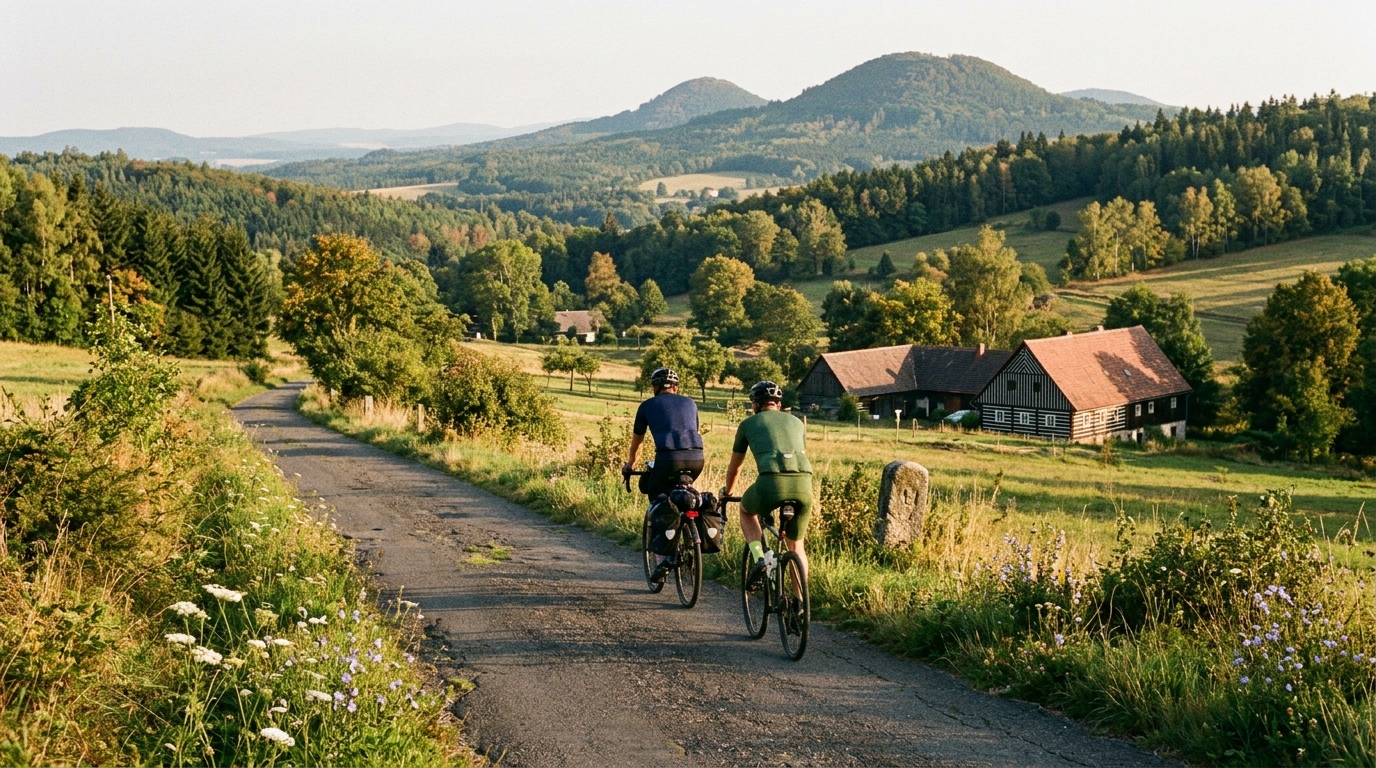
Oder-Neiße-Radweg – Czech part
A practical guide to the Oder-Neiße-Radweg - Czech part cycling route: 54.1 km of asphalt, 477 m of gain, and a point-to-point profile shaped by Horní Sedlo.
- Afstand
- 54.1km
- Hoogtemeters
- 477m
- Ondergrond
- —
- Vorm
- Punt-naar-punt
De route
Hoogteprofiel
Route character
The Oder-Neiße-Radweg - Czech part cycling route is a compact asphalt ride in CZ, running point-to-point for 54.1 km with 477 m of elevation gain. That profile is the key to understanding the day. This is not a route to treat as a simple cruise just because the surface is asphalt and the distance is manageable. The elevation gain is meaningful enough to shape pacing, especially with Horní Sedlo listed as the notable climb.
The ride should feel controlled rather than severe: long enough to reward steady endurance, but not so long that the route becomes a full-day survival exercise for a prepared rider. The important tactical point is restraint. If the early kilometres invite speed, the smarter move is to keep the effort smooth and avoid burning through matches before the climbing defines the ride.
Terrain and pacing
With 477 m of gain across 54.1 km, the terrain asks for rhythm. The asphalt surface keeps the route efficient, so speed will come easily when the road is cooperative. The trap is letting that efficiency push the effort too high before the harder parts arrive.
Horní Sedlo is the climb to keep in mind. The context does not give its length or gradient, so it is better to think of it as a pacing landmark rather than a specific numbers-based test. Arrive there with enough control to ride it seated, steady, and below the kind of effort that forces a long recovery afterward. Riders using power should anchor the day around sustainable endurance and tempo work rather than chasing every rise. If you need a pacing reference, use your known /glossary/ftp rather than feel alone.
Practical notes
Bike choice
The listed surface is asphalt, so a road bike or endurance road setup is the natural fit. There is no need to bias the setup toward rough-surface capability based on the provided route data.
Logistics
This is not a loop, which matters more than the distance suggests. Plan how you will handle the finish before starting: return transport, a pickup, or a connecting ride. Point-to-point routes often look simple on paper, but the post-ride logistics can dictate how relaxed the day feels.
Effort management
Treat the first part of the ride as an investment. Keep the pressure even, fuel before the route starts to bite, and avoid turning the approach to Horní Sedlo into a series of unnecessary accelerations. The fastest way through a route like this is usually not the most aggressive start, but the cleanest distribution of effort from start to finish.
Bottom line
The Oder-Neiße-Radweg - Czech part is best approached as a short-to-moderate endurance route with enough climbing to punish sloppy pacing. Its asphalt surface makes it accessible, but the point-to-point format and the presence of Horní Sedlo give it real structure. Ride it patiently and it should reward consistency over aggression.
Vergelijkbare routes
3-Länder-Radweg
A 302.2 km asphalt route in Germany with 1512 m of climbing and point-to-point logistics shaped by the Reußenkreuz climb.
7 Peaks Alpine Challenge
A 110.9 km point-to-point assault through the Victorian Alps, stacking 3404 metres of climbing across relentless, wind-swept high-country ascents.
Aberdare Range
A 46 km asphalt point-to-point through Kenya's Central Highlands that trades big climbs for a relentless 1,700 m of rolling grind.
Abra Málaga
A 45-kilometer point-to-point ribbon of asphalt through Peru's Sacred Valley, climbing 1,699 relentless meters into the high Andes.
Afriski Mahlasela Pass
A 112.8 km asphalt ascent through the Maloti Mountains, climbing 3,384 m to the roof of southern Africa via the storied Mahlasela Pass.
Ahr Cycleway
An 82.9 km asphalt point-to-point route with 541 m of gain, the Ahr Cycleway is a steady endurance ride rather than a climb-focused day.