Fürst-Franz-Weg
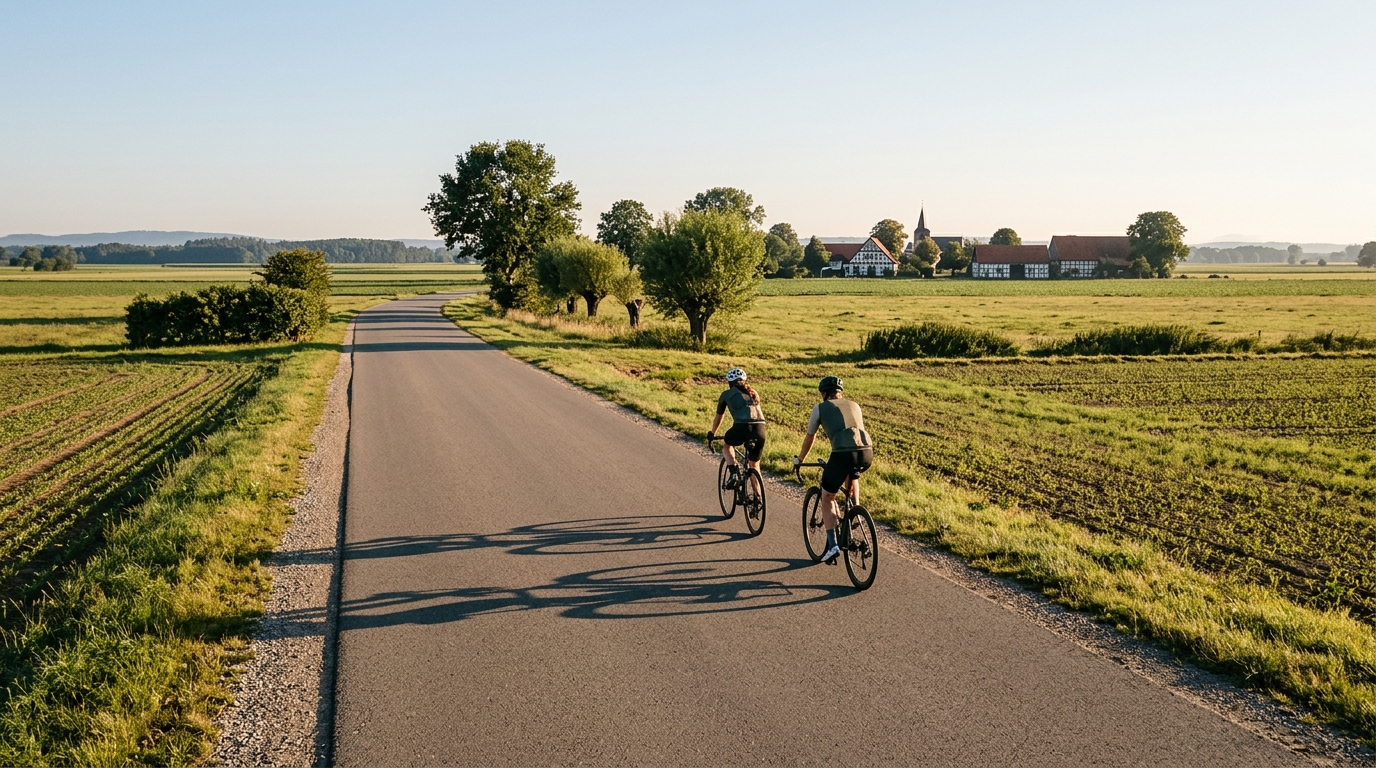
A 68.8 km asphalt loop in Germany with just 128 m of elevation gain, built for steady pacing rather than climbing.
- Afstand
- 68.8km
- Hoogtemeters
- 128m
- Ondergrond
- —
- Vorm
- Rondje
De route
Hoogteprofiel
Route character
The Fürst-Franz-Weg cycling route is a 68.8 km asphalt loop in Germany with 128 m of elevation gain. That profile tells you most of what matters: this is not a climbing route. It is a steady, low-relief ride where the challenge is less about surviving gradients and more about holding consistent pressure across the full distance.
Because the route returns to its start, pacing is straightforward. There is no point building the ride around a single decisive climb or a long descent. Instead, the smartest approach is to treat it as a controlled endurance effort, especially if you are using the loop for aerobic work, tempo riding, or a benchmark session.
Terrain and effort
With no notable climbs listed and only 128 m of total elevation gain, the terrain should reward smoothness. Small changes in gradient can still disrupt rhythm, but the overall demand is likely to come from accumulated time on the pedals rather than sharp elevation stress.
That changes how you should ride it. On a mountainous route, power spikes are often forced by the road. Here, they are more likely to come from choices: accelerating too hard out of turns, chasing pace too early, or riding above your target because the terrain feels easy. If you are training with power, this is a good route to keep the effort close to a planned zone around /glossary/ftp rather than turning every open stretch into an interval.
Practical notes
The asphalt surface makes the route suitable for a road bike or any efficient endurance setup. Since the profile does not include major climbing, gearing does not need to be selected around steep gradients. Comfort, rolling efficiency, and the ability to hold position matter more.
A 68.8 km loop is long enough that pacing and basic fueling still count. The low elevation gain can make the ride feel manageable early, but that is exactly where riders often overdo it. Start controlled, settle into rhythm, and let the route’s consistency work for you.
Best use
This route fits well as a steady endurance ride, a tempo-focused session, or a low-climbing day when you want distance without heavy elevation load. The Fürst-Franz-Weg cycling route is not defined by dramatic terrain. Its value is in the opposite: a clean asphalt loop where execution, consistency, and restraint determine the quality of the ride.
Vergelijkbare routes
3-Länder-Radweg
A 302.2 km asphalt route in Germany with 1512 m of climbing and point-to-point logistics shaped by the Reußenkreuz climb.
7 Peaks Alpine Challenge
A 110.9 km point-to-point assault through the Victorian Alps, stacking 3404 metres of climbing across relentless, wind-swept high-country ascents.
Aberdare Range
A 46 km asphalt point-to-point through Kenya's Central Highlands that trades big climbs for a relentless 1,700 m of rolling grind.
Abra Málaga
A 45-kilometer point-to-point ribbon of asphalt through Peru's Sacred Valley, climbing 1,699 relentless meters into the high Andes.
Afriski Mahlasela Pass
A 112.8 km asphalt ascent through the Maloti Mountains, climbing 3,384 m to the roof of southern Africa via the storied Mahlasela Pass.
Ahr Cycleway
An 82.9 km asphalt point-to-point route with 541 m of gain, the Ahr Cycleway is a steady endurance ride rather than a climb-focused day.