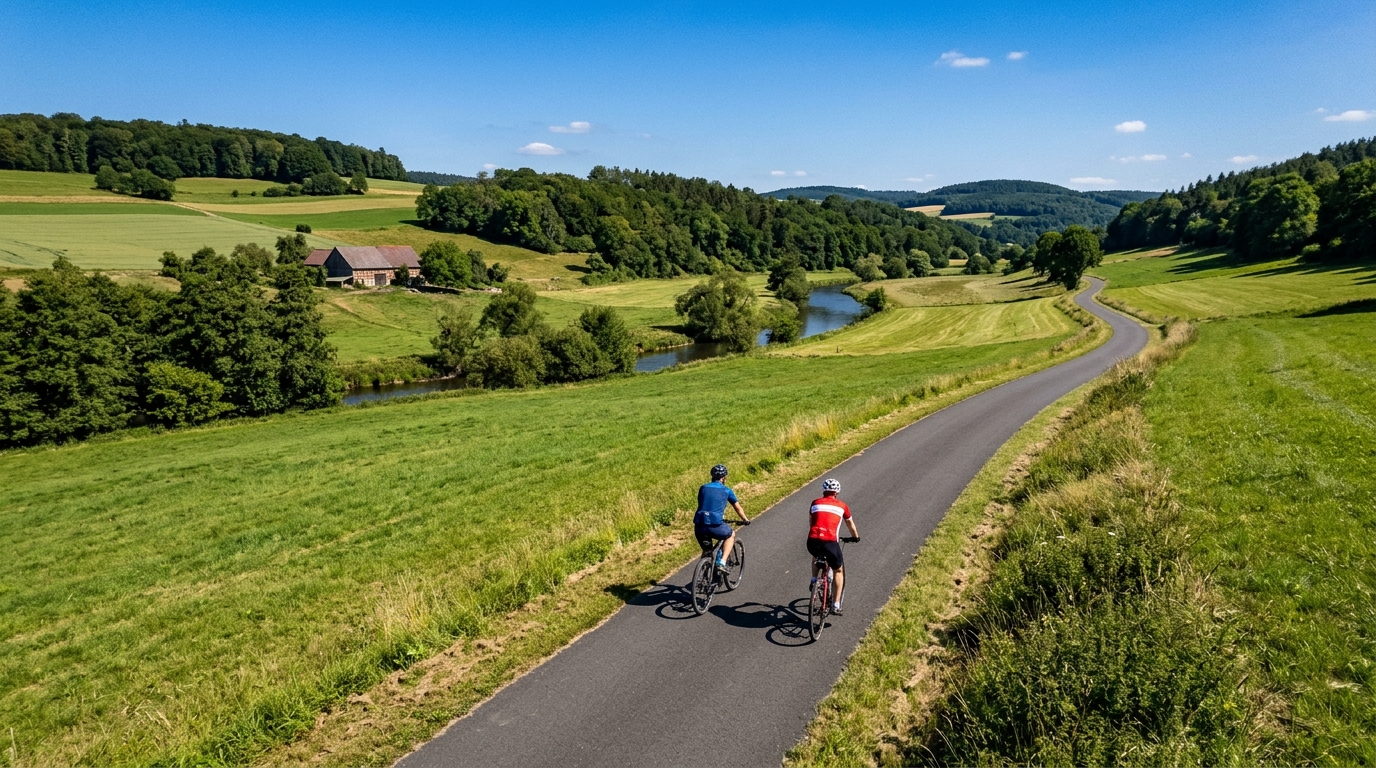
Diemelradweg
A 109.7 km asphalt point-to-point route in Germany with 863 m of elevation gain and no listed notable climbs.
- Afstand
- 109.7km
- Hoogtemeters
- 863m
- Ondergrond
- —
- Vorm
- Punt-naar-punt
De route
Hoogteprofiel
Route character
The Diemelradweg cycling route is a 109.7 km point-to-point ride in Germany, built around steady distance rather than a single defining climb. With 863 m of elevation gain across the full route and no notable climbs listed, the effort profile should feel rolling and cumulative rather than sharply selective.
That matters for pacing. The danger is not one climb that forces a reset, but the slow accumulation of small efforts over a route long enough to punish over-riding early. Treat it as an endurance ride with repeated changes in pressure on the pedals, not as a flat cruise. If riding by power, this is the kind of route where discipline around /glossary/ftp matters more than chasing every rise.
Terrain and surface
The listed surface is asphalt, which makes the route straightforward from an equipment perspective. A road bike, endurance road bike, or fast all-road setup is the logical choice. Tyre choice can lean efficient rather than defensive, assuming normal road conditions.
The elevation gain is moderate for the distance. That suggests a route where momentum management is important: stay smooth on the inclines, avoid spiking effort, and use the easier sections to keep speed without turning the ride into a sequence of accelerations. On asphalt, small pacing mistakes are amplified because the surface invites speed. The route is long enough that restraint early usually pays back later.
How to ride it
The best approach is to divide the ride into effort blocks rather than waiting for major landmarks or climbs. The absence of listed notable climbs means there may not be an obvious tactical reset point. Keep the opening controlled, settle into a sustainable rhythm, and let the route come to you.
Practical priorities:
- Plan transport carefully because the route is not a loop.
- Fuel from the start, not once fatigue is obvious.
- Keep climbing efforts capped so the 863 m of gain does not become a series of hidden matches burned.
- Use the asphalt surface to ride efficiently, but do not confuse smooth roads with an easy day.
Who it suits
This is a good route for riders who want a substantial endurance day without the demands of a climb-focused course. At 109.7 km, it still requires preparation, pacing, and nutrition. The profile makes it especially useful for steady aerobic work, group riding with controlled turns, or a longer solo ride where consistency is the main performance skill.
The Diemelradweg is not defined by drama in the available route data. Its value is in the combination of distance, asphalt efficiency, and enough elevation gain to keep the ride honest.
Vergelijkbare routes
3-Länder-Radweg
A 302.2 km asphalt route in Germany with 1512 m of climbing and point-to-point logistics shaped by the Reußenkreuz climb.
7 Peaks Alpine Challenge
A 110.9 km point-to-point assault through the Victorian Alps, stacking 3404 metres of climbing across relentless, wind-swept high-country ascents.
Aberdare Range
A 46 km asphalt point-to-point through Kenya's Central Highlands that trades big climbs for a relentless 1,700 m of rolling grind.
Abra Málaga
A 45-kilometer point-to-point ribbon of asphalt through Peru's Sacred Valley, climbing 1,699 relentless meters into the high Andes.
Afriski Mahlasela Pass
A 112.8 km asphalt ascent through the Maloti Mountains, climbing 3,384 m to the roof of southern Africa via the storied Mahlasela Pass.
Ahr Cycleway
An 82.9 km asphalt point-to-point route with 541 m of gain, the Ahr Cycleway is a steady endurance ride rather than a climb-focused day.