Cycling route Berlin–Leipzig
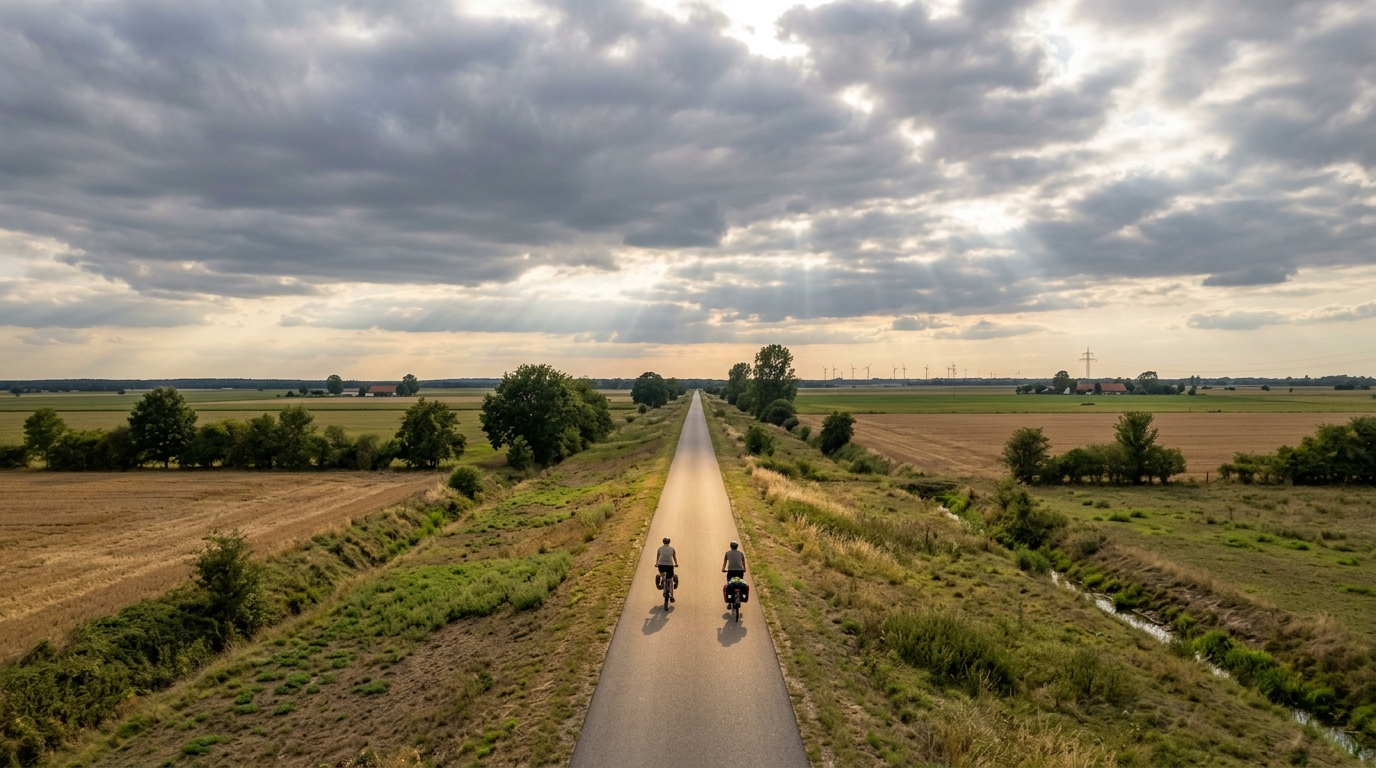
A 45.8 km asphalt point-to-point Berlin-Leipzig cycling route with just 101 m of elevation gain and no notable climbs.
- Afstand
- 45.8km
- Hoogtemeters
- 101m
- Ondergrond
- —
- Vorm
- Punt-naar-punt
De route
Hoogteprofiel
Route character
The Cycling route Berlin-Leipzig is a compact, asphalt point-to-point ride in Germany, measuring 45.8 km with 101 m of elevation gain. On paper, that tells you almost everything important about how it will ride: this is not a climbing route, and it is not a terrain-management puzzle. It is a steady endurance effort where momentum, pacing discipline, and basic route logistics matter more than gearing heroics.
With no notable climbs listed and only 101 m of gain across the full distance, the profile should favour consistent pressure on the pedals rather than repeated accelerations over steep terrain. That changes the physiological demand. Instead of needing sharp surges above /glossary/ftp, most riders will get more from riding close to an even aerobic output and avoiding the classic mistake of turning a flat-to-rolling point-to-point route into a sequence of unnecessary efforts.
Terrain and pacing
The asphalt surface makes this a road-bike-friendly route, assuming normal conditions. The main advantage of a fully asphalted course is predictability: tyre choice can lean toward efficiency, position can stay settled, and pacing can be more controlled than on mixed-surface routes.
The low elevation gain also means speed will be shaped less by climbs and more by how smoothly you ride. On a route like this, the biggest time losses usually come from inconsistent effort, poor fuelling habits, or letting concentration fade late in the ride. Treat the first half as a controlled build rather than a test. If you are using power, keep the effort anchored below threshold unless the goal is a specific workout. If you are riding by feel, the right sensation is steady and sustainable, not punchy.
Practical notes
Because this is not a loop, the logistics deserve attention before the ride starts. A point-to-point route means you need a plan for the finish, whether that is transport, a pickup, or continuing on by another route. That is the practical detail most likely to affect the day.
For equipment, the stats point toward a simple road setup: efficient tyres, normal road gearing, and enough food and fluid for a 45.8 km ride. There is no listed climb that demands special gearing choices, but the lack of major elevation does not make pacing irrelevant. Flat routes can still accumulate fatigue if the effort drifts too high early.
Who it suits
This Berlin-Leipzig cycling route suits riders looking for a straightforward endurance ride on asphalt rather than a climbing challenge. It can work as a steady base-mile session, a controlled tempo outing, or a point-to-point day where the goal is covering distance cleanly without technical terrain or major elevation changes.
Vergelijkbare routes
3-Länder-Radweg
A 302.2 km asphalt route in Germany with 1512 m of climbing and point-to-point logistics shaped by the Reußenkreuz climb.
7 Peaks Alpine Challenge
A 110.9 km point-to-point assault through the Victorian Alps, stacking 3404 metres of climbing across relentless, wind-swept high-country ascents.
Aberdare Range
A 46 km asphalt point-to-point through Kenya's Central Highlands that trades big climbs for a relentless 1,700 m of rolling grind.
Abra Málaga
A 45-kilometer point-to-point ribbon of asphalt through Peru's Sacred Valley, climbing 1,699 relentless meters into the high Andes.
Afriski Mahlasela Pass
A 112.8 km asphalt ascent through the Maloti Mountains, climbing 3,384 m to the roof of southern Africa via the storied Mahlasela Pass.
Ahr Cycleway
An 82.9 km asphalt point-to-point route with 541 m of gain, the Ahr Cycleway is a steady endurance ride rather than a climb-focused day.