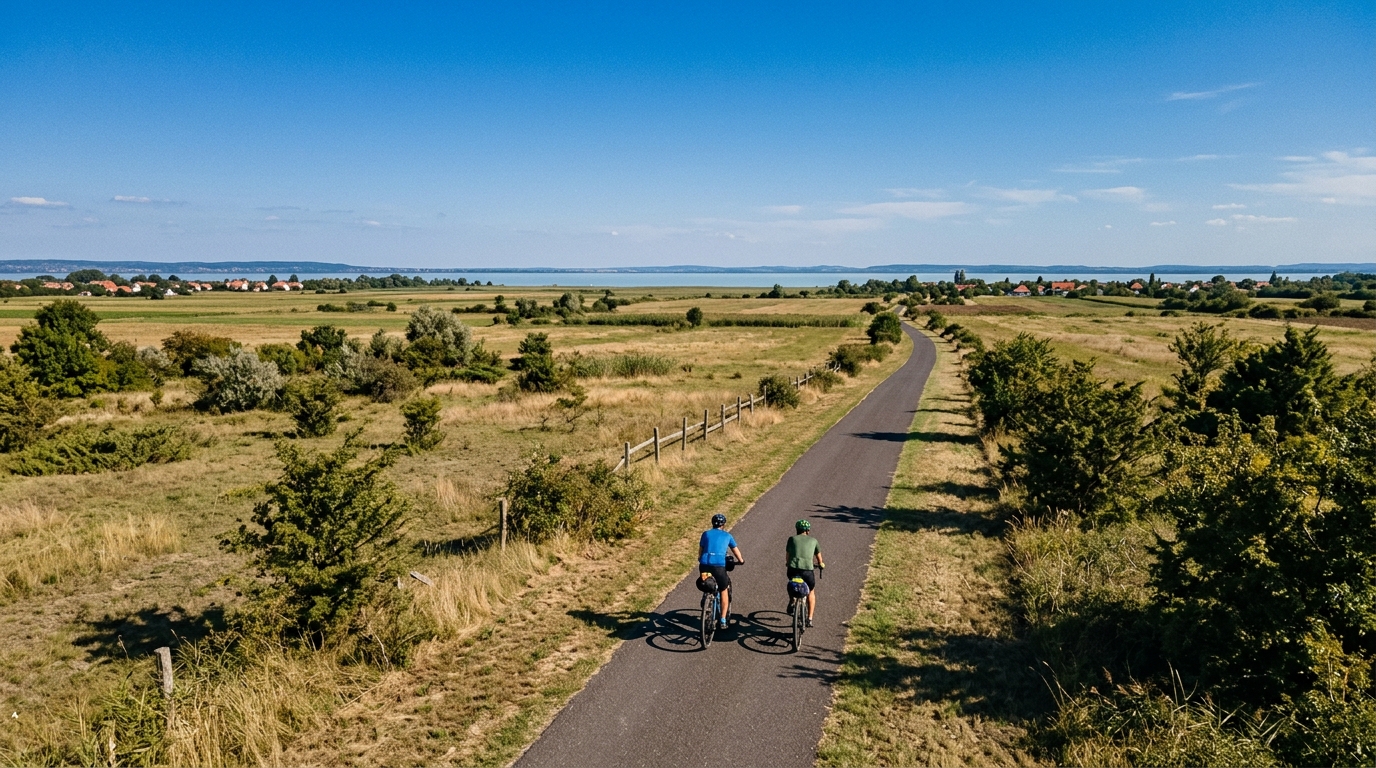
Balatoni kerékpárút
A long, asphalt route in HU where the main limiter is distance, not climbing. Expect steady endurance pacing over 284.7 km with only 391 m gained.
- Afstand
- 284.7km
- Hoogtemeters
- 391m
- Ondergrond
- —
- Vorm
- Punt-naar-punt
De route
Hoogteprofiel
Balatoni kerékpárút cycling route
The Balatoni kerékpárút cycling route is a long asphalt ride in HU with a very clear character: distance is the main load, not climbing. At 284.7 km with 391 m of elevation gain, this is not a route that will be decided by repeated hard gradients or a single major ascent. It is an endurance problem first, and that changes how it should be paced.
The low climbing total means the terrain should allow a steady rhythm for long stretches. That sounds simple, but it can be deceptive. On a route this long, small inefficiencies compound. Riding above sustainable endurance intensity early, skipping food because the road feels manageable, or treating the lack of listed climbs as permission to surge can all turn the final portion into damage control.
Terrain and ride character
The surface is asphalt, which makes this a road-bike-friendly route on paper. The absence of notable climbs in the route data points toward a ride where momentum, position, and pacing matter more than climbing gears or punchy power. This is the kind of profile where the strongest rider is often the one who keeps the effort boring for the longest.
With only 391 m of gain across 284.7 km, the elevation load is spread thinly. Instead of preparing for sustained climbing, prepare for sustained pedaling. That means comfortable contact points, stable fueling, and a power or heart-rate ceiling you can actually respect. If you ride by power, this is a route where keeping the early effort below your /glossary/ftp-based ambitions matters more than chasing speed.
Practical notes
The route is not flagged as a loop, so logistics deserve attention before the ride. Do not assume the finish returns you to the start unless you have verified your own planned version. For a route of this length, transport, timing, and contingency planning are not minor details - they are part of the ride.
Key setup priorities:
- Use a bike and tyres suited to long asphalt mileage.
- Pace it as an endurance ride, not a sequence of efforts.
- Fuel early, because the distance is large even if the climbing is limited.
- Confirm start, finish, and return logistics because the route is listed as non-loop.
- Avoid over-gearing the ride mentally. The profile may look controlled, but 284.7 km still demands discipline.
How to approach it
The best strategy is conservative consistency. Settle into a sustainable rhythm, protect your position on the bike, and let the flat-to-rolling nature of the route work for you rather than tempting you into unnecessary accelerations. The lack of notable climbs reduces the chance of a single decisive terrain feature, but it increases the importance of every small decision made over the full distance.
For riders building toward bigger endurance goals, the Balatoni kerékpárút is less about testing peak power and more about proving durability. If the pacing is controlled, the asphalt surface and limited elevation gain make it a clean long-distance benchmark. If the pacing is loose, the distance will expose it.
Vergelijkbare routes
3-Länder-Radweg
A 302.2 km asphalt route in Germany with 1512 m of climbing and point-to-point logistics shaped by the Reußenkreuz climb.
7 Peaks Alpine Challenge
A 110.9 km point-to-point assault through the Victorian Alps, stacking 3404 metres of climbing across relentless, wind-swept high-country ascents.
Aberdare Range
A 46 km asphalt point-to-point through Kenya's Central Highlands that trades big climbs for a relentless 1,700 m of rolling grind.
Abra Málaga
A 45-kilometer point-to-point ribbon of asphalt through Peru's Sacred Valley, climbing 1,699 relentless meters into the high Andes.
Afriski Mahlasela Pass
A 112.8 km asphalt ascent through the Maloti Mountains, climbing 3,384 m to the roof of southern Africa via the storied Mahlasela Pass.
Ahr Cycleway
An 82.9 km asphalt point-to-point route with 541 m of gain, the Ahr Cycleway is a steady endurance ride rather than a climb-focused day.