Afbeelding gegenereerd door ons model.
safety
Cycling Crash Analysis: Learn From Ride Data Safely
A practical guide to using ride data after a crash without overreading GPS, sensors, or Garmin incident alerts.
What Ride Data Can and Cannot Tell You After a Crash
Cycling crash analysis is useful because memory is unreliable under stress. After an impact, the brain tends to compress the sequence: corner, slide, ground, bike check, ride home or call for help. A ride file gives you a cleaner timeline. It can show where speed changed, where GPS drifted, when cadence stopped, whether power disappeared, and how long you were stationary.
But a ride file is still sensor evidence, not a complete explanation. GPS can lag in tight corners or under cover. Elevation can be noisy. Speed can be smoothed. Heart rate reacts late. Power and cadence can vanish because you stopped pedaling, unclipped, hit the ground, or because a sensor disconnected.
The useful goal is not to prove one perfect cause. It is to build a defensible reconstruction that helps you ride safer next time. That means treating the file as one layer of evidence, then checking it against terrain, surface, traffic, equipment condition, and your own decisions.
If there is any injury, medical care comes before analysis. If another road user is involved, or if the crash has insurance or legal implications, preserve the original data and avoid editing the activity before you have made a copy.
Preserve the File Before Syncs, Edits, or Privacy Trims
The first practical step is boring, but it matters: protect the original file.
Platforms often let you crop rides, hide start and finish areas, correct elevation, edit titles, delete pauses, or merge activities. Those edits can be useful for normal training review, but they can also obscure the exact timeline around the crash. Even a privacy trim can remove the approach to the incident if it happened near home or near the end of a ride.
Before changing anything, save the original activity file from the head unit or watch if possible. Keep a copy of the synced platform version as well, because different platforms can process GPS, elevation, and moving time differently. If you use a Garmin device, Garmin crash data should be treated the same way: preserve the raw activity and any incident-related information before cleaning up the ride for social sharing.
A sensible preservation workflow looks like this:
- Do not crop or trim the activity until you have a copy of the original file.
- Download the raw ride file from the device or the platform.
- Save screenshots of the map, elevation profile, speed trace, and sensor charts around the incident.
- Note the exact location in plain language while it is still fresh.
- Write a short memory log before looking too deeply at the data, so your recollection is not reshaped by the file.
That last point is underrated. The data can anchor your memory, but it can also overwrite it. If you remember braking for debris, write that down before the speed trace convinces you that something else happened.
Reconstruct the Incident: Speed, GPS, Gradient, and Time Gaps
Start with the timeline, not the conclusion. Open the ride file and find the point where the activity pattern changes sharply. In most crashes, there is some combination of an abrupt speed drop, a stop in cadence, an interruption in power, a change in GPS track, or a long stationary period.
Work backward from that point. What was happening on the approach? Were you descending, turning, accelerating, sitting in a group, or riding steadily? The approach matters because crashes are often caused by a decision made before the visible failure. Entering a corner too fast for the conditions, looking through the wrong part of the bend, braking late, or following a wheel into a hazard may all look like normal riding until the final moment.
Speed is helpful when it shows a pattern: rising into a technical section, staying high where braking would be expected, or dropping suddenly before the crash. It is less useful as a precise verdict. GPS-based speed can be imprecise when direction changes quickly. Wheel-speed data is usually more stable if calibrated and connected, but it still cannot tell you grip level or sightline.
GPS position gives location context, but it can shift away from the actual line you rode. Use it to identify the segment of road, not to claim centimeter-level precision. If the track cuts across a corner or jumps to the side of the road, that may be GPS error rather than proof of your path.
Gradient matters because it changes both speed and braking demand. A descent compresses decision time and increases the cost of a poor line. A rise after a descent can encourage riders to carry momentum. A false flat can hide how fast you are actually traveling. Without attaching a specific gradient value, you can still ask the important tactical question: did the terrain push you toward higher speed, lower traction margin, or more complex handling?
Time gaps help separate the crash from the aftermath. If there is a pause after the incident, compare it with your memory. Did you stop immediately, move the bike, check yourself, speak to someone, or restart the device? The gap will not answer everything, but it can keep the timeline honest.
Example reconstruction, hypothetical
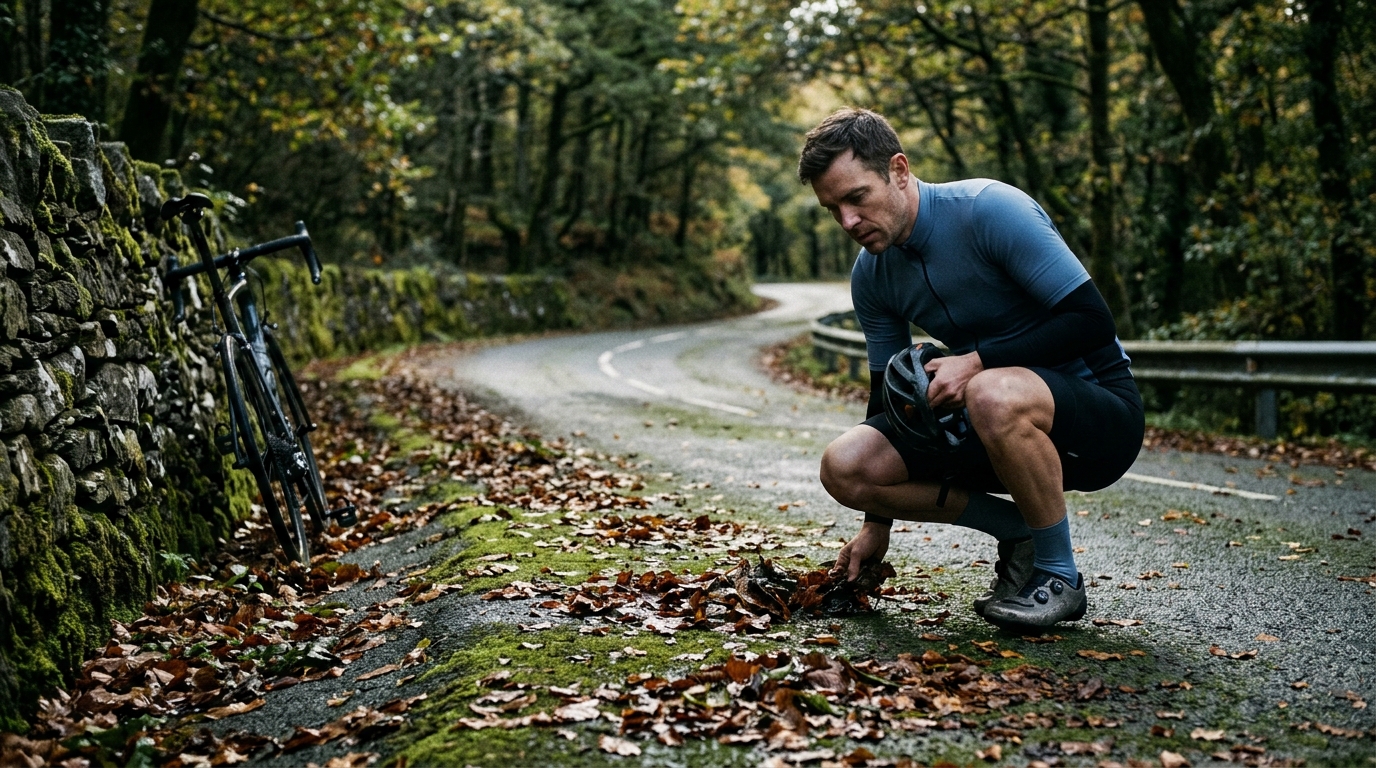
Say the crash happened in a wet, shaded corner. The file shows speed staying steady into the bend, then cadence drops abruptly. The GPS track appears offset toward the outside of the road, but the map position is not precise enough to prove the exact line. After the ride, inspection finds a cut in the front tire.
That reconstruction does not prove one cause. It does, however, narrow the useful questions. The steady speed suggests there may not have been much extra margin before turn-in. The cadence drop fits braking, coasting, or impact, so it needs context. The GPS offset should be treated cautiously. The tire cut makes a surface or debris strike plausible and moves the review from pure handling error toward equipment and road-condition checks.
That is the level of confidence to aim for: not a courtroom answer, but a practical explanation strong enough to change what you do next time.
Look for Context: Corners, Descents, Traffic, Surface, and Weather
A ride file gets more valuable when it is placed back onto the road. Cycling safety data is not just sensor output. It is the relationship between your behavior and the environment.
Look at the crash location with a rider's eye. Was it a decreasing-radius corner, an off-camber bend, a shaded patch, a painted line, a drainage cover, loose gravel, wet leaves, road furniture, a driveway, or a traffic merge? The data may show that you slowed, but the road explains whether you slowed enough for the conditions.
Corners deserve special attention. If the crash happened in a turn, review the approach speed, braking pattern, and line choice. Braking hard while leaned over increases the chance of losing traction. Entering wide can force a correction mid-corner. Following another rider can hide surface hazards until the last moment. None of that requires a dramatic mistake. Often the crash comes from a small stack of ordinary risks.
Descents create a similar stacking effect. Higher speed, more wind noise, longer braking demands, and faster changes in sightline all reduce the room for correction. If the data shows smooth speed into a descent followed by a sudden stop near a bend or intersection, the question is not simply whether you were going too fast. The better question is whether your speed left enough margin for the road you could actually see.
Traffic and group dynamics matter too. A solo crash on an empty road is different from a touch of wheels, a close pass, or an evasive maneuver. If riding with others, ask whether the file shows surges, soft-pedaling, braking waves, or gaps opening before the incident. Power and cadence can help here, but context from riders around you may be more reliable than the file alone.
Weather belongs in the review even if it is not perfectly captured in the activity. Wet surfaces, gusts, low sun, heat fatigue, and cold hands can all affect handling and decisions. Treat the ride file as the skeleton. Conditions put muscle on it.
Check Sensor Clues Without Overreading Them
Post-crash ride review often goes wrong when riders treat every sensor change as a smoking gun. A cleaner approach is to ask what each signal can reasonably support.
Heart rate is a delayed response. It may rise before the crash if you were working hard, stressed, or chasing. It may rise after the crash from adrenaline. It rarely identifies the trigger.
Power is useful for understanding intent. Were you pedaling through a section where coasting and setting up the bike would have made more sense? Did you surge before a corner, bridge to a wheel, or attack into technical terrain? Power can reveal a decision to keep pressure on when the safer choice would have been to reset.
Cadence can show when you stopped pedaling, but not why. A sudden cadence drop might mean braking, cornering, avoiding debris, unclipping, losing the chain, or hitting the ground. Pair it with speed and map position before drawing conclusions.
Garmin crash data and device incident alerts can be useful flags, especially when they mark a sudden event or help locate the incident. But they are not cause analysis. A device can identify abnormal movement or a stop; it cannot know whether the root cause was line choice, surface contamination, a car, a mechanical issue, or bad luck.
If you already use power zones or FTP to review training load, keep those metrics in their lane. Riding hard before a crash can matter because fatigue and attention are linked. But being above a threshold does not automatically explain a handling error. The question is whether the effort changed your decision quality, vision, braking, or body position.
Separate Rider Error, Equipment Issues, and Bad Luck
A good cycling crash analysis should be honest without becoming self-punishing. Most crashes sit somewhere across rider input, equipment condition, environment, and chance. The job is to sort the likely contributors so the lesson is actionable.
Rider error does not always mean recklessness. It can mean choosing the wrong line, entering a blind section with too little margin, braking late, overlapping wheels, looking at the hazard instead of the exit, or carrying fatigue into a technical section. These are fixable skills and choices.
Equipment issues need a physical inspection, not just a data review. Check tires, pressure choice, tread condition, brake function, rotor or rim contamination, bar and lever position, cleats, pedals, drivetrain, and any loose mounts. The ride file may show a sudden loss of speed or cadence, but the bike may explain why control was lost.
Bad luck is real, but it should be the conclusion after other causes have been tested. A hidden patch of oil, an unexpected animal, debris washed into a bend, or a driver moving unpredictably may leave little time to react. Even then, the useful question remains: could route choice, lane position, speed margin, or timing have reduced exposure?
One of the best tests is repeatability. If the same risk appears on other rides - always descending aggressively when tired, always taking the same rough corner at speed, always riding busy roads at a poor time of day - then the crash is not isolated. It is a pattern finally made visible.
Turn the Findings Into Safer Training and Route Choices
The point of post-crash ride review is behavior change. Do not finish with a vague note to be more careful. Translate the finding into a specific adjustment.
If the issue was corner entry speed, add a rule: brake earlier, release before the apex when possible, and enter technical descents with enough margin to change line. If the issue was surface awareness, build a habit of scanning for shade, paint, gravel, and runoff before committing to speed. If the issue was group positioning, stop sitting half-overlapped in nervous sections and give yourself an exit.
If fatigue contributed, adjust the ride design. Technical descents late in a hard endurance ride require different attention than the same descents fresh. That does not mean avoiding them forever. It means deciding whether the route matches the purpose of the session. A workout built around steady power does not need to finish with the sketchiest road in the area. Choose terrain that supports the training goal instead of adding unnecessary handling risk.
Route choice is one of the easiest safety wins. Mark roads or corners that deserve caution. Build safer versions of common loops. Avoid known poor surfaces after rain or during low-light conditions. If a descent repeatedly produces close calls, it is not a badge of honor to keep riding it the same way. Either change the line, change the timing, or change the route.
You can also create a short post-crash checklist for future use:
- Preserve the original file before edits.
- Write down your memory before deep data review.
- Identify the timeline around the incident.
- Cross-check speed, GPS, gradient pattern, power, cadence, and heart rate.
- Inspect the bike and kit.
- Add road, weather, traffic, and group context.
- Decide on one or more concrete behavior changes.
That final step is where cycling safety data becomes useful. The file should leave you with a decision rule, not just a theory. If the reconstruction points to wet shaded corners, the rule might be to scrub speed before turn-in whenever visibility and surface quality are uncertain. If it points to fatigue and technical roads, the rule might be to separate hard training days from the routes that demand your best handling. Ambiguous data is still valuable when it turns into a specific choice you can make before the next similar risk arrives.