Rassegna
London near miss frames a day of safety and reform pressure
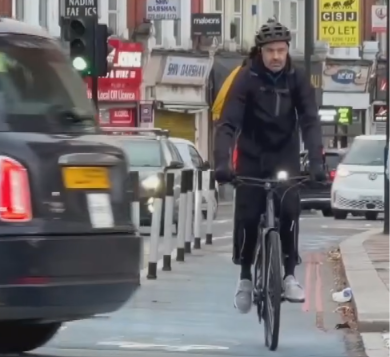
A TV-filmed near miss at a London cycling danger spot led the day, paired with the launch of a pro cycling reform group.
The most important thread from today is not a race result, but a pressure point every cyclist understands: risk is still being exposed in plain sight, and the systems around cycling are still being asked to respond.
road.cc led its live blog with a TV-filmed near miss at a London cycling danger spot, and that detail matters. A near miss is often treated as an almost-event, something defined by what did not happen. But for cyclists, the absence of impact does not mean the absence of consequence. It shows how close the margins can be at known danger spots, and why visibility, documentation, and public attention are part of the safety equation.
Safety is the story when the margin is this thin
The phrase 'London cycling danger spot' does a lot of work here. This was not framed as a random incident in an anonymous location. It was presented as happening at a place already understood as dangerous for cycling. That shifts the meaning of the near miss from isolated scare to evidence of a recurring problem.
For a data-driven cyclist, the takeaway is not simply that one rider had a close call. It is that risk concentrates. Certain junctions, layouts, and traffic interactions create predictable stress points, and when a near miss at one of them is captured on TV, it becomes harder to dismiss as anecdote. The filming does not create the danger, but it can make the pattern visible to people who do not experience it from the saddle.
Reform enters the same news cycle
The same live blog also covered the formal launch of a pro cycling reform group. The data does not give the group’s name, structure, or agenda, so the useful analysis has to stay at the level of what the launch represents: another signal that cycling is being debated not only through performances and results, but through the systems that shape the sport.
Placed alongside the London near miss, the reform launch gives the day a clear throughline. Cycling’s biggest issues are not confined to one lane of the sport. At street level, safety depends on whether dangerous places are recognized and addressed. At the professional level, reform depends on whether existing structures are seen as adequate or in need of change.
Neither item offers a final answer today. But together they point to the same basic reality: cycling is still negotiating the gap between what riders experience and what institutions are prepared to change. That makes this a meaningful day, even without a finish line deciding the headline.