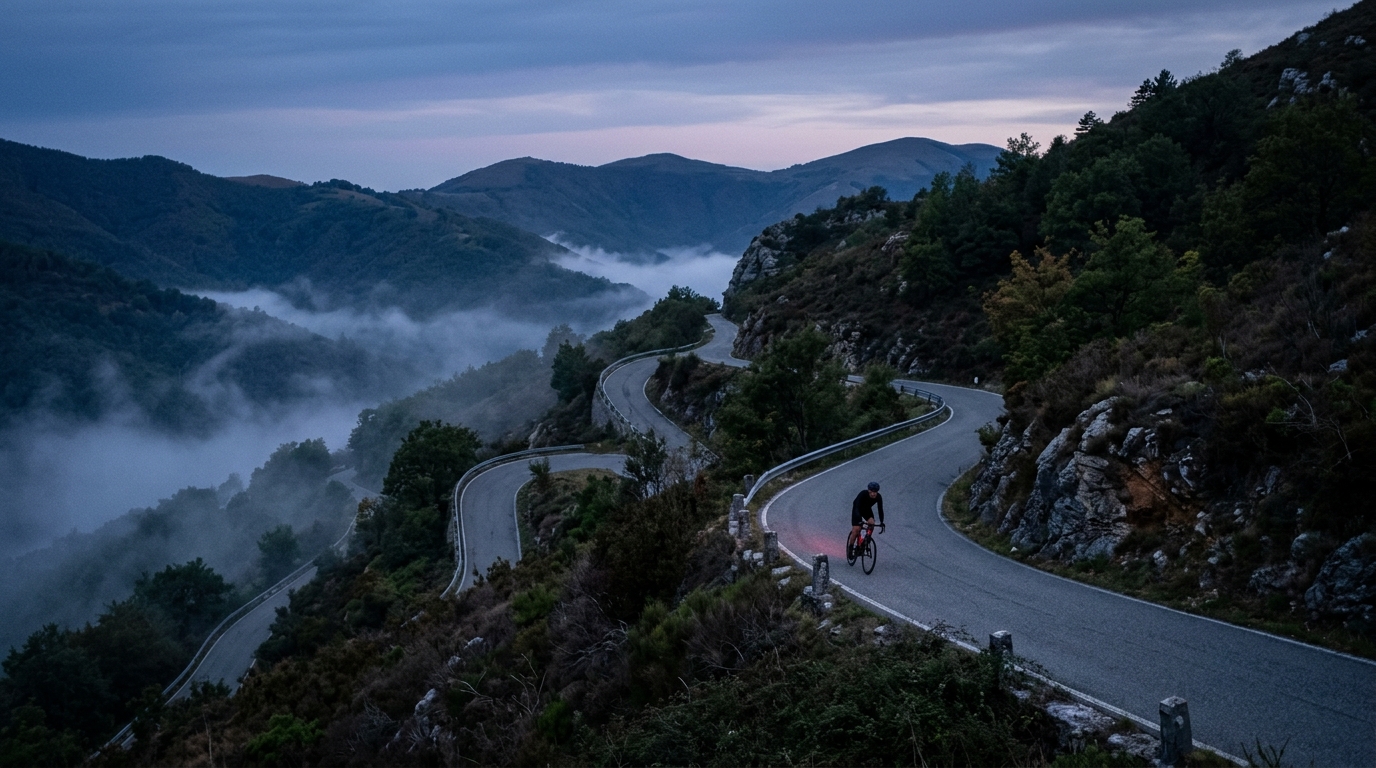
Passo della Scoffera
A compact but severe Italian climb: 5 km at 8.92%, with a maximum gradient of 18.06% and very little room for pacing mistakes.
- Lunghezza
- 5km
- Media
- 8.9%
- Max
- 18.1%
- Vetta
- 471m
- Dislivello
- 399m
La salita
Profilo altimetrico
Passo della Scoffera cycling climb profile
Passo della Scoffera is short enough to tempt an aggressive start, but the numbers argue for restraint. At 5 km, it does not give riders the long, gradual settling-in period of a major alpine pass. Instead, the defining feature is density: an average gradient of 8.92% across the full climb, with the road rising from 22 m to 471 m.
That combination makes the climb feel more like a sustained threshold test with repeated torque demands than a rolling pass. The net elevation gain is 449 m, so the work is concentrated into a compact distance. There is not much tactical complexity here. The climb rewards riders who can hold pressure on the pedals without repeatedly spiking above their sustainable effort.
How the gradient unfolds
The headline figure is the maximum gradient of 18.06%. Even without a detailed kilometre-by-kilometre breakdown, that matters because a ramp that steep changes how the whole climb should be ridden. On a 5 km ascent, a severe pitch does not need to last long to be decisive. If you arrive at it already over threshold, it can force a cadence collapse, push you into repeated standing efforts, and leave you trying to recover on a road that is still averaging nearly 9%.
The average gradient also tells you this is not a climb where one steep wall is balanced by long flat sections. An 8.92% average over 5 km means the baseline difficulty is already high before the maximum pitch is considered. The practical reading is simple: expect sustained climbing from the bottom, then be ready for at least one section where gearing and composure matter more than raw enthusiasm.
Pacing and gearing notes
The smart pacing strategy is to treat the lower slopes as the setup, not the attack point. Hold a controlled effort early, keep cadence available, and avoid chasing speed when the road first bites. On a climb this compact, the cost of overpacing shows up quickly because there is not enough distance to reset properly.
Gearing should be chosen for the 18.06% maximum gradient, not the 8.92% average. If your lowest gear only works when you are fresh, it is not low enough for this climb. A compact climbing setup lets you stay seated longer, keep torque under control, and avoid turning the steepest section into a series of inefficient surges.
For pacing by power, anchor the effort around your sustainable climbing output rather than reacting to every change in slope. If you use /glossary/ftp as your reference point, the key is preventing the steep ramps from dragging you too far above it too early. The riders who go fastest here will not necessarily be the ones who hit the biggest peak power. They will be the ones who keep the whole 5 km coherent from bottom to summit.