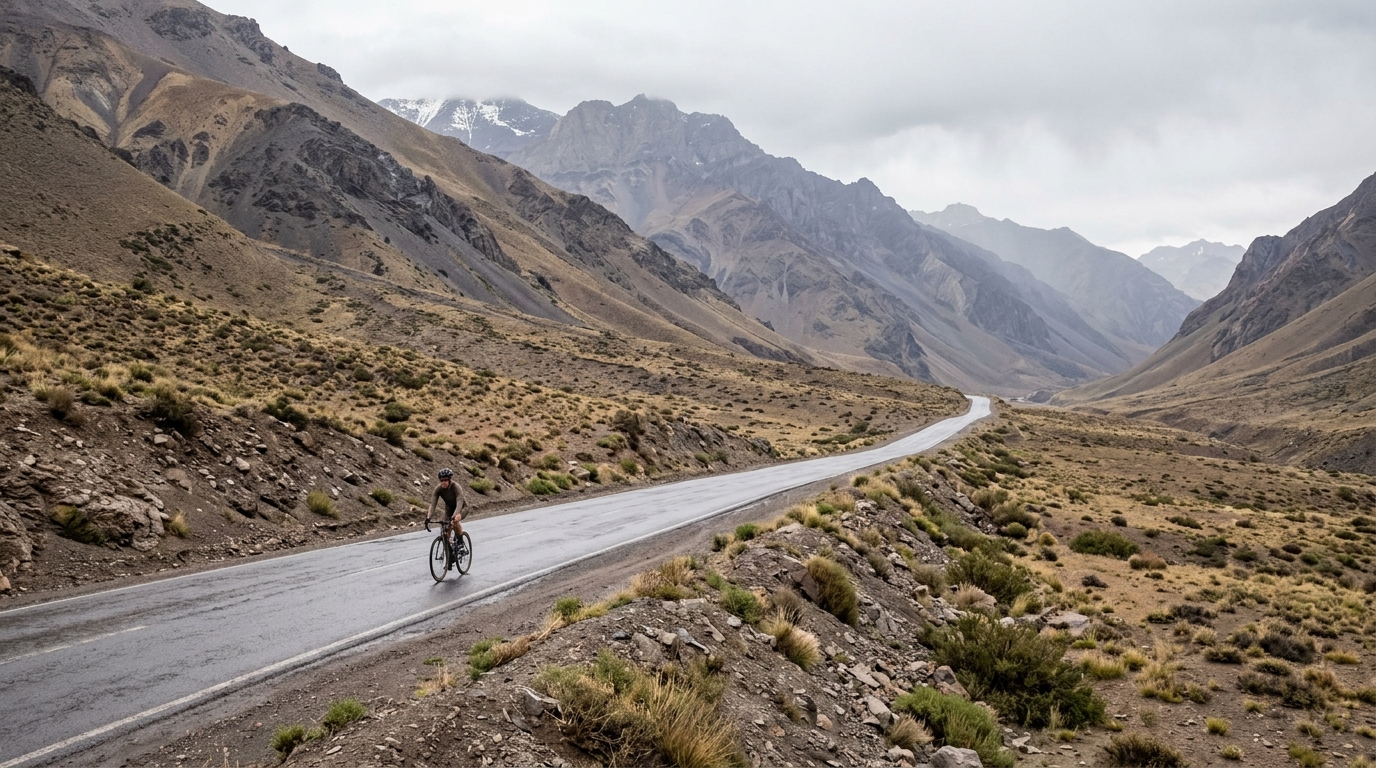
Paso de Tabala
Paso de Tabala is a 72.7 km HC climb in Chile, rising from 756 m to 4,141 m with 3,385 m of net elevation gain.
- Lunghezza
- 72.7km
- Media
- 4.7%
- Max
- 24.5%
- Vetta
- 4,141m
- Dislivello
- 3,649m
La salita
Profilo altimetrico
Paso de Tabala Cycling Climb Profile
Paso de Tabala is not a climb defined by one clean, decisive ramp. It is defined by scale. At 72.7 km, with 3,385 m of net elevation gain from 756 m to 4,141 m, this is an HC ascent where the main difficulty is the way the workload compounds long before the summit arrives.
The average gradient of 4.66% can understate the challenge. On paper, that number suggests a steady endurance climb rather than a pure wall. In practice, the profile data points to something more complicated. The route records 3,649 m of total ascent against 3,385 m of net gain, which means the road is not simply a perfectly linear rise from start to finish. There is extra climbing beyond the net elevation change, so pacing has to account for changes in pitch and the possibility that any brief easing does not mean the climb is becoming easy.
The other number that changes how this climb should be read is the maximum gradient of 24.53%. A climb can average 4.66% and still punish riders if the steepest sections arrive when fatigue is already established. On a climb this long, those sharper ramps are less about producing one explosive effort and more about forcing repeated spikes above sustainable power. That is where riders who pace only by feel can get into trouble.
How It Rides
The bottom starts high enough to feel like a mountain road, but the real feature is the long progression to 4,141 m. Because the summit comes after such a large vertical gain, the climb should be approached as an endurance climb first and a gradient challenge second.
The practical objective is to keep the early and middle sections controlled, even if the average gradient feels manageable. A rider who treats the 4.66% average as permission to ride at or above /glossary/ftp too often will pay for it later, especially if the steepest ramps appear after significant fatigue has accumulated.
Pacing and Gearing
Use gearing that leaves margin for the 24.53% maximum gradient. The mistake is bringing a setup that works for the average and then leaves no cadence when the road pitches up. For most riders, the correct gearing choice is the one that allows seated climbing at a controlled effort on the moderate sections while still giving a bailout option for the steepest ramps.
Pacing should be conservative from the start:
- Ride the opening phase below threshold, not at it.
- Let the long duration, not the average gradient, define the effort.
- Avoid repeated surges on steep ramps unless they are unavoidable.
- Use easier sections to stabilize breathing and cadence rather than to chase speed.
Paso de Tabala rewards discipline. The climb is long enough that small pacing errors become expensive, and steep enough at its maximum to punish riders who arrive without gears or restraint.