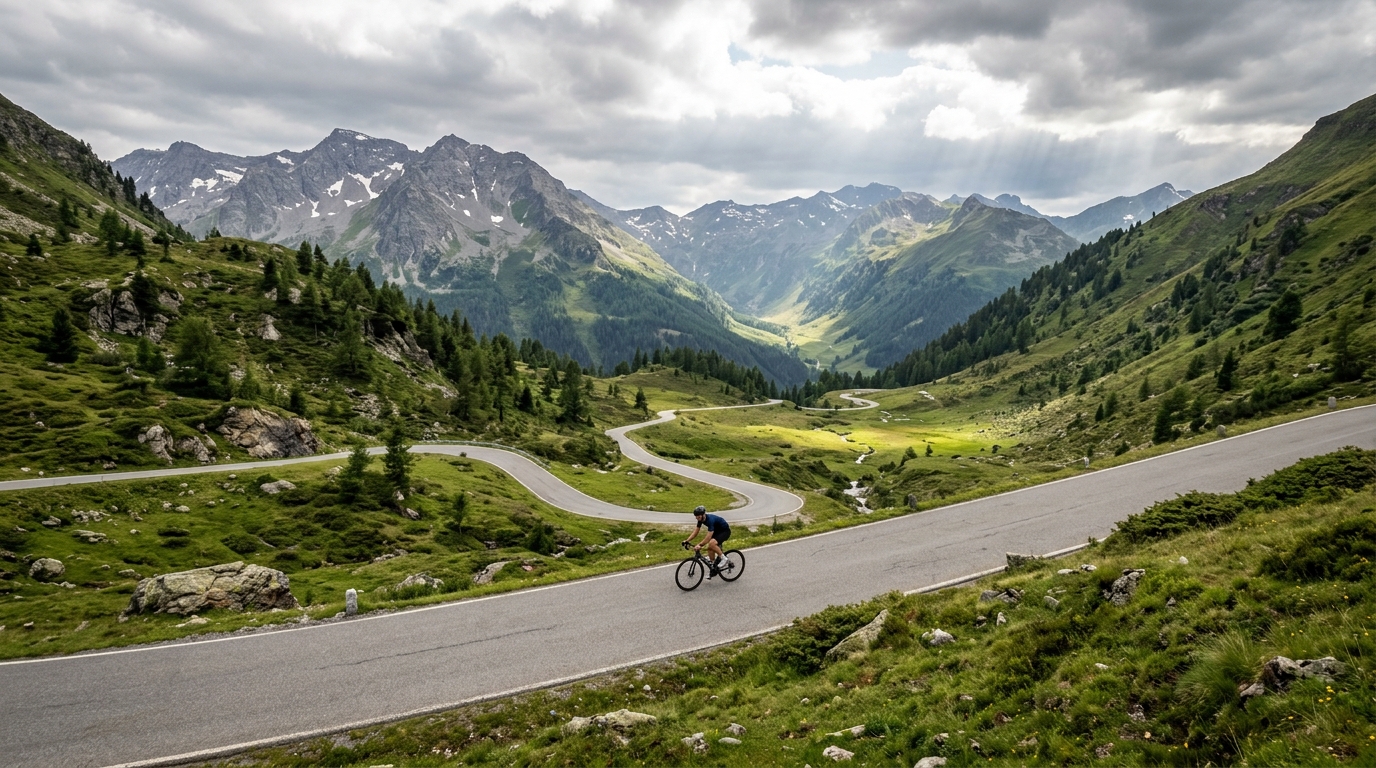
Lignitzhöhe
A long Austrian category 1 climb: 26.4 km at 4.27%, rising from 667 m to 1,797 m with pitches up to 11.87%.
- Lunghezza
- 26.4km
- Media
- 4.3%
- Max
- 11.9%
- Vetta
- 1,797m
- Dislivello
- 1,122m
La salita
Profilo altimetrico
Lignitzhöhe cycling climb profile
Lignitzhöhe is a long Austrian category 1 climb that asks for patience more than aggression. The headline numbers are clear: 26.4 km at an average gradient of 4.27%, starting at 667 m and topping out at 1,797 m. That gives the climb its defining character. It is not a short wall where the maximum pitch decides everything, but a sustained altitude-gaining effort where small pacing errors compound over time.
The average gradient can make Lignitzhöhe look more manageable than it will feel on the road. A climb this long at 4.27% rewards steady aerobic work, but the listed maximum gradient of 11.87% means the profile is not just a smooth false-flat drag. The steepest ramps are nearly three times the average, so the effort will naturally fluctuate unless you control it. The practical challenge is keeping those sharper sections from pulling you above a sustainable ceiling too often.
How the gradient should shape your ride
With 26.4 km to cover, the opening priority is restraint. The early kilometres should feel controlled, even slightly underwhelming, because the climb has enough length and elevation gain to punish riders who pace it like a shorter ascent. The route rises from 667 m to 1,797 m, so the accumulated cost matters as much as any single steep section.
Treat the 4.27% average as the baseline demand and the 11.87% maximum as the risk factor. On the steadier sections, settle into a rhythm around endurance to tempo intensity, depending on fitness and goals. If riding by power, avoid letting the easier gradients tempt you into unnecessary surges, then cap the steeper ramps before they become repeated threshold or above-threshold efforts. For riders using /glossary/ftp as a pacing anchor, this is the sort of climb where discipline below threshold early usually buys far more time later than a hard start.
Pacing and gearing notes
A sensible approach is to divide the climb mentally into three phases:
- Start controlled - ride the opening section as if the summit is still a long way away, because it is.
- Protect the middle - keep cadence stable and avoid chasing speed when the road steepens.
- Spend late - only lift the effort once the remaining distance is short enough that you can hold it to the top.
Gearing should be chosen for the maximum gradient, not the average. A setup that feels comfortable at 4.27% can become limiting when the road pitches toward 11.87%, especially deep into a 26.4 km climb. Prioritise a low gear that lets you stay seated and keep pressure smooth over the steepest ramps. Grinding early is the easiest way to turn Lignitzhöhe from a steady category 1 ascent into a long survival ride.
The best ride here is not the one with the hardest first half. It is the one where the final kilometres still look like cycling rather than damage control.